The Roman Invasion of Britain: How and Why Rome Conquered Britannia
The Roman arrival in Britain marked one of the most challenging and symbolically important expansions of Roman power. Unlike Gaul or Hispania, Britain lay beyond the familiar world of Roman conquest, separated by sea, cultural distance, and fierce tribal resistance. Rome’s conquest of Britain was not swift or simple; it unfolded over decades through military invasion, political manipulation, and sustained occupation. Understanding how the Romans came to Britain reveals both the strengths and limits of Roman imperial power.
Dramatic Roman landing in Britain, showing legions advancing ashore during the Roman invasion of Britain
Reader-Facing Image Description:
This image depicts Roman legions making a dramatic entrance into Britain, capturing the tension and scale of Rome’s first invasion of the island.
Britain Before the Romans: A Land Beyond the Empire
Before Roman intervention, Britain was inhabited by numerous Celtic tribes with no central authority. Power was decentralized, with local kings controlling territories through kinship, warfare, and alliances. Society was largely agrarian, though trade with Gaul connected Britain to the wider Mediterranean world.
Key features of pre-Roman Britain:
Tribal political systems
Hill forts as centers of power
Warrior-based social structures
Roman writers portrayed Britain as remote and dangerous, enhancing its symbolic value as a target for conquest.
Key Ideas
Britain lacked political unity
Tribal warfare dominated society
The island held symbolic value for Rome
This image shows a British warrior driving a chariot through a village, highlighting the martial culture and local life of Britain before Roman conquest.
Julius Caesar’s Expeditions (55–54 BC): Rome’s First Contact
The first Roman incursions into Britain were led by Julius Caesar during his Gallic campaigns. These expeditions were not full invasions but reconnaissance operations designed to punish British tribes aiding Gaulish resistance and to enhance Caesar’s political prestige.
Caesar faced:
Difficult sea crossings
Unfamiliar terrain
Fierce local resistance
Although he secured hostages and alliances, Rome did not occupy Britain at this time. However, Caesar’s expeditions established diplomatic relationships and demonstrated that Britain was militarily reachable.
Key Ideas
Caesar did not conquer Britain
Expeditions were strategic and political
Rome gained valuable intelligence
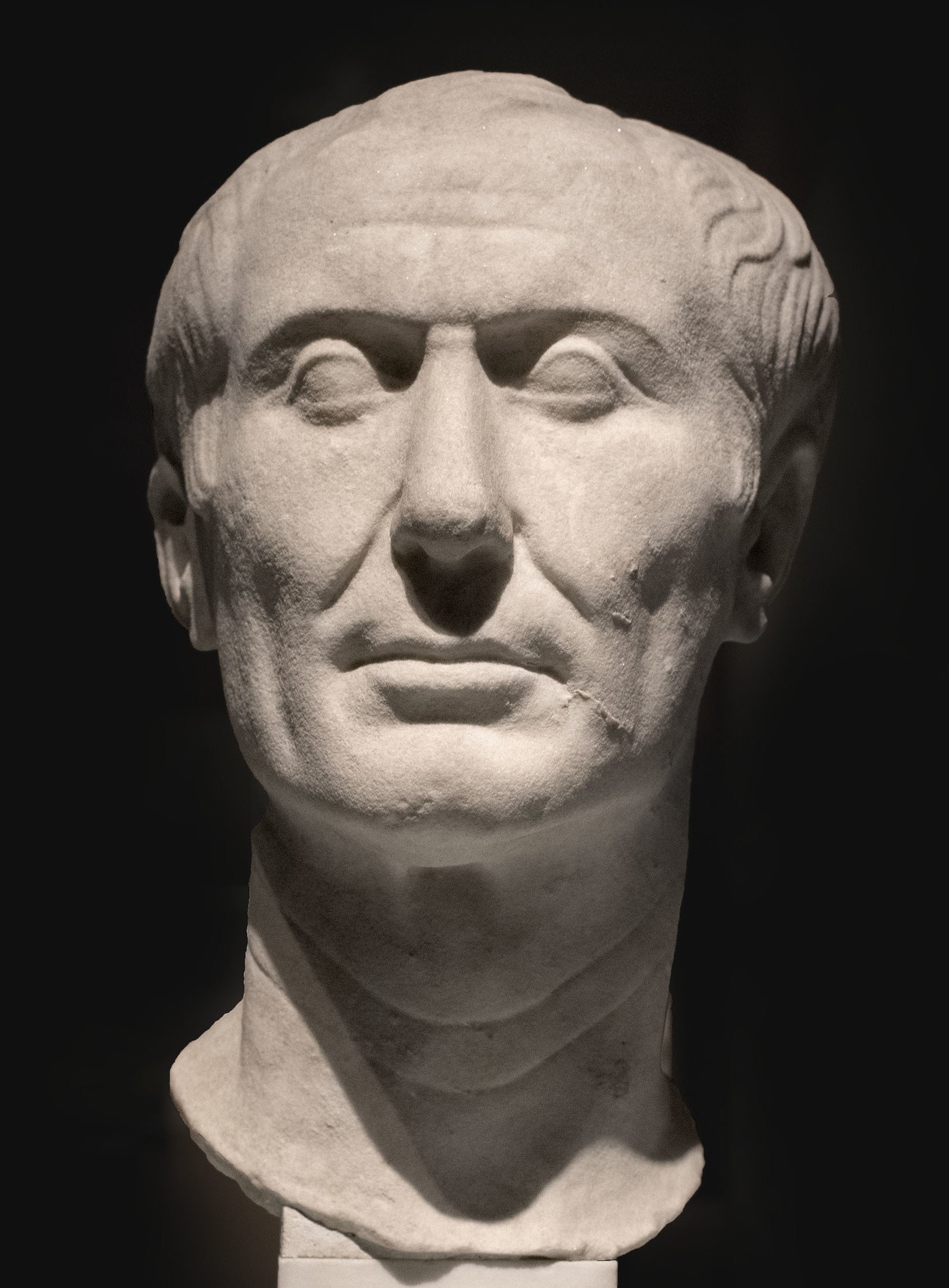
This marble statue portrays Julius Caesar, highlighting his authority and influence as a Roman general, politician, and key figure in the Republic’s transition to Empire.
The Claudian Invasion (43 AD): Britain Is Conquered
The true invasion of Britain began under Emperor Claudius in 43 AD. Motivated by political legitimacy and imperial ambition, Claudius ordered a full-scale military operation involving four legions.
Key moments of the invasion:
Roman landing in southeast Britain
Defeat of local tribal forces
Capture of Camulodunum (Colchester)
Claudius personally arrived to claim victory, solidifying his rule in Rome. Britain officially became a Roman province.
Key Ideas
Britain was invaded for political legitimacy
Roman military superiority ensured success
Province status followed conquest
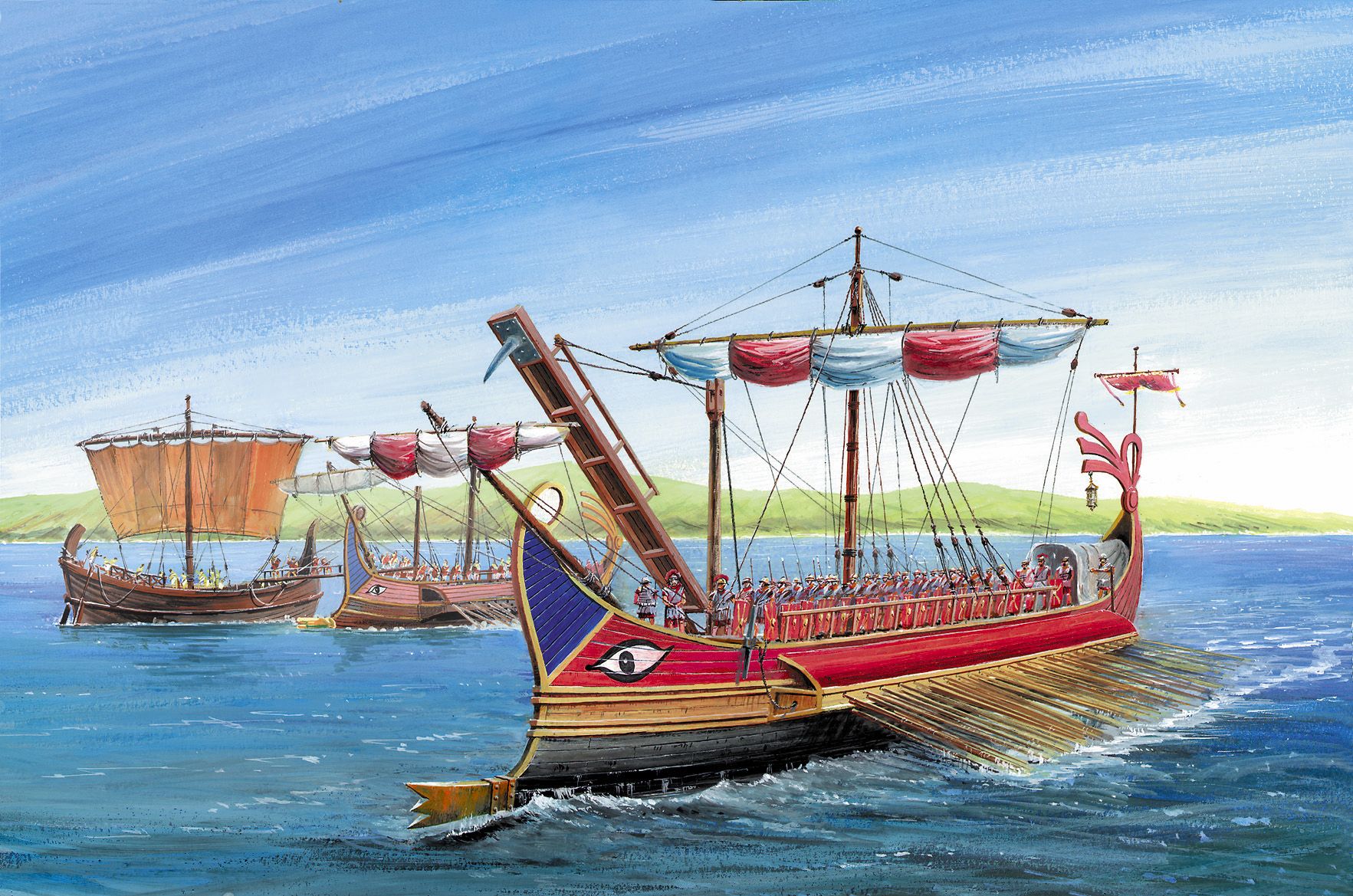
A Roman Ship or Trireme Sailing Away from England After a Failed Invasion
Roman Resistance and British Rebellion
Roman control was not uncontested. Tribal revolts occurred frequently, the most famous led by Boudica in 60–61 AD. Her rebellion destroyed Roman cities and nearly expelled Rome from Britain.
Rome responded with:
Brutal military suppression
Rebuilding of cities and forts
Increased military presence
The rebellion demonstrated both the vulnerability and resilience of Roman rule.
Key Ideas
Resistance remained strong
Roman authority was fragile at times
Military force secured long-term control
This image depicts Roman troops holding out inside a temple as Boudica’s forces surround them, capturing the desperation and intensity of the rebellion against Roman rule.
Romanization: How Britain Changed Under Rome
Following conquest, Rome reshaped Britain through infrastructure, law, and culture. Roads, towns, baths, and villas transformed the landscape, while Roman law replaced tribal justice systems.
Key aspects of Romanization:
Urban development
Economic integration
Cultural blending
Roman Britain became deeply connected to the empire, though rural areas retained local traditions.
Key Ideas
Rome transformed Britain’s landscape
Roman and local cultures blended
Romanization was uneven
This map illustrates Roman influence in Britain, highlighting key roads, forts, cities, and areas of long-term Roman control across the province.
Military Occupation and the Limits of Expansion
Despite success in southern Britain, Roman expansion northward faced serious challenges. Campaigns in Wales and Scotland were costly, leading to the construction of Hadrian’s Wall to define the empire’s northern boundary.
This decision reflected:
Strategic restraint
Recognition of logistical limits
Defensive consolidation
Britain became a heavily militarized province.
Key Ideas
Rome reached its limits in Britain
Defensive strategy replaced expansion
Military presence remained constant
This painting shows Roman soldiers building Hadrian’s Wall, emphasizing the engineering effort and military purpose of Rome’s northern frontier in Britain.
Why Britain Mattered to Rome
Britain was not the empire’s richest province, but it held strategic and symbolic importance. It demonstrated Rome’s ability to conquer the edge of the known world and projected imperial strength.
Britain provided:
Military prestige
Economic resources
Strategic security
Key Ideas
Britain symbolized imperial reach
Economic value was secondary
Prestige justified conquest
Roman farmers working in the fields
Conclusion: Rome’s Northern Challenge
The Roman arrival in Britain was not a single event, but a long process of exploration, invasion, resistance, and adaptation. It showcased Rome’s military power while revealing the limits of imperial expansion. Britain remained Roman for nearly four centuries, leaving a legacy that shaped its history long after Rome’s withdrawal.