
Roman expansion was guided by calculated strategy rather than uncontrolled ambition. Although Roman legions conquered vast territories across the Mediterranean, the empire deliberately halted deeper expansion into northern Europe after repeated military, environmental, and logistical difficulties. Regions such as Germania, Caledonia, and territories beyond the Rhine and Danube rivers presented challenges that differed greatly from the lands Rome had previously subdued. These lands lacked the urban infrastructure, economic wealth, and navigable terrain that had made conquest profitable elsewhere.
The disaster in the Teutoburg Forest (9 CE) showed that Roman tactical superiority could be neutralized in dense forests and unfamiliar landscapes. Combined with harsh climate, poor economic return, and decentralized tribal resistance, further expansion northward became strategically unjustifiable. Instead, Roman emperors chose to consolidate power along natural frontiers and fortifications such as Hadrian’s Wall.
This decision reveals the pragmatic nature of Roman imperial policy. Expansion was pursued only when it strengthened the empire. When conquest no longer served economic, military, or political interests, Rome accepted limits and focused on long-term stability rather than reckless territorial growth.
Lorem ipsum dolor sit amet, consectetur adipiscing elit. Ut elit tellus, luctus nec ullamcorper mattis, pulvinar dapibus leo.

Geography and Terrain of Germania and Northern Europe
The physical geography of northern Europe was fundamentally unsuitable for traditional Roman warfare. Beyond the Rhine and Danube lay vast stretches of dense forest, swampy marshland, winding rivers, and uneven ground that severely limited the effectiveness of Roman formations. Legionary tactics depended on discipline, visibility, and organized ranks supported by shields and coordinated movement. In forested terrain, visibility was reduced to a few meters, making formation fighting nearly impossible and exposing soldiers to ambush from unseen enemies.
Marshlands and soft ground made marching slow and exhausting, while rivers without bridges or established crossings disrupted supply routes. Unlike Gaul or Hispania, these regions lacked developed roads, meaning Roman engineers would need to build infrastructure while under constant threat. This dramatically slowed campaigns and increased vulnerability.
Local tribes, familiar with every path and forest trail, could strike quickly and retreat into terrain where Roman soldiers struggled to follow. The land itself became a defensive ally for the inhabitants, turning Roman strengths into weaknesses.
Key Ideas
Dense forests blocked Roman formations and visibility
Marshes and rivers disrupted movement and supply
No roads required dangerous engineering work
Terrain favored ambush and guerrilla tactics
Geography neutralized Roman tactical advantages

The Teutoburg Forest Disaster and Its Impact
In 9 CE, three Roman legions under Publius Quinctilius Varus were ambushed and destroyed in the Teutoburg Forest by Germanic tribes led by Arminius. This event had a profound psychological and strategic effect on Roman policy. The legions were trapped in narrow forest paths, unable to form proper lines or use their shields effectively. Continuous attacks over several days led to complete annihilation.
This defeat demonstrated that Roman discipline and equipment were insufficient in certain terrains. It revealed that Germania could not be conquered using conventional tactics without massive investment and risk. Emperor Augustus reportedly mourned the loss deeply, and future emperors became cautious about large-scale northern campaigns.
Teutoburg did not end Roman military capability, but it permanently altered Roman willingness to invest in further northern conquest. It showed that expansion had practical limits.
Key Ideas
Three legions destroyed in 9 CE ambush
Forest terrain prevented Roman formations
Major psychological shock to Roman leadership
Proved limits of Roman battlefield superiority
Influenced long-term imperial strategy

Climate and Harsh Environmental Conditions
The climate of northern Europe presented continuous and exhausting challenges that Roman soldiers were not accustomed to facing in other regions of the empire. Unlike the Mediterranean climate, where most Roman campaigns had taken place, Germania and lands further north were marked by persistent rainfall, thick fog, damp air, and long, freezing winters. These conditions affected not only the morale of the soldiers but also the performance of their equipment and the efficiency of their daily operations. Armor rusted quickly in constant moisture, leather straps deteriorated, and wooden equipment absorbed water, becoming heavier and less reliable.
Roman soldiers depended on well-maintained gear and dry conditions to function at peak efficiency. However, endless mud and cold ground made marching exhausting and camp construction more difficult. Trenches filled with water, tents offered little protection from the damp, and fires were harder to maintain with wet wood. Prolonged exposure to these elements led to illness, fatigue, and declining morale.
Winters were particularly dangerous. Freezing temperatures limited mobility, reduced food availability, and increased the risk of disease. Troops had to wear heavier clothing for warmth, which restricted movement in combat. The climate itself became an invisible enemy, weakening Roman forces before they ever engaged in battle.
Key Ideas
Persistent rain and damp damaged equipment
Mud and cold exhausted soldiers
Increased illness and low morale
Freezing winters restricted movement and supply
Climate acted as an indirect enemy

Lack of Economic Incentive
Roman expansion was closely tied to economic benefit. Provinces such as Gaul, Hispania, and Egypt provided agricultural wealth, taxable populations, trade routes, and urban centers that could sustain Roman administration and military presence. Northern territories beyond the Rhine, however, offered very little economic value. These lands were sparsely populated, lacked developed cities, and did not possess the farming systems or trade networks that made other regions profitable.
For Rome, conquest required long-term sustainability. Occupying a territory demanded garrisons, roads, administrative officials, and infrastructure, all of which needed financial support from the province itself. Germania and the lands further north could not provide the economic return necessary to justify permanent occupation.
Without cities to tax or markets to regulate, Rome would have been forced to fund the occupation from its own treasury. This made expansion economically irrational and strategically unnecessary.
Key Ideas
Expansion depended on economic return
Northern lands had few cities and little trade
High occupation cost with minimal benefit
Would burden the Roman treasury
Conquest was not economically sustainable
Tribal Warfare and Lack of Central Authority
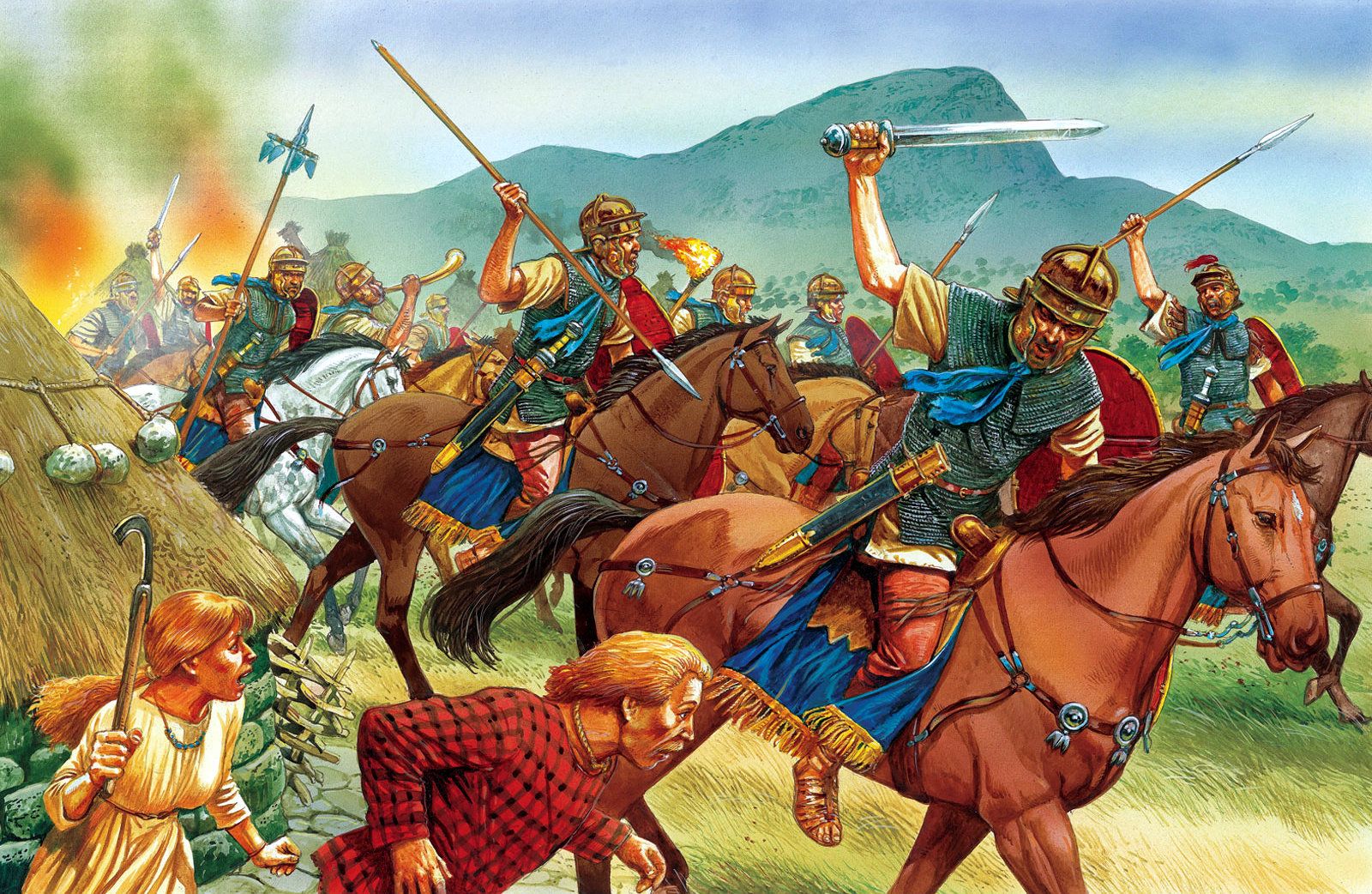
A major obstacle to Roman expansion was the absence of centralized political structures. In many conquered regions, defeating a king or ruling elite effectively brought the entire territory under Roman control. In Germania and beyond, society was divided into many independent tribes, each acting separately.
Even if Rome defeated one tribe, others remained free to resist. There was no single authority whose surrender guaranteed stability. This created a situation of endless small conflicts rather than decisive wars. Roman legions would have to constantly patrol and suppress uprisings without ever achieving lasting peace.
Roman administration relied on cooperation from local elites, but such systems were largely absent. The result would have been a permanent military occupation with continuous unrest, draining manpower and resources.
Key Ideas
No central ruler to conquer
Endless resistance from multiple tribes
Required constant military presence
Difficult to impose Roman governance
Continuous unrest without decisive victory

Logistical Overstretch and Supply Problems
Roman military success depended heavily on efficient logistics. Legions required steady supplies of food, weapons, clothing, and building materials, transported along reliable roads and rivers. In northern territories, these systems were extremely difficult to establish. Dense forests, marshlands, and lack of roads made transportation slow and dangerous.
Supply lines stretched from Roman bases along the Rhine and Danube and were vulnerable to ambush. Transporting grain and equipment became increasingly difficult during bad weather.
Without stable logistics, Roman armies risked isolation in hostile territory. The cost and danger of maintaining supply routes made prolonged campaigns impractical.
Key Ideas
Roman success relied on strong logistics
Lack of roads made supply slow and risky
Ambush threats to supply lines
Risk of army isolation
Logistics made campaigns unsustainable

Natural Frontiers: Rhine, Danube, and Hadrian’s Wall
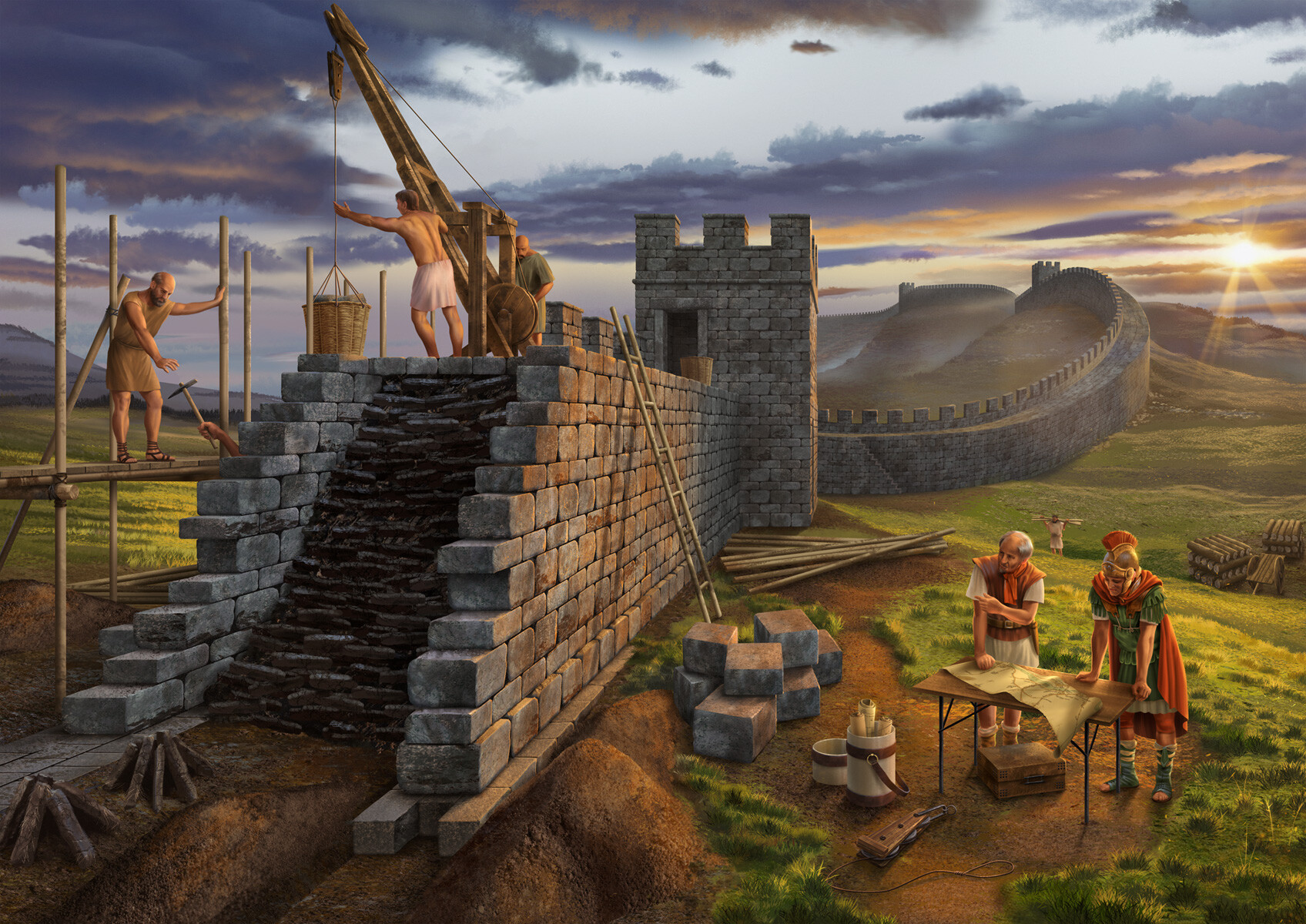
Rome chose to establish defensible natural frontiers rather than expand further. The Rhine and Danube rivers formed strong natural barriers, while in Britain Hadrian’s Wall marked a clear defensive limit.
These borders allowed Rome to monitor threats and defend territory with fewer resources. Forts, watchtowers, and patrol routes created a stable defensive system that was far more efficient than expanding into hostile lands.
This decision reflected strategic wisdom, recognizing that secure borders were more valuable than risky conquests.
Key Ideas
Rivers and walls as defensive limits
Easier to defend than conquer further
Reduced military and financial strain
Marked practical limits of expansion
Demonstrated strategic planning
Strategic Consolidation Over Endless Expansion
Roman leaders understood that empire building had limits. After centuries of expansion, internal stability and secure borders became more important than acquiring new territory. Consolidation allowed Rome to strengthen infrastructure and ensure loyalty within existing provinces.
Further northern expansion would have diverted resources from more valuable regions. Instead, Rome focused on preserving manpower, improving defenses, and maintaining control.
This decision shows that Roman imperial policy was guided by practicality and long-term thinking rather than ambition alone.
Key Ideas
Focus on stability over expansion
Preservation of resources and manpower
Avoidance of unnecessary wars
Strengthening existing provinces
Pragmatic imperial strategy