
1. Strategic Location: How Romans Chose Fort Sites
The selection of a fort’s location was one of the most critical decisions in Roman military planning, as it directly influenced the defensive strength, logistical efficiency, and strategic value of the entire position. Roman commanders did not choose sites randomly; instead, they relied on a combination of geographical analysis, military experience, and engineering expertise to identify locations that would maximize control over the surrounding area while minimizing vulnerability. A well-positioned fort could dominate key routes, secure supply lines, and serve as a base for both offensive and defensive operations.
One of the primary considerations in site selection was elevation. Roman forts were often constructed on high ground, such as hills or ridges, providing a clear tactical advantage. Elevated positions allowed soldiers to observe enemy movements from a distance, making it easier to detect approaching threats and prepare defenses in advance. Height also made direct assaults more difficult, as attackers were forced to advance uphill under missile fire, significantly increasing their casualties and reducing their effectiveness. However, elevation was balanced with practicality; excessively steep or isolated locations could hinder supply delivery and communication, so commanders sought positions that combined visibility with accessibility.
Access to water sources was another essential factor. Forts were typically located near rivers, streams, or reliable wells, ensuring a constant supply of water for drinking, cooking, and sanitation. In long-term fortifications, engineers often enhanced these natural resources by digging wells or constructing water channels to guarantee a stable supply even during sieges. Control of water sources also had strategic importance, as it could deny the enemy access to essential resources while strengthening the fort’s self-sufficiency.
Roman forts were frequently positioned along roads and trade routes, allowing the army to maintain control over movement within a region. These roads were not only used for military purposes but also facilitated communication, trade, and administrative control. By placing forts at key junctions or chokepoints, the Romans could monitor and regulate traffic, respond rapidly to threats, and project authority across vast territories. This integration of forts into the broader infrastructure network was a defining feature of Roman military strategy, linking isolated positions into a cohesive system of control.
Defensive considerations extended to the surrounding terrain. Commanders preferred locations where natural features enhanced fortification, such as rivers acting as barriers, forests limiting enemy movement, or open plains providing clear lines of sight. Avoiding areas prone to flooding, landslides, or ambushes was equally important. Engineers carefully assessed soil conditions to ensure that ditches, walls, and foundations could be constructed effectively, preventing structural weaknesses that might compromise the fort’s defenses.
Finally, strategic positioning considered the broader military objective. Forts were placed to secure borders, control rebellious regions, or support ongoing campaigns, often forming networks that allowed legions to coordinate movements and maintain regional dominance. Temporary camps followed similar principles, ensuring that even short-term positions offered maximum security and efficiency.
In summary, the selection of fort sites was a deliberate and calculated process, combining topographical advantage, access to resources, infrastructure integration, and strategic purpose. This careful planning allowed Roman forts to serve as powerful instruments of control, enabling the army to dominate terrain, maintain supply lines, and project military strength across the empire.
Key Ideas
Forts placed on high ground for visibility and defensive advantage
Located near water sources for sustainability and survival
Positioned along roads and chokepoints to control movement
Terrain used to enhance natural defenses and limit enemy access
Soil and environment assessed for stable construction
Sites chosen based on strategic military objectives and regional control
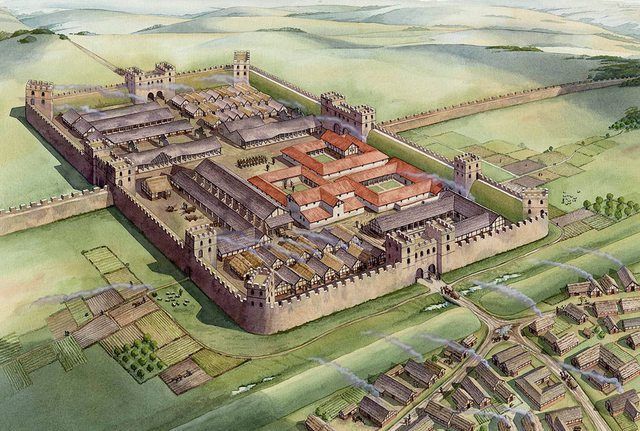
2. Standardized Layout: The Blueprint of a Roman Fort
One of the most defining characteristics of Roman military forts was their highly standardized layout, which reflected the Roman emphasis on discipline, efficiency, and organization. Unlike many other ancient armies that adapted their encampments randomly to terrain, Roman engineers followed a consistent architectural blueprint that could be replicated across the empire. This uniformity ensured that every soldier, regardless of where they were stationed—from Britannia to Syria—could immediately understand the structure of a fort, navigate it efficiently, and perform their duties without confusion.
At the core of every Roman fort was a rectangular or square shape, carefully aligned according to the cardinal directions whenever possible. This geometric precision was not merely aesthetic; it allowed for clear organization, efficient movement, and effective defense. The fort was divided by two main roads: the via praetoria, running from the main gate to the headquarters, and the via principalis, which crossed it horizontally. These roads created a grid system that organized the interior into distinct functional zones, ensuring that each unit had a designated space and that movement within the fort was orderly and predictable.
The central point of the fort was the principia (headquarters building), which served as the administrative and symbolic heart of the camp. Here, commanders issued orders, stored important documents, and held military standards, which were considered sacred. Surrounding the principia were key structures such as the praetorium (commander’s residence), storage facilities (horrea), and workshops. These central buildings ensured that command, logistics, and administration were concentrated and easily accessible, allowing for efficient coordination of military operations.
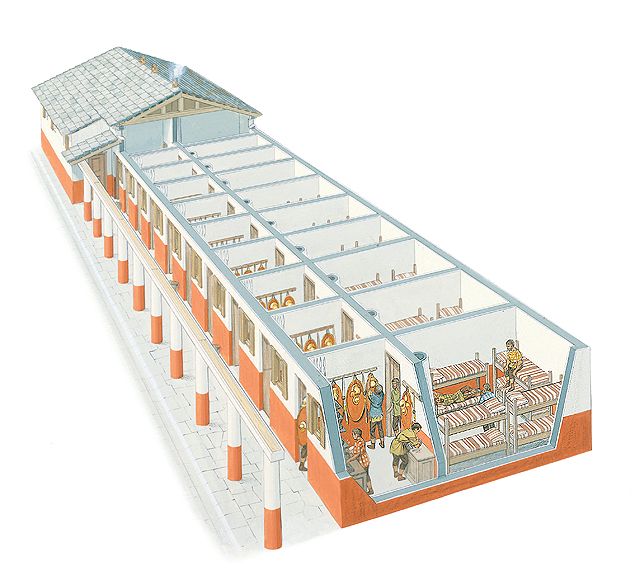
Barracks were arranged in uniform rows along the interior streets, providing organized living quarters for the soldiers. Each barrack block housed a century, reinforcing the military hierarchy and ensuring that units remained cohesive even when not in battle. The layout also included designated areas for training, equipment storage, and animals, ensuring that all aspects of military life were integrated into the fort’s design. This organization minimized confusion, improved discipline, and allowed soldiers to transition quickly between daily routines and combat readiness.
The standardized layout also played a crucial role in defensive capability. Gates were positioned strategically, usually on each side of the fort, allowing controlled access and rapid deployment of troops. Streets were wide enough to allow formations to move efficiently, while the overall design prevented congestion during emergencies. Because every fort followed a similar structure, reinforcements or newly arrived units could immediately adapt, knowing exactly where to find resources, commanders, and defensive positions.
Another key advantage of standardization was speed of construction. Roman soldiers were trained not only as fighters but also as builders, capable of constructing a fully functional camp in a matter of hours. The use of a consistent blueprint meant that each soldier knew their role in the building process, eliminating delays and ensuring that the fort could be completed quickly even in hostile territory. This efficiency allowed Roman legions to maintain security at all times, regardless of their location.
The standardized layout of Roman forts was therefore not just a matter of convenience but a deliberate strategic choice. It reinforced discipline, cohesion, and operational efficiency, ensuring that the army functioned as a unified and highly organized force. By combining geometric precision, functional zoning, and defensive planning, Roman forts became reliable and effective bases for military operations, contributing significantly to Rome’s ability to maintain control over its vast empire.
Key Ideas
Forts followed a standard rectangular grid layout for efficiency and organization
Main roads (via praetoria and via principalis) structured internal movement
Central buildings like the principia ensured effective command and control
Barracks and facilities arranged in uniform, functional zones
Standardization allowed rapid construction and immediate familiarity
Layout improved defense, discipline, and operational coordination
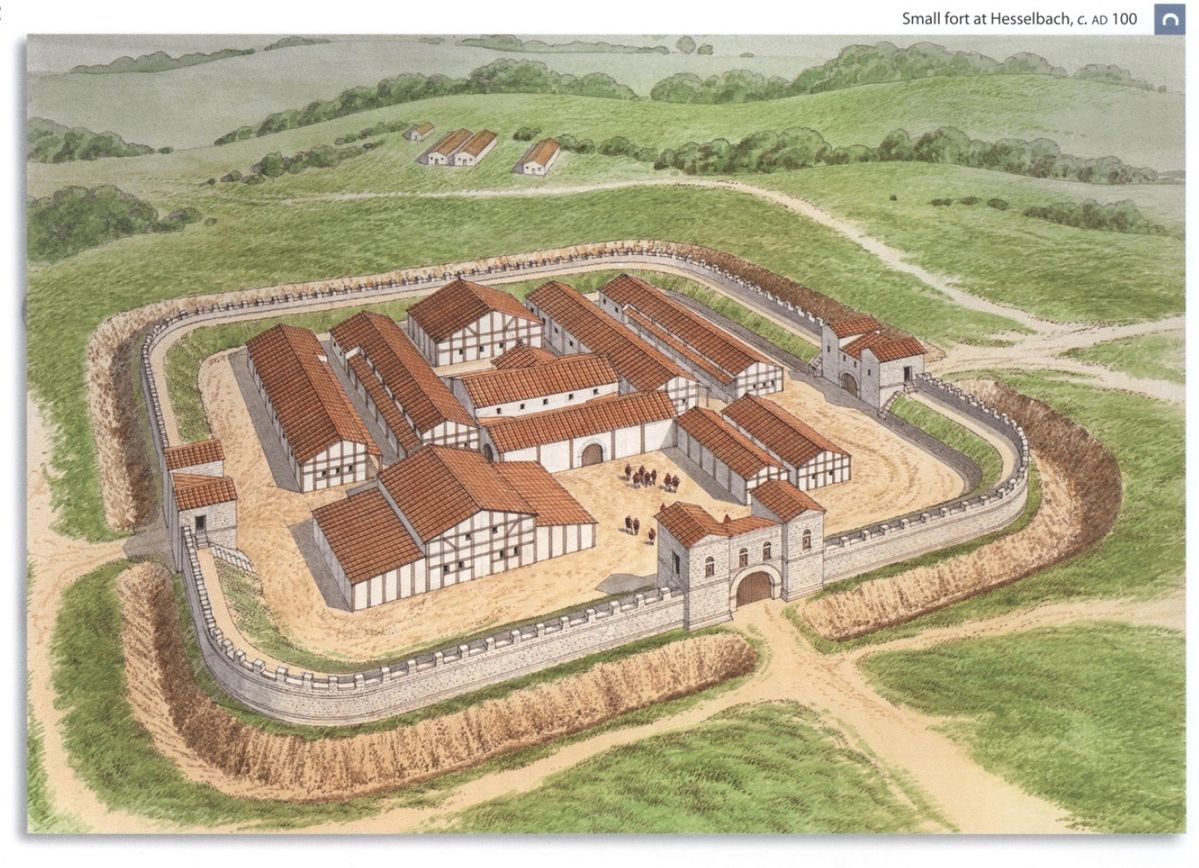
3. Building the Defenses: Ditches, Walls, and Palisades
The defensive structures of Roman forts were among the most sophisticated in the ancient world, combining engineering skill, tactical foresight, and practical labor to create positions that were difficult for enemies to breach. Roman military planners understood that a fort’s strength did not rest solely on its soldiers but also on the physical barriers that could delay, injure, or repel attackers. Consequently, every fort—whether temporary or permanent—was surrounded by a carefully designed combination of ditches, walls, and palisades, which were integrated into the fort’s overall layout and strategically enhanced by the surrounding terrain.
The first line of defense was almost always a ditch (fossa) surrounding the fort. These ditches varied in width and depth depending on the size and purpose of the fort but typically ranged from 3 to 6 meters wide and 1.5 to 3 meters deep. The earth excavated from the ditch was often used to create an earthen rampart immediately behind it, raising the height of the walls and providing defenders with a vantage point. Ditches served multiple purposes: they slowed down enemy troops, created obstacles for siege engines, and funneled attackers into predictable approaches where defenders could concentrate their fire. In addition, ditches could be filled with water if the terrain permitted, adding an extra layer of difficulty for attackers attempting to reach the walls.
Behind the ditch, Roman engineers constructed the primary fortifications, often beginning with a palisade (vallum). These were sturdy wooden fences made of sharpened stakes driven deep into the ground and bound together for stability. Palisades provided a flexible yet formidable barrier that could be built quickly, making them ideal for temporary forts during campaigns. In permanent forts, palisades were often replaced or supplemented with stone walls, providing long-term durability and resistance to fire or battering. Stone walls were typically reinforced with towers at corners and along intervals, which allowed soldiers to observe the surrounding area and provide overlapping fields of missile fire, creating a deadly defensive network.
Gates were integrated into the defensive system, designed not only for controlled access but also to serve as choke points in the event of an attack. Each gate could be defended by soldiers stationed in towers or along walls, ensuring that any advancing enemy would be exposed to concentrated fire before entering the fort. Defensive ramps or staircases were often incorporated, allowing soldiers to move quickly to threatened sections of the fortification.
The construction of ditches, palisades, and walls required careful coordination, labor management, and knowledge of local materials. Roman soldiers were trained in construction techniques, ensuring that fortifications were completed efficiently and to a high standard. Even temporary forts could be fully fortified in a matter of hours, reflecting the discipline and skill of the legion. Engineers assessed soil stability, slope, and drainage to prevent erosion or collapse, demonstrating the Romans’ understanding of both military and environmental engineering.
Overall, the defensive structures of Roman forts were not merely physical obstacles; they were integral components of Roman military strategy. Ditches, walls, and palisades provided layers of protection that amplified the effectiveness of the soldiers within, allowing relatively small garrisons to withstand superior enemy forces. This combination of engineering, tactical design, and disciplined labor made Roman forts some of the most secure military positions of the ancient world and a cornerstone of Rome’s ability to control vast territories.
Key Ideas
Ditches (fossa) slowed and funneled attackers, sometimes filled with water
Palisades were sharpened wooden stakes providing quick and strong barriers
Stone walls with towers enhanced observation and overlapping fields of fire
Gates were defensible choke points, integrated into the fort’s layout
Construction relied on trained soldiers, coordination, and knowledge of materials
Fort defenses amplified soldier effectiveness and allowed small garrisons to hold out against larger forces
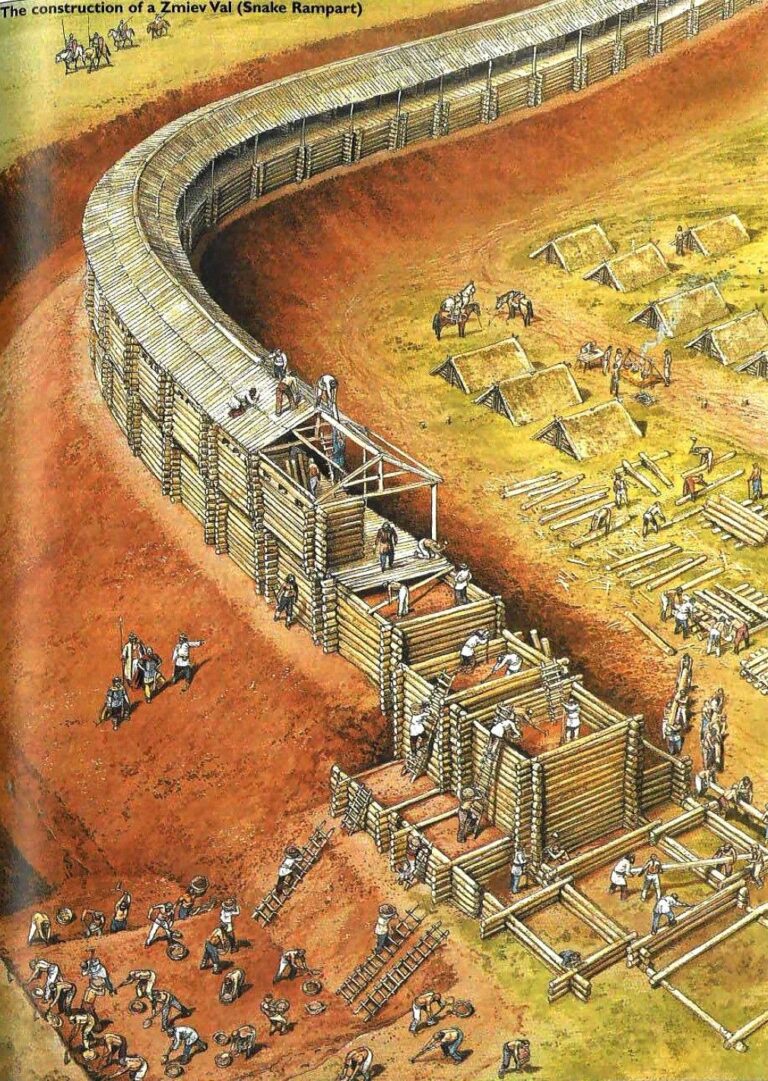
4. Gates and Watchtowers: Controlling Access and Surveillance
Gates and watchtowers were critical components of Roman forts, serving as both points of controlled entry and platforms for surveillance and defense. While ditches, walls, and palisades provided passive protection, gates and towers allowed soldiers to actively monitor, control, and respond to threats. Their design reflected the Roman emphasis on discipline, standardization, and tactical foresight, ensuring that every fort could efficiently regulate movement and maintain situational awareness over the surrounding terrain.
Gates were the most vulnerable points of any fort, as they represented natural entry points for enemies. To mitigate this, Roman engineers designed robust, heavily fortified gates, often reinforced with thick timber, metal bands, and strong hinges. Some gates featured double doors or multiple layers of barriers, forcing attackers to slow down and exposing them to missile fire from above. Gates were strategically positioned along the fort’s perimeter, typically on each cardinal side, and were connected by the main roads inside the fort, such as the via praetoria and via principalis, which allowed troops to move quickly to defend or patrol these critical points.
Adjacent to gates, Roman forts frequently included towers that provided elevated platforms for surveillance and defense. Towers were placed at corners or intervals along the walls, creating overlapping fields of observation and missile fire. From these positions, soldiers could spot approaching enemies from a distance, detect signs of sabotage, or monitor surrounding territory for signs of rebellion or intrusion. The height advantage of towers allowed defenders to shoot arrows or throw javelins effectively, targeting enemies attempting to breach the gates or scale the walls.
In addition to observation, gates and towers were used to regulate traffic and maintain order within the fort. Soldiers entering or leaving were often inspected, and wagons or pack animals were funneled through controlled paths to prevent congestion. This organization was particularly important in larger forts, where hundreds or thousands of troops, supplies, and equipment moved daily. Efficient gate management ensured that military operations, logistics, and communication could proceed without disruption while maintaining the security of the fort.
The design of gates and towers also reflected the flexibility and adaptability of Roman military engineering. Temporary forts used wooden gates and simple towers that could be quickly constructed and dismantled during campaigns, while permanent forts incorporated stone or brick constructions with reinforced battlements. Towers were often multi-level, providing storage, defensive positions, and vantage points for signaling or communication with nearby forts. Signal fires, flags, or mirrors could be used from towers to transmit messages across distances, coordinating troop movements and relaying warnings about enemy activity.
Overall, gates and watchtowers were far more than architectural features; they were integral to the operational and defensive capabilities of Roman forts. They combined physical strength, tactical positioning, and surveillance capability, enabling soldiers to control access, monitor the surrounding environment, and respond rapidly to threats. Their strategic placement and standardization across the empire contributed significantly to the efficiency, discipline, and dominance of the Roman military, allowing even relatively small garrisons to defend effectively against larger forces.
Key Ideas
Gates were fortified entry points, often reinforced with timber, metal, and multiple barriers
Towers provided elevated surveillance, allowing early detection of enemies
Towers allowed overlapping fields of missile fire to defend walls and gates
Gates regulated troop movement, logistics, and traffic control
Signal systems from towers enabled communication between forts
Designs varied based on temporary vs. permanent fortifications, reflecting tactical needs
Gates and towers combined defense, control, and operational efficiency, key to Roman dominance
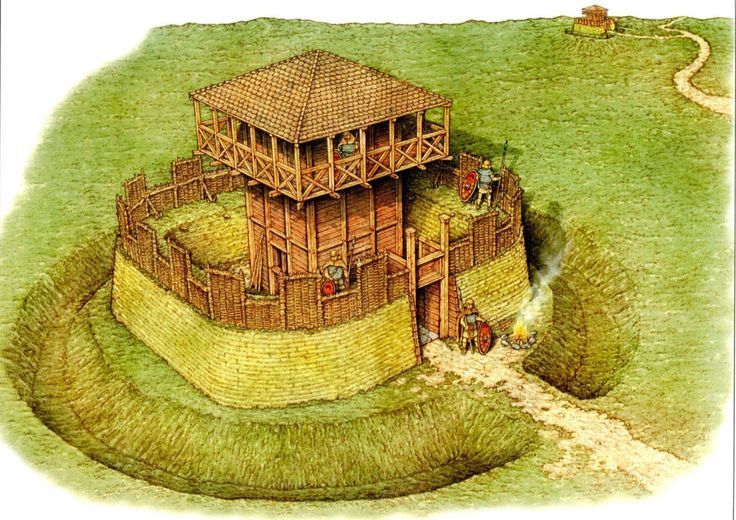
5. Internal Structures: Barracks, Headquarters, and Storage
The internal organization of a Roman fort was as meticulously planned as its external defenses, with barracks, headquarters, and storage facilities forming the backbone of daily military life. These structures were designed to ensure efficiency, discipline, and readiness, allowing soldiers to live, train, and operate effectively within a secure environment. The standardized arrangement of these facilities reflected the Romans’ understanding that a well-structured interior was just as important as ditches, walls, or towers in maintaining the fort’s defensive and operational capabilities.
At the heart of every fort stood the principia, or headquarters building. The principia served as the administrative, ceremonial, and symbolic center of the fort, where commanders issued orders, recorded troop movements, and held sacred standards. Inside the principia, there were offices for clerks and officers, archives for documentation, and shrines for the signa militaria—military standards regarded as sacred by Roman soldiers. This central location allowed commanders to monitor all aspects of the fort’s operations efficiently and ensured that troops could receive orders quickly and accurately. The principia also acted as a rallying point in case of attack, concentrating command and control at a defensible location within the fort.
Surrounding the principia, soldiers lived in barracks (contubernia), which were carefully arranged along the fort’s internal streets, typically aligned with the via praetoria and via principalis. Each barrack housed a century of soldiers, usually around 80 men, divided into smaller units called contubernia, where eight soldiers shared sleeping quarters, cooking arrangements, and equipment. This organization fostered unit cohesion and mutual accountability, which were essential for maintaining discipline and readiness. The layout allowed soldiers to assemble quickly in formation, respond to orders, and perform daily routines without confusion or delay. Barracks were often constructed with timber in temporary forts or stone in permanent installations, reflecting both durability and the speed of construction.
Storage facilities, or horrea, were another crucial component of internal organization. These structures held food, weapons, ammunition, and other supplies necessary to sustain the fort’s population during campaigns or sieges. Engineers designed horrea with raised floors, ventilation, and secure doors to prevent spoilage, theft, and pest infestation. The proximity of storage buildings to barracks and gates allowed for rapid distribution of supplies, ensuring that soldiers remained well-equipped and capable of responding to emergencies at all times.
Additional internal structures included workshops, kitchens, stables, and latrines, all carefully integrated into the fort’s layout. Workshops allowed for the repair of weapons and armor, kitchens supported organized food preparation, stables housed horses and pack animals, and latrines maintained sanitation. Each facility contributed to the overall functionality of the fort, ensuring that soldiers could focus on military duties without disruption.
The internal organization of Roman forts exemplified efficiency, discipline, and adaptability. By standardizing barracks, headquarters, and storage, the Romans created an environment that maximized operational readiness, reinforced social and military hierarchies, and enabled rapid response to both internal and external threats. The careful design of these internal structures allowed forts to function as self-contained military hubs, capable of sustaining prolonged campaigns and projecting Roman power across diverse and often hostile territories.
Key Ideas
Principia served as the administrative and ceremonial heart of the fort
Barracks (contubernia) fostered unit cohesion and disciplined living arrangements
Storage facilities (horrea) preserved supplies and ensured rapid distribution
Workshops, kitchens, stables, and latrines enhanced functionality and sustainability
Standardized internal layout allowed for rapid assembly and operational readiness
Internal organization supported self-sufficiency, discipline, and efficiency
Well-planned interiors were as critical as walls and ditches for Roman military dominance
6. Construction Process: How Soldiers Built Forts in Hours
One of the most impressive aspects of Roman military engineering was the ability of soldiers to construct fully functional forts in an incredibly short amount of time, often within a single day. This capability reflected the Romans’ combination of discipline, standardized procedures, and practical training, allowing armies to maintain both security and mobility during campaigns. The construction process of a fort was a carefully organized operation, where every soldier had a specific role, and every task was performed with precision to ensure that the fort would provide maximum defensive capability, even in hostile territory.
The process began with site selection and preparation, informed by commanders and surveyors. Once a location was chosen, soldiers cleared the area of vegetation, rocks, and debris, leveling the ground to create a stable surface for walls, ditches, and internal structures. Engineers assessed soil conditions to ensure proper drainage and prevent erosion, particularly in areas where ditches or ramparts would be constructed. Scouts often marked the outline of the fort using ropes, stakes, and measuring tools, establishing a geometric grid that guided construction according to the standard Roman fort blueprint.
Next, soldiers began digging the defensive ditches (fossa), the first line of protection. The excavation of these ditches was organized by century or smaller units, ensuring simultaneous progress along all sides of the fort. The displaced earth was used to build earthen ramparts, which served as the foundation for palisades or walls. This dual-purpose approach—digging ditches while creating ramparts—reflected the Romans’ ability to maximize efficiency while minimizing labor. Temporary forts relied on timber palisades, which could be constructed rapidly using sharpened stakes, while permanent forts incorporated stone walls for greater durability.
Once the external defenses were underway, soldiers began constructing internal structures, including barracks, storage facilities, and headquarters. Barracks were erected according to pre-measured plans, arranged in rows along the main streets (via praetoria and via principalis), allowing troops to immediately understand the layout. Storage buildings (horrea) and workshops were strategically placed to facilitate logistics and operational efficiency, ensuring that supplies and equipment were readily accessible. Commanders oversaw the placement of the principia, the fort’s administrative and ceremonial center, which was constructed early in the process to establish the hub for command and communication.
Throughout the construction process, Roman forts were designed with rapid defense in mind. Gates were installed with reinforced timber or stone, and watchtowers were erected to provide early surveillance. Even temporary structures were fortified to resist small-scale attacks or harassment by enemy forces. Soldiers trained extensively in construction techniques, ensuring that speed did not compromise quality. Each legionary knew their assigned role, whether digging, carpentry, masonry, or assembly, creating a coordinated workforce capable of completing a fortified camp in hours rather than days.
The efficiency of fort construction allowed Roman legions to operate in hostile and unfamiliar territories with confidence, maintaining security and operational flexibility. This capability was essential for extended campaigns, enabling soldiers to rest, resupply, and defend themselves immediately upon arrival. The combination of discipline, standardized layouts, and engineering skill meant that Roman forts were not only defensible but also functional, sustainable, and strategically integrated into the broader military network.
Key Ideas
Fort construction began with site clearing, leveling, and surveying
Ditches and earthen ramparts were built simultaneously for efficiency
Timber palisades and stone walls provided rapid yet durable defenses
Internal structures (barracks, storage, headquarters) were built according to standardized layouts
Gates and watchtowers were integrated for control and surveillance
Soldiers were trained in specialized construction roles, allowing speed without compromising quality
Quick fort construction enabled security, operational flexibility, and strategic advantage

7. Permanent Forts vs Temporary Camps: Evolution of Roman Fortifications
Roman military engineering was characterized by adaptability, allowing legions to establish both temporary marching camps and permanent forts depending on strategic needs. While temporary camps could be constructed in a matter of hours during campaigns, permanent forts were carefully planned and fortified structures, designed to provide long-term control over territory. The evolution from temporary to permanent fortifications demonstrates how the Romans maximized defensive efficiency, logistical support, and administrative control, ensuring that their army could project power across a vast empire.
Temporary camps, or castra, were essential for legions on the move. These camps were constructed at the end of each day’s march and designed to provide immediate security against potential attacks. Soldiers followed a highly standardized blueprint, digging defensive ditches, erecting timber palisades, and setting up gates and watchtowers within hours. Barracks, headquarters, and storage facilities were arranged in rows along the main roads, enabling rapid organization and communication. Temporary camps were functional but lightweight, prioritizing speed and mobility over long-term durability. Even so, these camps could withstand minor assaults and allowed soldiers to rest, resupply, and maintain combat readiness in hostile environments.
Permanent forts represented the next stage of Roman military engineering. Constructed in strategic locations such as border regions, major trade routes, or rebellious provinces, these forts were designed to serve as enduring centers of control. Unlike temporary camps, permanent forts featured stone walls, reinforced gates, and multi-level watchtowers, providing a level of defense that could withstand prolonged sieges. Internal structures, including barracks, horrea (storage buildings), workshops, and headquarters, were built from durable materials, ensuring that the fort could sustain its garrison for years without significant repairs. The design of permanent forts often incorporated terrain advantages, such as elevated positions, rivers, or hills, enhancing defensive strength and surveillance capabilities.
The construction of permanent forts required more resources, planning, and labor than temporary camps. Roman engineers carefully assessed soil stability, drainage, and environmental factors to prevent structural failure. Construction was phased: walls and ditches were built first to establish basic security, followed by barracks, administrative buildings, and storage facilities. Soldiers and specialized laborers worked together efficiently, drawing on standardized designs and prior experience to create well-organized, defensible, and self-sufficient installations.
Permanent forts also served broader strategic and administrative purposes. They functioned as regional command centers, enabling the coordination of military operations, the management of supply lines, and the projection of imperial authority. Many permanent forts became focal points for civilian settlements, integrating local populations, facilitating trade, and spreading Roman culture. This combination of military, administrative, and social influence made permanent forts a cornerstone of Roman territorial control.
The evolution from temporary camps to permanent forts demonstrates the Romans’ strategic foresight and engineering expertise. By creating flexible fortifications that could meet the immediate needs of marching legions and the long-term demands of territorial occupation, the Roman army maintained both mobility and dominance. This dual system of fortification allowed Rome to secure vast regions, protect supply routes, and maintain operational readiness, ensuring that the empire could project military power effectively across continents.
Key Ideas
Temporary camps (castra) prioritized speed, mobility, and short-term security
Permanent forts featured stone walls, reinforced gates, and durable internal structures
Both types of fortifications followed standardized layouts for efficiency and familiarity
Permanent forts integrated terrain advantages for surveillance and defense
Construction of permanent forts required phased planning, labor coordination, and engineering expertise
Forts served as regional command centers, supporting administration, logistics, and cultural influence
The combination of temporary and permanent fortifications allowed Rome to maintain flexibility, control, and long-term military dominance