1. Location and Social Status: Where Romans Lived and Why
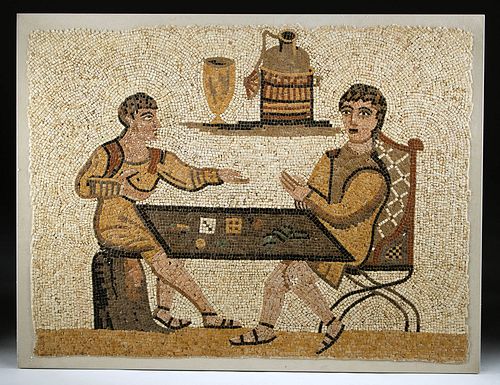
Roman housing was fundamentally shaped by social hierarchy, economic power, and urban structure, making location one of the clearest indicators of status in Roman society. In cities such as Rome, where population density was extremely high, residential areas developed according to wealth distribution, access to resources, and proximity to political and economic centers. The result was a highly stratified urban landscape, where elite citizens and the lower classes lived in dramatically different conditions, often within the same city but separated by quality, safety, and comfort.
Wealthy Romans resided in domus, private houses typically located in desirable and relatively quiet districts. These areas were often situated near important political buildings, forums, or elevated terrain, which provided both prestige and practical advantages such as better air circulation and reduced risk of flooding. Living close to the center of power allowed elite families to maintain direct involvement in political, economic, and social activities, reinforcing their influence and authority. The placement of these homes also reflected the Roman emphasis on visibility and reputation, as a well-located house contributed to the public image of its owner.
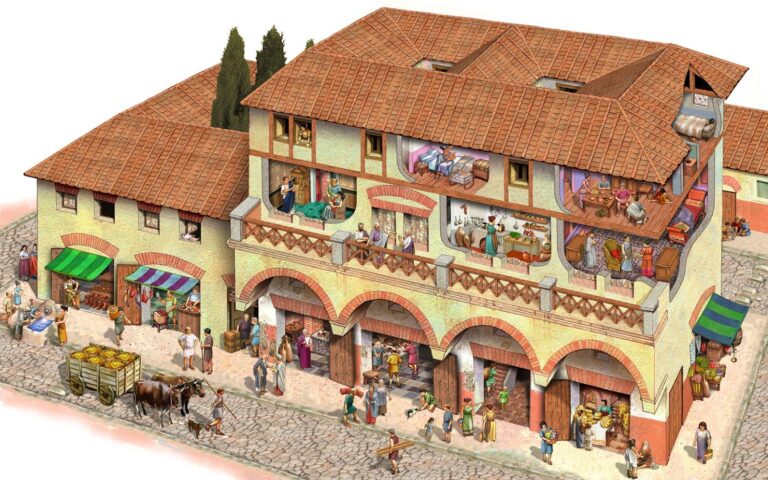
In contrast, the majority of the population lived in insulae, multi-story apartment buildings concentrated in crowded urban zones. These areas were characterized by noise, congestion, and poor living conditions, with narrow streets, limited sunlight, and inadequate infrastructure. Insulae were often built quickly and cheaply to accommodate the growing population, leading to structural instability and frequent hazards such as fires and collapses. The higher floors, which were less desirable due to lack of water access and increased risk, were typically occupied by the poorest residents, while lower floors were reserved for shops or wealthier tenants.
Access to essential resources played a major role in determining residential location. Wealthy households often had direct access to water systems, either through private connections to aqueducts or proximity to reliable sources, allowing for greater comfort and hygiene. Poorer residents depended on public fountains and shared facilities, which could be overcrowded and unreliable. Similarly, proximity to roads and markets influenced daily life: living near major roads facilitated trade and communication but also exposed residents to noise, pollution, and constant movement.
Location also had strategic and practical implications beyond comfort. In times of unrest or disaster, those living in well-built domus had greater security, while insulae residents faced higher risks due to structural weaknesses and limited escape routes. This disparity highlights how Roman housing was not merely about shelter but about control, safety, and social identity.
Ultimately, the distribution of housing in Roman cities reflected a broader system of inequality, where architecture reinforced social divisions. The contrast between spacious, well-equipped domus and crowded, hazardous insulae illustrates how economic status determined quality of life, access to resources, and even personal safety. Roman housing location was therefore not accidental but a direct expression of the empire’s social structure, urban planning, and hierarchical organization.
Key Ideas
- Housing location reflected social hierarchy and economic status
- Wealthy lived in domus in prestigious, central areas
- Majority lived in insulae with poor and unsafe conditions
- Access to water, roads, and markets influenced placement
- Urban density caused congestion, noise, and hazards
- Housing reinforced inequality, safety differences, and social identity
2. The Domus: Layout and Architectural Design
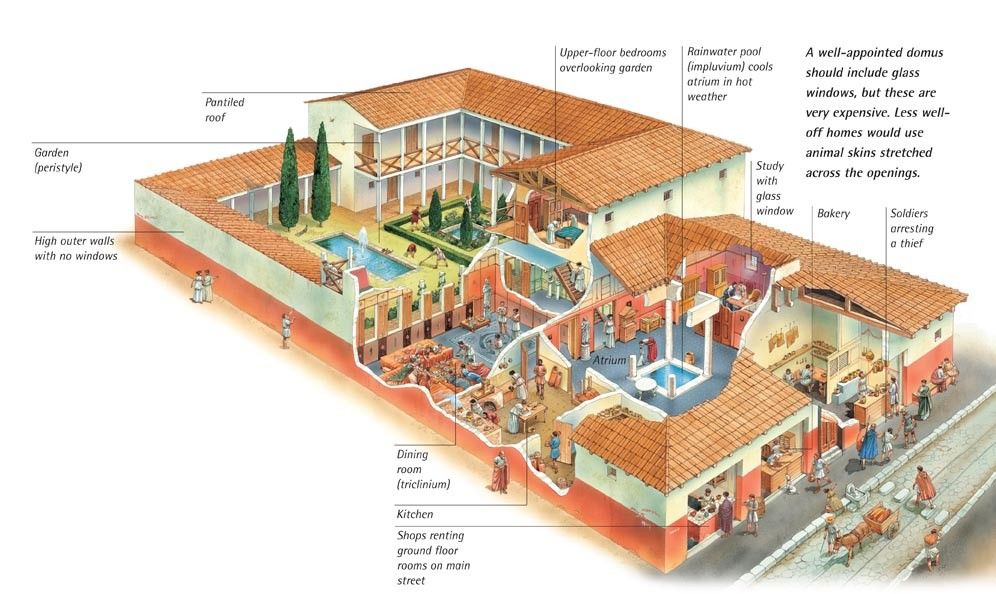
The domus was the primary form of housing for wealthy Roman citizens, designed to reflect status, authority, and social function while also providing a controlled and organized living environment. Unlike modern houses, the domus followed a strict architectural plan, where every space had a defined purpose, both practical and symbolic. Its layout was not only about comfort but also about reinforcing the social hierarchy within the household and the public image of the owner.
At the center of the domus was the atrium, the most important and recognizable feature of the house. This large open hall served as the main reception area, where guests were welcomed and daily activities took place. The atrium included a roof opening called the compluvium, which allowed rainwater to fall into a basin below known as the impluvium. This system provided both natural lighting and a practical method of water collection. The atrium was often decorated with statues, paintings, and family heirlooms, emphasizing the wealth and lineage of the household.
Beyond the atrium lay the tablinum, which functioned as the office of the paterfamilias, the head of the household. This space was used for managing business affairs, receiving clients, and displaying important documents or records. Its central placement allowed the owner to maintain control over both the household and external interactions, reinforcing authority and status. The tablinum also acted as a transitional space between the public and private areas of the house.
Further into the domus, many houses included a peristyle garden, an open courtyard surrounded by columns. This area provided light, ventilation, and a space for leisure, often featuring plants, fountains, and decorative elements. The peristyle represented a shift from the more formal front of the house to a private, आराम environment for family life. Surrounding the peristyle were additional rooms such as dining areas (triclinia), bedrooms (cubicula), and kitchens, all arranged to maximize functionality and comfort.
The design of the domus carefully controlled movement and visibility. Guests entering the house would pass through the atrium and possibly the tablinum, seeing only the most impressive and curated spaces. Private areas were located further inside, ensuring that the family’s daily life remained hidden from public view. This separation between public and private spaces was a key aspect of Roman architecture, reflecting cultural values related to status, privacy, and social interaction.
Construction materials and decoration further emphasized the importance of the domus. Wealthy homeowners used stone, marble, frescoes, and mosaics to create visually striking interiors. Floors were often covered with intricate mosaic patterns, while walls displayed painted scenes of mythology, nature, or architecture. These decorative elements were not merely aesthetic but served to communicate the owner’s wealth, education, and cultural sophistication.
In summary, the domus was far more than a residence; it was a carefully designed structure that combined architecture, social function, and symbolism. Its standardized yet flexible layout allowed for efficient daily living while reinforcing the authority of the household head and the status of the family. Through its organization, decoration, and spatial hierarchy, the domus embodied the values of Roman society, making it a central element in understanding Roman urban life and social structure.
Key Ideas
- Domus designed for wealthy Roman citizens and elite families
- Central atrium with compluvium and impluvium for light and water
- Tablinum served as administrative and social control space
- Peristyle garden provided private leisure and ventilation
- Layout controlled movement, visibility, and privacy
- Decoration with mosaics and frescoes reflected wealth and culture
- Domus combined function, status, and architectural planning
3. Insulae: Apartment Living in Roman Cities
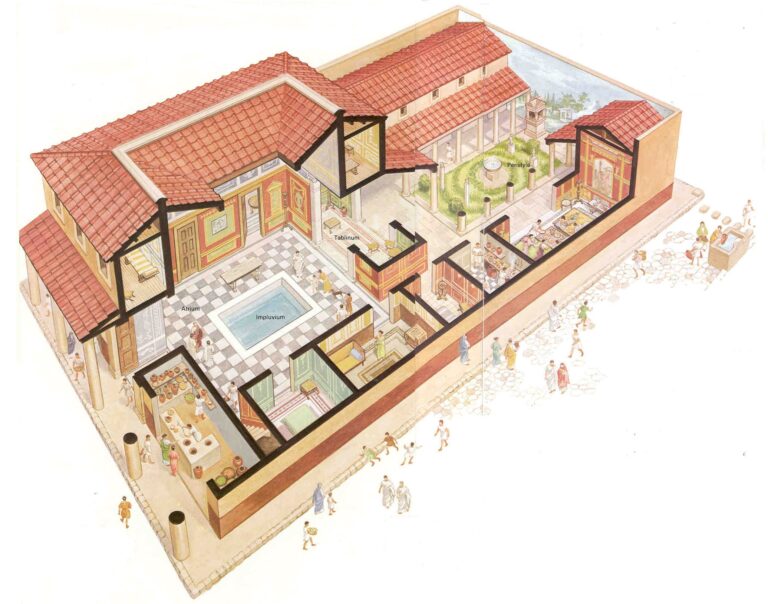
The insulae were the most common form of housing in Roman cities, accommodating the majority of the population and defining the reality of urban life for lower and middle classes. Unlike the spacious and carefully designed domus, insulae were multi-story apartment buildings constructed to maximize space in densely populated areas. As Rome and other major cities grew rapidly, the demand for housing increased significantly, leading to the widespread construction of these buildings, often with limited regulation and varying quality.
Insulae typically ranged from three to six stories, although some could be even taller despite legal limits imposed to reduce the risk of collapse. The ground floor was usually occupied by shops and businesses (tabernae), which opened directly onto the street and contributed to the economic activity of the area. The upper floors were reserved for residential units, with conditions deteriorating as height increased. Lower-level apartments were more expensive and better constructed, often housing wealthier tenants, while the upper levels were occupied by poorer residents who endured smaller spaces, weaker structures, and limited access to resources.
Construction materials played a significant role in the safety and durability of insulae. While some buildings used brick and Roman concrete, many relied heavily on wood and cheaper materials, making them vulnerable to fires and structural collapse. Poor construction practices, combined with overcrowding, created dangerous living conditions. Fires were particularly frequent due to the use of open flames for cooking, heating, and lighting, and once ignited, they could spread rapidly through tightly packed buildings and narrow streets. Collapses were also a serious risk, as poorly built foundations and excessive height compromised structural integrity.
Access to essential services within insulae was limited. Unlike domus, most apartments did not have running water or private sanitation facilities. Residents relied on public fountains for water and public latrines for sanitation, which were often crowded and unsanitary. Carrying water to upper floors was physically demanding, making daily life more difficult for those living higher up. Ventilation and lighting were also inadequate, as windows were small or absent, and interior spaces could become dark, smoky, and poorly ventilated.
Despite these challenges, insulae were essential to the functioning of Roman cities. They allowed large populations to live close to workplaces, markets, and infrastructure, supporting economic activity and urban development. The presence of shops on the ground floor created mixed-use spaces, where commerce and daily life were closely interconnected. This integration of living and working environments contributed to the vibrancy of Roman urban centers, even if it came at the cost of comfort and safety for many residents.
The existence of insulae highlights the sharp social inequalities within Roman society. While the elite enjoyed spacious, well-equipped homes, the majority of citizens lived in crowded and often hazardous conditions. This contrast illustrates how architecture in Rome was not only a matter of design but also a reflection of economic disparity, population pressure, and urban challenges. Insulae were therefore a critical element of Roman housing, revealing both the strengths and limitations of Roman urban planning.
Key Ideas
- Insulae were multi-story apartment buildings housing most Romans
- Ground floors used for shops (tabernae), upper floors for housing
- Higher floors had worse conditions and poorer tenants
- Poor construction led to fires and collapses
- Limited access to water, sanitation, and ventilation
- Essential for urban density and economic activity
- Reflect social inequality and challenges of Roman cities
4. Building Materials and Construction Techniques
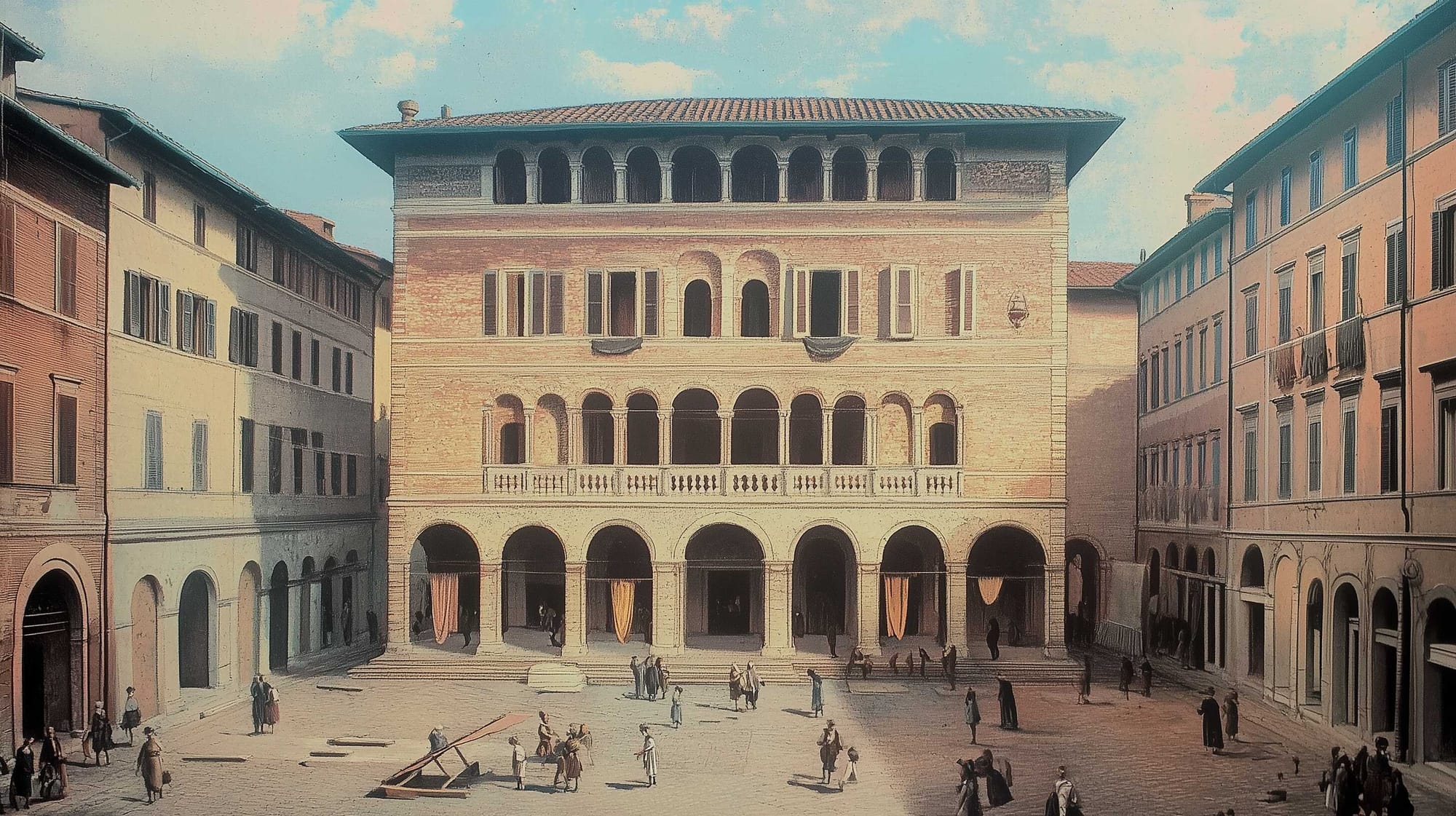
The construction of Roman houses relied on a combination of advanced engineering knowledge, practical techniques, and locally available materials, allowing builders to create structures that ranged from simple and temporary to highly durable and complex. The choice of materials and methods was closely tied to social status, location, and intended function, resulting in significant differences between elite homes such as the domus and mass housing like insulae. Despite these differences, Roman construction techniques demonstrated a consistent emphasis on efficiency, strength, and adaptability, which contributed to the long-term success of Roman urban development.
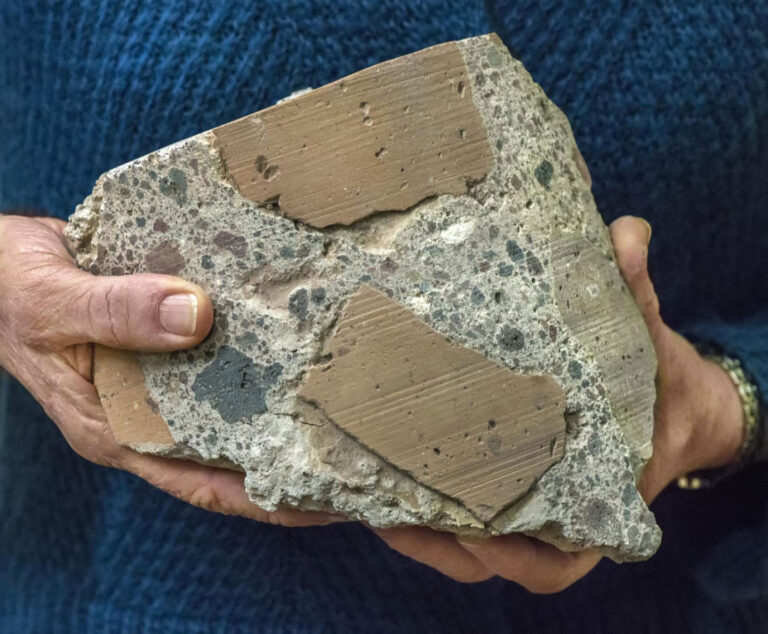
One of the most important innovations in Roman construction was the use of concrete (opus caementicium). This material, made from lime mortar, water, and aggregates such as stones or volcanic ash, allowed Romans to build strong, durable, and versatile structures. Unlike traditional stone construction, concrete could be poured into molds, enabling the creation of complex shapes and large surfaces. This made it particularly useful for walls, foundations, and multi-story buildings. Concrete was often combined with brick or stone facing, which improved both the structural integrity and the visual appearance of buildings.
Stone was widely used in the construction of wealthier homes, particularly for foundations, walls, and decorative elements. Materials such as limestone, tufa, and marble were chosen based on availability and cost. Marble, being expensive and prestigious, was primarily used for decoration in elite houses, reinforcing the status and wealth of the owner. In contrast, insulae often relied more heavily on brick and concrete, sometimes with lower-quality materials that compromised long-term stability. Wood was also used extensively, especially for floors, roofs, and internal frameworks, but it increased the risk of fire, particularly in densely populated urban areas.
Roman builders employed a variety of construction techniques to ensure stability and efficiency. Walls were often constructed using methods such as opus incertum, opus reticulatum, and opus latericium, each representing different arrangements of stone or brick within a concrete core. These techniques allowed for flexibility in design while maintaining structural strength. Roofs were typically covered with terracotta tiles, which were durable and relatively fire-resistant compared to wooden coverings. Floors varied depending on wealth, ranging from simple packed earth to elaborate mosaic surfaces in elite homes.
Engineers paid close attention to foundations and load distribution, particularly in multi-story buildings like insulae. Strong foundations were essential to support the weight of upper floors, but in many cases, especially in rapidly constructed housing, these principles were not always followed, leading to structural weaknesses. Ventilation and drainage were also important considerations. Builders incorporated courtyards, windows, and drainage systems to improve air circulation and prevent water accumulation, which could damage structures over time.
Construction practices differed significantly between domus and insulae. Wealthy homeowners invested in high-quality materials and skilled labor, ensuring durability, comfort, and aesthetic appeal. Insulae, on the other hand, were often built quickly to meet housing demand, leading to cost-cutting measures and reduced safety standards. This disparity highlights how construction techniques were influenced not only by engineering knowledge but also by economic priorities and social inequality.
Overall, Roman building materials and techniques represent a combination of innovation, practicality, and adaptation to urban needs. The use of concrete, advanced wall construction methods, and durable roofing materials allowed Romans to create structures that could withstand time and environmental challenges. At the same time, variations in quality and execution reveal the limitations of rapid urban expansion and the impact of social class on architectural standards. These construction practices formed the foundation of Roman housing, enabling cities to grow and function while reflecting the broader dynamics of Roman society.
Key Ideas
- Use of concrete (opus caementicium) enabled strong and versatile construction
- Materials included stone, brick, wood, and marble depending on wealth
- Techniques like opus incertum and opus reticulatum ensured structural strength
- Roofs made of terracotta tiles improved durability and fire resistance
- Engineers considered foundations, ventilation, and drainage
- Domus used high-quality materials, insulae often poorly built
- Construction reflected innovation, efficiency, and social inequality
5. Interior Spaces and Daily Functionality in Roman Houses
Roman houses were not only defined by their exterior structure but also by the carefully organized interior spaces, which were designed to support daily life, social interaction, and household management. The arrangement of rooms inside both the domus and the insulae reflected a combination of practicality, social hierarchy, and cultural values. Each space had a specific purpose, and the internal layout was often structured to control movement, privacy, and access, particularly in elite households where public and private life were strictly separated.
In the domus, interior spaces were organized around a central architectural axis that guided both residents and visitors through the house. The most important public-facing area was the atrium, which functioned as a reception hall and social space. From there, access to other rooms was carefully controlled. The tablinum, located behind the atrium, acted as a semi-public office where the head of the household conducted business, received clients, and managed family records. This room was a critical transition point between public and private areas, emphasizing the authority of the paterfamilias and the importance of social hierarchy within the household.
Beyond the tablinum, the interior became increasingly private. One of the most significant private areas was the peristyle, an open courtyard surrounded by columns that provided light, air, and a sense of openness within the house. Around the peristyle were rooms such as cubicula (bedrooms), triclinia (dining rooms), and private studies. The triclinium, in particular, played an important role in Roman social life, as dining was a highly structured activity involving reclining on couches and engaging in conversation, business, or political discussion. The design of these rooms emphasized comfort and display, often decorated with mosaics, frescoes, and imported materials to reflect wealth and cultural sophistication.
Domestic functionality in the domus extended beyond living and entertainment. Many houses included kitchens (culinae), storage rooms, and servant quarters, although these areas were often small and located away from main reception spaces. Kitchens were typically simple and utilitarian, equipped with open hearths or basic ovens. Water management systems, including lead pipes or clay conduits, sometimes supplied fountains or basins within the house, improving convenience for wealthy households. Lighting was provided by oil lamps, while ventilation relied on open courtyards and strategically placed windows.
In contrast, the interior spaces of insulae were far more limited and functional. Apartments were typically small, with one or two rooms serving multiple purposes such as sleeping, cooking, and storage. There was little separation between public and private life within these spaces, and overcrowding was common. Residents often shared facilities such as kitchens, water sources, and latrines, which were located outside the individual units. The lack of space and infrastructure meant that daily life in insulae was practical but often uncomfortable, with limited privacy and poor environmental conditions.
Despite these limitations, both domus and insulae were designed to support the essential functions of Roman daily life: rest, food preparation, social interaction, and work. In elite homes, interior design emphasized hierarchy and controlled access, reinforcing social status and authority. In lower-class housing, efficiency and density were prioritized over comfort or privacy.
The interior organization of Roman houses also reflects broader cultural values, particularly the importance of order, hierarchy, and social identity. In the domus, space was carefully structured to display wealth and manage relationships with clients and guests. In insulae, space was shaped by necessity, reflecting the realities of urban population density and economic constraints.
Ultimately, interior spaces in Roman houses reveal how architecture shaped everyday life. Whether in the grand halls of a domus or the compact rooms of an insula, the design of interior environments determined how Romans lived, interacted, and organized their daily routines, making housing a direct reflection of social structure and urban life in ancient Rome.
Key Ideas
- Domus interior centered on atrium, tablinum, and peristyle
- Rooms had specific functions: triclinium, cubicula, culina
- Design controlled movement, privacy, and social hierarchy
- Elite homes emphasized luxury, decoration, and social display
- Insulae interiors were small, multifunctional, and overcrowded
- Shared facilities were common in lower-class housing
- Interior structure reflects Roman social organization and daily life
6. Water, Heating, and Domestic Infrastructure in Roman Houses
Roman domestic life was strongly influenced by the presence—or absence—of water supply systems, heating methods, and basic infrastructure, which varied dramatically depending on social class and housing type. The contrast between elite domus and ordinary insulae is especially clear in this area, as wealthy households could access advanced conveniences while most urban residents relied on public systems and manual labor for basic needs. These differences highlight how Roman housing was not only architectural but also deeply connected to engineering, urban planning, and social inequality.
In wealthy domus, water access was often integrated directly into the home through a combination of private plumbing connections, cisterns, and fountains. Some elite houses were connected to the city’s aqueduct system via lead pipes, allowing a controlled flow of water into courtyards, gardens, and interior basins. The impluvium in the atrium also played a role in water collection, gathering rainwater that could be stored in underground cisterns for later use. This system provided a reliable source of water for drinking, cleaning, cooking, and decorative features such as fountains, which were common in peristyle gardens. Water management was therefore both practical and symbolic, as flowing water demonstrated wealth, refinement, and access to advanced infrastructure.
In contrast, residents of insulae had no private water systems. They depended entirely on public fountains and wells, often located at street level and shared by large populations. This meant that water collection was a daily task requiring time and physical effort, particularly for those living on higher floors of apartment buildings. Water had to be carried manually up staircases, which were often narrow and poorly maintained. The lack of direct access to water significantly affected hygiene, cooking, and overall living conditions, reinforcing the divide between social classes in Roman cities.
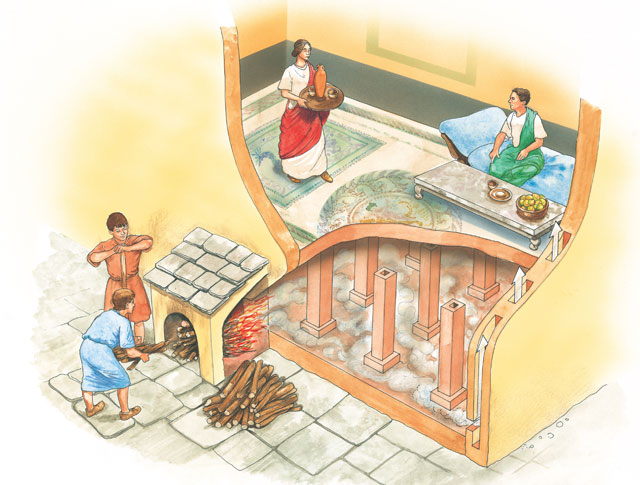
Heating systems also varied greatly. In elite domus, some rooms were equipped with hypocaust systems, an advanced form of underfloor heating that circulated warm air from a furnace (praefurnium) beneath raised floors. This system allowed certain rooms, such as baths or winter dining rooms, to maintain comfortable temperatures even in colder months. Wealthy households could also use portable braziers for additional heating. However, even in domus, heating was often limited to specific areas due to the high cost of fuel and maintenance.
In insulae, heating was far more basic and dangerous. Residents typically relied on open fires, braziers, or small stoves for warmth and cooking. These methods were inefficient and posed a significant fire risk, especially in densely packed wooden structures. Because ventilation was poor and rooms were small, smoke often accumulated indoors, creating unhealthy living conditions. The combination of fire hazards and poor air quality made heating one of the most dangerous aspects of life in Roman apartment buildings.
Sanitation and drainage systems were also crucial elements of domestic infrastructure. Wealthy homes sometimes had private latrines connected to sewer systems, such as the Cloaca Maxima in Rome, although these were not universal. Wastewater from kitchens and baths could be directed into drainage channels, improving hygiene and reducing contamination. In insulae, however, sanitation was largely communal. Residents used public latrines, which were shared, crowded, and often poorly maintained. Waste disposal in apartment buildings was inconsistent, contributing to unsanitary conditions in many urban districts.
Lighting was another important aspect of domestic infrastructure. Both domus and insulae relied primarily on oil lamps, but wealthy households could afford more lamps and better-quality fuel, improving visibility and safety within the home. In contrast, poorer households often struggled with limited lighting, especially in upper-floor apartments where natural light was scarce.
Overall, water, heating, and infrastructure in Roman houses reveal a clear divide between elite comfort and urban hardship. While the Romans developed advanced engineering solutions such as aqueducts and hypocaust systems, access to these innovations was uneven. Wealth determined whether a household enjoyed convenience and efficiency or endured daily labor and environmental challenges. These systems demonstrate how Roman domestic life was shaped not only by architecture but also by technology, resource distribution, and social inequality.
Key Ideas
- Wealthy domus had aqueduct connections, cisterns, and fountains
- Insulae relied on public fountains and manual water transport
- Hypocaust systems provided advanced heating in elite homes
- Insulae used braziers and open fires, creating fire risks
- Sanitation ranged from private latrines to shared public facilities
- Lighting depended on oil lamps, with disparities in quality and quantity
- Domestic infrastructure reflects Roman engineering and social inequality
7. Decoration, Art, and Symbolism in Roman Domestic Spaces
Roman houses were not only functional living spaces but also carefully curated environments designed to express wealth, identity, cultural values, and social ambition. Decoration played a central role in both elite domus and, to a lesser extent, insulae, although the scale, quality, and symbolic meaning of artistic elements varied significantly depending on social class. In elite households, interior decoration was an essential tool for displaying status and reinforcing authority, transforming the home into a controlled space of visual communication and cultural representation.
One of the most prominent forms of decoration in Roman houses was wall painting (frescoes). In wealthy domus, walls were often covered with elaborate fresco cycles depicting mythological scenes, landscapes, architectural illusions, and daily life imagery. These paintings were not purely decorative; they served as a reflection of the owner’s education, cultural sophistication, and familiarity with Greek and Roman mythology. Certain styles, such as the Second and Third Pompeian Styles, created illusionistic effects, making rooms appear larger and more architecturally complex than they actually were. This visual manipulation of space reinforced the idea of wealth and control over the environment.
Another major decorative element was the use of mosaics, particularly on floors. Mosaics were constructed from small colored stone or glass pieces arranged into detailed patterns or scenes. Common themes included geometric designs, mythological figures, marine life, and scenes of hunting or daily activities. In elite homes, mosaics often served as focal points in reception rooms or dining areas, where guests would immediately notice and interpret them as signs of refinement and prosperity. The durability of mosaics also meant that they were a long-term investment, further emphasizing the permanence of wealth.
Sculpture and three-dimensional decoration were also important in Roman domestic spaces. Wealthy households frequently displayed statues of gods, ancestors, or historical figures in atriums, gardens, and peristyles. These statues reinforced religious devotion, family lineage, and political connections. The display of ancestral masks (imagines) in the atrium was particularly significant, as it linked the household to its genealogical heritage and social prestige. Gardens often included decorative fountains, marble columns, and imported statues, creating a controlled natural environment that reflected both luxury and cultural influence.
Symbolism in Roman domestic decoration was highly intentional. Many artistic elements were designed to communicate moral values, civic identity, and personal achievement. Mythological scenes could represent virtues such as courage, wisdom, or loyalty, while depictions of nature symbolized harmony and prosperity. Even architectural illusions painted on walls conveyed messages of abundance and expansion, suggesting that the household extended beyond its physical boundaries. Decoration was therefore a form of visual language, understood by visitors and clients who entered the home.
In contrast, decoration in insulae was minimal or nonexistent. Due to limited space, economic constraints, and the temporary nature of many apartment structures, residents rarely had access to frescoes, mosaics, or sculptures. Walls were typically plain plaster or rough brick, and floors were simple and functional. Any decorative elements were usually small personal objects rather than integrated architectural art. This lack of decoration further emphasized the social and economic divide between elite and lower-class housing.
Despite these differences, even modest Roman households could incorporate small symbolic items such as oil lamps, painted pottery, or household shrines (lararia) dedicated to protective deities. These shrines often contained small statues or paintings of household gods, reflecting the importance of religion in daily domestic life across all social classes.
Ultimately, decoration, art, and symbolism in Roman houses reveal that domestic spaces were far more than places of residence. They were carefully constructed environments that communicated identity, power, belief systems, and cultural belonging. In elite homes, every visual element was part of a broader strategy of self-representation, while in lower-class housing, simplicity reflected economic reality. Together, they demonstrate how Roman domestic architecture functioned as both physical shelter and cultural expression, deeply embedded in the values of Roman society.
Key Ideas
- Frescoes depicted mythology, landscapes, and architectural illusions
- Mosaics used in floors to show wealth, culture, and permanence
- Statues represented gods, ancestors, and political identity
- Decoration functioned as visual communication of status and values
- Gardens and atriums reinforced luxury and controlled nature
- Insulae had minimal decoration due to cost and space limits
- Even simple homes included small religious shrines (lararia)
- Domestic art reflected social hierarchy, identity, and Roman ideology