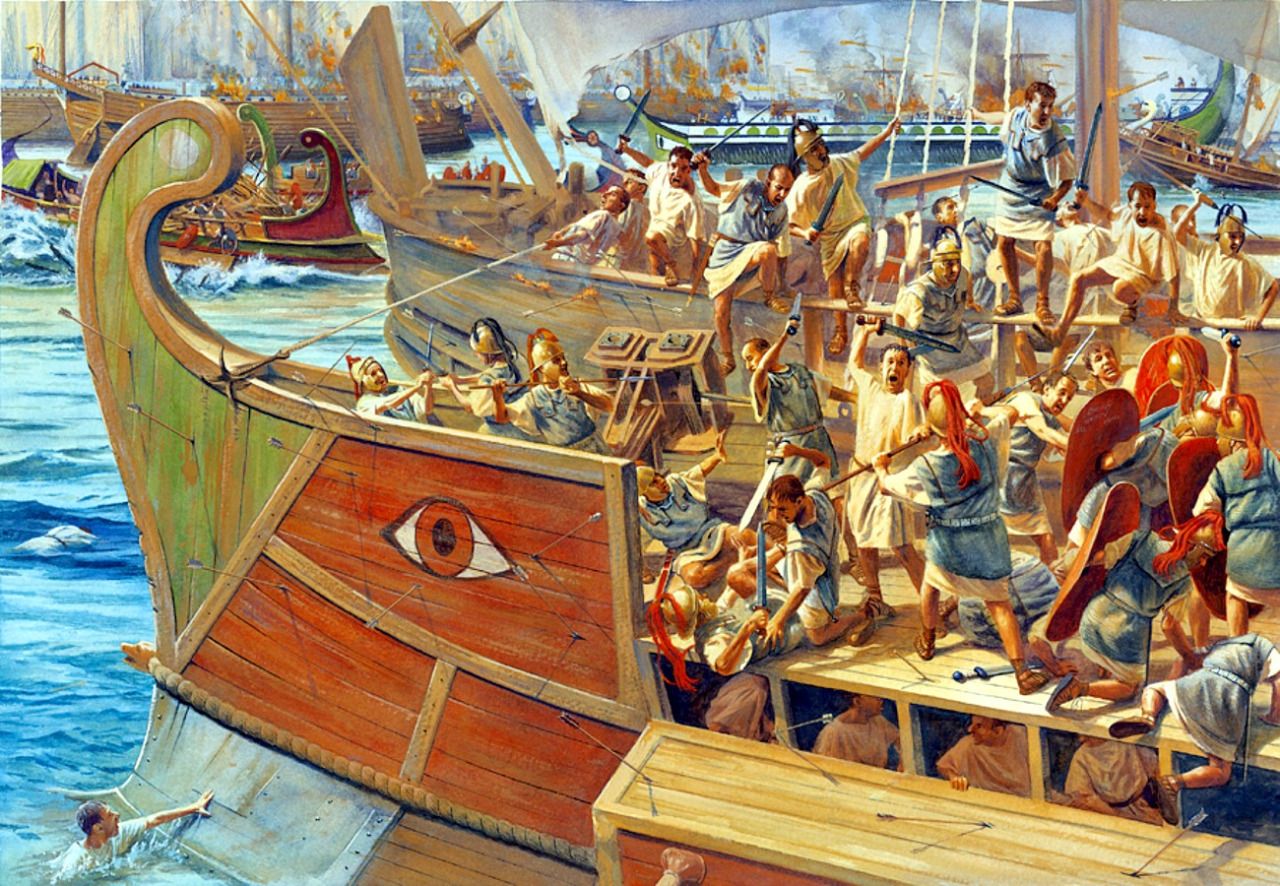
1. Background of the Conflict: Power Struggle After Caesar’s Death
The rivalry between Octavian (later known as Augustus) and Mark Antony began after the assassination of Julius Caesar in 44 BCE, an event that plunged the Roman Republic into severe political instability. Caesar’s death did not restore the authority of the Senate as his assassins intended. Instead, it created a power vacuum, where no single leader had enough control to stabilise the state, and multiple factions immediately began competing for dominance. Rome was effectively left without clear leadership, and civil conflict became increasingly likely.
At the centre of this struggle were two of Caesar’s most important supporters. Mark Antony was an experienced general, politically established, and deeply connected to Caesar’s veterans and allies. He initially appeared to be the strongest candidate to take control of Caesar’s legacy. Octavian, however, was only eighteen years old and lacked military experience or political authority at the time. Despite this, he had one crucial advantage: he was Caesar’s legally adopted son and designated heir, giving him official legitimacy in Roman law and a powerful symbolic connection to Caesar’s name.
Octavian quickly understood that survival in Roman politics required more than inheritance alone. He began building his position carefully by appealing directly to Caesar’s veterans, using his adopted father’s name to attract loyalty. He also distributed money from Caesar’s estate to gain political and military support, demonstrating an early understanding that Roman power depended heavily on both army loyalty and public influence. Although inexperienced, Octavian showed remarkable political awareness and long-term strategic thinking, which allowed him to compete with far more established figures like Antony.
At first, the two men did not immediately become enemies because they shared a common goal: defeating Caesar’s assassins. This temporary alignment led to the creation of the Second Triumvirate in 43 BCE, an official alliance between Octavian, Antony, and Lepidus. Unlike traditional Roman political arrangements, the Triumvirate was granted extraordinary legal powers, allowing its members to bypass the Senate and rule directly. It effectively replaced republican governance with a temporary system of military dictatorship shared between the three leaders.
One of their first major actions was the implementation of proscriptions, a brutal political process in which enemies were declared outlaws, their property confiscated, and many executed. This allowed the Triumvirs to eliminate opposition while also funding their armies. Together, they defeated the forces of Caesar’s assassins at the Battle of Philippi in 42 BCE, securing control over Rome’s territories and temporarily stabilising the political situation.
However, this victory removed the need for cooperation. With their shared enemies gone, the alliance began to weaken rapidly. The Roman world was divided into spheres of influence: Antony controlled the eastern provinces, Octavian governed the west, and Lepidus was given Africa. This geographical division created separate power bases, increasing rivalry and reducing trust between the leaders. Over time, Lepidus was pushed aside, leaving Octavian and Antony as the two dominant figures in Roman politics.
Their relationship continued to deteriorate due to differences in strategy, ambition, and political direction. Antony focused on the eastern Mediterranean and formed a close alliance with Cleopatra of Egypt, while Octavian remained in Rome, strengthening his political influence and carefully shaping public opinion. These differences set the stage for a growing conflict that would eventually lead to civil war and determine the future of Rome.
Key Ideas
- Caesar’s assassination created a power vacuum in Rome
- Antony initially stronger due to military experience and influence
- Octavian gained legitimacy as Caesar’s adopted heir
- Formation of the Second Triumvirate (Octavian, Antony, Lepidus)
- Use of proscriptions to eliminate enemies and raise funds
- Victory at Philippi ended immediate threats but not tensions
- Empire divided into east (Antony), west (Octavian), Africa (Lepidus)
- Lepidus removed, leaving Octavian vs Antony rivalry
- Antony’s alliance with Cleopatra increased tensions
- Octavian strengthened power through Rome-based political control
- Rivalry escalated into inevitable civil war


2. Octavian (Augustus): Political Intelligence and Strategic Control
Octavian, later known as Augustus, rose to power through a combination of political intelligence, careful planning, and long-term strategy, rather than relying primarily on battlefield glory. In contrast to many Roman leaders of his time, his strength was not immediate military dominance but his ability to understand how power actually worked in the late Roman Republic. He recognized early that controlling Rome required more than armies; it required influence over the Senate, the people, and public perception. This understanding became the foundation of his rivalry with Mark Antony.
At the beginning of his political career, Octavian faced serious disadvantages. He was young, inexperienced, and lacked the military reputation of established leaders such as Antony. However, he possessed one crucial advantage: his adoption by Julius Caesar, which made him Caesar’s legal heir. This gave him legitimacy in Roman law and strong symbolic value, especially among Caesar’s veterans, who still remained loyal to their former commander. Octavian used this connection effectively, presenting himself as the continuation of Caesar’s legacy.
To build support, Octavian acted decisively. He used Caesar’s inherited wealth to pay soldiers and secure loyalty, showing a clear understanding that Roman politics depended heavily on military backing and financial reward. He also positioned himself carefully in public life, gradually gaining recognition from both the Senate and the Roman population. Despite his youth, he demonstrated a strong ability to read political situations and act with patience rather than rushing into open confrontation.
One of Octavian’s most important strengths was his skill in image management and political presentation. While Antony was associated with military campaigns in the east, Octavian remained closer to Rome and the Senate, allowing him to shape how he was perceived. He presented himself as a defender of Roman tradition and stability, contrasting himself with Antony, who was increasingly linked to eastern influence and foreign alliances. This difference in location and behavior became a powerful political tool.
Octavian also understood the importance of alliances and key supporters. He worked closely with influential figures such as Marcus Agrippa, who became one of his most important military commanders. Agrippa’s role was essential in strengthening Octavian’s military position, even though Octavian himself was not a great battlefield commander. By surrounding himself with capable allies, Octavian ensured that his weaknesses were compensated for by strong leadership in other areas.
Another key element of his strategy was patience. Octavian did not immediately challenge Antony directly. Instead, he slowly built his position over time, consolidating power in the western provinces and strengthening his influence in Rome. He waited for the right moment to act, allowing Antony’s position to weaken due to his eastern focus and controversial alliance with Cleopatra.
Octavian also became highly effective in political messaging and propaganda. He carefully shaped public opinion in Rome, portraying Antony as a leader who was drifting away from Roman values. This narrative became increasingly important as tensions between the two men grew, allowing Octavian to gain broader support without relying solely on military confrontation.
Ultimately, Octavian’s rise was based on a combination of legitimacy, strategy, and control of perception. While he may not have initially appeared to be the strongest contender, his ability to understand and manipulate the political system allowed him to gradually outmaneuver his rival. His success demonstrates that in the late Republic, power depended not only on force but also on careful planning, alliances, and control of information.
Key Ideas
- Octavian relied on political strategy rather than battlefield reputation
- Gained legitimacy as Julius Caesar’s adopted heir
- Used inherited wealth to secure military loyalty and support
- Positioned himself close to Rome and the Senate for influence
- Presented Antony as influenced by foreign eastern powers
- Built strong alliances, especially with Marcus Agrippa
- Focused on patience and long-term planning
- Used propaganda and public image control effectively
- Strength came from strategy, legitimacy, and perception management
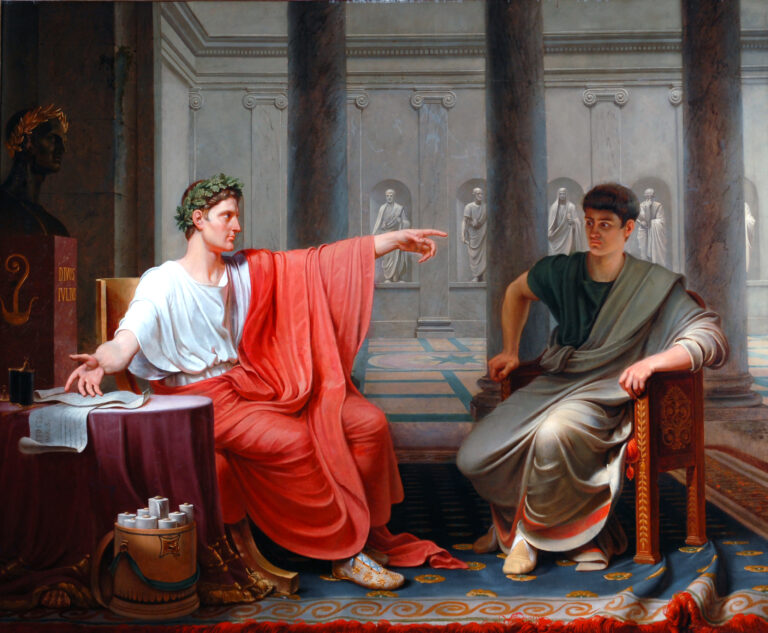
3. Mark Antony: Military Power, Eastern Rule, and Political Decline
Mark Antony was one of the most prominent figures of the late Roman Republic, known for his military ability, personal charisma, and close association with Julius Caesar. Unlike Octavian, whose power was built on political calculation and long-term planning, Antony’s strength lay primarily in his experience as a general and his direct connection to Caesar’s legacy. However, during his rivalry with Octavian, these strengths were gradually undermined by strategic missteps, political isolation, and controversial alliances, particularly in the eastern provinces.
Following the formation of the Second Triumvirate and the victory at Philippi, Antony took control of the eastern territories of the Roman world, including Greece, Asia Minor, and Egypt. This region was wealthy and strategically important, providing access to resources, trade routes, and military forces. Antony used this position to build a strong power base, organizing campaigns against external threats such as the Parthian Empire. His military background allowed him to maintain authority over his troops, and he continued to command respect as an experienced and capable leader.
However, Antony’s decision to base himself in the east had significant political consequences. By remaining distant from Rome, he weakened his influence over the Senate and the Roman population, allowing Octavian to dominate political life in the west. This geographical separation created a perception that Antony was disconnected from traditional Roman values, especially as he began to adopt aspects of eastern court culture. His lifestyle and political choices were increasingly viewed as incompatible with Roman expectations of leadership, which emphasized discipline, modesty, and loyalty to the state.
The most controversial aspect of Antony’s eastern rule was his relationship with Cleopatra VII of Egypt. Their alliance was both political and personal, as Cleopatra provided financial and military support for Antony’s campaigns. Together, they sought to strengthen their position in the eastern Mediterranean, but this partnership became a major weakness in Antony’s rivalry with Octavian. In Rome, Octavian portrayed Antony as being under the influence of a foreign queen, suggesting that his loyalty to Rome had been compromised. This narrative was reinforced by events such as the “Donations of Alexandria,” in which Antony granted territories to Cleopatra and their children, actions that were interpreted as a challenge to Roman authority.
Antony’s political decline was also linked to his failure to manage perception and propaganda. Unlike Octavian, who carefully controlled his public image, Antony did little to counter the negative portrayal of his actions in Rome. His absence from the political center allowed Octavian to shape the narrative, presenting himself as the defender of Roman tradition while depicting Antony as a threat to it. This imbalance in information and influence gradually shifted public opinion in favor of Octavian.
Militarily, Antony remained a capable commander, but his campaigns in the east, particularly against Parthia, were less successful than expected. These setbacks weakened his reputation and reduced the effectiveness of his forces. As tensions with Octavian escalated, Antony faced the challenge of maintaining loyalty among his troops while preparing for a decisive confrontation. His reliance on eastern resources and allies further reinforced the perception that he was no longer acting solely in Rome’s interest.
Ultimately, Antony’s decline was not the result of a single failure but a combination of strategic, political, and personal factors. His strengths as a general were overshadowed by his inability to maintain influence in Rome, manage public perception, and counter Octavian’s political strategies. The contrast between Antony’s eastern rule and Octavian’s control of the west created a narrative that favored Octavian, contributing significantly to the outcome of their rivalry.
In conclusion, Mark Antony’s role in the conflict illustrates how military power alone was insufficient in the late Republic. While he possessed the experience and resources to challenge Octavian, his political miscalculations and controversial alliances ultimately led to his decline. His career demonstrates the importance of balancing military strength with political strategy and public image, a balance that Octavian was able to achieve more effectively.
Key Ideas
- Antony known for military experience and connection to Caesar
- Controlled wealthy eastern provinces after Philippi
- Distance from Rome weakened political influence
- Alliance with Cleopatra damaged reputation in Rome
- Failed to counter Octavian’s propaganda
- Military setbacks reduced authority and momentum
- Decline caused by political isolation and strategic errors
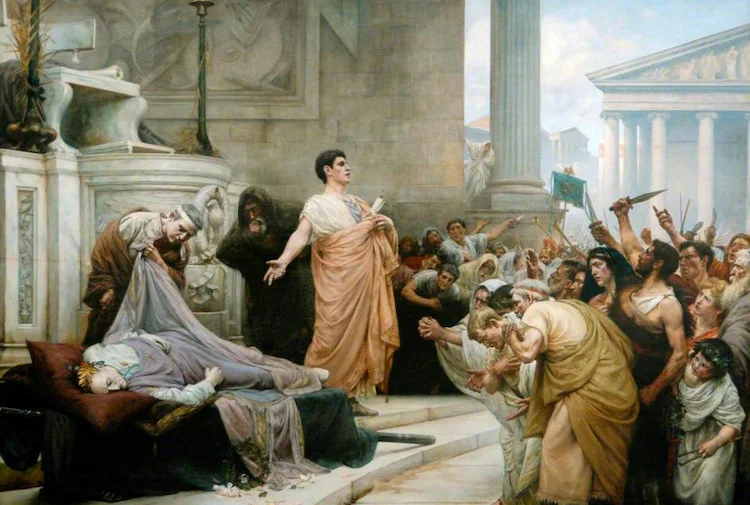
4. The Breakdown of the Second Triumvirate: From Alliance to Rivalry
The rivalry between Octavian and Mark Antony developed gradually from the collapse of the Second Triumvirate, an alliance that had originally been formed to stabilize Rome after the assassination of Julius Caesar. Established in 43 BCE between Octavian, Antony, and Lepidus, the Triumvirate was granted extraordinary legal authority, allowing its members to bypass traditional republican institutions and rule with near absolute power. While this arrangement temporarily unified Caesar’s supporters, it was inherently unstable, as it placed three ambitious leaders in positions of overlapping authority with conflicting interests and long-term goals.
In its early phase, the Triumvirate functioned effectively. The three leaders coordinated their efforts to eliminate opposition, most notably through the use of proscriptions, which targeted political enemies and allowed for the confiscation of wealth. This brutal process not only removed rivals but also funded their military campaigns. The Triumvirate achieved its primary objective with the victory at Philippi (42 BCE), where the forces of Caesar’s assassins were defeated. However, with the common enemy eliminated, the alliance began to weaken, as the need for cooperation diminished and competition for power intensified.
Following Philippi, the Roman world was divided into spheres of influence. Antony took control of the eastern provinces, Octavian governed the west, and Lepidus was assigned Africa. This division created a fragile balance, but it also introduced geographical and political separation, allowing each leader to develop independent power bases. Over time, this separation led to growing mistrust, as communication decreased and each leader prioritized strengthening his own position rather than maintaining unity.
The first major rupture in the Triumvirate came with the decline of Lepidus. Although initially an important member of the alliance, Lepidus lacked the influence and military strength of the other two. Octavian gradually undermined him, eventually removing him from power and forcing him into political isolation. This left Octavian and Antony as the sole dominant figures, effectively transforming the Triumvirate into a rivalry between two competing leaders rather than a cooperative government.
Tensions between Octavian and Antony continued to grow due to differences in strategy, leadership style, and priorities. Octavian focused on consolidating power in the west, maintaining strong connections with the Senate and the Roman people. Antony, on the other hand, concentrated on the east, pursuing military campaigns and forming alliances, most notably with Cleopatra. These differing approaches created contrasting public images: Octavian as the guardian of Roman tradition, and Antony as a leader increasingly associated with foreign influence and eastern practices.
Political conflict intensified as both leaders sought to undermine each other’s legitimacy. Octavian used propaganda and political maneuvering to portray Antony as a threat to Rome, emphasizing his relationship with Cleopatra and his absence from Italy. Antony, in turn, attempted to assert his authority through military strength and eastern alliances, but he struggled to counter Octavian’s influence within Rome itself. The breakdown of communication and trust between the two leaders made reconciliation increasingly unlikely.
The expiration of the Triumvirate’s legal authority further accelerated the conflict. Without the formal structure binding them together, Octavian and Antony were no longer obligated to cooperate, and their rivalry became open and unavoidable. Both began preparing for confrontation, gathering resources, securing alliances, and positioning their forces for what would become a decisive civil war.
Ultimately, the collapse of the Second Triumvirate illustrates how an alliance built on necessity can quickly dissolve when shared objectives are achieved and personal ambitions take precedence. The transition from cooperation to conflict between Octavian and Antony was driven by competition for power, differences in leadership, and the absence of a unifying threat. This breakdown set the stage for the final phase of their rivalry, in which the future of Rome would be determined through direct confrontation.
Key Ideas
- Second Triumvirate formed with extraordinary powers
- Initially united to defeat Caesar’s assassins
- Victory at Philippi removed common enemy
- Division of territories created separate power bases
- Lepidus removed, leaving Octavian vs Antony rivalry
- Growing tension due to different strategies and ambitions
- Collapse led to open conflict and civil war preparation
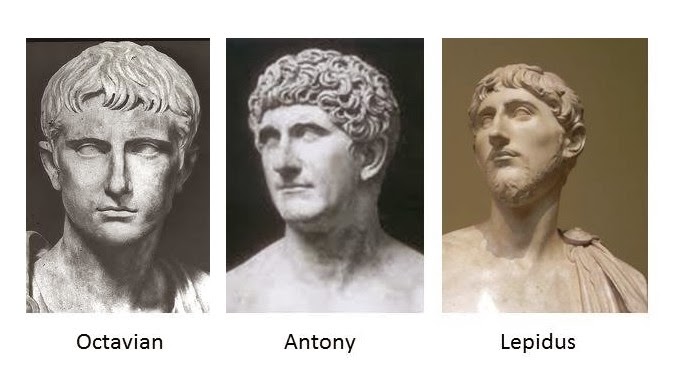
5. Propaganda and Ideological Warfare: Winning Rome Without Fighting
One of the most decisive aspects of the rivalry between Octavian and Mark Antony was not fought on the battlefield but in the realm of propaganda, public perception, and ideological control. Octavian understood that in the late Roman Republic, power depended not only on military strength but also on the ability to shape opinion in Rome, influence the Senate, and present a convincing narrative to the people. While Antony focused heavily on military and eastern affairs, Octavian waged a calculated campaign to undermine his rival’s reputation and legitimacy, effectively weakening him before the final confrontation even began.
At the center of this ideological conflict was the question of Roman identity and loyalty. Octavian carefully positioned himself as the defender of traditional Roman values—discipline, duty, and loyalty to the state. In contrast, he portrayed Antony as someone who had abandoned these principles, emphasizing his long absence from Rome and his increasing involvement in the eastern provinces. This contrast was not accidental; it was part of a deliberate effort to frame the conflict not as a civil war between two Roman leaders, but as a struggle between Rome and a foreign-influenced threat.
The most powerful element of Octavian’s propaganda was his exploitation of Antony’s relationship with Cleopatra VII. Cleopatra was depicted in Roman political discourse as a symbol of eastern luxury, excess, and foreign influence, qualities that were viewed negatively by many Romans. Octavian used this perception to suggest that Antony was no longer acting in Rome’s interest but was instead under the control of a foreign queen. This narrative was reinforced through speeches, public declarations, and political messaging, which consistently emphasized the idea that Antony had become “un-Roman” in both behavior and loyalty.
A key moment in this propaganda campaign was the publication of Antony’s will, which Octavian allegedly obtained and read before the Senate. The document reportedly included provisions that favored Cleopatra and their children, as well as requests that Antony be buried in Egypt. Whether entirely accurate or strategically exaggerated, this revelation had a profound impact on Roman opinion. It allowed Octavian to present Antony as someone who intended to shift power away from Rome, further justifying opposition to him. By turning private information into a public political weapon, Octavian demonstrated his skill in manipulating perception to achieve strategic goals.
Octavian’s control over Rome gave him a significant advantage in this ideological struggle. By remaining physically present in the west, he maintained direct influence over the Senate, the urban population, and key political institutions. This allowed him to control the flow of information, ensuring that his version of events dominated public discourse. Antony, in contrast, was largely absent from Rome and therefore unable to effectively respond to or counter these narratives. His reliance on eastern support further reinforced the image that Octavian was promoting, even if it did not fully reflect reality.
Another important aspect of Octavian’s strategy was his ability to redefine the nature of the conflict. Instead of declaring war directly on Antony, he framed the coming confrontation as a war against Cleopatra. This distinction was politically crucial, as it allowed Octavian to avoid the stigma of initiating another Roman civil war. By presenting the conflict as a defense of Rome against a foreign power, he gained broader support and legitimacy for his actions.
Ultimately, propaganda and ideological warfare played a central role in determining the outcome of the rivalry. Octavian’s ability to control narrative, exploit symbolism, and influence public opinion weakened Antony’s position long before the decisive battle at Actium. The conflict demonstrates that in the late Republic, victory depended not only on armies but also on perception, messaging, and political strategy. Octavian’s success in this domain ensured that when the final confrontation came, he held a decisive advantage not just militarily, but also in the eyes of Rome itself.
Key Ideas
- Rivalry involved propaganda and control of public perception
- Octavian portrayed himself as defender of Roman values
- Antony depicted as influenced by Cleopatra and the East
- Publication of Antony’s will damaged his reputation and legitimacy
- Octavian controlled information and political narrative in Rome
- War framed as Rome vs foreign threat, not civil war
- Propaganda gave Octavian a decisive strategic advantage
6. The Final Confrontation: Actium and the Rise of Augustus
The rivalry between Octavian and Mark Antony reached its decisive conclusion at the Battle of Actium (31 BCE), a naval engagement that determined the fate of the Roman world and marked the end of the Republic. This confrontation was not sudden but the result of years of political tension, military preparation, and ideological conflict, all culminating in a single decisive encounter. Actium demonstrated how strategy, leadership, and preparation could shape the outcome of a war that would redefine Roman governance.
The conflict leading up to Actium was carefully orchestrated by Octavian. Having secured political support in Rome and undermined Antony’s reputation through propaganda, he positioned himself as the legitimate defender of Roman interests. By formally declaring war on Cleopatra rather than Antony, Octavian avoided the appearance of starting a civil war, instead presenting the conflict as a defense of Rome against foreign influence. This allowed him to rally political and popular support, strengthening his position before the battle even began.
Militarily, Octavian relied heavily on his most capable general, Marcus Agrippa, whose leadership and experience played a crucial role in the campaign. Agrippa conducted a series of strategic operations that weakened Antony’s position, including the capture of key ports and the disruption of supply lines. These actions limited Antony’s ability to maneuver and forced him into a situation where a decisive battle became unavoidable. By the time the fleets met at Actium, Octavian’s forces were better positioned, better supplied, and more coordinated.
Antony and Cleopatra commanded a large and formidable fleet, but their situation was complicated by logistical difficulties, declining morale, and internal instability. Their forces were stationed in Greece, far from their main power base in Egypt, and they struggled to maintain supply lines and cohesion. While Antony remained an experienced commander, these factors limited his ability to fully use his military strength.
The battle itself was primarily a naval engagement, where maneuverability and coordination proved more important than size. Octavian’s fleet, under Agrippa’s command, consisted of smaller, more agile ships suited to the conditions. Antony’s larger ships, while powerful, were less flexible and harder to coordinate. As the battle progressed, Octavian’s forces were able to outmaneuver and weaken Antony’s fleet.
A decisive moment occurred when Cleopatra’s ships withdrew from the battle, followed by Antony, who chose to join her. This decision effectively ended any chance of recovery, as it left the remaining fleet without leadership. The result was clear: Octavian achieved a decisive victory, while Antony’s forces collapsed.
Following Actium, Octavian advanced into Egypt. Facing defeat, both Antony and Cleopatra died, ending their challenge. With no remaining rivals, Octavian became the dominant ruler of Rome. Instead of declaring himself king, he carefully reshaped the system, presenting his rule as a restoration of the Republic while holding ultimate authority, marking the beginning of the Roman Empire.
The consequences of Actium were enormous. The victory not only ended the rivalry but also marked the final collapse of the Roman Republic. Power became concentrated in one individual, leading to a new political system that ensured stability after years of civil war but fundamentally changed Roman governance.
In conclusion, the Battle of Actium was more than a military victory—it was the turning point that created the Roman Empire. Through strategy, leadership, and control of narrative, Octavian emerged as Augustus, the first emperor, shaping the future of Rome for centuries.
Key Ideas
- Battle of Actium (31 BCE) was the decisive final battle
- Octavian framed war as Rome vs foreign influence
- Marcus Agrippa played a key strategic role
- Antony weakened by logistics and morale issues
- Roman fleet had maneuverability advantage
- Cleopatra and Antony’s withdrawal caused collapse
- Led to rise of Augustus and end of the Republic