
1. The Rise of Pyrrhus of Epirus and His Ambition in the West
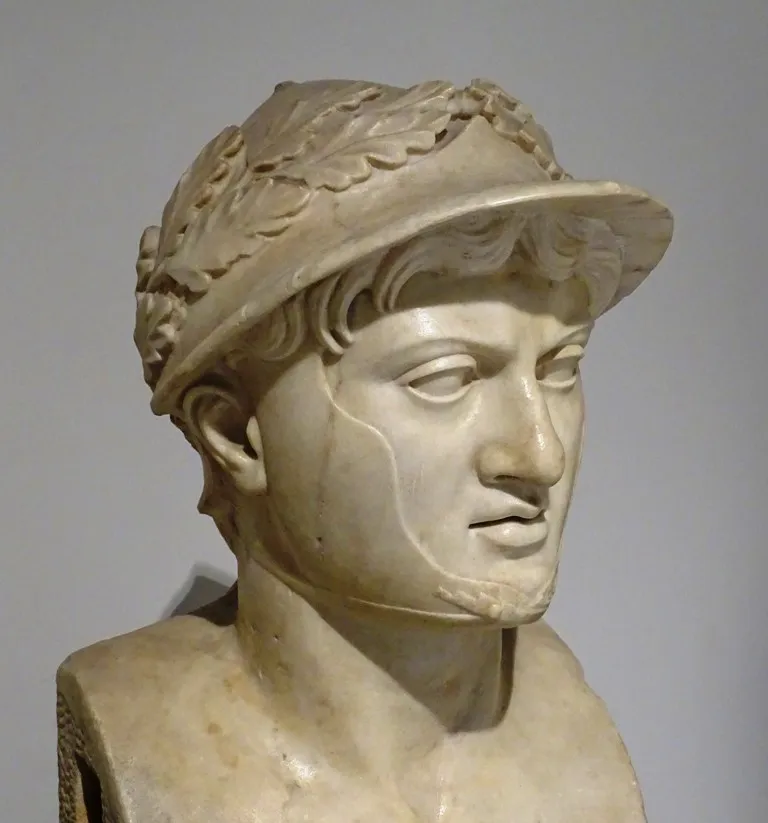
The rise of Pyrrhus of Epirus is one of the most fascinating stories of ambition in the Hellenistic world, a period defined by powerful successors to Alexander the Great competing for dominance. Born into the royal house of Epirus around 319 BCE, Pyrrhus grew up in a time of constant warfare, political instability, and shifting alliances. From an early age, his life was shaped by conflict. He was even briefly exiled as a child, only to later return and reclaim his throne. This early experience forged in him a resilient and determined character, as well as a deep understanding of power struggles.
Pyrrhus did not simply aim to rule Epirus; his ambitions were far greater. Inspired by the legacy of Alexander the Great, he sought to build a powerful kingdom that could rival the major Hellenistic states such as Macedon and the Seleucid Empire. He became known as one of the most capable generals of his time, admired even by his enemies. In fact, later Roman sources would describe him as one of the greatest commanders they had ever faced, highlighting his tactical brilliance and battlefield adaptability.
One of Pyrrhus’ key strengths was his ability to combine traditional Greek military tactics with innovations learned from the eastern kingdoms. His army was built around the phalanx formation, a dense line of heavily armed infantry equipped with long spears, supported by cavalry and light troops. However, what truly set him apart—and what would shock the Romans—was his use of war elephants. These massive animals, originally introduced into warfare by eastern armies, were used by Pyrrhus as psychological and physical weapons, capable of breaking enemy formations and causing chaos on the battlefield.
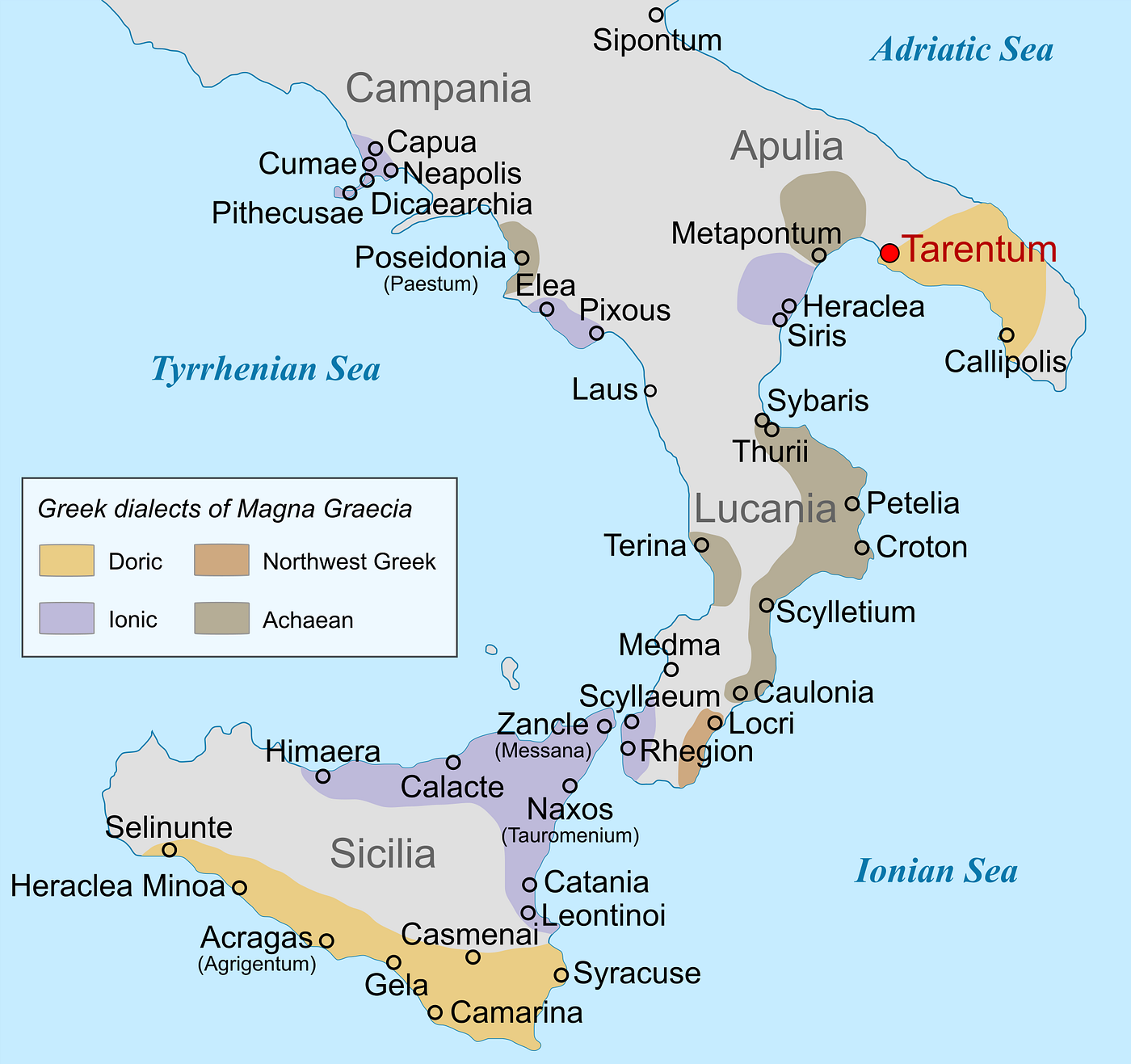
Despite his abilities, Pyrrhus faced a major challenge: Epirus was a relatively small and resource-limited kingdom. To achieve greatness, he needed to expand beyond his homeland. This led him to look westward, toward Italy, where Greek cities such as Tarentum were under increasing pressure from the expanding power of Rome. These cities, culturally Greek but politically vulnerable, represented both an opportunity and a justification for intervention.
When Tarentum called for aid against Rome, Pyrrhus saw far more than a defensive war—he saw a chance to establish himself as a major force in the western Mediterranean. By intervening in Italy, he could potentially create a new power base, challenge Roman expansion, and perhaps even replicate the kind of empire-building success that Alexander had achieved in the east. This was not simply a campaign of assistance; it was the beginning of a bold attempt to reshape the balance of power in the region.
Pyrrhus’ decision to invade Italy marked the start of a confrontation between two very different military systems: the Hellenistic armies of the east and the disciplined, adaptable legions of Rome. At the time, Rome was still expanding within the Italian peninsula and had not yet faced a commander of Pyrrhus’ caliber. This made the coming conflict unpredictable, as both sides would be tested in ways they had not experienced before.
In conclusion, the rise of Pyrrhus was driven by ambition, military talent, and the desire to achieve greatness beyond his homeland. His intervention in Italy was not an accident but a calculated move aimed at expanding his influence and challenging a rising power. This decision would lead to a series of battles that not only tested his own limits but also forced Rome to adapt and evolve, shaping the future of Roman warfare.
Key Ideas
- Pyrrhus rose in a time of constant warfare and instability
- Inspired by Alexander the Great’s legacy
- Known for tactical brilliance and strong leadership
- Used phalanx formations and war elephants effectively
- Ruled a small but ambitious kingdom (Epirus)
- Saw opportunity in aiding Tarentum
- Aimed to expand power into the western Mediterranean
- His campaign would bring him into direct conflict with Rome
2. Why Tarentum Called for Help Against Rome
The involvement of Pyrrhus of Epirus in Italy did not begin as a random act of expansion, but rather as a direct response to a plea for help from the Greek city of Tarentum. This wealthy and powerful city, located in southern Italy, had long been one of the most important Greek colonies in the region. However, by the early 3rd century BCE, it found itself under increasing pressure from a rapidly expanding Rome. The decision to call Pyrrhus was driven by fear, political miscalculation, and the growing threat of Roman domination.
Tarentum had traditionally maintained a strong naval presence and prided itself on its independence. As a Greek city, it followed its own customs, political systems, and alliances, often looking toward the Greek world rather than Italy. However, Rome’s expansion into southern Italy brought it into direct contact—and conflict—with Tarentum. The Romans were steadily consolidating control over the Italian peninsula, defeating local tribes and incorporating territories into their system. To Tarentum, this expansion represented a serious threat to its autonomy and influence.
The immediate trigger for conflict came when Roman ships entered the waters near Tarentum, violating an existing agreement that restricted Roman naval movement in the area. Viewing this as a provocation, the Tarentines attacked the Roman fleet, sinking ships and escalating tensions. This act was not just a defensive measure—it was a bold and risky decision that effectively declared hostility toward Rome. When Roman envoys arrived to demand an explanation, they were reportedly mocked and insulted, further worsening the situation.
Rome’s response was predictable and firm. As a rising power that relied on discipline and authority, it could not tolerate such defiance. War became inevitable. However, Tarentum quickly realized that it was not prepared to face Rome alone. Despite its wealth and naval strength, it lacked the kind of organized, disciplined land army that Rome possessed. The Roman legions had proven themselves highly effective in previous conflicts, and Tarentum understood that without outside help, defeat was likely.
This is where Pyrrhus entered the picture. For Tarentum, calling on him made strategic sense. He was one of the most capable generals of the Hellenistic world, with experience, resources, and access to a powerful army that included phalanxes, cavalry, and war elephants. To the Tarentines, he represented not just military support but a chance to push back against Rome and preserve their independence. They hoped that his intervention would not only defeat Roman forces but also restore Greek dominance in southern Italy.
However, this decision was also a major gamble. By inviting Pyrrhus into Italy, Tarentum effectively placed its future in the hands of a foreign king with his own ambitions. While Pyrrhus came as an ally, he also saw the campaign as an opportunity to expand his own power. This created a situation where Tarentum was no longer fully in control of the conflict, as its fate became tied to Pyrrhus’ broader strategic goals.
The call for help therefore highlights a critical moment in the history of Roman expansion. It shows how local resistance to Rome could escalate into larger conflicts involving external powers. Tarentum’s actions transformed a regional dispute into a major war, bringing one of the most skilled commanders of the Hellenistic world into direct confrontation with Rome.
In conclusion, Tarentum called on Pyrrhus because it faced an existential threat from Roman expansion and lacked the means to resist alone. The decision was driven by fear of losing independence, misjudgment of Roman power, and reliance on external military strength. While it temporarily strengthened Tarentum’s position, it also set the stage for a conflict that would ultimately demonstrate Rome’s resilience and ability to overcome even the most formidable opponents.
Key Ideas
- Tarentum was a wealthy Greek city threatened by Rome
- Conflict began after Roman ships entered restricted waters
- Tarentum attacked Rome, escalating tensions into war
- Rome responded firmly, making conflict inevitable
- Tarentum lacked a strong land army to face Roman legions
- Called Pyrrhus of Epirus for military support
- Pyrrhus brought advanced Hellenistic warfare (phalanx, elephants)
- Decision was risky, giving power to an external ruler
- Conflict became a major war, not just a local dispute
- Marked the beginning of Rome vs Pyrrhus confrontation
3. Pyrrhus Lands in Italy: War Elephants vs Roman Legions
When Pyrrhus of Epirus finally landed in southern Italy in 280 BCE, the conflict between him and Rome moved from diplomacy and preparation into full-scale war. His arrival marked a turning point, as it introduced a level of military experience and tactical sophistication that the Romans had rarely faced before. For the Greek cities like Tarentum, his landing brought hope. For Rome, it marked the beginning of a confrontation with a commander trained in the traditions of Alexander the Great.
Pyrrhus did not arrive alone or unprepared. He brought with him a well-organized Hellenistic army, including thousands of infantry, cavalry, and one of the most feared weapons of the time: war elephants. These animals, unfamiliar to Roman soldiers, would play a crucial psychological and tactical role in the early battles of the campaign. His infantry was arranged in the Macedonian phalanx, a dense formation of heavily armed soldiers carrying long spears known as sarissas. This formation was designed for frontal strength and cohesion, making it extremely difficult to break in direct combat.
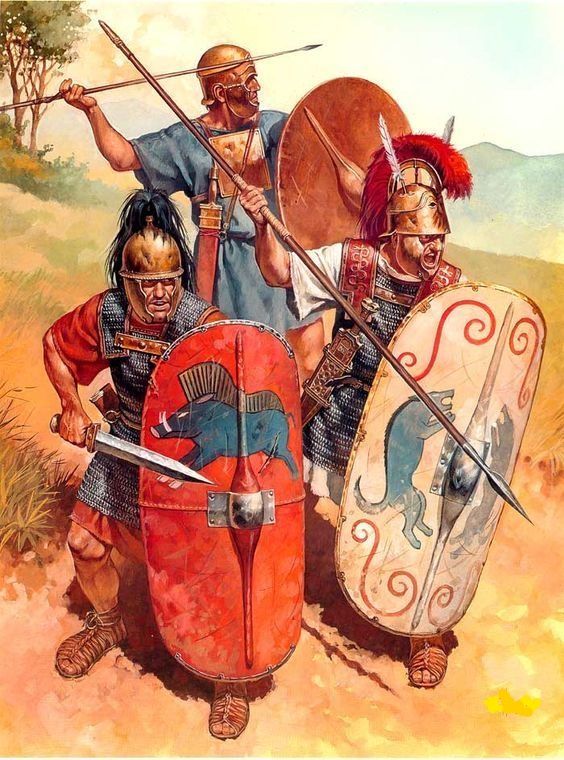
In contrast, the Roman army operated using the manipular legion system, which was more flexible and adaptable. Roman soldiers were organized into smaller units that could maneuver independently, allowing them to respond to changing battlefield conditions. While the phalanx excelled in direct confrontation, it could struggle in uneven terrain or when its formation was disrupted. This difference in military systems set the stage for a fascinating clash between rigid strength and flexible adaptability.
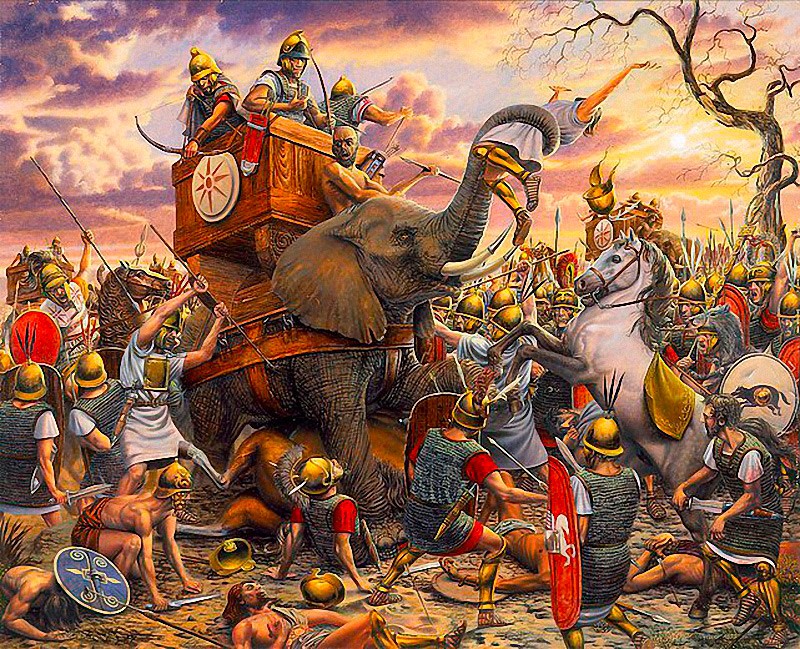
One of the most striking aspects of Pyrrhus’ army was the presence of war elephants. These massive animals had been used effectively in eastern warfare, but for the Romans, they were something entirely new. On the battlefield, elephants could charge into enemy lines, break formations, and cause panic among both soldiers and horses. Roman cavalry, in particular, was vulnerable, as horses often refused to approach the unfamiliar animals. The psychological impact of these creatures cannot be overstated; they created fear and confusion, especially in the early stages of the conflict when Roman troops had no experience dealing with them.
Pyrrhus’ initial strategy relied on using his superior experience and these unique advantages to deliver decisive victories. He understood that Rome’s strength lay in its ability to sustain long wars, so he aimed to defeat Roman armies quickly and force a favorable peace. His approach combined direct engagement using the phalanx with decisive strikes supported by cavalry and elephants. This strategy was designed to overwhelm Roman forces before they could adapt.
For the Romans, facing Pyrrhus was a learning experience. They had previously fought against other Italian tribes and regional powers, but Pyrrhus represented something different: a commander trained in large-scale Hellenistic warfare with access to resources and tactics unfamiliar to them. The presence of elephants alone forced Roman commanders to rethink their strategies and develop new methods of countering these threats.
Despite the initial shock, the Roman system had a key advantage: resilience and adaptability. While Pyrrhus aimed for quick victories, Rome was prepared for a prolonged conflict. The Roman ability to raise new armies, replace losses, and continue fighting even after defeats would become a crucial factor in the outcome of the war. This difference in strategic approach—decisive battles versus sustained warfare—would define the campaign.
In conclusion, Pyrrhus’ arrival in Italy brought a dramatic shift in the nature of the conflict. His use of phalanxes, cavalry, and war elephants introduced new challenges for the Roman legions, forcing them to adapt and evolve. The early encounters between these two military systems highlighted both the strengths and weaknesses of each side, setting the stage for a series of battles that would test not only tactics but endurance. This moment represents the beginning of a clash between two worlds: the established traditions of Hellenistic warfare and the rising power of Rome.
Key Ideas
- Pyrrhus of Epirus landed in Italy with a professional Hellenistic army
- Included phalanx infantry, cavalry, and war elephants
- Romans used the flexible manipular legion system
- Elephants caused fear and disrupted Roman formations
- Clash between phalanx rigidity and Roman adaptability
- Pyrrhus aimed for quick decisive victories
- Romans relied on endurance and ability to replace losses
- First encounters forced Rome to adapt to new warfare styles
- Marked the beginning of a major military clash of systems
4. The Battle of Heraclea: Rome’s First Shock Defeat
The Battle of Heraclea (280 BCE) marked the first major confrontation between the forces of Pyrrhus of Epirus and the Roman Republic, and it resulted in a shocking outcome that reverberated across Italy. For the Romans, who were accustomed to defeating local Italian enemies, this battle represented a new and dangerous level of warfare. For Pyrrhus, it was an opportunity to prove the superiority of his Hellenistic army and establish himself as a dominant force in the west.
The battle took place near the Siris River in southern Italy, where Roman forces under the consul Publius Valerius Laevinus advanced to confront Pyrrhus. The Roman army was large, disciplined, and confident. It had already demonstrated its strength against various Italian tribes and believed it could handle another opponent. However, what the Romans faced at Heraclea was fundamentally different from anything they had encountered before. Pyrrhus brought not only a well-trained army but also battlefield experience gained from wars among the successors of Alexander the Great.
At the start of the battle, both sides deployed their infantry in traditional formations. The Roman legions advanced using their flexible manipular system, while Pyrrhus positioned his troops in the Macedonian phalanx, supported by cavalry on the flanks. The initial engagement was intense and evenly matched. Roman soldiers pressed forward with discipline, attempting to break the phalanx, while Pyrrhus’ infantry held firm with their long spears, creating a nearly impenetrable wall. The clash demonstrated the strengths of both systems: Roman flexibility and aggression versus Greek cohesion and defensive power.
However, the decisive factor of the battle came with the introduction of war elephants, which Pyrrhus had kept in reserve. At a critical moment, he deployed these massive animals against the Roman lines. The effect was immediate and devastating. Roman soldiers, unfamiliar with elephants, were thrown into confusion. The animals charged into formations, breaking lines and creating panic. Even more importantly, Roman cavalry horses refused to approach them, rendering the Roman cavalry ineffective. This disruption allowed Pyrrhus to gain the upper hand and shift the momentum of the battle in his favor.
Despite the chaos caused by the elephants, the Romans did not collapse immediately. They continued to resist, showing the resilience and discipline that would later define Roman warfare. However, the combined pressure of the phalanx, cavalry, and elephants eventually forced them to retreat. The battlefield was left to Pyrrhus, marking a clear victory for his forces.
The defeat at Heraclea was a major shock for Rome. It was one of the first times that Roman legions had been defeated by a foreign army on this scale. The battle demonstrated that Rome was not invincible and that its military system could be challenged by new tactics and unfamiliar weapons. At the same time, it revealed the effectiveness of Pyrrhus as a commander and the strength of his army.
However, the victory was not as decisive as Pyrrhus might have hoped. While he had won the battle, the Romans were far from defeated as a state. They quickly began raising new armies and preparing to continue the war. This response highlighted a crucial difference between the two sides: Pyrrhus relied on decisive battlefield victories, while Rome relied on its ability to recover, rebuild, and continue fighting.
In conclusion, the Battle of Heraclea was a turning point that introduced Rome to a new kind of warfare and a formidable opponent. It showcased the power of Hellenistic tactics, particularly the use of war elephants, while also revealing the limitations of Roman experience at that time. Yet, despite the defeat, Rome’s ability to endure ensured that the war was far from over. Heraclea was not the end of the conflict, but the beginning of a longer and more demanding struggle that would test both sides to their limits.
Key Ideas
- Battle of Heraclea was the first major clash between Rome and Pyrrhus
- Romans faced a new level of warfare and tactics
- Battle featured phalanx vs Roman legions
- War elephants caused panic and broke Roman formations
- Roman cavalry was neutralized by elephants
- Pyrrhus achieved a clear battlefield victory
- Romans showed resilience despite defeat
- Battle proved Rome was not invincible
- Pyrrhus relied on decisive victories, Rome on endurance
- Marked the beginning of a long and difficult war

5. Diplomacy and Defiance: Rome Refuses to Surrender
After the Roman defeat at the Battle of Heraclea, Pyrrhus of Epirus found himself in a strong but uncertain position. He had proven that his army could defeat Roman legions in battle, and many expected that Rome, like other states defeated by Hellenistic kings, would now seek peace. In the eastern Mediterranean, it was common for a defeated power to negotiate after a major loss, often accepting terms to preserve what remained of its strength. However, Rome was not a typical Hellenistic state, and its response would reveal a fundamentally different approach to war and diplomacy.
Following his victory, Pyrrhus did not immediately march on Rome. Instead, he attempted to resolve the conflict through diplomacy, hoping to secure a favorable peace while his position was still strong. He sent an envoy, the Greek diplomat Cineas, to negotiate with the Roman Senate. Pyrrhus’ proposal was relatively moderate: he would return captured prisoners and withdraw from Italy in exchange for recognition of the independence of the Greek cities, including Tarentum. From his perspective, this was a reasonable settlement that would allow both sides to avoid further costly battles.
However, the Roman response was unexpected. Despite the recent defeat and the presence of a powerful enemy in Italy, the Senate refused to accept Pyrrhus’ terms. This decision was not based on confidence in immediate victory but on a broader principle that defined Roman policy: Rome did not negotiate from a position of weakness. Accepting Pyrrhus’ terms would have meant acknowledging defeat and allowing a foreign king to dictate conditions within Italy, something the Romans were unwilling to do.
One of the most famous moments of this diplomatic exchange involved the Roman statesman Appius Claudius Caecus. Although old and blind, he was brought into the Senate to speak against accepting Pyrrhus’ offer. His argument emphasized that Rome must continue fighting rather than submit to external pressure. His stance reflected a core Roman belief in persistence, honor, and long-term resilience, even in the face of setbacks. This moment became symbolic of Rome’s refusal to yield, reinforcing the idea that the Republic would endure hardship rather than compromise its authority.
At the same time, Pyrrhus attempted to strengthen his position by seeking alliances within Italy. He hoped that Rome’s allies, seeing its defeat at Heraclea, might abandon it and join his side. While some groups were tempted, many remained loyal to Rome. This loyalty was not accidental; it was the result of Rome’s system of alliances, which combined military obligation with political integration. Even after defeat, Rome’s network held together, preventing Pyrrhus from gaining the widespread support he needed to achieve a decisive strategic advantage.
The failure of diplomacy forced Pyrrhus to continue the war, but it also revealed a critical weakness in his strategy. His approach depended on winning decisive battles and then negotiating from strength. When Rome refused to negotiate, this strategy became less effective. Each victory cost him valuable troops that he could not easily replace, while Rome continued to raise new armies. This imbalance would become increasingly important as the war progressed.
For Rome, the decision to reject peace was a defining moment. It demonstrated a unique ability to absorb losses, maintain political unity, and continue fighting, even when facing a skilled and dangerous opponent. This resilience would later become one of the key factors behind Rome’s expansion and success. The refusal to surrender after Heraclea showed that Rome was not simply fighting individual battles—it was committed to winning the war as a whole, regardless of short-term setbacks.
In conclusion, the diplomatic phase following Heraclea highlights a crucial contrast between Pyrrhus and Rome. While Pyrrhus sought a negotiated settlement after victory, Rome chose continued resistance over compromise. This decision shaped the course of the conflict, transforming it from a potentially short campaign into a prolonged war of attrition. It revealed that defeating Rome on the battlefield was not enough; to truly win, an enemy would need to break its will to fight, something Pyrrhus would ultimately fail to achieve.
Key Ideas
- After Battle of Heraclea, Pyrrhus sought peace negotiations
- Sent envoy Cineas to negotiate with Rome
- Proposed independence for Tarentum and Greek cities
- Rome refused to negotiate from a position of weakness
- Appius Claudius Caecus urged continued resistance
- Roman allies largely remained loyal despite defeat
- Pyrrhus’ strategy depended on decisive victories + negotiation
- Rome relied on endurance and long-term war effort
- Refusal of peace prolonged the conflict
- Showed Rome’s resilience and political unity

6. The Battle of Asculum and the Birth of a “Pyrrhic Victory”
The Battle of Asculum (279 BCE) was the second major clash between Pyrrhus of Epirus and the Roman Republic, and it became one of the most famous engagements of the war—not because of a decisive strategic outcome, but because it gave history the term “Pyrrhic victory.” This phrase, still used today, describes a victory that comes at such a great cost that it is almost equivalent to defeat. The events at Asculum perfectly illustrate this idea, showing how even success on the battlefield could weaken a commander’s overall position.
After his victory at Heraclea, Pyrrhus expected that Rome might negotiate or that its allies might begin to defect. However, Rome instead raised new armies and continued the war with determination. This forced Pyrrhus into another major engagement. The battle took place near the town of Asculum in southern Italy, where both sides gathered large forces. The Romans, having learned from their previous encounter, were better prepared and more cautious. They had begun to adapt their tactics, especially in dealing with Pyrrhus’ war elephants, which had caused so much disruption at Heraclea.
The battle itself lasted for two days, highlighting its intensity and complexity. On the first day, the terrain played a significant role. Rough ground limited the effectiveness of Pyrrhus’ phalanx and prevented him from fully utilizing his cavalry and elephants. This worked in favor of the Romans, whose more flexible manipular system allowed them to maneuver more effectively in difficult conditions. As a result, the fighting remained inconclusive, with neither side able to gain a clear advantage.
On the second day, Pyrrhus adjusted his strategy. He managed to position his forces on more favorable terrain, allowing him to deploy his army in a more traditional Hellenistic formation. His phalanx advanced with strength and discipline, while his cavalry and elephants were used more effectively to support the attack. Once again, the elephants played a crucial role. Despite Roman attempts to counter them—reportedly using special anti-elephant tactics such as wagons and projectiles—the animals still managed to disrupt Roman formations and create openings for Pyrrhus’ forces.
In the end, Pyrrhus was able to claim victory, as the Roman army was forced to withdraw from the battlefield. However, this victory came at a heavy cost. Pyrrhus lost a significant number of experienced troops, including many of his best soldiers and officers. Unlike Rome, which could replace its losses by raising new legions, Pyrrhus had limited resources and could not easily replenish his army. Each battle weakened him, even when he won.
It is after this battle that Pyrrhus is famously said to have remarked that “another such victory, and we are lost.” This statement captures the essence of the situation. While he had technically defeated the Romans again, he had not broken their ability or willingness to continue fighting. Instead, the war was becoming more difficult for him with each engagement.
For Rome, the outcome of Asculum reinforced an important lesson: defeat in battle did not mean defeat in war. The Romans demonstrated their characteristic resilience and adaptability, continuing to refine their tactics and rebuild their forces. Their willingness to endure losses without seeking immediate peace placed increasing pressure on Pyrrhus, whose strategy relied on decisive victories leading to negotiation.
The Battle of Asculum therefore represents a critical moment in the campaign. It showed that while Pyrrhus could defeat Roman armies, he could not achieve a decisive strategic victory. The concept of the “Pyrrhic victory” highlights the limitations of his approach and the strength of Rome’s system. Over time, this imbalance would shift the advantage toward Rome, as Pyrrhus’ resources dwindled and Roman resistance remained unbroken.
In conclusion, Asculum was both a victory and a warning for Pyrrhus. It confirmed his skill as a commander but also exposed the unsustainable nature of his campaign. For Rome, it was another step in a long process of learning and adaptation, demonstrating that persistence could overcome even the most talented opponent. The legacy of the battle endures in the term “Pyrrhic victory,” a reminder that not all victories bring true success.
Key Ideas
- Battle of Asculum was the second major battle of the war
- Fighting lasted two days, showing its intensity
- Terrain initially favored Roman flexibility
- Pyrrhus adapted and used phalanx + elephants effectively
- Romans attempted anti-elephant tactics
- Pyrrhus achieved technical victory
- Suffered heavy, irreplaceable losses
- Famous quote: “Another such victory and we are lost”
- Term “Pyrrhic victory” originated from this battle
- Highlighted Rome’s endurance vs Pyrrhus’ limited resources
7. Pyrrhus Invades Sicily: A New Front Against Carthage
After the costly victories in Italy, Pyrrhus of Epirus faced a difficult reality: despite defeating Roman armies in battle, he had failed to force Rome into submission. His army had suffered heavy losses, and the war showed no sign of ending quickly. At this point, Pyrrhus made a bold and controversial decision—to shift his focus away from Italy and launch a campaign in Sicily. This move opened a completely new front in the war, this time against the powerful city-state of Carthage.
The decision to invade Sicily was not random. Greek cities on the island, long threatened by Carthaginian expansion, had appealed to Pyrrhus for help. Much like Tarentum earlier, these cities saw him as a defender of Greek interests and a capable leader who could challenge a dominant power. For Pyrrhus, this presented an opportunity to achieve what he had struggled to accomplish in Italy: a decisive and potentially more rewarding campaign. Sicily was rich, strategically located, and central to Mediterranean trade. Controlling it would give Pyrrhus not only wealth but also a strong base for further expansion.
Upon arriving in Sicily, Pyrrhus was initially welcomed as a liberator. Greek cities supported him, providing troops, supplies, and access to their fortifications. His presence quickly shifted the balance of power on the island. Pyrrhus proved himself an effective commander once again, launching successful campaigns against Carthaginian positions and pushing them back. His military skill and leadership allowed him to gain control over large parts of the island in a relatively short time.
One of his most notable successes was his campaign against Carthaginian strongholds, where he demonstrated both tactical ability and determination. Carthage, known for its naval strength and fortified cities, was not an easy opponent. Yet Pyrrhus managed to capture several key positions, weakening Carthaginian influence and raising hopes among the Greek population that complete victory might be possible. At this stage, it seemed that Pyrrhus might succeed in establishing a powerful western kingdom that could rival both Rome and Carthage.
However, the situation soon began to change. Pyrrhus’ leadership style, effective in warfare, proved more problematic in governance. As his campaign continued, he began to demand more resources, troops, and control from the Greek cities he had come to support. His actions started to resemble those of a ruler imposing authority rather than a liberator offering protection. This shift caused tension and dissatisfaction among his allies, who had initially welcomed him.
At the same time, Pyrrhus faced strategic challenges. While he had achieved success on land, Carthage remained a formidable naval power. Without a strong fleet, Pyrrhus struggled to completely eliminate Carthaginian presence on the island. This limited his ability to secure a final, decisive victory. The campaign began to stall, and the initial momentum started to fade.
Another critical factor was the situation in Italy. While Pyrrhus was campaigning in Sicily, Rome was recovering and strengthening its position. The war in Italy was far from over, and by shifting his focus, Pyrrhus allowed Rome time to regroup. This divided attention weakened his overall strategy, as he was now fighting on multiple fronts without fully securing either one.
Eventually, growing dissatisfaction among the Sicilian Greeks, combined with the ongoing threat from Carthage and the unresolved conflict with Rome, forced Pyrrhus to reconsider his position. What had begun as a promising campaign started to turn into a strategic burden. His inability to maintain strong alliances and achieve a decisive victory meant that his success in Sicily was ultimately limited.
In conclusion, Pyrrhus’ invasion of Sicily represents a bold but flawed expansion of his campaign. While he achieved early victories and demonstrated his military skill, he failed to secure lasting control or maintain the support of his allies. The campaign highlights the challenges of managing multiple fronts and balancing military success with political stability. Instead of strengthening his position, the Sicilian venture ultimately weakened Pyrrhus, setting the stage for his eventual decline in Italy.
Key Ideas
- Pyrrhus of Epirus shifted campaign to Sicily
- Greek cities requested help against Carthage
- Sicily offered wealth and strategic advantage
- Pyrrhus initially welcomed as a liberator
- Achieved early military successes against Carthage
- Faced difficulty due to Carthaginian naval power
- Began losing support from Greek allies
- Campaign stretched his resources across multiple fronts
- Rome used time to recover and strengthen
- Sicilian campaign weakened Pyrrhus’ overall position
8. The Failure in Sicily: Lost Allies and Strategic Mistakes
Although Pyrrhus of Epirus initially achieved success during his campaign in Sicily, his position on the island gradually weakened due to a combination of strategic mistakes, political misjudgment, and loss of local support. What had begun as a promising intervention against Carthage slowly turned into a failing campaign, ultimately forcing Pyrrhus to abandon Sicily altogether. This phase of the war highlights how even a skilled commander can struggle when military success is not matched by effective leadership and long-term planning.
At first, Pyrrhus was welcomed by the Greek cities of Sicily as a liberator. They viewed him as a protector against Carthaginian expansion and placed their trust in his leadership. However, as the campaign progressed, Pyrrhus began to act less like an ally and more like a ruler imposing control. He demanded more troops, resources, and authority from the cities, expecting full cooperation in his war effort. This shift created tension, as the local populations had not invited him to dominate them but to defend their independence. Over time, this growing dissatisfaction weakened his political position.
One of Pyrrhus’ major strategic challenges was dealing with the strength of Carthage. While he had proven highly effective in land battles, Carthage maintained a powerful navy that allowed it to control key coastal areas and maintain supply lines. Without a fleet capable of matching Carthaginian power at sea, Pyrrhus could not completely eliminate their presence on the island. This meant that, despite his victories, the war in Sicily remained incomplete and unresolved. His inability to adapt fully to naval warfare limited his effectiveness and prevented a decisive outcome.
Another critical mistake was Pyrrhus’ attempt to expand his ambitions beyond what his resources could support. Rather than focusing on consolidating his gains in Sicily, he began planning further campaigns, including the possibility of invading North Africa to directly challenge Carthage. While ambitious, these plans stretched his already limited resources even further. His army, which had already suffered losses in Italy, was not large enough to sustain such wide-ranging operations. This overextension weakened his ability to maintain control over the territories he had already secured.
At the same time, the situation in Italy continued to demand attention. Rome had not been defeated and was actively rebuilding its strength. By remaining in Sicily for an extended period, Pyrrhus allowed the Romans valuable time to recover, reorganize, and prepare for future confrontations. This created a strategic imbalance, as Pyrrhus was now divided between two theaters of war without achieving a decisive victory in either. His decision to shift focus away from Rome ultimately reduced the pressure on his main enemy, allowing them to regain momentum.
The loss of support from the Sicilian Greeks proved to be one of the most damaging consequences of his leadership. As dissatisfaction grew, his allies became less willing to provide troops and resources. Some even began to view him as a threat rather than a protector. This erosion of trust made it increasingly difficult for Pyrrhus to sustain his campaign, as he no longer had the full backing of the local population. Without strong alliances, his position became unstable and vulnerable.
Eventually, these combined factors forced Pyrrhus to abandon his campaign in Sicily. Despite his earlier successes, he was unable to secure lasting control or defeat Carthage decisively. As he prepared to leave the island, he is said to have remarked that Sicily was a “fair battlefield” for Rome and Carthage—a statement reflecting both the opportunity he saw and the failure he experienced.
In conclusion, the failure of Pyrrhus in Sicily was not due to a lack of military skill but rather to strategic overreach, political mismanagement, and the inability to maintain alliances. His campaign demonstrates that success in war requires more than victories on the battlefield; it also depends on maintaining support, managing resources, and making sustainable decisions. By losing the trust of his allies and failing to secure a decisive outcome, Pyrrhus weakened his overall position and set the stage for his eventual defeat in Italy.
Key Ideas
- Pyrrhus of Epirus lost support in Sicily
- Initially welcomed, later seen as a controlling ruler
- Faced strong resistance from Carthage
- Lacked naval strength to secure decisive victory
- Overextended ambitions beyond available resources
- Divided focus between Sicily and Italy
- Allowed Rome time to recover and rebuild
- Lost trust and cooperation of Greek allies
- Campaign became unsustainable
- Forced to abandon Sicily, weakening overall position
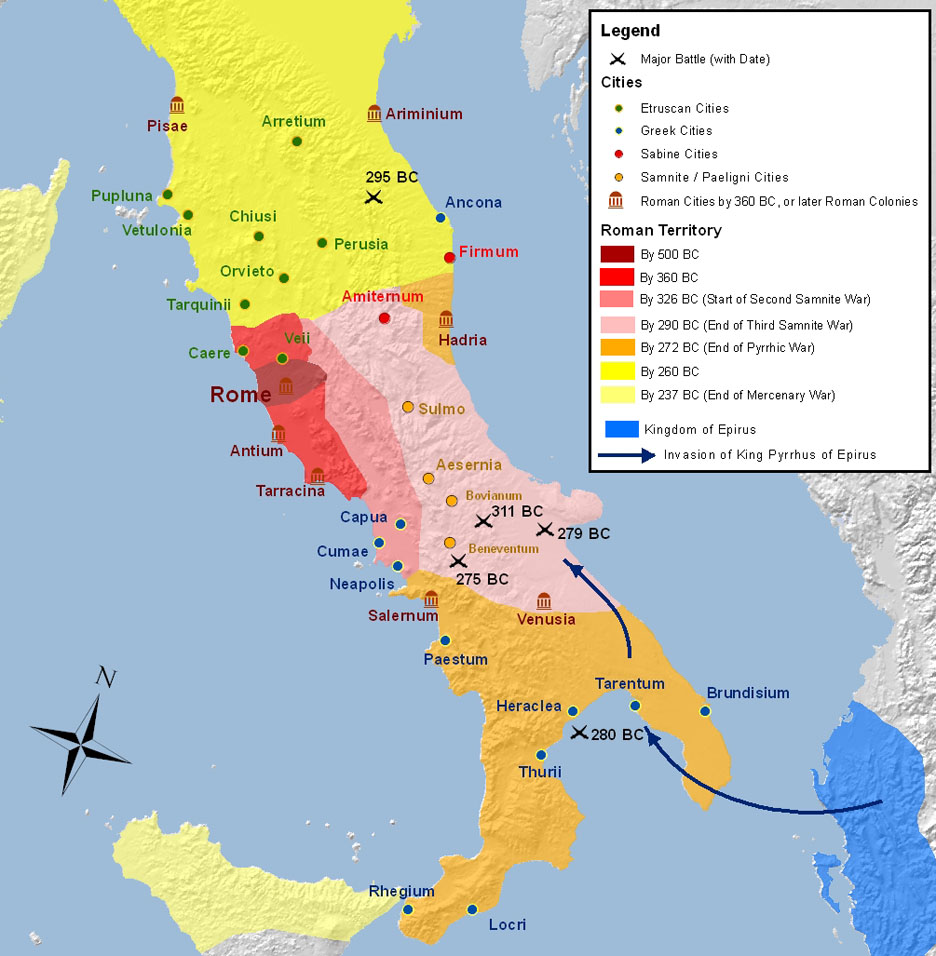
9. Return to Italy and the Battle of Beneventum
After the collapse of his Sicilian campaign, Pyrrhus of Epirus returned to Italy in 275 BCE, hoping to restore his position and achieve a decisive victory against Rome. However, the situation he encountered was far less favorable than when he had first arrived years earlier. His army had been weakened by continuous campaigning, his alliances were less reliable, and Rome had used the time to recover, reorganize, and strengthen its forces. The balance of power had shifted, and Pyrrhus was no longer in a dominant position.
Upon his return, Pyrrhus attempted to reestablish control and rally support among the Greek cities of southern Italy, including Tarentum. However, enthusiasm for his leadership had declined. His prolonged absence and mixed results in Sicily had reduced confidence in his ability to deliver a final victory. While he still retained some support, it was no longer as strong or unified as before. This made it more difficult for him to rebuild his forces and coordinate a large-scale campaign.
At the same time, Rome had significantly improved its military readiness. Having faced Pyrrhus in previous battles such as Battle of Heraclea and Battle of Asculum, Roman commanders had learned valuable lessons about Hellenistic warfare. They had adapted their tactics, particularly in dealing with war elephants, and were better prepared for future encounters. More importantly, Rome’s ability to raise new armies ensured that it could continue the war despite earlier defeats.
The final major confrontation between Pyrrhus and Rome took place at the Battle of Beneventum (275 BCE). Roman forces, led by the consul Manius Curius Dentatus, confronted Pyrrhus in a battle that would ultimately decide the outcome of his Italian campaign. Unlike earlier engagements, this battle did not result in a clear tactical victory for Pyrrhus. The Romans, now more experienced and better prepared, were able to resist his tactics more effectively.
One of the key factors in the battle was the reduced effectiveness of Pyrrhus’ war elephants. The Romans had developed methods to counter them, including the use of missiles and coordinated attacks designed to disrupt and panic the animals. In some accounts, the elephants caused confusion not only among Roman troops but also within Pyrrhus’ own lines when they became uncontrollable. This loss of advantage was significant, as the elephants had previously been one of his most powerful weapons.
The battle itself was fiercely contested, but unlike at Heraclea or Asculum, Pyrrhus was unable to achieve a decisive breakthrough. The Roman army held its ground, demonstrating both improved tactics and the discipline that had become a hallmark of Roman warfare. Eventually, Pyrrhus was forced to withdraw, marking a strategic defeat. While not a complete destruction of his army, the outcome made it clear that he could no longer win the war in Italy.
Following Beneventum, Pyrrhus made the decision to leave Italy entirely and return to Epirus. This marked the end of his campaign against Rome. His departure effectively handed control of southern Italy to the Romans, allowing them to continue their expansion without significant external opposition. For Rome, this was a major turning point, as it removed one of the most formidable opponents it had faced and confirmed its growing strength as a regional power.
In conclusion, Pyrrhus’ return to Italy and the Battle of Beneventum represent the final stage of his campaign and the moment when the balance of power shifted decisively in Rome’s favor. Despite his earlier victories and reputation as a brilliant commander, Pyrrhus was ultimately unable to overcome Rome’s resilience, adaptability, and ability to sustain long-term warfare. Beneventum demonstrated that Rome had learned from its defeats and evolved into a more capable military force. The end of the campaign marked not just the failure of Pyrrhus’ ambitions, but also the rise of Rome as the dominant power in Italy.
Key Ideas
- Pyrrhus of Epirus returned to Italy after failure in Sicily
- Found weaker alliances and reduced support, including in Tarentum
- Rome had adapted after Battle of Heraclea and Battle of Asculum
- Final battle: Battle of Beneventum
- Romans better prepared and more disciplined
- War elephants less effective and sometimes caused confusion
- Pyrrhus failed to achieve decisive victory
- Forced to withdraw and abandon Italy
- Marked the end of Pyrrhus’ campaign
- Confirmed Rome’s rise as a dominant power
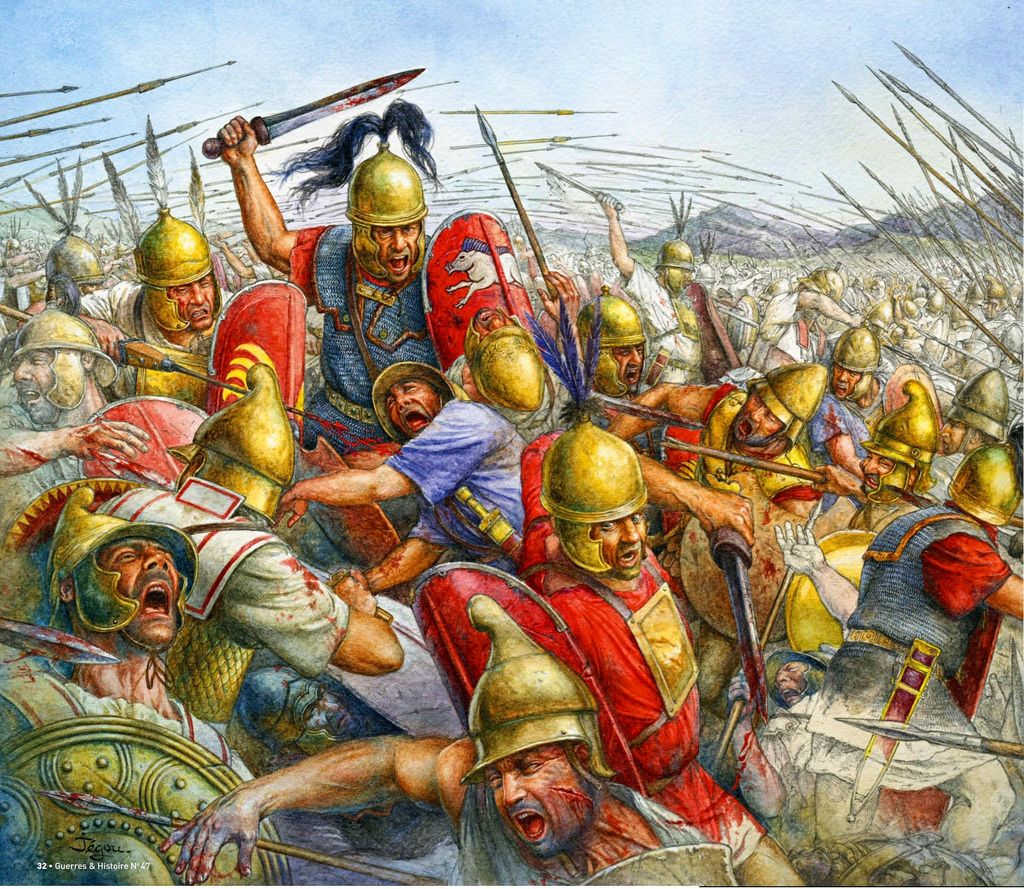
10. The Legacy of Pyrrhus of Epirus: How Rome Learned to Win Wars of Attrition
The campaign of Pyrrhus of Epirus against Rome left a lasting impact that went far beyond the battles themselves. Although Pyrrhus ultimately failed to achieve his goal of defeating Rome or establishing a lasting power in Italy, his war played a crucial role in shaping how Rome would fight—and win—future conflicts. In many ways, Pyrrhus forced Rome to evolve, teaching it lessons that would later be applied against even greater enemies such as Carthage.
One of the most important aspects of Pyrrhus’ legacy is the concept of the “Pyrrhic victory,” which originated from his costly success at the Battle of Asculum. This idea captured a fundamental truth about warfare: winning a battle does not necessarily mean winning a war. Pyrrhus repeatedly defeated Roman armies in direct engagements, yet each victory weakened him because he could not replace his losses. Rome, on the other hand, could absorb defeat, rebuild, and continue fighting. This contrast highlighted the importance of sustainability in warfare, a lesson that Rome would fully embrace.
The Roman response to Pyrrhus demonstrated a defining characteristic of their military system: resilience. After defeats such as the Battle of Heraclea and Asculum, Rome did not collapse or seek peace. Instead, it raised new legions, adjusted its tactics, and continued the war. This ability to recover from setbacks allowed Rome to outlast opponents who relied on quick, decisive victories. Over time, this approach became a core element of Roman strategy, enabling it to succeed in long and difficult conflicts.
Another key lesson Rome learned from Pyrrhus was the importance of adaptation. When first confronted with war elephants, Roman forces were unprepared and suffered significant disruption. However, by the time of the Battle of Beneventum, they had developed methods to counter these animals, reducing their effectiveness. This willingness to learn from defeat and improve was a major strength of the Roman military system. Rather than relying on fixed tactics, Rome continuously evolved based on experience.
Pyrrhus also demonstrated the limits of relying solely on battlefield success. His strategy was based on winning major engagements and then negotiating from a position of strength. This approach worked well in the Hellenistic world, where wars were often decided by a few decisive battles. However, against Rome, it proved ineffective. The Roman refusal to surrender after defeat forced Pyrrhus into a prolonged conflict that his resources could not sustain. This showed that strategic endurance could be more important than tactical brilliance.
In addition, the campaign reinforced the strength of Rome’s system of alliances. Despite suffering defeats, Rome’s allies largely remained loyal, providing troops and support. This network allowed Rome to maintain its war effort even under pressure. Pyrrhus, in contrast, struggled to maintain the loyalty of his own allies, particularly in Sicily. The difference in alliance stability played a significant role in the outcome of the war and highlighted another advantage of the Roman system.
The long-term impact of Pyrrhus’ campaign can be seen in Rome’s later conflicts, especially against Carthage during the Punic Wars. The ability to endure heavy losses, adapt to new challenges, and continue fighting over long periods became essential to Roman success. In this sense, Pyrrhus unintentionally helped prepare Rome for the even greater struggles it would face in the future.
In conclusion, the legacy of Pyrrhus is not defined by his victories, but by the lessons his war taught Rome. His campaign revealed both the strengths and weaknesses of different approaches to warfare, showing that winning battles is not enough without the ability to sustain a war effort. For Rome, this conflict was a turning point that reinforced its core strengths—resilience, adaptability, and endurance. These qualities would allow it to rise from a regional power in Italy to one of the greatest empires in history.
Key Ideas
- Pyrrhus of Epirus failed strategically despite battlefield success
- Term “Pyrrhic victory” came from Battle of Asculum
- Rome mastered wars of attrition and endurance
- Showed importance of sustainability over short-term victory
- Romans adapted after defeats like Battle of Heraclea
- Learned to counter war elephants effectively
- Pyrrhus relied on decisive battles, which failed against Rome
- Roman alliance system remained strong and loyal
- Campaign influenced later wars vs Carthage
- Helped shape Rome into a dominant long-term military power