
1. Rome Looks North: Why Germania Became a Target
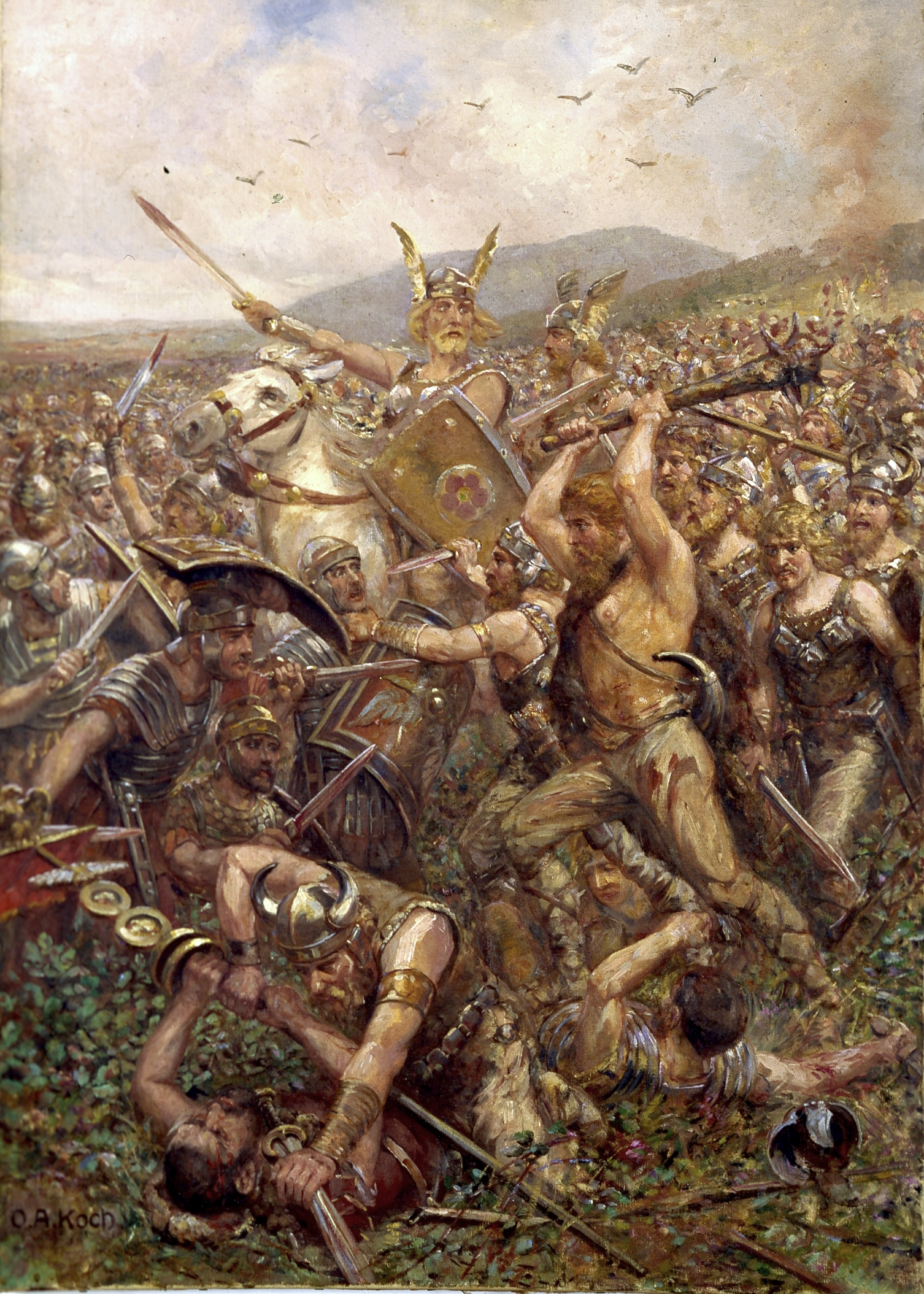
Before Rome ever suffered disaster in the forests of the north, it first had to make a decision: why even attempt to conquer Germania at all? For a state as calculated and expansion-driven as Rome, wars were rarely random. Every campaign had a purpose—strategic, economic, or political. Germania, the vast and largely unknown region beyond the Rhine River, represented both an opportunity and a risk. Understanding why Rome looked north in the first place is key to understanding why the entire campaign ultimately failed.
During the late Republic and early Empire, Rome had already expanded across much of the Mediterranean world. Provinces in Hispania, Gaul, Greece, and the Near East were either conquered or firmly under Roman influence. With these regions secured, Roman leaders began to look beyond existing borders. Expansion was not just about territory—it was about prestige, security, and control of potential threats. Unconquered lands were often seen as dangers waiting to emerge. Germania, located just beyond the Rhine, fit this category perfectly.
One of the earliest figures to seriously engage with Germania was Julius Caesar. During his campaigns in Gaul, Caesar encountered Germanic tribes who occasionally crossed the Rhine to raid or settle in Gallic territory. For Caesar, Germania represented both a military challenge and a political opportunity. By launching expeditions across the Rhine, he could demonstrate Roman power and present himself as a defender of Roman territory. His famous crossings of the Rhine were not full invasions, but they sent a clear message: Rome could reach Germania if it chose to.
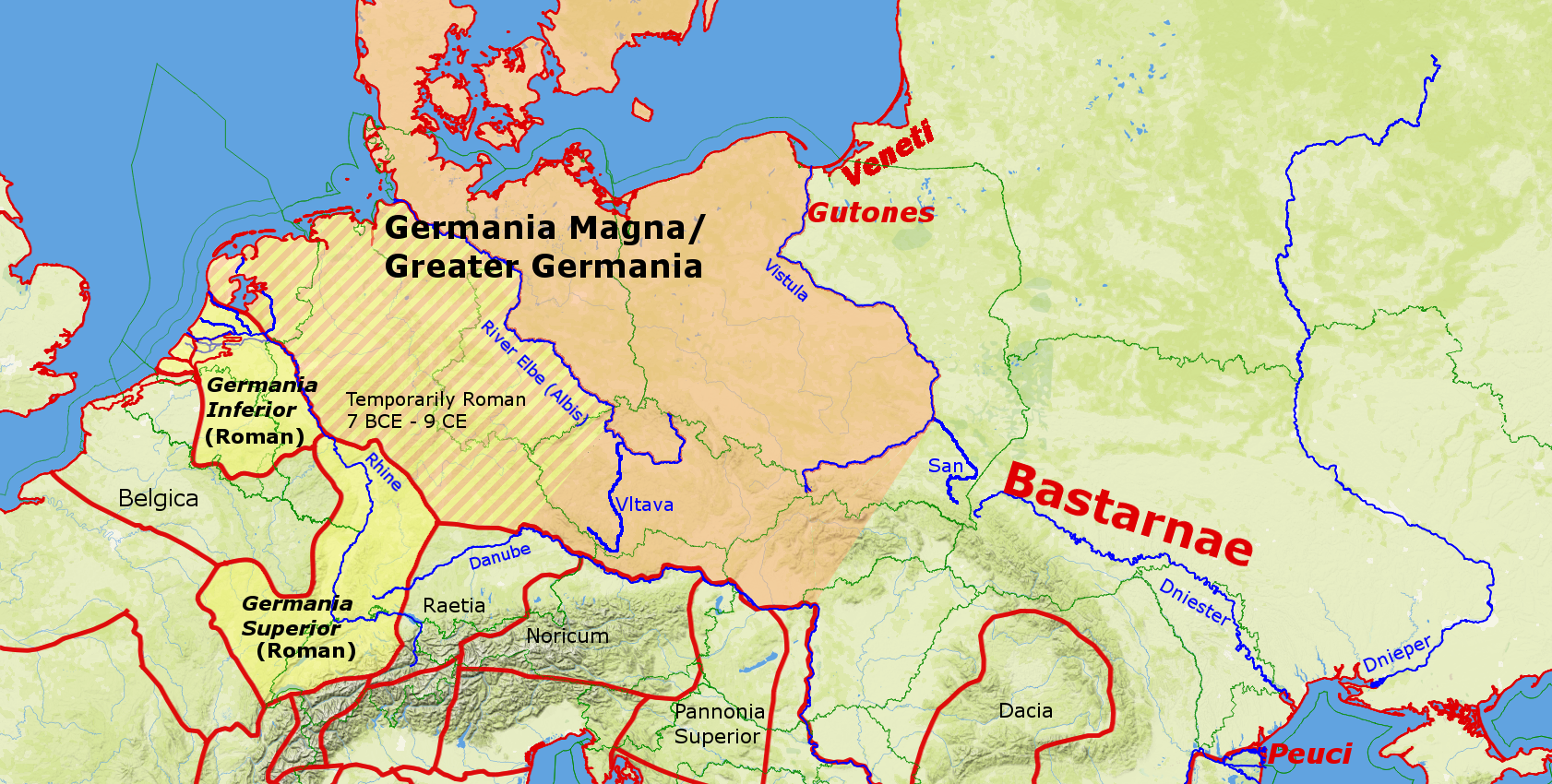
From a Roman perspective, Germania also had strategic value. The Rhine River formed a natural frontier, but it was not an impenetrable barrier. Germanic tribes could cross it, and they were often unpredictable and difficult to control. By pushing the frontier further east to the Elbe River, Rome hoped to create a more secure and stable boundary. This idea was based on a typical Roman strategy: expand borders to eliminate threats rather than wait for threats to arrive.
Economic motivations also played a role, although Germania was not as obviously wealthy as other regions Rome had conquered. Unlike Egypt or parts of the eastern Mediterranean, Germania did not offer immediate access to rich cities or established trade networks. However, it did have resources such as timber, minerals, and potential trade routes. More importantly, conquest itself generated wealth through plunder, tribute, and the redistribution of land. Roman generals often used successful campaigns to gain both personal prestige and financial reward.
Another major factor was political ambition within Rome. Military success was one of the fastest ways for Roman leaders to gain power and influence. Victories in foreign lands could lead to triumphs, increased popularity, and stronger political positions. Germania, as a relatively unconquered region, offered the chance for new and dramatic victories. Leaders could present themselves as conquerors of the unknown, expanding the reach of Rome into lands that had never been fully controlled.
However, despite these motivations, Germania presented unique challenges that Rome did not fully understand at first. Unlike Gaul, which had more centralized structures and urbanized areas, Germania was composed of numerous independent tribes with no unified political system. This made conquest far more complicated. There was no single leader to defeat, no capital to capture that would end resistance. Instead, Rome would face a decentralized and highly adaptable opponent.
The geography of Germania also posed serious difficulties. Dense forests, marshlands, and limited infrastructure made movement slow and dangerous for Roman armies, which relied heavily on organization, roads, and supply lines. Roman warfare was highly effective in open terrain and structured environments, but Germania offered the opposite: unpredictable terrain that favored ambush and guerrilla tactics.
Despite these challenges, early Roman optimism remained strong. The success of previous conquests had created a belief that Rome could overcome any obstacle through discipline and organization. Germania was initially viewed as just another frontier to be brought under control. This confidence, however, would later prove to be one of Rome’s greatest weaknesses in the region.
In conclusion, Rome’s decision to target Germania was driven by a combination of strategic security, political ambition, and the desire for expansion. Figures like Julius Caesar helped establish the idea that Germania was within reach, while Roman leaders saw its conquest as both a necessity and an opportunity. However, beneath this ambition lay a lack of understanding about the region’s complexity. What seemed like a logical next step in expansion would eventually become one of Rome’s most significant failures.
Key Ideas
- Rome targeted Germania for security, expansion, and prestige
- Julius Caesar first demonstrated Roman reach beyond the Rhine
- Germania seen as a potential threat and opportunity
- Strategic goal: push frontier from Rhine to Elbe
- Economic value limited but included resources and plunder
- Roman leaders sought military glory and political power
- Germania lacked centralized leadership, making conquest harder
- Terrain favored ambush and guerrilla warfare
- Roman overconfidence influenced decision to expand
- Set foundation for future campaigns—and future disaster
2. Early Expeditions Beyond the Rhine: Testing the Unknown
After establishing dominance in Gaul, Rome began to look beyond the Rhine River—not yet with full commitment to conquest, but with cautious exploration and calculated displays of power. These early expeditions into Germania were not designed to immediately annex territory. Instead, they were meant to test the land, intimidate local tribes, and gather intelligence about a region that remained largely unknown to Roman commanders.
The first major figure to lead such efforts was Julius Caesar. During his Gallic campaigns, Caesar faced repeated interactions with Germanic tribes who crossed the Rhine, either as raiders or migrants. These movements created instability in Gaul and forced Caesar to respond. However, rather than simply defending Roman-controlled territory, Caesar chose a more aggressive approach: he would bring the fight across the Rhine itself.
One of Caesar’s most famous achievements during this period was the construction of a bridge over the Rhine. This was not just an engineering project—it was a symbolic demonstration of Roman capability and dominance. The Rhine had long been seen as a natural boundary between the Roman world and the unknown lands of Germania. By building a bridge and marching his army across it, Caesar showed that Rome was not limited by geography. He could reach Germania whenever he chose.
However, it is important to understand that Caesar did not attempt a full conquest of Germania. His expeditions were short and highly controlled. After crossing the river, he conducted limited operations, advanced into Germanic territory, and then withdrew. These actions were designed to send a message rather than establish permanent control. The message was clear: Rome could strike at any time, and resistance would be met with force.
From a strategic perspective, these early expeditions served several purposes. First, they allowed Rome to gather valuable information about the terrain, the tribes, and the nature of warfare in Germania. Roman commanders quickly realized that this region was very different from Gaul. There were no large cities to capture, no centralized governments to defeat, and no clear political structure to exploit. Instead, Germania was made up of independent tribes that could unite temporarily but were otherwise decentralized.
Second, these expeditions were a form of psychological warfare. By crossing into Germania, Caesar aimed to intimidate the tribes and discourage them from crossing into Roman territory. The goal was not just military victory, but deterrence. If the Germanic tribes believed that Rome could retaliate quickly and effectively, they might be less likely to raid across the Rhine.
After Caesar, Roman interest in Germania did not disappear. During the early Empire, under the rule of Augustus, the idea of expanding into Germania became more serious. Unlike Caesar’s limited expeditions, Augustus envisioned a more permanent solution. He aimed to extend Roman control beyond the Rhine and potentially push the frontier to the Elbe River. This would transform Germania from a threatening frontier into a controlled province.
To achieve this, Roman forces began to conduct deeper and more sustained campaigns into Germanic territory. They established temporary bases, built roads, and attempted to integrate certain tribes into the Roman system through alliances. These efforts marked a transition from exploration to attempted expansion. Rome was no longer just testing Germania—it was beginning to plan for its incorporation into the empire.
However, even in these early stages, the challenges of Germania became increasingly clear. The terrain remained a major obstacle. Dense forests, rivers, and marshes made movement slow and unpredictable. Roman armies, which relied heavily on organized formations and supply lines, found it difficult to operate efficiently in such conditions. This forced them to adapt, but adaptation took time and experience.
Another major challenge was the nature of Germanic resistance. Unlike more centralized societies, the tribes of Germania could not be defeated through a single decisive battle. Even when one group was subdued, others could rise in resistance. This created a situation where victory in one area did not guarantee stability in the region as a whole.
Despite these difficulties, Roman confidence remained high. The success of previous conquests had created a belief that Germania could eventually be brought under control through persistence and organization. Early expeditions reinforced this belief, as they often encountered limited resistance and achieved their immediate objectives. However, these successes were somewhat misleading. They reflected short-term operations rather than long-term control.
In conclusion, the early expeditions beyond the Rhine were a crucial phase in Rome’s attempt to understand and dominate Germania. Led initially by Julius Caesar and later expanded under Augustus, these campaigns allowed Rome to gather intelligence, test military strategies, and assert its presence in the region. However, they also revealed the fundamental challenges that would later define the campaign: difficult terrain, decentralized resistance, and the limits of Roman control. What began as exploration would soon evolve into a much more dangerous and costly attempt at conquest.
Key Ideas
- Early expeditions aimed to test and intimidate, not fully conquer Germania
- Julius Caesar led first crossings of the Rhine
- Rhine bridge symbolized Roman power and engineering
- Expeditions gathered intelligence on terrain and tribes
- Germania lacked centralized political structure
- Campaigns used as psychological deterrence
- Expansion efforts grew under Augustus
- Transition from exploration to planned conquest
- Terrain and logistics created major challenges
- Early success hid deeper problems of long-term control

3. The Campaigns of Julius Caesar in Germania
The campaigns of Julius Caesar in Germania were not full-scale invasions aimed at permanent conquest, but they were crucial in shaping Rome’s understanding—and misunderstanding—of the region. These operations took place during his broader Gallic Wars, where interactions with Germanic tribes became increasingly frequent. While Caesar’s actions beyond the Rhine were limited in duration, their symbolic and strategic impact was enormous. They helped establish the idea that Germania was within Rome’s reach, even if it was not yet fully understood.
Caesar’s involvement with Germania began as a response to real threats. During his campaigns in Gaul, several Germanic tribes crossed the Rhine, either seeking new lands or attempting to raid Roman-controlled territories. One of the most notable examples was the movement of the Suebi, a powerful Germanic confederation known for its military strength. These incursions forced Caesar to confront the reality that the Rhine was not a secure boundary. If Rome wanted stability in Gaul, it could not ignore what was happening on the other side of the river.
Rather than adopting a purely defensive stance, Caesar chose a bold and aggressive strategy: he would project Roman power directly into Germania. His goal was not to occupy territory permanently, but to demonstrate that Rome could strike across the Rhine whenever necessary. This approach combined military action with psychological warfare, sending a clear message to Germanic tribes that they were not beyond Rome’s reach.
One of Caesar’s most famous achievements during these campaigns was the construction of a massive wooden bridge across the Rhine. This was an extraordinary engineering feat, completed in a remarkably short time. The bridge itself became a powerful symbol of Roman capability. It showed that natural barriers like the Rhine could be overcome through discipline, organization, and technical skill. Caesar then marched his army across the river, entering Germania in a move that had enormous political and psychological significance.
However, Caesar did not remain in Germania for long. His campaigns were brief and carefully controlled. After advancing into the region and demonstrating Roman strength, he withdrew back across the Rhine and destroyed the bridge behind him. This pattern was repeated in later expeditions. These actions were not failures—they were deliberate. Caesar was not attempting to conquer Germania, but to intimidate and deter its inhabitants while maintaining control over Gaul.
From a military perspective, these campaigns revealed both strengths and limitations. On one hand, Caesar’s legions proved capable of operating in unfamiliar territory and executing complex engineering projects under pressure. On the other hand, the nature of Germania presented challenges that could not be easily overcome. The lack of centralized leadership among the tribes meant there was no single enemy to defeat. Even if one group retreated or avoided battle, others could emerge elsewhere. This created a fluid and unpredictable battlefield environment.
The terrain itself also played a critical role. Germania was dominated by dense forests, rivers, and marshlands, which limited visibility and restricted movement. Roman armies, which relied on structured formations and coordinated maneuvers, found it difficult to operate effectively in such conditions. Caesar’s expeditions did not fully expose these weaknesses, but they hinted at them. His campaigns avoided deep penetration into the region, meaning that Rome never fully tested its ability to sustain long-term operations there.
Despite these challenges, Caesar’s reports—especially his writings in Commentarii de Bello Gallico—portrayed the Germanic tribes as fierce but ultimately manageable opponents. He emphasized their strength and bravery, but also suggested that Roman discipline and organization could overcome them. These descriptions contributed to a sense of cautious confidence in Rome regarding future expansion into Germania.
Another important outcome of Caesar’s campaigns was their influence on Roman political and military thinking. By successfully crossing the Rhine and returning safely, Caesar demonstrated that Germania was not an unreachable or mythical land. It was a region that could be entered, explored, and potentially controlled. This idea would later influence the policies of leaders like Augustus, who would pursue more ambitious plans for expansion beyond the Rhine.
However, Caesar’s campaigns also created a false sense of security. Because his expeditions were limited and carefully executed, they did not fully reveal the long-term challenges of conquering Germania. Roman leaders who came after him would inherit both his achievements and his assumptions—some of which would prove dangerously optimistic.
In conclusion, the campaigns of Julius Caesar in Germania were a foundational moment in Rome’s northern expansion. They demonstrated Roman power, gathered valuable intelligence, and shaped future ambitions. However, they also masked the deeper difficulties of the region. What appeared to be manageable during short expeditions would later become overwhelming during attempts at full conquest. Caesar opened the door to Germania—but he did not stay long enough to see what lay beyond it.
Key Ideas
- Julius Caesar launched early campaigns into Germania
- Built Rhine bridge as symbol of Roman engineering and power
- Expeditions aimed to intimidate, not conquer
- Germanic tribes were decentralized and unpredictable
- Terrain limited Roman military effectiveness
- Campaigns revealed both strengths and hidden weaknesses
- Caesar withdrew deliberately after short operations
- Writings shaped Roman perception of Germania
- Created confidence for future expansion plans
- Also created a false sense of control over the region

4. Establishing Control: Forts, Roads, and Roman Expansion Plans
As Rome moved from exploration to attempted conquest in Germania, its strategy began to shift. No longer satisfied with short expeditions like those of Julius Caesar, Roman leaders—especially under Augustus—aimed to establish permanent control over the region. This required more than military victories. It required infrastructure: forts, roads, supply systems, and long-term planning. These were the foundations of Roman expansion everywhere else in the empire, and Germania was no exception—at least in theory.
The Roman approach to conquest was highly systematic. When entering a new territory, they did not simply defeat enemies and move on. Instead, they built a network of fortified positions (forts) to secure key locations. These forts served multiple purposes: they housed troops, protected supply lines, and acted as centers of Roman authority. In Germania, Roman forces began constructing such forts along and beyond the Rhine, creating a chain of defensive and offensive positions designed to support deeper operations into the region.
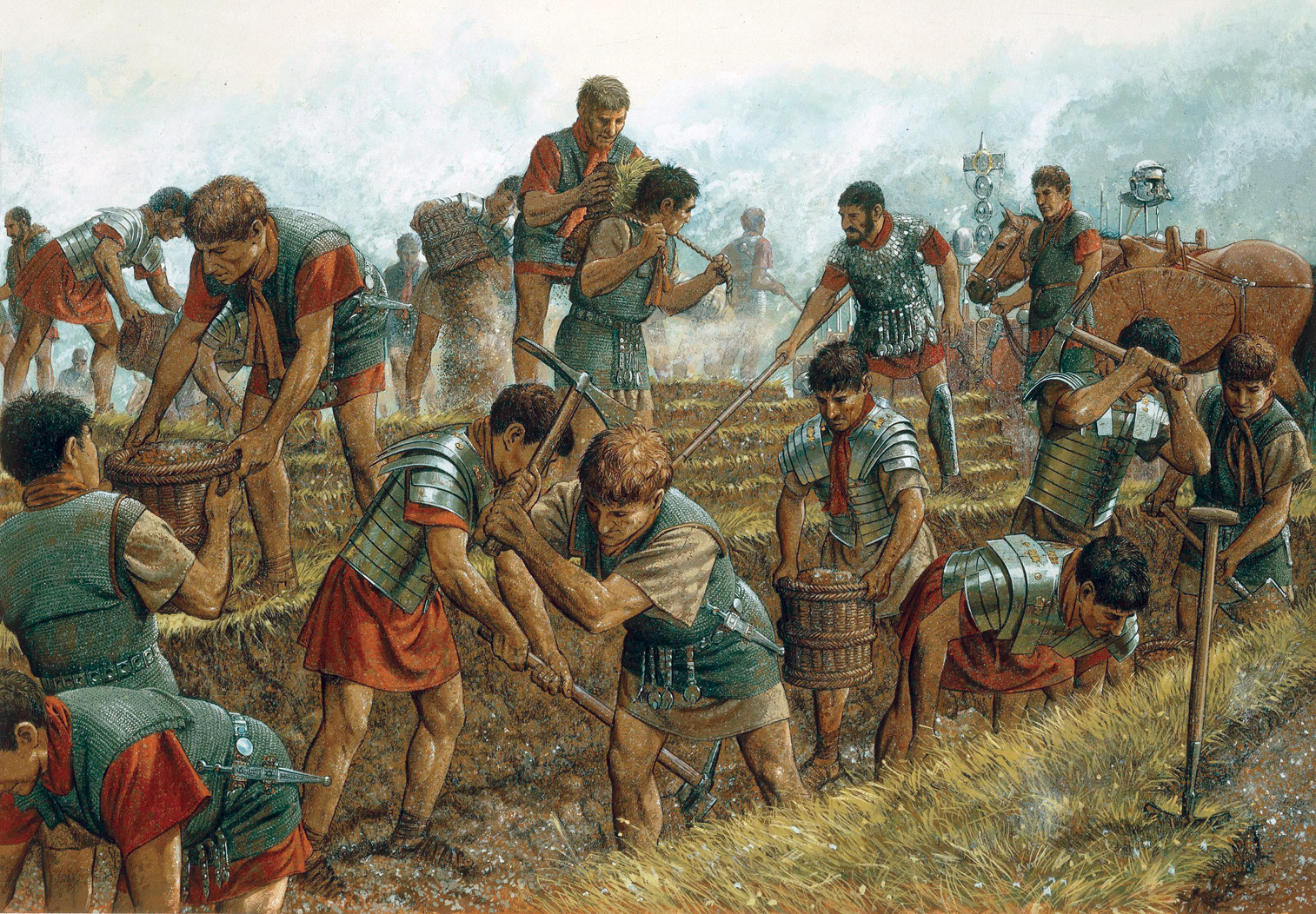
These forts were not random structures. They were carefully planned and constructed using standardized designs that allowed Roman legions to build them quickly and efficiently. Typically, a Roman fort included defensive walls, ditches, watchtowers, and organized internal layouts with barracks, storage facilities, and command centers. This level of organization gave Roman forces a significant advantage in most regions they conquered. It allowed them to maintain discipline, protect themselves from surprise attacks, and project power into surrounding areas.
However, forts alone were not enough. To truly control a region, Rome needed roads. Roman roads were one of the empire’s greatest strengths, allowing for rapid movement of troops, communication, and trade. In Germania, the construction of roads became a key part of expansion efforts. These roads connected forts, linked supply depots, and enabled armies to move efficiently through otherwise difficult terrain.
Yet here, Rome encountered one of its first major challenges. Germania was not like Gaul or Italy, where roads could be integrated into existing infrastructure. Instead, Roman engineers had to build routes through dense forests, marshlands, and uneven terrain. This made construction slower, more difficult, and more vulnerable to attack. Unlike in more developed regions, these roads were not always secure. Germanic tribes could ambush construction teams or disrupt supply lines, turning Rome’s greatest strength into a potential weakness.
Despite these difficulties, Roman leaders remained committed to expansion. Under Augustus, the goal was clear: push beyond the Rhine and establish a new frontier at the Elbe River. This would not only expand Roman territory but also create a more defensible boundary. To achieve this, Rome began integrating certain Germanic tribes into its system through alliances and diplomacy. Some tribal leaders were offered protection, trade opportunities, and political recognition in exchange for cooperation.
This combination of military force and diplomacy was a typical Roman strategy. By turning local groups into allies, Rome could reduce resistance and stabilize newly acquired territories. However, in Germania, this approach had mixed results. While some tribes cooperated, others remained fiercely independent. The lack of a centralized political structure meant that alliances with one group did not guarantee peace with others. This made long-term control extremely difficult.
Another issue was the overextension of Roman resources. Maintaining forts, building roads, and supplying troops deep in Germania required a constant flow of resources from the empire. The further Roman forces advanced, the more vulnerable their supply lines became. Unlike in other provinces, where cities and infrastructure could support Roman presence, Germania offered limited local support. This forced Rome to rely heavily on its own logistics, increasing the strain on its military system.
Despite these warning signs, Roman confidence remained strong. The success of their methods in other regions created a belief that Germania would eventually follow the same pattern. Forts would secure territory, roads would connect it, and local populations would gradually be integrated into the empire. This model had worked in Gaul, Hispania, and elsewhere. There was little reason—at least in Roman thinking—to believe it would fail here.
However, this confidence overlooked a critical difference. Germania was not just another province waiting to be organized. It was a region where terrain, tribal independence, and constant resistance combined to undermine Roman systems. Forts could be isolated, roads could be ambushed, and alliances could collapse without warning. The very tools that had made Rome successful were now being tested in an environment that did not suit them.
In conclusion, Rome’s attempt to establish control over Germania through forts, roads, and expansion planning represented a shift from temporary expeditions to long-term occupation. Inspired by earlier successes and driven by the ambitions of leaders like Augustus, these efforts aimed to transform Germania into a stable Roman province. However, the challenges of terrain, logistics, and decentralized resistance made this goal far more difficult than expected. What seemed like a proven strategy would soon face its greatest test—and ultimately, its greatest failure.
Key Ideas
- Rome shifted from exploration to permanent control strategy
- Built forts to secure territory and protect troops
- Roman forts were highly organized and standardized
- Roads enabled movement, communication, and supply lines
- Germania’s terrain made construction difficult and dangerous
- Expansion plans aimed to push frontier to the Elbe River
- Rome used alliances and diplomacy with local tribes
- Lack of central authority made control unstable
- Supply lines became overextended and vulnerable
- Roman system faced serious limits in Germania
5. The Rise of Arminius: Rome’s Hidden Enemy
As Rome pushed deeper into Germania with forts, roads, and long-term expansion plans, it believed it was gradually bringing the region under control. Some tribes had been subdued, others had formed alliances, and Roman influence was spreading beyond the Rhine. However, beneath this surface of apparent progress, a far more dangerous threat was emerging—one that Rome failed to recognize in time. That threat was Arminius, a man uniquely positioned to understand both Roman power and its weaknesses.
Arminius was not an ordinary tribal leader. He had spent years within the Roman system itself. As a young man, he had been taken to Rome, where he received military training, education, and even Roman citizenship. He served as an officer in the Roman army and fought alongside Roman forces in various campaigns. This experience gave him something no other Germanic leader possessed: an insider’s understanding of Roman tactics, discipline, and command structure.
To the Romans, Arminius appeared to be a loyal ally. He was seen as a bridge between Roman authority and the Germanic tribes, someone who could help stabilize the region and support Roman expansion. Leaders trusted him, and he was given responsibilities that reflected this trust. However, this trust would become one of Rome’s greatest mistakes.
While outwardly cooperating with Rome, Arminius was quietly building connections among the Germanic tribes. He understood that the Roman strategy relied heavily on division—keeping tribes separated, forming alliances with some while suppressing others. To resist Rome effectively, Arminius needed to do the opposite: unite the tribes against a common enemy. This was an extremely difficult task, given the independence and rivalries that defined Germanic society. Yet Arminius used his knowledge, influence, and leadership to begin forming a coalition.
One of the key advantages Arminius had was his ability to anticipate Roman behavior. He knew how Roman legions moved, how they organized their camps, and how they responded to threats. This allowed him to plan strategies that directly targeted Roman strengths. Instead of facing them in open battle—where Roman discipline and formation would dominate—he would exploit terrain, surprise, and fragmentation.
At the same time, Roman leadership in Germania became increasingly confident. Governors such as Publius Quinctilius Varus believed that the region was largely under control. Varus, in particular, approached Germania not as a hostile frontier, but as a province in the process of being organized. He focused on administration, taxation, and legal reforms, treating the tribes as if they were already part of the Roman system.
This approach created growing resentment among the Germanic populations. Roman authority brought new demands—taxes, laws, and obligations—that many tribes were not willing to accept. While Rome saw this as normal governance, the tribes saw it as foreign domination. Arminius recognized this tension and used it to strengthen his position. By presenting himself as a defender of Germanic freedom, he was able to rally support against Roman control.
The most dangerous aspect of Arminius’ rise was how invisible it was to the Romans. Because he had Roman training and appeared loyal, he was not viewed as a threat. In fact, he was often relied upon for advice and support in dealing with other tribes. This gave him access to critical information and allowed him to influence Roman decisions from within. It was a perfect position for someone planning resistance.
Arminius also understood that timing would be crucial. Rome was still in the process of consolidating its control over Germania, meaning its position was not yet secure. Supply lines were stretched, forts were scattered, and communication across the region was not always reliable. These weaknesses created an opportunity—but only if they were exploited at the right moment.
Rather than launching small, scattered attacks, Arminius prepared for something much larger. He aimed to deliver a decisive blow that would not only defeat a Roman force, but also shatter the illusion of Roman control in Germania. To do this, he needed coordination, secrecy, and the element of surprise.
The Roman belief that Germania was nearly pacified would play directly into his hands. By allowing the Romans to feel secure, Arminius ensured that they would lower their guard. This overconfidence would become a critical factor in what followed.
In conclusion, the rise of Arminius represents one of the most important turning points in Rome’s attempt to conquer Germania. Unlike previous opponents, Arminius combined Roman knowledge with Germanic resistance, creating a threat that Rome was not prepared to face. His ability to unite tribes, exploit Roman weaknesses, and operate under the guise of loyalty made him a uniquely dangerous enemy. While Rome believed it was building control through forts and administration, Arminius was quietly preparing to destroy that control from within.
Key Ideas
- Arminius trained and served within the Roman system
- Gained deep knowledge of Roman tactics and strategy
- Appeared loyal but secretly planned resistance
- Worked to unite Germanic tribes against Rome
- Exploited Roman strengths by avoiding open battle
- Roman governor Publius Quinctilius Varus believed Germania was under control
- Roman policies caused resentment among tribes
- Arminius used idea of freedom vs domination to gain support
- Roman overconfidence blinded them to the threat
- Set the stage for a decisive and devastating confrontation
6. The Battle of the Teutoburg Forest: Disaster in the Wilderness
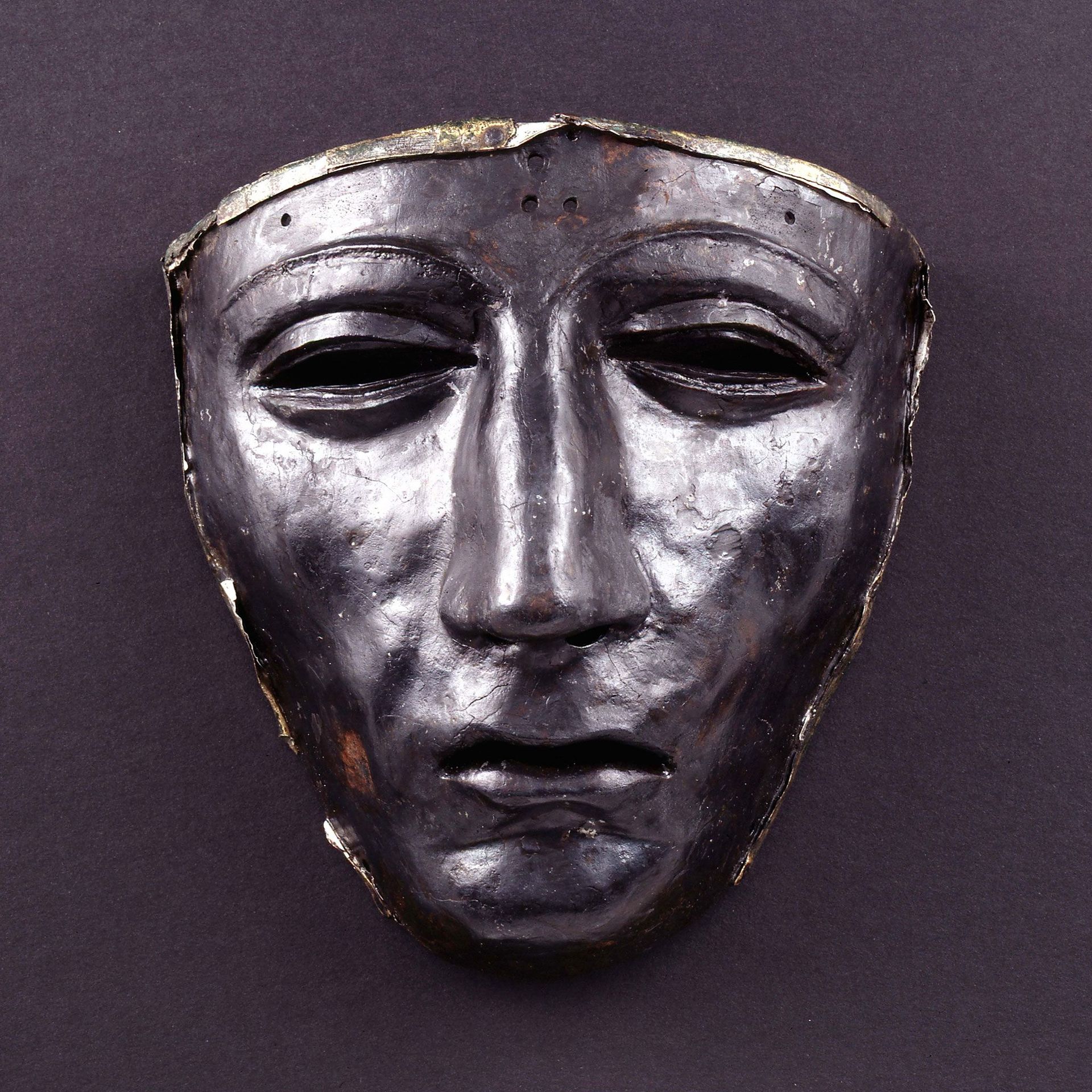
The Battle of the Teutoburg Forest stands as one of the most catastrophic defeats in Roman military history. What began as a routine movement through what the Romans believed was a largely controlled region turned into a total collapse of three Roman legions, permanently altering Rome’s ambitions in Germania. At the center of this disaster were two figures: Publius Quinctilius Varus, the Roman commander, and Arminius, the man who orchestrated one of the most devastating ambushes ever faced by Rome.
By 9 CE, Rome believed it was close to fully integrating Germania into the empire. Roman forts had been established, roads were being built, and administrative systems were being introduced. Varus, the governor, acted less like a military commander in hostile territory and more like a civil administrator. He focused on collecting taxes and enforcing Roman law, assuming that resistance had largely been neutralized. This assumption would prove fatal.
Arminius, who had gained Varus’ trust, used his position to set a carefully planned trap. He informed Varus of a supposed uprising in a distant area, convincing him to move his legions through unfamiliar terrain to suppress it. This decision led the Roman army directly into the dense forests of Germania—a setting that completely neutralized Roman military advantages.
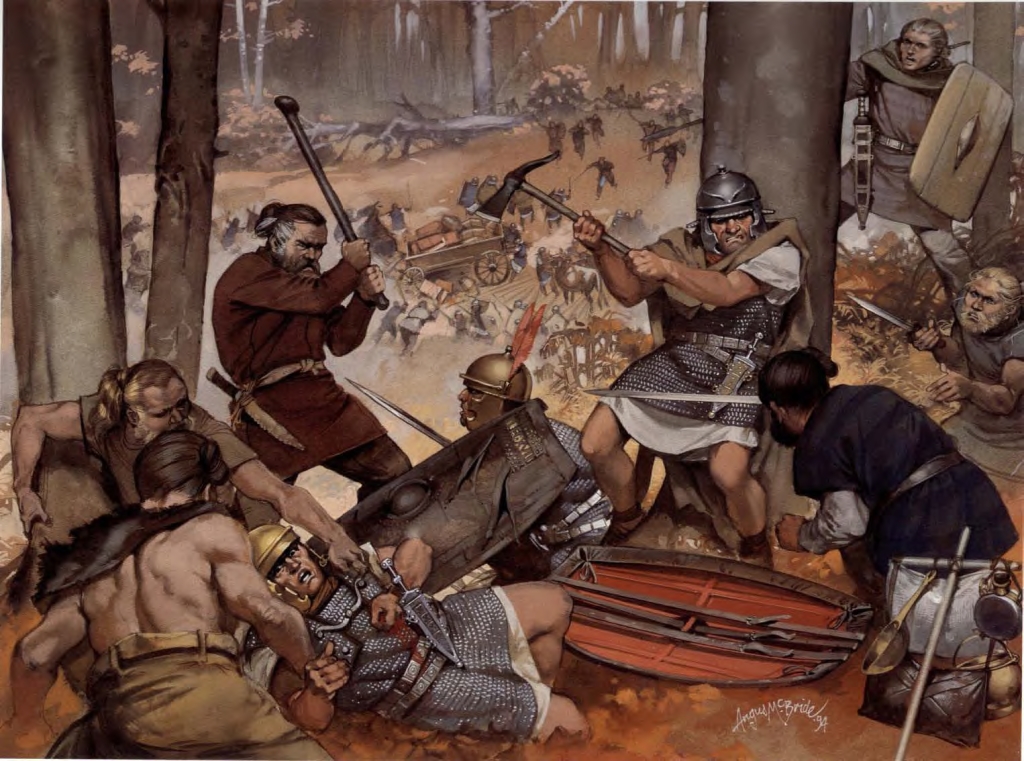
The Roman force, consisting of three legions along with auxiliary troops and camp followers, was not marching in battle formation. Instead, it was stretched out in a long column, moving through narrow forest paths, muddy ground, and difficult terrain. This made coordination nearly impossible. The soldiers were weighed down with equipment, and the army’s structure became fragmented. It was the perfect moment for an ambush.
Arminius and his allied tribes struck suddenly. Attacks came from all sides—from the trees, from hidden positions, and in waves of coordinated assaults. The Romans, trained for organized battle on open ground, struggled to respond. Their formations could not be properly established, and communication between units broke down. What should have been a disciplined fighting force turned into isolated groups trying to survive in chaos.
The battle did not end in a single day. It continued over several days as the Romans attempted to retreat and regroup. However, the terrain and constant harassment made this impossible. Rain, mud, and exhaustion further weakened the Roman troops. Supplies were lost, morale collapsed, and the legions became increasingly disorganized. Each attempt to escape only led them deeper into the trap.
Publius Quinctilius Varus eventually realized the scale of the disaster. Facing total defeat, he took his own life rather than be captured. His death symbolized the complete failure of the Roman campaign in Germania. By the end of the battle, three entire legions—along with their standards—had been destroyed. This was not just a defeat; it was a military catastrophe of the highest level.
The psychological impact on Rome was enormous. News of the disaster shocked the empire. According to later accounts, Augustus was devastated, reportedly exclaiming, “Varus, give me back my legions!” This reaction highlights the scale of the loss. Roman legions were not easily replaced—they represented years of training, experience, and organization. Losing three at once was almost unthinkable.
Beyond the immediate losses, the battle exposed fundamental weaknesses in Rome’s approach to Germania. The reliance on roads, structured formations, and predictable strategies had failed in an environment that rewarded flexibility and surprise. Arminius had successfully turned Roman strengths into vulnerabilities by forcing them to fight in terrain where they could not operate effectively.
The victory also had a unifying effect on the Germanic tribes. While they had often been divided, the success against Rome demonstrated that resistance was possible. This changed the dynamic of the region, making future Roman campaigns far more difficult. Germania was no longer seen as a region on the verge of submission—it had proven itself capable of defeating one of the most powerful armies in the world.
In conclusion, the Battle of the Teutoburg Forest was the turning point in Rome’s attempt to conquer Germania. The careful planning of Arminius, combined with Roman overconfidence under Publius Quinctilius Varus, led to a disaster that Rome could not ignore. This battle did more than destroy legions—it shattered the illusion that Germania could be easily controlled. From this moment forward, Roman expansion in the region would never be the same.
Key Ideas
- Battle of the Teutoburg Forest was a catastrophic Roman defeat
- Arminius used deception and terrain to trap Romans
- Publius Quinctilius Varus led legions into ambush
- Roman army stretched and disorganized in forest terrain
- Attacks came from all directions over several days
- Three Roman legions completely destroyed
- Varus committed suicide after defeat
- Augustus shocked by loss
- Battle exposed limits of Roman military system
- Marked a major turning point in Germania campaign

7. Rome Strikes Back: The Campaigns of Germanicus
After the catastrophic defeat at the Battle of the Teutoburg Forest, Rome faced not only a military crisis but also a crisis of confidence and prestige. Three legions had been annihilated, Roman authority beyond the Rhine had collapsed, and Germania—once seen as a future province—had become a symbol of resistance. However, Rome was not a power that accepted defeat easily. In the years following the disaster, a new commander would emerge to restore Roman honor and attempt to reassert control: Germanicus.
Germanicus, a highly respected general and a member of the imperial family, was given command of Roman forces along the Rhine. His mission was clear: punish the Germanic tribes, recover Roman prestige, and re-establish control in the region. Unlike earlier commanders, Germanicus approached Germania with a deeper awareness of its dangers. He understood that this was not a conventional war and that Rome could not rely solely on traditional tactics.
One of Germanicus’ first priorities was to rebuild the morale of the Roman army. The defeat at Teutoburg had left a psychological scar on Roman forces. Soldiers were wary of the forests, the terrain, and the tactics of the Germanic tribes. Germanicus worked to restore discipline and confidence, emphasizing training, organization, and unity. He also made symbolic gestures, such as recovering the remains of fallen soldiers from the Teutoburg battlefield. This act was deeply significant—it honored the dead and reinforced the idea that Rome would not forget or abandon its losses.
Germanicus then launched a series of campaigns into Germania. These operations were more cautious and strategic than earlier attempts at expansion. Rather than advancing blindly into unfamiliar territory, he used a combination of careful planning, coordinated movements, and multiple army groups. He also made use of naval support along rivers and coastlines, allowing for more flexible movement and supply options. This adaptation showed that Rome was learning from its earlier mistakes.
In battle, Germanicus achieved several victories against Germanic tribes, including forces led by Arminius. These engagements demonstrated that Roman legions, when properly organized and prepared, could still defeat their opponents even in challenging conditions. Germanicus avoided being drawn into situations where his army could be ambushed in dense forests. Instead, he sought more controlled engagements where Roman discipline and coordination could be fully utilized.
One of the most important aspects of these campaigns was their symbolic value. Germanicus was not just fighting for territory—he was fighting to restore Rome’s image as an unstoppable power. Each victory helped rebuild confidence among Roman soldiers and citizens. It showed that the disaster of Teutoburg was not the end of Roman strength, but a setback that could be overcome.
However, despite these successes, the campaigns also revealed the ongoing difficulties of operating in Germania. The terrain remained a constant challenge, and the Germanic tribes continued to resist fiercely. Even after defeats, they could retreat, regroup, and return to fight again. There was no single decisive victory that could end the conflict. This highlighted the same problem that had existed from the beginning: Germania could not be conquered in the same way as other regions.
At the same time, political considerations in Rome began to influence the direction of the campaign. The emperor Tiberius, who had succeeded Augustus, became increasingly cautious about continuing large-scale operations in Germania. While Germanicus was achieving victories, these campaigns required significant resources and did not guarantee permanent control. The cost of maintaining armies in such a difficult region began to outweigh the potential benefits.
Eventually, Tiberius made the decision to recall Germanicus and scale back operations beyond the Rhine. This marked a turning point in Roman strategy. Instead of continuing attempts at full conquest, Rome would adopt a more defensive approach, focusing on securing the Rhine frontier rather than expanding beyond it.
This decision did not erase Germanicus’ achievements. His campaigns had successfully restored Roman prestige and demonstrated that the legions could still dominate in battle. However, they also confirmed a critical reality: victory in Germania did not equal control. Even after defeating enemy forces, Rome could not guarantee long-term stability in the region.
In conclusion, the campaigns of Germanicus represent Rome’s determined response to one of its greatest defeats. Through careful strategy, adaptation, and leadership, he was able to restore confidence and achieve military success against the Germanic tribes, including those led by Arminius. However, these victories also highlighted the limits of Roman power. Germania remained unconquered, and Rome was forced to reconsider its ambitions. The shift from expansion to defense marked the beginning of a new phase in Roman strategy—one shaped by the lessons learned in the forests of the north.
Key Ideas
- Germanicus led Roman response after Teutoburg disaster
- Focus on restoring morale and Roman prestige
- Recovered remains of fallen soldiers as symbolic act
- Used more cautious and strategic campaigns
- Achieved victories against Arminius
- Adapted tactics to avoid ambush in forests
- Demonstrated continued strength of Roman legions
- Germania remained difficult to control despite victories
- Tiberius chose to limit expansion
- Marked shift from conquest to defensive strategy

8. Why Germania Could Not Be Conquered: Terrain, Tactics, and Resistance
Despite Rome’s immense power, discipline, and experience in conquering vast territories, Germania proved to be a fundamentally different challenge. Even after early successes, infrastructure building, and the campaigns of Germanicus, it became increasingly clear that this region could not be controlled in the same way as Gaul, Hispania, or the eastern provinces. The failure to conquer Germania was not due to a single defeat like the Battle of the Teutoburg Forest alone—it was the result of deep structural problems that made Roman methods ineffective in this environment.
One of the most important factors was terrain. Germania was dominated by dense forests, marshlands, rivers, and uneven ground. Unlike the open battlefields where Roman legions excelled, this landscape limited visibility and restricted movement. Roman armies depended heavily on tight formations, coordinated maneuvers, and clear lines of communication. In the forests of Germania, these advantages were neutralized. Units could not maintain formation, signals could not be easily seen or heard, and coordination broke down quickly.
This environment gave Germanic warriors a major advantage. They were familiar with the land and adapted their tactics accordingly. Instead of engaging in open battles where Roman discipline would dominate, they relied on ambushes, hit-and-run attacks, and surprise engagements. These methods disrupted Roman formations and created chaos within their ranks. The Battle of the Teutoburg Forest was the most famous example of this, but similar tactics were used repeatedly throughout the conflict.
Another critical issue was the lack of centralized political structure in Germania. In many regions conquered by Rome, there were established systems of governance—kings, councils, or cities—that could be controlled or replaced. In Germania, power was distributed among numerous independent tribes. Even when Rome defeated one group, others could continue resisting. There was no single authority whose defeat would bring the entire region under control. This made the idea of “conquest” far more complicated than in other parts of the empire.
This decentralized structure also made alliances unreliable. Roman strategy often involved forming partnerships with local leaders, offering them protection and status in exchange for loyalty. While this approach worked in some areas, in Germania it was unstable. Tribal alliances could shift quickly, and leaders could change sides if it suited them. The example of Arminius shows how dangerous this could be—someone trusted by Rome could turn into its greatest enemy.
Logistics were another major challenge. Roman armies relied on well-organized supply lines to maintain their strength. In regions with established infrastructure, supplies could be transported efficiently. In Germania, however, there were few roads, limited local resources, and constant threats to supply routes. As Roman forces moved deeper into the region, they became increasingly dependent on long and vulnerable supply lines. This made sustained campaigns difficult and risky.
Even the Roman system of forts and roads, which had been so effective elsewhere, faced limitations in Germania. Forts could be isolated and surrounded, while roads could be ambushed or destroyed. Instead of securing control, these structures sometimes became targets. Maintaining them required constant effort and resources, further straining Roman capabilities.
Another factor was psychological resistance. Germanic tribes valued independence and were deeply resistant to external control. Roman rule brought taxes, laws, and obligations that many tribes rejected. This created a continuous cycle of resistance, even after temporary defeats. Unlike in some provinces where Roman culture was gradually adopted, Germania remained culturally distinct and resistant to integration.
The campaigns of Germanicus demonstrated that Rome could still win battles in Germania. However, these victories did not lead to lasting control. Each success was temporary, as defeated tribes could retreat, regroup, and continue fighting. This highlighted a key problem: military victory did not equal political stability. Rome could defeat armies, but it could not easily transform the region into a functioning province.
Political decisions in Rome also played a role. Leaders like Tiberius began to question whether the cost of conquering Germania was worth the benefit. Maintaining large armies in such a difficult region required significant resources, and the potential gains were limited compared to other provinces. Over time, the idea of full conquest became less attractive.
In the end, the failure to conquer Germania was not a sign of weakness, but a recognition of limits. Rome adapted its strategy, choosing to secure the Rhine frontier rather than push further east. This decision reflected an understanding that not all regions could be controlled using the same methods. Germania had exposed the boundaries of Roman expansion.
In conclusion, Germania could not be conquered because it combined multiple challenges that undermined Roman strengths: difficult terrain, decentralized resistance, unreliable alliances, logistical strain, and strong cultural independence. Even powerful commanders like Germanicus could not overcome these factors permanently. The failure was not due to a lack of effort or skill, but to the unique nature of the region itself. Germania was not just another frontier—it was the limit of Roman expansion in the north.
Key Ideas
- Terrain limited Roman formations and coordination
- Germanic tribes used ambush and guerrilla tactics
- Battle of the Teutoburg Forest showed Roman vulnerability
- No centralized authority in Germania
- Alliances were unstable and unpredictable
- Logistics and supply lines were difficult to maintain
- Forts and roads were less effective in this environment
- Strong cultural resistance to Roman rule
- Victories did not lead to long-term control
- Rome recognized limits and shifted to defensive strategy
9. The Decision to Abandon Expansion Beyond the Rhine
After decades of effort, bloodshed, and costly campaigns, Rome eventually reached a difficult conclusion: Germania could not be fully conquered or permanently integrated into the empire under existing conditions. This decision did not come from a single defeat or moment, but from a long accumulation of failures, logistical problems, and strategic reassessments following events like the Battle of the Teutoburg Forest and the later campaigns of Germanicus.
The final shift in policy began under Tiberius, who succeeded Augustus and inherited both the ambitions and the limitations of Roman expansion. While earlier leaders had dreamed of pushing the empire’s frontier all the way to the Elbe River, Tiberius took a more cautious and pragmatic approach. He recognized that Germania was not simply another province waiting to be organized—it was a region that consistently resisted long-term control.
One of the key reasons for abandoning expansion was cost versus benefit. Maintaining military campaigns in Germania required enormous resources. Roman legions had to be stationed along the Rhine, supply lines had to be protected over long distances, and infrastructure had to be constantly rebuilt or defended. Unlike other provinces, Germania offered relatively little economic return. There were no wealthy cities, no stable taxation systems, and no reliable local administration that could support Roman governance.
This created a situation where Rome was spending more to control Germania than it could realistically gain from it. Even successful campaigns, such as those led by Germanicus, did not translate into permanent occupation. Victories in battle did not lead to lasting stability. Instead, Roman forces found themselves repeatedly responding to uprisings, ambushes, and resistance movements that could not be fully eliminated.
Another major factor was military risk. The disaster of the Battle of the Teutoburg Forest had shown that even well-organized Roman legions could be destroyed under the right conditions. The loss of three legions was a warning that overextension in Germania could lead to catastrophic consequences. Roman leaders became increasingly aware that continuing aggressive expansion might result in further large-scale defeats.
The geography of Germania also played a decisive role in the decision. The region’s forests, rivers, and marshes made it extremely difficult to maintain control over large areas. Even when Roman armies succeeded in defeating local forces, they struggled to hold territory. Supply lines were vulnerable, forts could be isolated, and communication was slow. This made long-term occupation unstable and expensive.
At the same time, political priorities within the empire were shifting. Rome had already expanded across vast territories in the Mediterranean, and attention was turning toward consolidation rather than further expansion. Leaders like Tiberius began to emphasize securing existing borders instead of pushing into new and unpredictable regions. The Rhine River became the preferred frontier, serving as a natural defensive boundary that was easier to maintain.
This strategic shift marked a major change in Roman imperial thinking. Instead of pursuing unlimited expansion, Rome began to recognize the importance of defensible borders and sustainable control. The idea of a “manageable empire” replaced the earlier ambition of continuous territorial growth. Germania, in this context, represented a region that did not fit into Rome’s long-term administrative model.
The withdrawal from expansion beyond the Rhine did not mean that Rome ignored Germania completely. Military presence remained along the frontier, and occasional campaigns still took place to punish raids or secure stability. However, these actions were defensive rather than expansionist. The goal was no longer to conquer Germania, but to contain it.
This decision also had psychological implications. It marked the first major acknowledgment that Roman power had limits. While Rome remained one of the most powerful empires in the world, Germania demonstrated that there were regions where its methods were not effective. This realization influenced later imperial policy and helped shape the concept of frontier zones rather than unlimited expansion.
In conclusion, the decision to abandon expansion beyond the Rhine was the result of multiple factors: high costs, military risks, difficult geography, and limited strategic benefit. Under Tiberius, Rome shifted its focus from conquest to consolidation, recognizing that Germania could not be integrated like other provinces. The legacy of campaigns led by Germanicus and the trauma of the Battle of the Teutoburg Forest ultimately shaped this decision. By choosing the Rhine as a permanent frontier, Rome defined both the limit of its northern expansion and a new philosophy of imperial control.
Key Ideas
- Rome abandoned full conquest of Germania under Tiberius
- High costs outweighed limited economic benefits
- Battle of the Teutoburg Forest showed danger of overextension
- Campaigns of Germanicus achieved victories but no lasting control
- Geography made occupation unstable and expensive
- Supply lines and forts were difficult to maintain
- Shift from expansion to consolidation of empire
- Rhine became permanent defensive frontier
- Germania recognized as a region beyond effective control
- Marked major change in Roman imperial strategy
10. The Legacy of Failure: How Germania Changed Roman Strategy
The Roman experience in Germania did not end with conquest or expansion, but with a long and uneasy acceptance of limits. After years of campaigning, from the early expeditions of Julius Caesar to the large-scale operations of Germanicus, Rome was forced to confront a reality it rarely admitted: not every region could be fully controlled, no matter how powerful the empire became. The consequences of this realization reshaped Roman military thinking, imperial policy, and the very idea of what the empire was supposed to be.
The turning point that forced this reflection was the disaster of the Battle of the Teutoburg Forest. The destruction of three Roman legions under Publius Quinctilius Varus by the forces of Arminius shattered the assumption that Roman discipline and organization could overcome any environment. This defeat was not just a battlefield loss—it was a psychological shock that revealed the vulnerability of even Rome’s most powerful military system.
In the aftermath, Rome’s response was intense but ultimately cautious. The campaigns of Germanicus restored honor and achieved victories, but they also confirmed a critical truth: victory in battle did not guarantee control of territory. Even when Roman armies defeated Germanic forces, they could not hold the land securely or transform it into a stable province. The region remained resistant, fragmented, and unpredictable.
This experience forced Roman leaders to rethink their entire approach to expansion. Earlier in its history, Rome had operated under the assumption that successful conquest naturally led to long-term integration. Provinces like Gaul, Hispania, and parts of the eastern Mediterranean had been absorbed into the empire through a combination of military force and administrative organization. Germania, however, did not follow this pattern. It exposed the limits of Rome’s traditional model.
One of the most important changes that emerged from this realization was the shift toward defensive imperial strategy. Instead of continuously expanding outward, Rome began to prioritize securing existing borders. The Rhine River became a permanent frontier, marking the boundary between Roman-controlled territory and the independent Germanic tribes. This was not simply a geographic decision—it was a strategic one. Natural barriers like rivers were easier to defend than artificially extended borders deep in hostile territory.
This shift also influenced military deployment. Roman legions were increasingly stationed along frontiers rather than being used primarily for expansion. Their role changed from conquest to containment and deterrence. Forts, roads, and defensive networks along the Rhine became more important than attempts to push deeper into Germania. The focus was no longer on how far Rome could expand, but on how effectively it could maintain stability.
Another major legacy of the Germanic campaigns was the recognition of environmental and cultural limits. Roman military doctrine had been highly successful in Mediterranean environments, where cities, roads, and centralized governments made control easier. Germania lacked these features. Its forests, decentralized tribes, and unpredictable alliances made it fundamentally different. This forced Rome to acknowledge that its methods were not universally applicable.
The figure of Arminius also became symbolic in Roman memory. He represented a new type of enemy—one who understood Roman systems and used them against Rome itself. His success at the Teutoburg Forest demonstrated that Rome’s greatest strength—its organization—could be turned into a weakness when confronted with unconventional tactics.
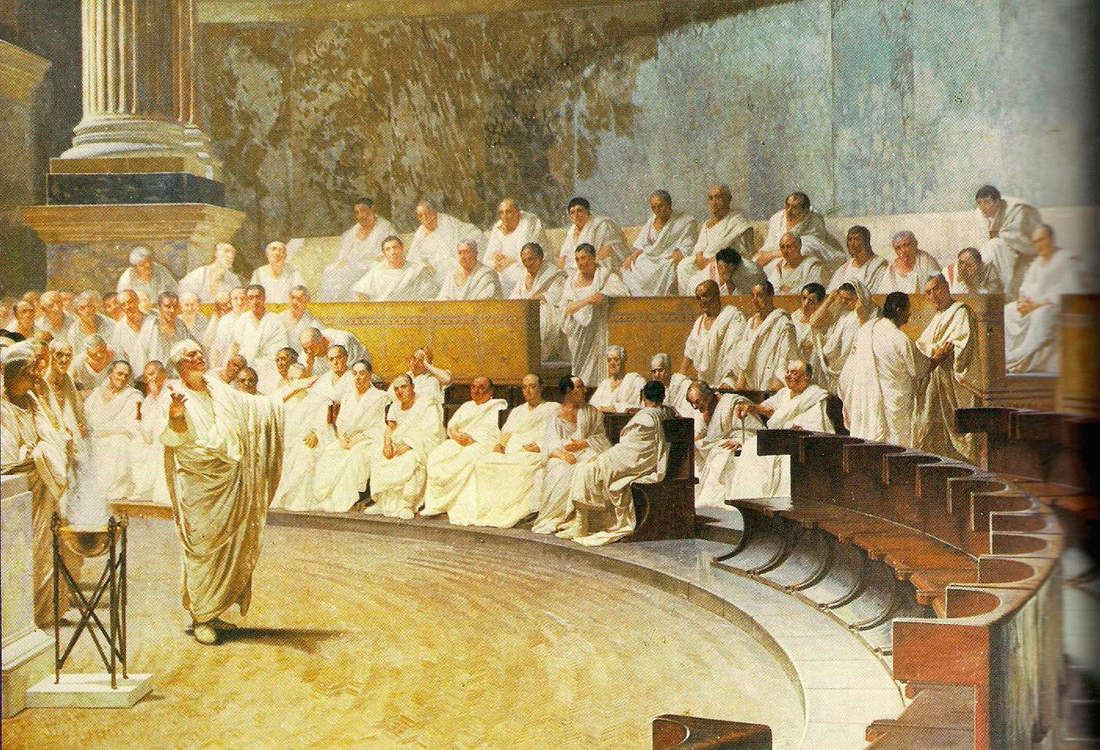
Politically, the Germanic failure contributed to a broader shift in how emperors viewed expansion. Leaders like Tiberius and his successors became more cautious about large-scale military adventures in unstable regions. The focus increasingly shifted toward consolidation, administration, and internal stability rather than territorial ambition.
Over time, Germania came to represent a symbolic boundary of Roman power. It was not simply a lost province, but a defining limit that helped shape the identity of the empire. Rome could project power far beyond its borders, but it could not always transform that power into permanent control.
In conclusion, the legacy of Rome’s failure in Germania was profound. It forced the empire to adapt, shifting from unlimited expansion to strategic restraint. The experiences of Julius Caesar, Germanicus, and the defeat at the Battle of the Teutoburg Forest all contributed to a new understanding of imperial limits. Germania did not become a Roman province, but it permanently changed how Rome defined its power. The empire learned that true strength was not just in conquest—but in knowing where to stop.
Key Ideas
- Battle of the Teutoburg Forest exposed limits of Roman expansion
- Arminius symbolized resistance using Roman knowledge
- Campaigns of Germanicus restored honor but not control
- Rome shifted from expansion to defensive strategy
- Rhine became permanent frontier of the empire
- Legions redeployed for border security instead of conquest
- Germania revealed limits of Roman military model
- Geography and tribal structure made control impossible
- Influenced cautious policies of Tiberius
- Germania became a defining boundary of Roman imperial power