1. The Crisis of the Third Century: Why the Roman Empire Was on the Brink of Collapse
Before Emperor Aurelian could save the Roman Empire, the empire first had to survive one of the darkest periods in its history. Known today as the Crisis of the Third Century, this era lasted from AD 235 to AD 284 and nearly brought Rome to complete collapse. During these decades, the empire faced civil wars, foreign invasions, economic disaster, political instability, and disease all at the same time. Many historians consider it the greatest crisis Rome ever experienced before the fall of the Western Roman Empire centuries later.
The crisis began after the assassination of Alexander Severus in AD 235. His death ended the Severan Dynasty and triggered decades of political chaos. Instead of peaceful successions, Roman emperors were increasingly chosen by the army rather than the Senate or through hereditary succession. As a result, ambitious generals constantly competed for power, leading to frequent civil wars.
During this period, emperors rarely ruled for long. Many were assassinated by their own soldiers, killed in battle, or overthrown by rival commanders. Between AD 235 and AD 270, the Roman Empire saw more than twenty emperors, with many ruling for only a few months. This constant turnover created instability because every new emperor had to secure his position while facing threats on multiple frontiers.
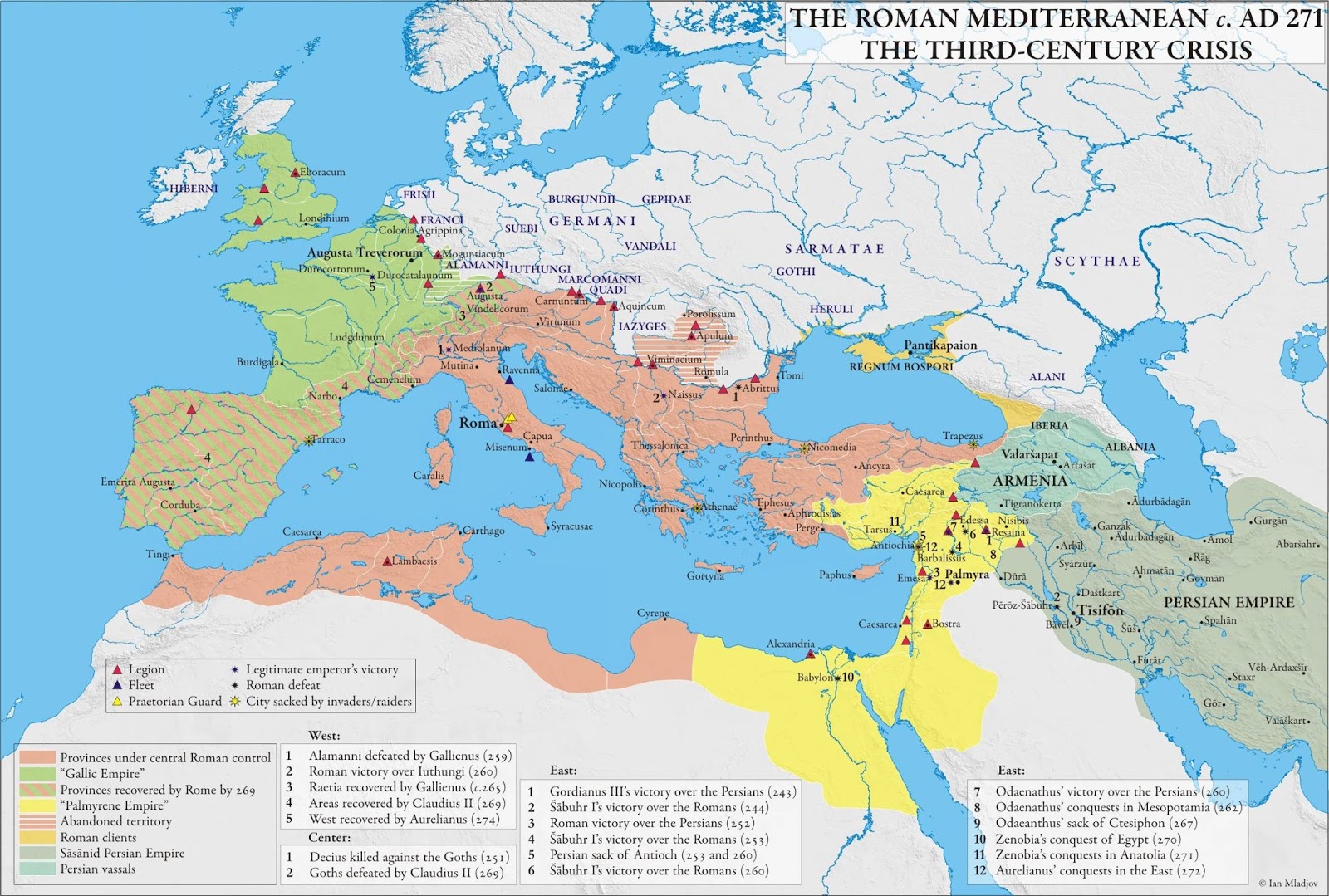
While Rome fought itself, its enemies seized the opportunity to attack. Along the northern frontiers, Germanic tribes such as the Goths, Alamanni, and Franks launched repeated invasions across the Rhine and Danube frontiers. Entire provinces were raided, cities were burned, and Roman defenses came under enormous pressure. Some invading armies even penetrated deep into Roman territory, reaching areas that had been secure for generations.
The eastern frontier faced an equally dangerous threat from the Shapur I and the powerful Sasanian Empire. Unlike earlier enemies, the Sasanians possessed a well-organized state capable of challenging Rome directly. They captured several important Roman cities and achieved one of the greatest victories ever won against Rome.
The most shocking moment came in AD 260, when Valerian was captured alive after the Battle of Edessa. Never before had a reigning Roman emperor been taken prisoner by a foreign enemy. The event stunned the Roman world and severely damaged the empire’s prestige. It demonstrated that Rome was no longer invincible and encouraged further invasions by both foreign powers and rebellious provinces.
At the same time, the empire began to fragment internally. In the west, the Gallic Empire broke away under Postumus, controlling Gaul, Britain, and parts of Hispania. Meanwhile, in the east, the wealthy city of Palmyra gradually became independent under Odaenathus and later Zenobia. For several years, Rome was effectively divided into three separate states, each governed independently.
Economic problems made the situation even worse. Constant warfare required enormous military spending, forcing emperors to reduce the silver content of Roman coins. This caused inflation, making money less valuable and increasing prices across the empire. Trade declined, businesses struggled, and many farmers abandoned their land because of heavy taxation and repeated invasions.
Disease also contributed to the crisis. Epidemics spread across the empire, reducing the population and weakening both the economy and the military. Fewer healthy citizens meant fewer recruits for the legions, while agricultural production declined in many regions. Combined with ongoing warfare, these outbreaks placed even greater strain on Roman society.
The Roman army itself also faced major difficulties. Instead of focusing solely on defending the empire, legions were frequently used in civil wars between rival emperors. Experienced soldiers died fighting fellow Romans rather than foreign invaders, leaving important frontiers exposed. Loyalty increasingly shifted from the empire to individual generals, making political instability even worse.
By the late AD 260s, many people believed that the Roman Empire might not survive. The government had lost control over large portions of its territory, foreign enemies attacked from every direction, and the economy was in serious decline. Confidence in imperial authority was fading, and the empire seemed to be falling apart.
It was into this desperate situation that Aurelian rose to power in AD 270. He inherited an empire divided by rebellion, weakened by invasion, and exhausted by decades of crisis. The challenges before him were enormous, and many believed they were impossible to overcome. Yet within only a few years, Aurelian would reunify the empire, defeat its greatest enemies, restore imperial authority, and earn the title Restitutor Orbis, meaning “Restorer of the World.” His achievements would mark one of the greatest recoveries in Roman history and prevent the empire from collapsing during its darkest hour.
Main Ideas
- The Crisis of the Third Century nearly destroyed the Roman Empire.
- Political instability led to constant civil wars and rapid changes of emperors.
- Germanic tribes and the Sasanian Empire invaded Roman territory.
- Emperor Valerian became the first Roman emperor captured by a foreign enemy.
- The Gallic Empire and the Palmyrene Empire split away from Rome.
- Inflation, heavy taxation, and declining trade weakened the economy.
- Disease reduced the empire’s population and military strength.
- Roman legions often fought each other instead of defending the borders.
- By AD 270, the empire appeared close to complete collapse.
- Aurelian inherited one of the most difficult situations in Roman history and would soon begin restoring the empire.
2. Who Was Emperor Aurelian? The Rise of Rome's Greatest Military Leader
Aurelian was one of the greatest emperors in Ancient Roman history, yet he is often less well known than figures such as Julius Caesar, Augustus, or Trajan. Despite ruling for only five years (AD 270–275), Aurelian achieved what many believed was impossible—he reunited a fractured empire, defeated powerful foreign enemies, restored confidence in Roman authority, and laid the foundations for the empire’s survival during one of its darkest periods.
Aurelian was born around AD 214 in the Roman province of Moesia or possibly nearby Pannonia, regions located along the empire’s vulnerable Danube frontier. Unlike many earlier emperors who came from wealthy aristocratic families, Aurelian was believed to have come from humble origins. Ancient sources suggest that his family was not part of Rome’s political elite, making his rise to supreme power even more remarkable.
Growing up near the frontier exposed Aurelian to the constant threat of barbarian invasions. Germanic tribes regularly crossed the Danube, forcing Roman armies to remain in a constant state of readiness. This environment shaped Aurelian into a hardened soldier from an early age. He joined the Roman army as a young man and quickly gained a reputation for courage, discipline, and exceptional leadership.
As Aurelian advanced through the military ranks, he distinguished himself in numerous campaigns against Rome’s enemies. He became known as a commander who was willing to fight alongside his soldiers rather than remain safely behind the lines. His strict discipline earned him respect within the army, while his ability to win difficult battles brought him increasing influence.
During the Crisis of the Third Century, military ability became one of the most important qualities for any Roman leader. The empire faced invasions on several frontiers while rival generals competed for the imperial throne. In this unstable environment, experienced commanders like Aurelian became essential to Rome’s survival.
Before becoming emperor, Aurelian served under Claudius II Gothicus, one of the few successful rulers during the crisis. Claudius achieved an important victory over the Goths at the Battle of Naissus, and Aurelian played a significant role in these military operations. His performance further strengthened his reputation as one of Rome’s finest generals.
When Claudius II died in AD 270, his brother Quintillus briefly claimed the throne. However, much of the Roman army supported Aurelian instead. Recognizing his military experience and leadership, the legions proclaimed him emperor. Shortly afterward, Quintillus died, leaving Aurelian as the undisputed ruler of the Roman Empire.
The empire Aurelian inherited was in an extremely dangerous condition. Large areas of the west were controlled by the Gallic Empire, while the east was dominated by the Palmyrene Empire under Zenobia. Germanic tribes continued crossing the empire’s frontiers, the economy was suffering from inflation, and political instability remained a constant threat.
Unlike many previous emperors who focused only on immediate military problems, Aurelian adopted a broader strategy. He understood that the empire could only survive if it was reunified, stabilized, and strengthened. Rather than defending individual regions separately, he aimed to restore Roman authority across the entire empire.
One of Aurelian’s greatest qualities was his ability to make quick and decisive decisions. He rarely allowed enemies time to recover and often launched rapid campaigns that surprised his opponents. His armies marched extraordinary distances in short periods, allowing him to respond to multiple threats across different frontiers within only a few years.
Aurelian also believed strongly in restoring the prestige of the Roman Empire. After decades of civil wars and defeats, many people had lost confidence in imperial authority. Through military victories, strict discipline, and determined leadership, Aurelian worked to convince both Romans and their enemies that the empire remained a powerful force.
Although his reign lasted only five years, Aurelian accomplished more than many emperors achieved in decades. He defeated invading tribes, reunited the empire, strengthened Rome’s defenses, introduced important reforms, and restored stability during one of the empire’s greatest crises. His achievements earned him the title Restitutor Orbis, meaning “Restorer of the World,” a recognition of his extraordinary contribution to Roman history.
Today, many historians regard Aurelian as one of the greatest military emperors Rome ever produced. Without his leadership, the Roman Empire might have permanently fragmented during the third century, dramatically changing the course of European and Mediterranean history.
Main Ideas
- Aurelian rose from humble origins to become Roman emperor.
- He built his reputation through military skill and discipline.
- He served successfully under Emperor Claudius II Gothicus.
- The army proclaimed Aurelian emperor in AD 270.
- He inherited an empire divided by rebellion and invasion.
- Aurelian aimed to reunify and stabilize the entire Roman Empire.
- His leadership combined rapid decision-making with military excellence.
- He restored confidence in Roman authority after decades of crisis.
- His short reign transformed the future of the empire.
- Aurelian earned the title Restitutor Orbis for saving and reuniting Rome.
3. Aurelian's Campaign Against the Palmyrene Empire and the Reconquest of the East
When Aurelian became emperor in AD 270, one of the greatest threats to the Roman Empire came from the east. The wealthy city of Palmyra, located in modern-day Syria, had grown into a powerful state that controlled much of Rome’s eastern territory. Although Palmyra had originally been a loyal ally of Rome, it eventually became an independent empire under the leadership of Zenobia. If Aurelian wanted to restore the Roman Empire, defeating the Palmyrene Empire was essential.
The rise of Palmyra began after the capture of Emperor Valerian by the Sasanian Empire in AD 260. Rome’s eastern frontier was left vulnerable, and the Palmyrene ruler Odaenathus stepped in to defend the region. He successfully defeated several Persian armies and restored stability, earning the trust of the Roman government.
After Odaenathus was assassinated, power passed to his wife, Queen Zenobia, who ruled as regent for her young son, Vaballathus. Zenobia proved to be an ambitious and highly capable ruler. Over the next few years, she expanded Palmyrene control beyond Syria, conquering Egypt, much of Asia Minor, and several eastern Roman provinces. Although she initially claimed loyalty to Rome, her growing independence made it clear that she intended to establish a powerful empire of her own.
By the time Aurelian became emperor, the Roman Empire had effectively lost control of much of its eastern territory. This was unacceptable to Aurelian, who believed that the empire could only survive if it remained united. After securing the northern frontiers against invading tribes, he turned his full attention toward the east.
In AD 272, Aurelian launched a major military campaign against the Palmyrene Empire. His advance was fast and carefully planned. As his army moved through Asia Minor, many cities surrendered without resistance because they recognized the strength of the Roman army and preferred peaceful submission over destruction. Aurelian often showed mercy toward cities that surrendered voluntarily, helping him gain support as he advanced.
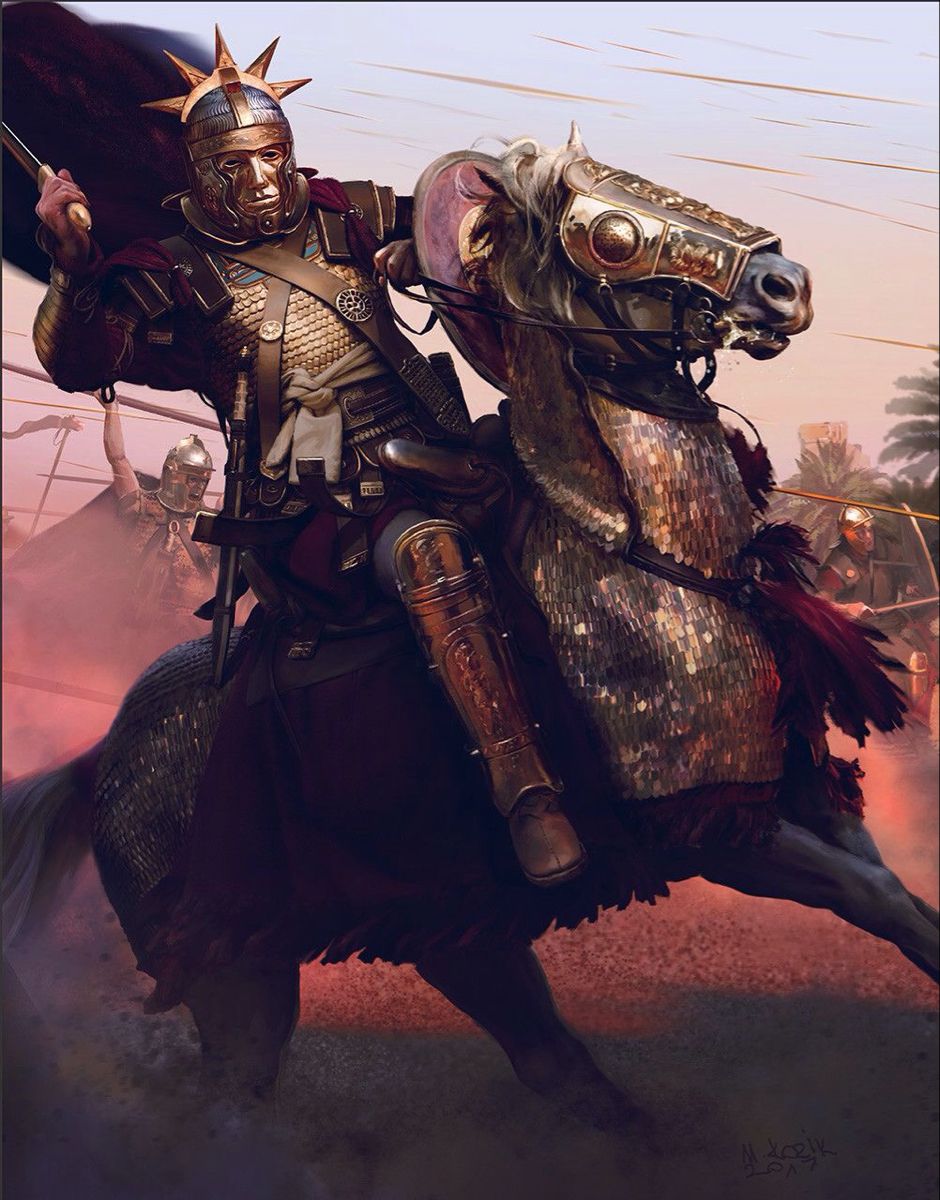
The decisive stage of the campaign came near the city of Antioch, where Roman forces met Zenobia’s army at the Battle of Immae. The Palmyrene army possessed powerful heavily armored cavalry known as cataphracts, which were among the strongest mounted troops of the ancient world. Rather than attacking them head-on, Aurelian used clever tactics. Roman cavalry pretended to retreat, drawing the heavily armored horsemen into a long pursuit. Once the Palmyrene cavalry became exhausted, the Romans turned and counterattacked, winning a decisive victory.
Zenobia retreated south to Emesa, where another major battle took place. Once again, Aurelian defeated the Palmyrene forces despite their strong cavalry and determined resistance. These consecutive victories broke the military strength of the Palmyrene Empire and forced Zenobia to withdraw to the heavily fortified city of Palmyra.
Aurelian then laid siege to Palmyra. The city was protected by impressive walls and located deep in the Syrian desert, making it difficult to capture. As supplies became scarce, Zenobia attempted to escape eastward to seek assistance from the Persian Empire. Before she could reach safety, Roman cavalry intercepted and captured her near the Euphrates. With their queen captured, the defenders of Palmyra surrendered to Aurelian.
Rather than destroying the city immediately, Aurelian initially treated Palmyra with restraint. However, the following year the city revolted again while Aurelian was campaigning elsewhere. This time he responded much more harshly. The rebellion was crushed, and Palmyra lost its status as one of the wealthiest and most influential cities in the eastern Mediterranean.
The defeat of the Palmyrene Empire was one of Aurelian’s greatest achievements. By reconquering the eastern provinces, he restored Roman control over vital trade routes, secured Egypt’s grain supply, and reunited nearly half of the empire that had been lost during the Crisis of the Third Century. His victory also demonstrated that Rome remained strong enough to defeat even the most powerful breakaway states.
The reconquest of the east marked a turning point in Aurelian’s reign. With Palmyra defeated, he could now focus on recovering the western provinces and completing the reunification of the Roman Empire. His campaign against Zenobia remains one of the finest examples of Roman military leadership, combining speed, strategy, discipline, and decisive action to restore imperial authority.
Main Ideas
- The Palmyrene Empire became independent during Rome’s Third Century Crisis.
- Queen Zenobia expanded Palmyrene rule across the eastern Roman provinces.
- Aurelian launched a major campaign to restore Roman control.
- The Romans defeated Palmyra at the Battles of Immae and Emesa.
- Zenobia was captured while attempting to flee to the Persian Empire.
- Palmyra surrendered, ending its independence.
- A later revolt led to the city’s final defeat and decline.
- The reconquest restored Rome’s eastern provinces and important trade routes.
- Aurelian proved that the Roman Empire could still defeat major rivals.
- The victory prepared the way for the reunification of the entire Roman Empire.
4. How Aurelian Defeated the Gallic Empire and Reunified the Roman Empire
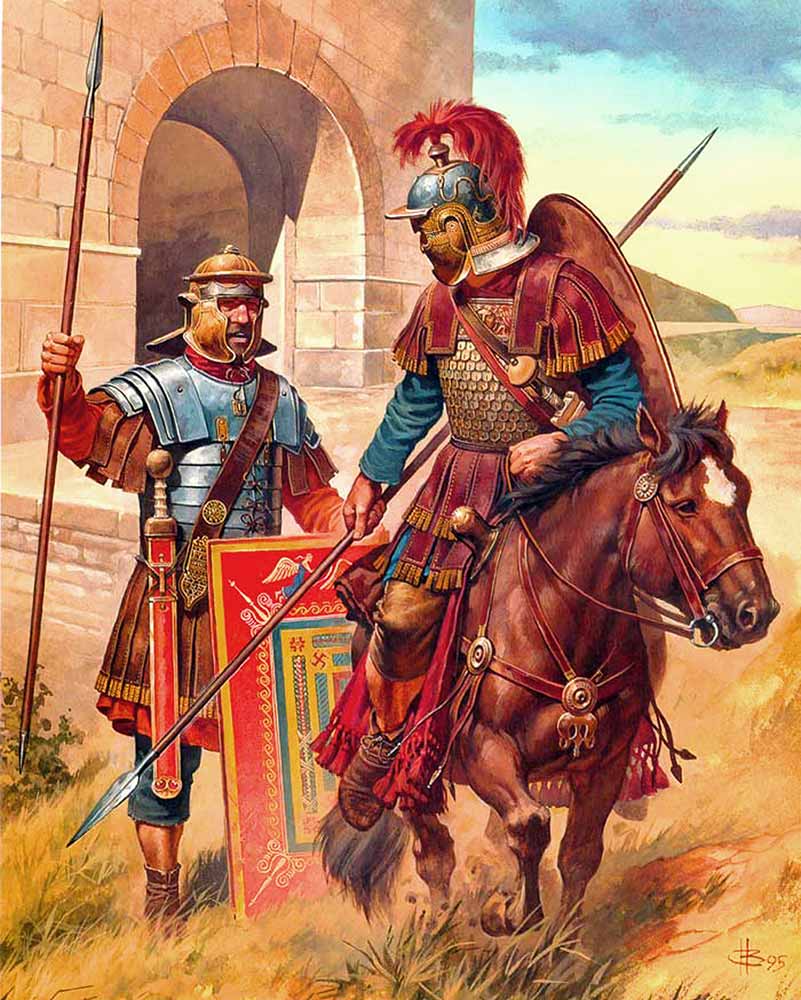
After defeating the Palmyrene Empire and restoring Roman control over the eastern provinces, Aurelian turned his attention to the west. Although the eastern half of the empire had been recovered, Rome was still divided because the Gallic Empire remained independent. If Aurelian truly wanted to save the Roman Empire, he needed to reunite these western provinces under a single Roman government.
The Gallic Empire had been created during the Crisis of the Third Century in AD 260 after the Roman general Postumus declared himself emperor. At its greatest extent, the breakaway state controlled Gaul, Britain, and, for a time, parts of Hispania. Although it had separated from Rome politically, the Gallic Empire still preserved many Roman traditions. It had its own emperors, army, government, and administration, making it more than just a rebellion—it was effectively a rival Roman state.
By the time Aurelian prepared his western campaign, the Gallic Empire had become weaker than it had been under Postumus. Several rulers had succeeded one another in quick succession, creating political instability similar to that experienced by the central Roman government. Eventually, Tetricus I became emperor, but he inherited a state struggling with internal problems and increasing military pressure.
Unlike many earlier Roman emperors, Aurelian understood that simply defeating the Gallic army was not enough. His larger goal was to restore the unity of the Roman Empire without causing unnecessary destruction to provinces that were already Roman in culture. The people living in Gaul and Britain were not foreign enemies—they were Roman citizens who had been separated by years of political chaos.
In AD 274, Aurelian marched west with his experienced legions. As he advanced, his reputation as the conqueror of the Palmyrene Empire encouraged many communities to support him rather than resist. His victories in the east had restored confidence in the imperial government, and many believed that Aurelian was finally capable of ending decades of division.
The decisive confrontation occurred at the Battle of Châlons in Gaul. Although the exact details of the battle remain uncertain, ancient sources agree that it was the decisive engagement between Aurelian and Tetricus. Roman forces defeated the Gallic army, ending the independence of the breakaway empire once and for all.
According to several ancient accounts, Tetricus may have secretly communicated with Aurelian before the battle, asking for protection in exchange for ending the conflict. While historians continue to debate whether this story is completely accurate, it reflects the difficult position Tetricus faced. His authority was weakening, and many within the Gallic Empire recognized that reunification offered greater stability than continued separation.
After the victory, Aurelian demonstrated one of the qualities that made him such an effective ruler—mercy. Instead of executing Tetricus, as many Roman emperors might have done, Aurelian spared his life. He even granted him an important administrative position in Italy after the war. This act showed that Aurelian preferred reconciliation over revenge whenever possible, helping to heal the divisions created during the Third Century Crisis.
The defeat of the Gallic Empire reunited the western provinces with the rest of the Roman Empire. For the first time in many years, the empire was once again governed by a single emperor. The provinces of Gaul, Britain, and Hispania returned to imperial control, restoring Rome’s authority across much of Western Europe.
The reunification also brought important economic and military benefits. Trade routes that had been disrupted by years of division could now operate more efficiently, tax revenues returned to the central government, and Roman armies no longer had to prepare for conflict with rival Roman states. Instead, they could focus once again on defending the empire’s frontiers against external enemies.
Aurelian celebrated his achievements with a magnificent triumph in the city of Rome. The celebration honored his victories over both the Palmyrene Empire and the Gallic Empire, symbolizing the restoration of Roman unity after years of chaos. During the triumph, captured enemies and symbols of victory were displayed before the Roman people, demonstrating that the empire had survived its greatest crisis.
For these extraordinary achievements, Aurelian received the title Restitutor Orbis, meaning “Restorer of the World.” It was one of the highest honors a Roman emperor could receive and reflected the enormous importance of his accomplishments. In only a few years, he had reunited an empire that many believed was beyond saving.
Although Aurelian’s reign would end only a year later with his assassination, his victory over the Gallic Empire completed the reunification of Rome. Without his leadership, the empire might have remained permanently divided into separate states. Instead, Aurelian restored the political unity that allowed the Roman Empire to survive for centuries after the Crisis of the Third Century.
Main Ideas
- The Gallic Empire controlled Gaul, Britain, and parts of Hispania after breaking away from Rome.
- Aurelian sought reunification rather than the destruction of the western provinces.
- The decisive victory came at the Battle of Châlons in AD 274.
- Emperor Tetricus I was defeated and later spared by Aurelian.
- The western provinces were peacefully reintegrated into the Roman Empire.
- Reunification restored trade, taxation, and military coordination.
- Aurelian celebrated a triumph in Rome after his victories.
- He earned the title Restitutor Orbis for restoring the empire.
- The Roman Empire was once again united under a single emperor.
- Aurelian’s victory ensured the survival of the Roman Empire during its greatest crisis.

5. The Aurelian Walls: Why Rome Needed Massive New Defenses
After reunifying the Roman Empire, Aurelian turned his attention to a problem that revealed just how dangerous the Crisis of the Third Century had become: even the city of Rome itself was no longer safe. For centuries, Rome had relied on its distance from the frontiers and the strength of its armies to protect it. But repeated invasions, civil wars, and the collapse of border security meant that enemy forces had come closer to Italy than ever before. For the first time in centuries, the capital needed serious fortifications.
This led to the construction of the Aurelian Walls, one of the most important military building projects in Roman history. These walls were designed to protect Rome from both external invasions and internal threats during a time when political instability made the empire unpredictable. The project reflected Aurelian’s understanding that military victory alone was not enough—the empire also needed long-term structural security.
The decision to build massive walls around Rome marked a major shift in Roman thinking. For much of its earlier history, Rome had not been heavily fortified because it was believed to be secure at the center of the empire. However, during the third century, this assumption became dangerously outdated. Germanic invasions had reached northern Italy, and the city could no longer depend on frontier armies alone for protection.
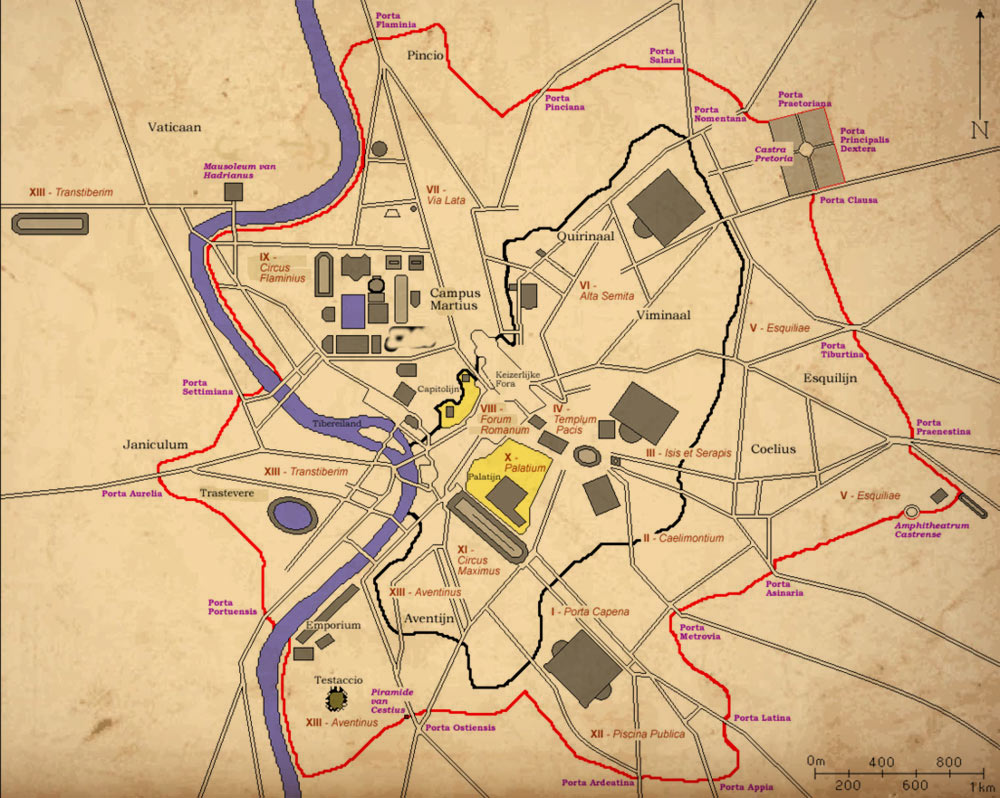
Construction of the Aurelian Walls began around AD 271 and was carried out at extraordinary speed for such a large engineering project. Roman soldiers themselves played a major role in building the fortifications, demonstrating once again the dual military-engineering nature of the Roman army. The walls stretched for approximately 19 kilometers, encircling the city with a strong defensive barrier made of brick-faced concrete.
The design of the walls reflected both practicality and urgency. They were built quickly but still incorporated strong defensive features, including towers, gatehouses, and elevated platforms for defenders. These structures allowed Roman soldiers to monitor and respond to threats effectively. The walls were not intended to make Rome invincible, but rather to delay and deter attackers long enough for imperial forces to respond.
One of the key reasons for the walls’ construction was the mobility of enemy forces during this period. Germanic tribes had become more organized and capable of large-scale raids. Without proper defenses, Rome itself could be vulnerable to sudden attack. The walls ensured that even if enemy forces reached Italy, they would face a heavily fortified capital city.
The Aurelian Walls also had a psychological purpose. They symbolized the reality of the third-century crisis: Rome was no longer untouchable. At the same time, they demonstrated that the empire was still strong enough to adapt and defend itself. The walls reassured the population that the capital was secure, helping to restore confidence after decades of instability.
Although Aurelian initiated the project, the walls were completed under later emperors. This shows the long-term importance of the project, as it continued beyond his reign. The fact that later rulers maintained and expanded the walls demonstrates how effective and necessary they were for the security of the city.
The construction of these defenses did not replace Roman military strength—it complemented it. Rome still relied on its legions to defend the frontiers, but now the capital itself had a physical barrier against sudden invasion. This combination of field armies and fortified infrastructure reflected a more defensive and realistic approach to empire management.
Aurelian’s decision to fortify Rome is considered one of his most important reforms. It showed that he understood the deeper weaknesses of the empire, not just its military enemies. By strengthening the heart of Roman power, he ensured that even in times of crisis, the capital would not fall easily.
The Aurelian Walls remain one of the most enduring physical legacies of his reign, standing for centuries as a reminder of the period when Rome had to defend itself from threats both outside and inside its borders. They symbolize the transformation of Rome during the third century—from an expansionist superpower to an empire that now had to protect its own survival.
Main Ideas
- Rome became vulnerable during the Crisis of the Third Century.
- Aurelian ordered the construction of the Aurelian Walls around Rome.
- The walls were built quickly using Roman soldiers and engineers.
- They stretched about 19 kilometers around the city.
- The walls included towers, gates, and defensive positions.
- They were designed to defend against invasions and raids.
- The project marked a shift toward a more defensive Roman strategy.
- The walls had both practical and psychological importance.
- They were completed under later emperors but based on Aurelian’s plan.
- The Aurelian Walls became one of Rome’s most important defenses.
7. Why Aurelian Earned the Title Restitutor Orbis ("Restorer of the World") and His Lasting Legacy
The reign of Aurelian was short, lasting only from AD 270 to AD 275, but its impact on Roman history was enormous. In just a few years, he accomplished what many thought impossible during the Crisis of the Third Century: he reunited a fractured empire, restored military authority, strengthened defenses, and reestablished confidence in Roman power. Because of these achievements, he was awarded the honorary title Restitutor Orbis, meaning “Restorer of the World.”
This title was not given lightly. It reflected the fact that the Roman Empire had been on the verge of breaking apart before Aurelian’s rise. Large regions had been lost to breakaway states like the Gallic Empire in the west and the Palmyrene Empire in the east. At the same time, foreign invasions, civil wars, and economic collapse had weakened imperial authority. Many contemporaries believed Rome might never recover its unity.
Aurelian changed this situation through a series of rapid and decisive military campaigns. He first secured the Danube frontier, then defeated the Palmyrene Empire, and finally conquered the Gallic Empire. These victories restored Roman control over all major territories and brought the empire back under a single ruler for the first time in years. Unlike many previous emperors, Aurelian did not simply defend existing territory—he actively reconquered lost provinces and restored imperial borders.
However, Aurelian’s legacy was not based only on military success. He also strengthened the internal stability of the empire. He introduced reforms to improve discipline within the army, reorganized provincial administration, and addressed economic instability caused by years of crisis. His efforts helped restore confidence in Roman governance at a time when loyalty to the central government had been severely weakened.
Another major part of his legacy was his focus on defensive infrastructure, especially the construction of the Aurelian Walls. By fortifying the capital city, he acknowledged the reality that Rome was no longer immune to attack. This decision reflected a more realistic and strategic approach to imperial defense, ensuring that even if frontier regions were threatened, the heart of the empire would remain secure.
Aurelian also worked to restore traditional Roman religious and cultural unity. He promoted the worship of Sol Invictus, a sun deity that he supported as a unifying religious figure across the empire. While this policy did not replace existing beliefs, it was intended to strengthen unity by encouraging shared religious identity during a time of division.
Despite his achievements, Aurelian’s reign ended abruptly when he was assassinated in AD 275 by members of his own administration. Ironically, the emperor who had restored order to the empire fell victim to internal political conspiracy. His death showed that although he had stabilized Rome externally, internal political instability had not yet been fully resolved.
Even after his death, Aurelian’s impact remained deeply felt. The empire he left behind was significantly stronger and more unified than the one he had inherited. His successors were able to build upon his reforms, and the Roman Empire continued to survive for centuries in both the West and the East.
Historians often regard Aurelian as one of the most effective “military savior emperors” in Roman history. While he ruled for a short time, his actions prevented the empire from permanently fragmenting during its most dangerous crisis. Without his leadership, it is possible that the Roman world would have broken into separate kingdoms long before the eventual fall of the Western Empire.
Ultimately, Aurelian earned the title Restitutor Orbis because he did far more than defend Rome—he restored its unity, rebuilt its strength, and revived its authority. His legacy is that of a ruler who saved an empire at the edge of collapse and proved that even in its darkest moment, Rome was still capable of recovery.
Main Ideas
- Aurelian earned the title Restitutor Orbis for restoring the empire.
- He reunified Rome by defeating the Gallic and Palmyrene Empires.
- His reign restored military strength and imperial authority.
- He introduced reforms to stabilize the army and administration.
- The Aurelian Walls strengthened Rome’s long-term defense.
- He promoted Sol Invictus to encourage cultural unity.
- His assassination in AD 275 ended his short reign.
- Despite his death, his reforms stabilized the empire.
- He prevented the permanent fragmentation of the Roman world.
- Aurelian is remembered as one of Rome’s greatest crisis emperors.