Roman theatres were some of the most important entertainment venues in the ancient Roman world. They were places where thousands of people could gather to watch comedies, tragedies, music, poetry, dancing, and other performances. Theatre was not simply a form of entertainment; it was also an important part of Roman culture and social life.
Roman theatre developed from earlier Greek theatrical traditions, but the Romans gradually created their own styles, buildings, performances, and traditions. As Rome expanded, theatres appeared across the Roman Empire, from Italy and Spain to North Africa, Gaul, Greece, and the eastern Mediterranean.
The design of Roman theatres was also an impressive achievement of Roman architecture. Unlike many earlier Greek theatres that were built into natural hillsides, Roman engineers could construct theatres as largely freestanding buildings. They used arches, concrete, stone, and carefully planned seating to create enormous structures capable of holding large crowds.
Inside the theatre, audiences were divided according to social status. Important citizens and members of the elite generally received better seating, while ordinary Romans sat farther away from the stage. This made the theatre a place where Roman social hierarchy could be seen clearly.
Performers also played an important role. Actors, musicians, dancers, and entertainers could become well known, although acting was not always considered a prestigious profession by the Roman elite. Roman audiences enjoyed both serious and humorous performances, with comedy proving especially popular.
Some Roman theatres became enormous architectural landmarks. Famous examples include the Theatre of Marcellus in Rome, the Roman Theatre of Orange in Gaul, and the Theatre of Aspendos in modern Turkey. Many Roman theatres have survived as ruins, allowing archaeologists and historians to study how Romans experienced public entertainment.
Theatre also changed over time. As the Roman Empire developed, audiences were offered an increasingly wide range of public spectacles and performances. Theatre existed alongside amphitheatre games, chariot racing, festivals, and other forms of entertainment.
Today, Roman theatres provide an important window into ancient Roman culture. Their architecture reveals the engineering abilities of Roman builders, while their performances and audiences reveal how Romans spent their free time and interacted with one another.
From small provincial theatres to enormous venues in major cities, Roman theatres brought entertainment to millions of people across the empire and left a lasting architectural and cultural legacy.
I. How Roman Theatres Developed and Became Popular
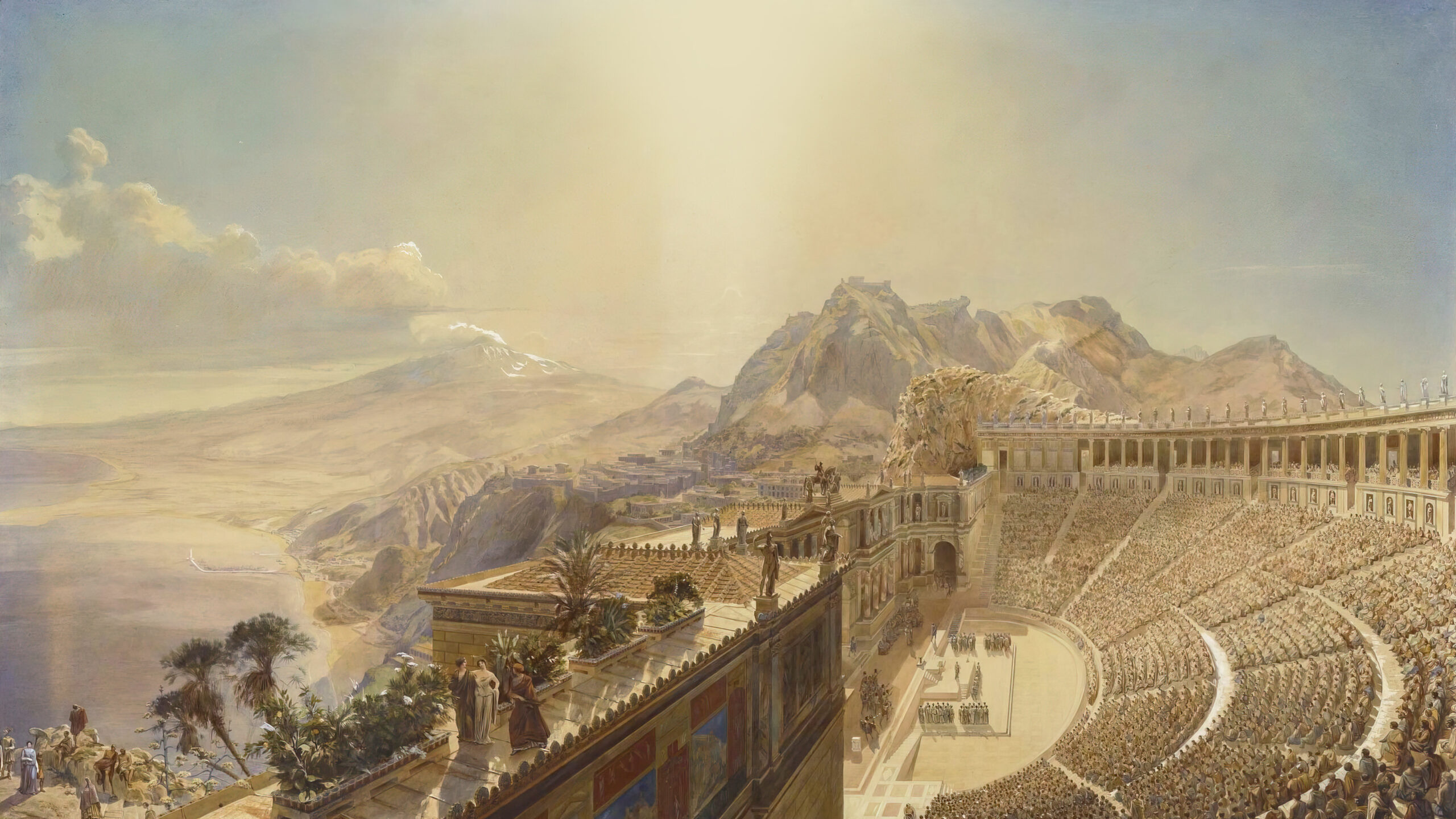
The history of Roman theatre began before the Romans had developed the enormous stone theatres that we associate with the Roman Empire. Early Roman entertainment was influenced by several different traditions, including Greek theatre, performances from southern Italy, and older Italian festivals and public celebrations.
The Romans encountered highly developed Greek theatrical traditions as they expanded into southern Italy and later conquered the Greek world. Greek cities already had theatres where audiences watched comedies, tragedies, music, and dramatic performances. Roman writers and performers adopted many Greek ideas but gradually changed them to suit Roman audiences and Roman culture.
Early Roman theatrical performances were often connected to religious festivals. Public games, known as ludi, were organized in honor of Roman gods, and entertainment became part of these celebrations. Performances could include plays, music, dancing, and other forms of entertainment. These events were usually organized by wealthy politicians or officials, who could gain popularity by providing impressive public entertainment.
One of the important developments in Roman theatre was the growth of professional performers. Actors and entertainers could travel between cities looking for opportunities to perform. Some became well known, although professional acting was often viewed negatively by members of the Roman elite.
During the Roman Republic, permanent stone theatres were relatively uncommon in Rome itself. Temporary wooden structures could be constructed for festivals and performances. Roman authorities sometimes worried that permanent theatres might encourage large crowds or behavior they considered undesirable.
This changed during the late Republic and early Empire. In 55 BC, the politician Pompey the Great constructed the Theatre of Pompey, the first permanent stone theatre in Rome. The enormous complex could accommodate a huge audience and demonstrated how theatre had become an important part of Roman public life.
Later, Augustus and other Roman leaders continued to support public entertainment. The emperor’s government recognized that festivals and performances could attract large crowds and contribute to the cultural life of Rome. The construction of new theatres also became a way for wealthy individuals and emperors to display their wealth, power, and generosity.
As Rome expanded, theatres spread throughout the Roman Empire. Cities in Spain, Gaul, North Africa, Greece, and Asia Minor built their own theatres. Local communities could adapt Roman theatrical traditions to their own cultures, creating a diverse entertainment network across the empire.
Roman theatre therefore developed through a combination of Greek influence, Italian traditions, Roman religious festivals, and political sponsorship. What began as performances connected with festivals eventually became a major part of Roman urban culture.
By the beginning of the Roman Empire, theatres were no longer unusual temporary attractions. They had become important public buildings where people from different parts of society could gather for entertainment, social interaction, and major public celebrations.
Main Ideas
- Roman theatre was strongly influenced by Greek theatrical traditions.
- Early performances were often connected with religious festivals and public games.
- Professional actors and entertainers became increasingly important.
- The Theatre of Pompey, built in 55 BC, was Rome’s first permanent stone theatre.
- Theatres eventually spread throughout the Roman Empire.
II. How Roman Theatres Were Designed and Built
Roman theatres were impressive examples of ancient Roman architecture and engineering. As theatre became more popular, Roman builders developed large structures that could hold thousands of spectators while providing good views and sound across the entire building.
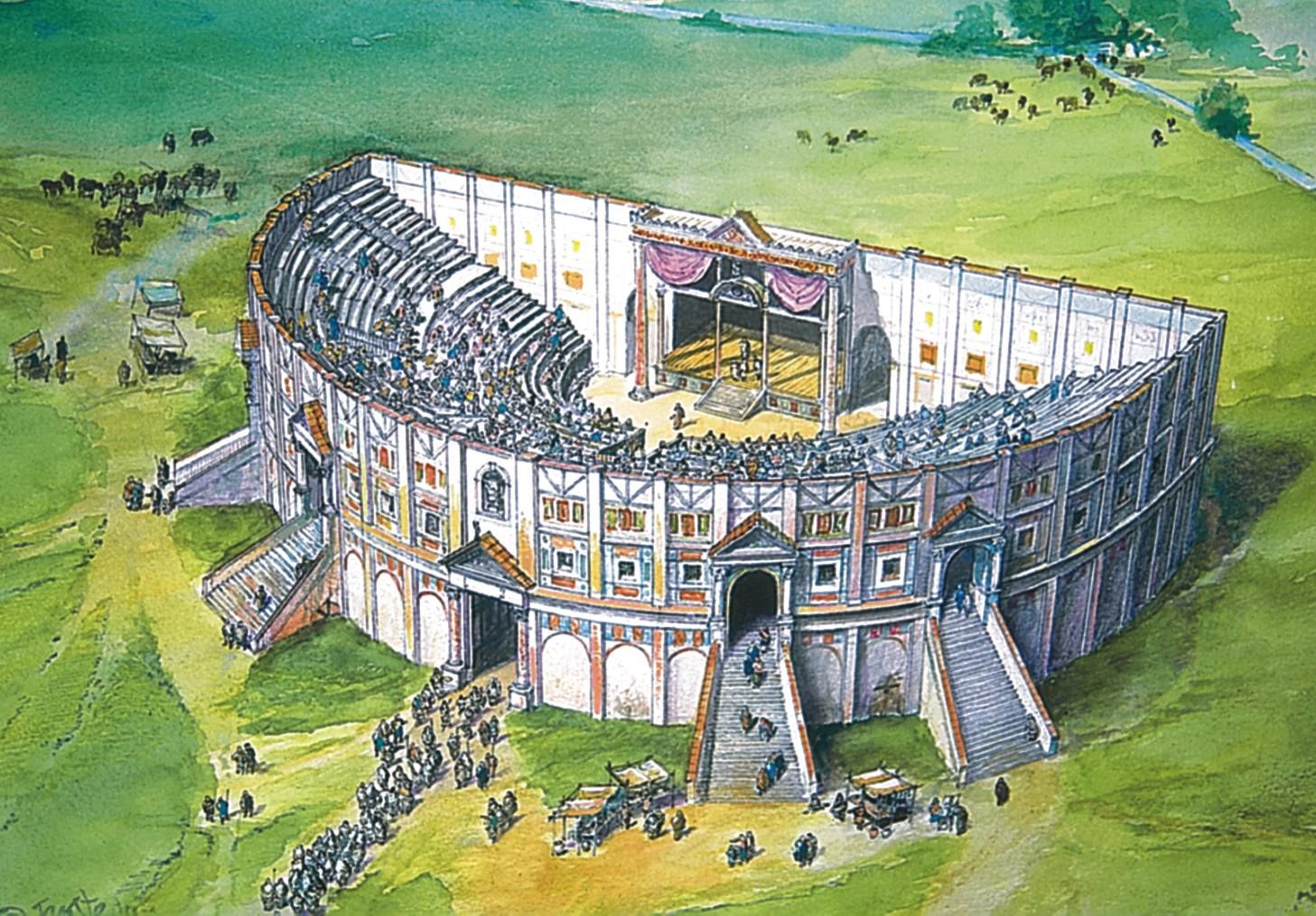
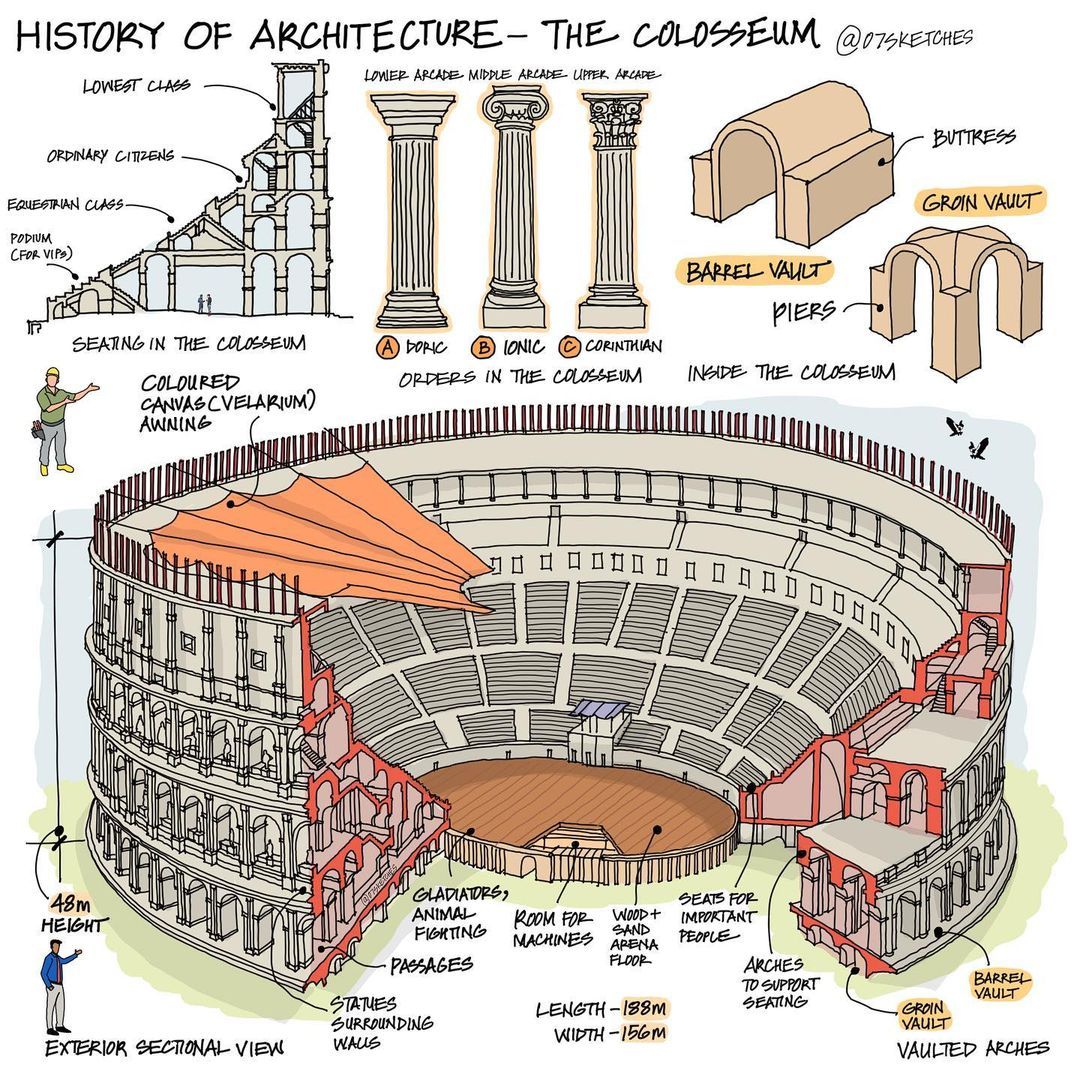
One major difference between Greek and Roman theatres was the way they were constructed. Many Greek theatres were built into the natural slopes of hills, using the landscape to create seating areas. Roman engineers, however, developed techniques that allowed theatres to be built as largely freestanding structures. They used arches, vaults, concrete, and strong foundations to support enormous buildings.
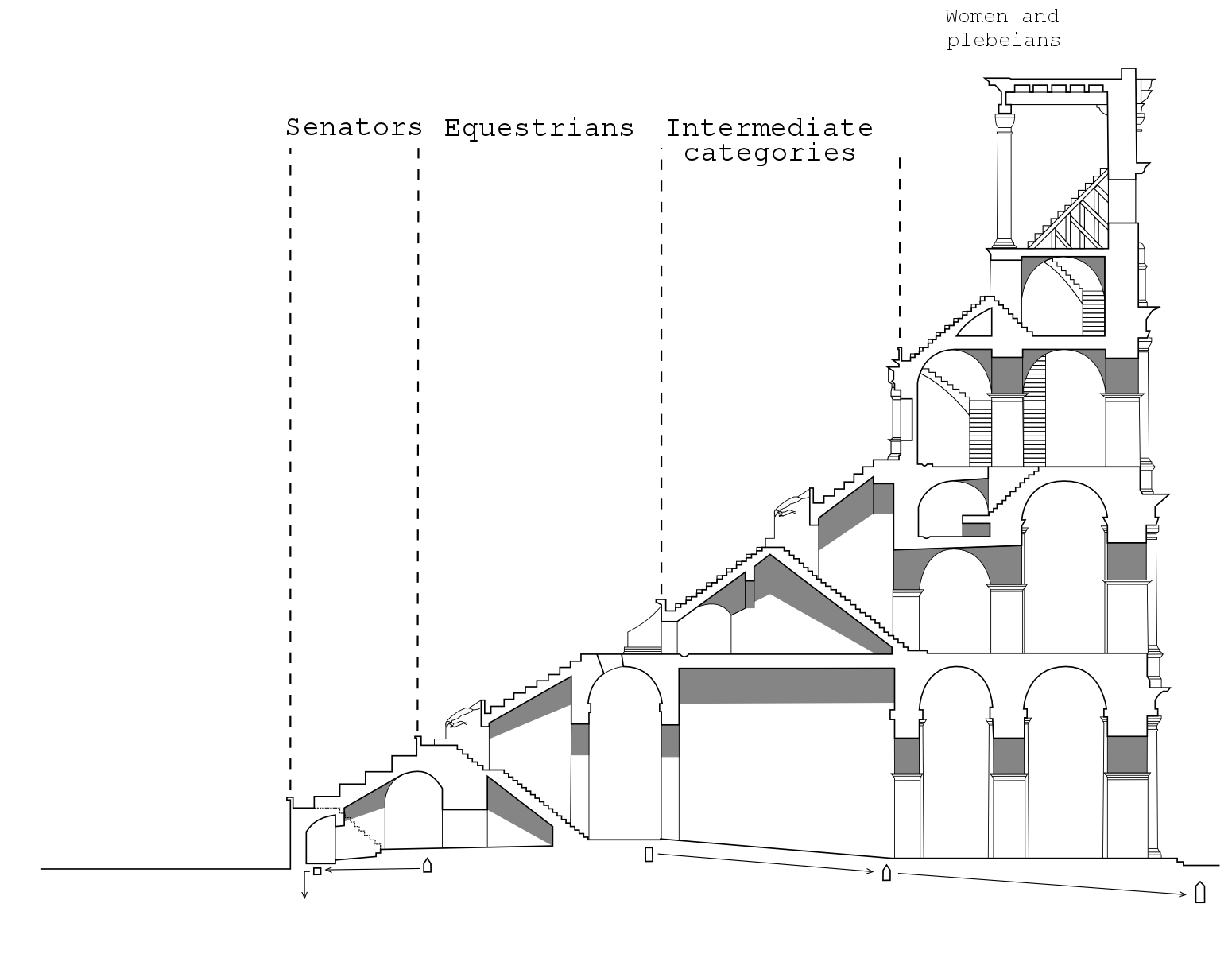
A typical Roman theatre had several important parts. The large semicircular seating area was called the cavea. This was where spectators sat during performances. The seating was divided into different sections, and a person’s position could depend on their social status. Wealthy and important citizens generally received better seats closer to the stage, while people of lower status sat farther away.
At the front was the orchestra, a semicircular area between the audience and the stage. Unlike in many Greek theatres, where the orchestra was particularly important for the chorus, Roman theatres placed greater emphasis on the stage itself.
The performance area was called the pulpitum. This raised platform provided actors with a clear space to perform in front of the audience. Behind it stood one of the most recognizable features of Roman theatre architecture: the enormous scaenae frons, or decorated stage building.
The scaenae frons could be several stories high and was often decorated with columns, statues, arches, and elaborate architectural details. It created an impressive background for performances and demonstrated the wealth of the city or individual who had financed the theatre.
Roman theatres also contained extensive passageways and entrances. These allowed large numbers of spectators to enter and leave efficiently. The Romans used carefully designed corridors and stairways to organize the crowds and direct people toward their assigned seating areas.
Another important feature was the theatre’s acoustics. Roman architects carefully considered the shape and materials of the building so that actors’ voices could reach large audiences. The semicircular seating arrangement helped spectators see and hear the performance from many different positions.
Some theatres also had systems for providing protection from the sun and weather. Large awnings called vela could sometimes be stretched over parts of the audience area, providing shade during performances.
Theatres were also expensive buildings. Construction required huge quantities of stone, concrete, marble, timber, and metal, as well as skilled architects, engineers, craftsmen, and laborers. Wealthy citizens, local governments, and emperors could finance these projects as demonstrations of wealth and public generosity.
As the Roman Empire expanded, local cities built theatres according to Roman architectural principles while adding their own regional styles. Some were relatively small, while others could accommodate thousands of spectators.
Roman theatres therefore combined engineering, architecture, social organization, and entertainment. Their carefully planned seating, stage buildings, entrances, and decorations created spaces that were not only functional but also visually impressive.
Many of these structures survived for centuries, and their ruins can still be seen today. They provide historians with valuable evidence about how Romans designed their cities and created spaces for public entertainment and social gatherings.
Main Ideas
- Roman theatres used advanced engineering and architecture.
- The cavea contained the audience seating.
- The pulpitum was the main raised stage for performers.
- The scaenae frons created an elaborate architectural background.
- Roman theatres combined entertainment, engineering, and social organization.
III. Roman Plays: Comedy, Tragedy, and Other Performances
Roman theatres offered audiences a wide variety of performances and entertainment. Although Roman theatre was strongly influenced by Greek drama, Roman writers and performers developed their own styles that appealed to the tastes of Roman audiences. People could watch comedies, tragedies, musical performances, mime, pantomime, and other dramatic shows.
One of the most popular forms was comedy. Roman comedies often focused on ordinary problems involving family, money, romance, mistaken identities, and clever servants. The situations could be exaggerated and humorous, giving audiences an opportunity to escape from the seriousness of everyday life.
Two of the most famous Roman comic playwrights were Plautus and Terence. Plautus, who lived during the Roman Republic, was known for energetic and humorous plays featuring exaggerated characters and complicated situations. Terence used a more controlled and sophisticated style and was particularly influenced by Greek comedy.
Roman audiences could also watch tragedies. These performances dealt with serious subjects such as revenge, power, family conflict, suffering, and the actions of gods and heroes. Some Roman tragedies were based on famous Greek stories, while others adapted mythological subjects for Roman audiences.
During the Roman Empire, theatrical entertainment became increasingly diverse. One particularly popular form was mime, which could involve short scenes, jokes, music, dancing, and exaggerated physical performances. Unlike the modern meaning of “mime,” Roman mime could include spoken dialogue and sometimes large casts.
Another important form was pantomime. A pantomime performer usually acted out stories through movement, gestures, dance, and facial expressions, while another performer or singers could provide the spoken or sung elements. These performances could tell stories about gods, heroes, and famous mythological events.
Music was also an important part of Roman performances. Musicians and singers could accompany actors and dancers, creating a more dramatic atmosphere. Instruments such as flutes, percussion instruments, and stringed instruments were used in different forms of entertainment.
Roman theatre was also connected to public festivals. Performances could be organized as part of religious celebrations and public games. Wealthy politicians and officials sometimes financed entertainment as a way of demonstrating their generosity and importance to the population.
The subjects performed in theatres could vary greatly. Some shows were based on Greek mythology, while others focused on everyday Roman life. Audiences could therefore encounter stories about gods and heroes alongside humorous situations involving families, servants, merchants, and lovers.
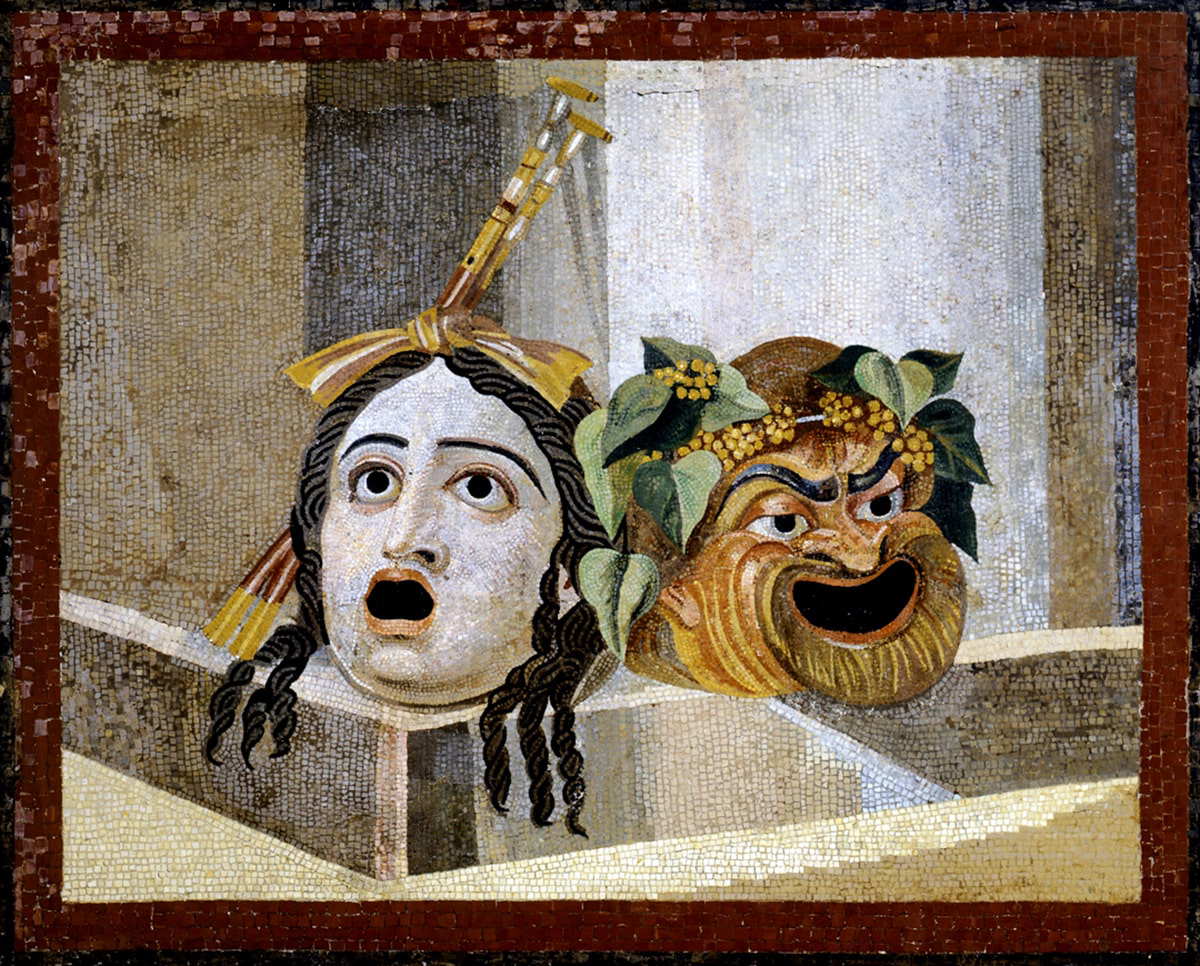
Theatre also allowed Roman performers to experiment with costumes, masks, music, scenery, and stage effects. These elements helped create different characters and settings and made performances more visually interesting.
However, theatre was not considered equally respectable by everyone in Roman society. Some members of the Roman elite looked down on professional actors, even though they themselves could enjoy theatrical performances. This created an interesting contrast: acting could have low social status while theatre itself remained an extremely popular form of public entertainment.
Roman plays and performances therefore combined Greek traditions with Roman tastes. Whether audiences wanted laughter, serious drama, music, dancing, or mythology, Roman theatres provided a wide range of entertainment that became an important part of Roman cultural life.
Main Ideas
- Roman theatres offered comedy, tragedy, mime, pantomime, music, and dance.
- Plautus and Terence were important Roman comic playwrights.
- Tragedies often explored power, revenge, suffering, and mythology.
- Mime and pantomime became especially popular forms of entertainment.
- Theatre was an important part of Roman festivals and cultural life.
IV. Famous Roman Playwrights and Actors
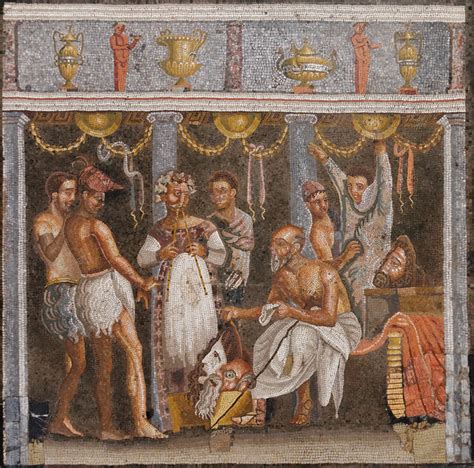
Roman theatre became successful partly because of the talented writers and performers who created entertainment for Roman audiences. Some Roman playwrights became famous for their comedies and tragedies, while actors, singers, dancers, and other performers brought these works to life on stage.
One of the earliest and most important Roman playwrights was Plautus, who lived during the late 3rd and early 2nd centuries BC. He became famous for his comedies, many of which were influenced by earlier Greek plays. However, Plautus adapted these stories for Roman audiences, adding jokes, wordplay, exaggerated characters, and situations that appealed to Roman tastes.
Plautus often included clever servants, confused fathers, young lovers, greedy characters, and mistaken identities. His plays were designed to entertain large audiences, and his energetic style helped make Roman comedy extremely popular.
Another major Roman playwright was Terence, who lived during the 2nd century BC. Terence also adapted Greek comedy, but his writing style was generally more controlled and focused on relationships between characters. His plays explored subjects such as family disagreements, friendship, love, and misunderstandings.
Although Plautus and Terence were both influenced by Greek theatre, their works became important examples of Roman comedy. Their surviving plays give historians valuable information about Roman entertainment and the development of Latin literature.
Roman tragedy also had important writers. Seneca, a philosopher, statesman, and writer who lived during the 1st century AD, wrote several tragedies based on Greek mythology. His plays explored dramatic subjects involving revenge, family conflict, violence, power, and the actions of gods and heroes. Seneca’s tragedies later became influential among European writers.
The people who performed these works were equally important. Roman actors could perform many different types of roles, sometimes using costumes, masks, exaggerated movements, and distinctive voices to identify their characters.
Professional performers could become well known, but acting did not always have a high social reputation. Members of the Roman elite sometimes looked down on professional actors, even though theatrical performances were extremely popular with the public. This demonstrates an interesting difference between social status and popularity.
Actors were not the only performers in Roman theatres. Musicians, singers, dancers, and pantomime performers could all participate in productions. Pantomime performers became particularly popular during the Roman Empire because they could communicate stories through gesture, movement, and dance.
Some performers could achieve considerable fame and earn substantial rewards. Successful entertainers could attract large audiences and become recognized throughout a city or even beyond it. Their popularity shows that Roman society had its own form of celebrity culture.
Theatre companies also needed people working behind the scenes. Performances required costume makers, musicians, stage workers, decorators, and other assistants. Large productions therefore created opportunities for many different types of workers.
Roman playwrights and performers helped transform theatre into an important part of Roman cultural life. Writers such as Plautus, Terence, and Seneca created works that survived long after the Roman Empire disappeared, while performers helped make theatrical entertainment a major part of public festivals.
Their influence can still be seen today. Many modern stories involving comedy, mistaken identity, family conflict, romance, and dramatic tragedy have connections to ideas developed in ancient theatre.
Main Ideas
- Plautus became famous for energetic Roman comedy.
- Terence wrote sophisticated comedies influenced by Greek theatre.
- Seneca became an important Roman writer of tragedy.
- Roman actors worked alongside musicians, singers, dancers, and pantomime performers.
- Despite their popularity, professional actors often had low social status in Roman society.
V. The Audience and Social Life Inside Roman Theatres
Roman theatres were more than places where people simply sat and watched a performance. They were important social spaces where Romans from different backgrounds could gather, see friends, follow public events, and experience entertainment together. A theatre could bring together wealthy elites, merchants, ordinary citizens, women, and other members of Roman society, although the seating arrangement made social differences very visible.
One of the clearest examples of Roman social hierarchy was the seating system. The audience did not necessarily choose any seat they wanted. Important groups were given particular areas, with senators and other high-status people receiving prominent positions close to the performance area. Other social groups had their own sections farther away. This meant that a person’s place in society could literally determine where they sat inside the theatre.
The theatre therefore reflected the structure of Roman society. People could see who belonged to the elite simply by looking at the audience. At the same time, thousands of spectators could share the same performance, creating a strong sense of being part of a large public crowd.
Roman audiences could also be extremely active. Spectators reacted to performances with laughter, applause, shouting, and other expressions of approval or disapproval. A popular performer could receive a huge response from the crowd, while an unpopular performance might be met with negative reactions. The atmosphere could therefore be much louder and more energetic than the quiet audiences commonly associated with modern theatres.
Theatre also provided opportunities for social interaction. People could meet relatives, friends, business contacts, and political supporters. For wealthy Romans, public entertainment was part of a wider culture of public visibility and social status. Being seen at major events could be important, especially in large cities such as Rome.
Roman theatres were also connected to festivals and public celebrations. Performances were often included in the ludi, organized celebrations that could involve several types of entertainment. A visit to the theatre could therefore become part of a much larger day of public activities.
Women also attended theatrical performances, although their experiences and participation could vary depending on period, location, and social status. Children and families could also be present, making theatrical entertainment something that reached beyond a narrow elite audience.
The social importance of theatres became even greater throughout the empire. Cities built theatres as symbols of their importance and Roman cultural life. Local communities could gather there for performances while also experiencing Roman-style architecture and entertainment.
Ultimately, Roman theatres were both cultural and social institutions. They provided entertainment, but they also displayed the divisions of Roman society, encouraged social interaction, and created shared experiences for enormous crowds.
Main Ideas
- Roman theatres brought together people from different social classes.
- Seating arrangements reflected social status.
- Audiences could be loud and highly involved in performances.
- Theatres were important places for social interaction and public visibility.
- Theatre was both entertainment and an important part of Roman social life.
VI. The Most Famous Roman Theatres Across the Empire
Roman theatres were built throughout the Roman Empire, from Italy and Spain to North Africa, Syria, France, and modern Turkey. These buildings showed how widely Roman architecture, entertainment, and urban culture had spread. Although theatres followed many common Roman design principles, each one had its own size, decoration, and local character.
One of the most famous was the Theatre of Pompey in Rome. Completed in 55 BC, it was the first permanent stone theatre built in Rome. The complex was enormous and included not only the theatre itself but also a large portico and gardens. The building became an important part of Roman public life and demonstrated how wealthy political figures could use monumental architecture to gain prestige.
Another famous theatre in Rome was the Theatre of Marcellus. Construction began under Julius Caesar and was completed under Augustus, with the building dedicated to Augustus’ nephew Marcus Claudius Marcellus. Its surviving remains are especially important because they show the impressive combination of arches, stone construction, and tiered seating used in Roman architecture.
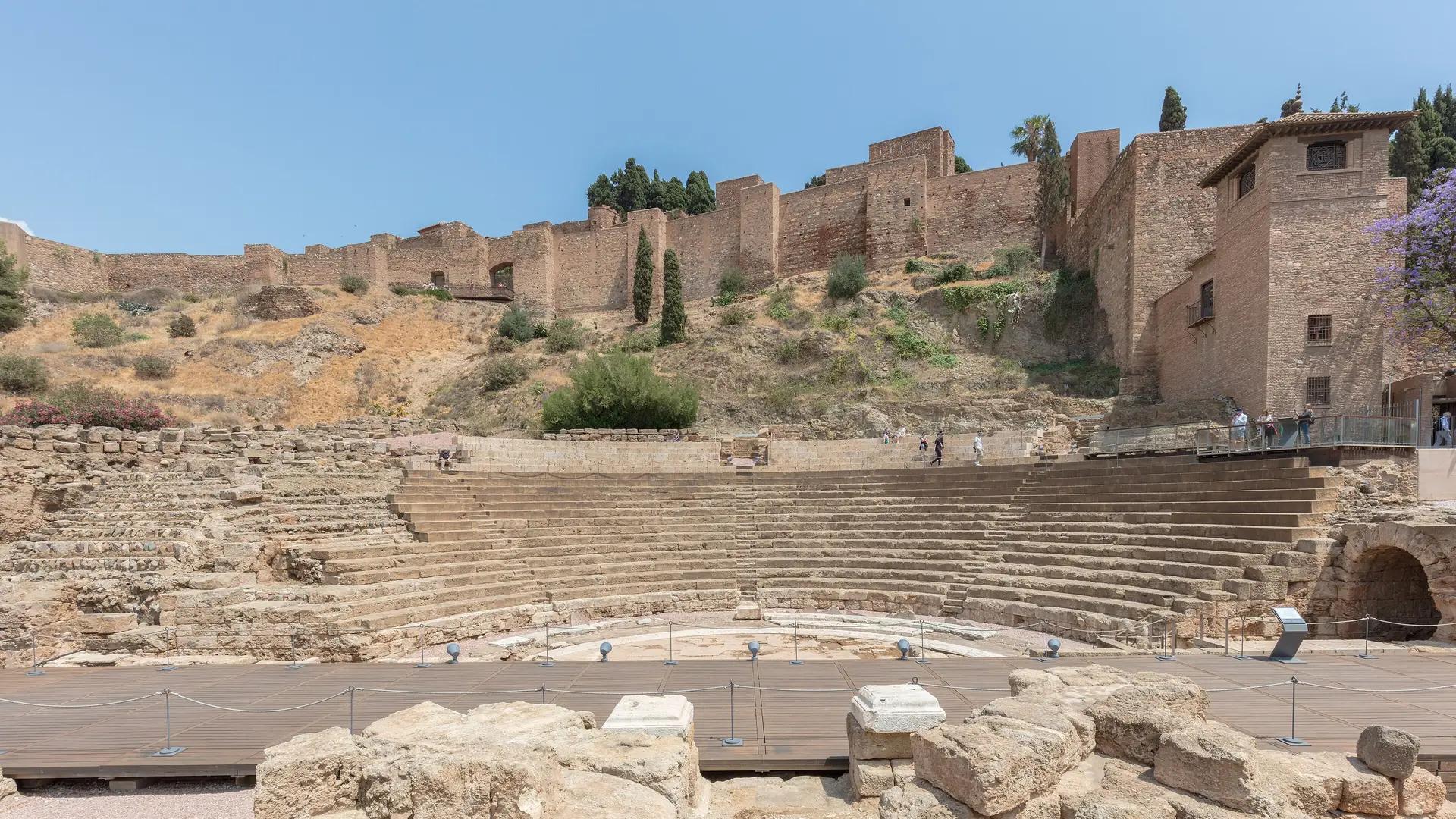
Outside Rome, one of the best-preserved examples is the Roman Theatre of Mérida in modern Spain. It was constructed during the reign of Augustus, around the late 1st century BC. The theatre could accommodate a large audience and featured a monumental scaenae frons decorated with columns and statues. Mérida became one of the major Roman cities in Hispania, and its theatre remains a powerful example of Roman cultural influence in the western empire.
In modern France, the Roman Theatre of Orange is another remarkable surviving monument. Built during the early Roman Empire, it contains an enormous stage wall that remains one of its most impressive features. The theatre demonstrates how Roman cities in Gaul adopted Roman-style public entertainment while developing their own local identities.
The Theatre of Aspendos, in modern Turkey, is another famous example. Built during the 2nd century AD, it is particularly well preserved. Its steep seating area and large stage building demonstrate the engineering skills of Roman architects. The theatre could accommodate a large crowd and remains one of the most recognizable Roman theatres in the eastern Mediterranean.
Roman theatres also existed in North Africa and the Middle East. The theatre at Bosra, in modern Syria, was constructed during the Roman period and is famous for its enormous semicircular auditorium. Sabratha, on the coast of modern Libya, also possessed a monumental Roman theatre decorated with columns and sculptures.
These theatres reveal that Roman entertainment was not limited to the city of Rome. As Roman cities developed across the empire, they often received forums, baths, amphitheatres, and theatres. These buildings helped create recognizable forms of Roman urban life while also incorporating regional traditions.
Today, surviving Roman theatres are valuable archaeological sites. They allow historians to study Roman architecture, engineering, entertainment, and society. Some have even returned to use as modern performance venues, connecting today’s audiences with buildings constructed nearly two thousand years ago.
Main Ideas
- Roman theatres were built across the entire Roman Empire.
- The Theatre of Pompey was Rome’s first permanent stone theatre.
- The Theatre of Marcellus and Mérida Theatre are major surviving examples.
- Orange, Aspendos, Bosra, and Sabratha show the spread of Roman theatre culture.
- Surviving theatres provide evidence of Roman architecture, engineering, and entertainment.
VII. The Decline of Roman Theatre and Its Legacy Today
Roman theatre did not disappear suddenly when the Roman Empire began to decline. Instead, theatrical entertainment changed gradually as Roman society, religion, politics, and the economy changed. During Late Antiquity, traditional plays continued in some places, while other forms of public entertainment became increasingly important.
One major change was the growing popularity of mime and pantomime. These performances could combine acting, music, dancing, comedy, and dramatic storytelling. They often appealed to large audiences and could be easier to stage than traditional literary dramas. As a result, the theatre of later Roman times was not necessarily less active; rather, the types of performances people watched were changing.
Roman cities also faced major economic and political difficulties during parts of Late Antiquity. Maintaining enormous public buildings required money, workers, and local government support. As some cities became smaller or poorer, certain theatres were no longer maintained as they had been during the height of the empire. Buildings could be repaired less frequently, abandoned, or eventually used for other purposes.
The spread of Christianity also affected Roman entertainment culture. Some Christian writers criticized particular forms of theatre because they associated them with traditional pagan religion or behavior they considered immoral. However, it would be too simple to say that Christianity alone caused Roman theatre to disappear. The transformation was connected to several different changes occurring across the empire.
The Western Roman Empire experienced major political and economic transformations during the 4th and 5th centuries AD. As Roman administrative structures changed, some traditional systems that had supported public entertainment became weaker. At the same time, the eastern part of the empire continued to preserve Roman urban traditions for much longer.
Even after many theatres stopped functioning as entertainment venues, their buildings did not simply vanish. Some were abandoned, while others were converted into homes, workshops, fortifications, or other structures. In some places, stones from old theatres were reused in later buildings.
The legacy of Roman theatre remained important. Roman writers such as Plautus, Terence, and Seneca continued to influence European literature. Their ideas about comedy, tragedy, characters, family conflicts, revenge, and human behavior were studied and adapted by later writers.
Roman theatre architecture also left a lasting influence. The basic concept of a large audience area facing a raised stage became an important part of later European theatre design. Surviving Roman theatres provide archaeologists with evidence about Roman construction, urban planning, entertainment, and social organization.
Today, several ancient Roman theatres have been restored and are sometimes used for modern performances and cultural festivals. This allows modern audiences to experience spaces that were designed nearly two thousand years ago.
The history of Roman theatre therefore did not simply end with the decline of Rome. Its buildings, literature, performance traditions, and architectural ideas continued to influence later cultures. From ancient Roman comedy to modern theatre architecture, the legacy of Roman entertainment remains visible today.
Main Ideas
- Roman theatre changed gradually rather than disappearing suddenly.
- Mime and pantomime became important forms of later Roman entertainment.
- Economic and political changes affected the maintenance of theatres.
- Christianization influenced attitudes toward theatre but was not the only factor in its decline.
- Roman theatre left a lasting legacy in literature, architecture, and modern performance.