Caesar’s Tenth Legion: The Iron Backbone of a Conqueror
When history remembers Julius Caesar, it often focuses on his political genius, his reforms, or his assassination on the Ides of March. But behind every one of Caesar’s victories — from the windswept plains of Gaul to the sands of Egypt — stood an elite brotherhood of soldiers: Legio X Equestris, the Tenth Legion.
They were more than just soldiers. They were Caesar’s sword, shield, and symbol of power — the men who built his empire, one battle at a time.
Origins: Caesar’s Personal Legion
The Tenth Legion was formed around 61 BCE, during Caesar’s term as governor of Hispania Ulterior (southern Spain). From the very beginning, the Tenth was special — it was raised personally by Caesar, not by the Senate. This made it his legion in every sense.
When Caesar departed for the conquest of Gaul in 58 BCE, the Tenth went with him. Over the next eight years, they became his most trusted force — earning both glory and the eternal loyalty of their commander.
The “Equestris” Title: The Day Infantry Became Cavalry
The name Equestris (“Mounted”) came from one of Caesar’s earliest campaigns in Gaul. During negotiations with a hostile tribe, Caesar needed a show of force but had too few cavalry. So he ordered men from the Tenth Legion — infantrymen! — to mount borrowed horses and ride alongside him.
The enemy, thinking Caesar was backed by cavalry, surrendered without a fight. From that day on, Caesar jokingly called them his “mounted legion” — and the name stuck: Legio X Equestris.
Caesars 10th Legion Gemina And Later Equestris Marching
The Tenth in Action: Gaul and Glory
Throughout the Gallic Wars (58–50 BCE), the Tenth Legion became Caesar’s iron hammer. They fought in nearly every major engagement, including:
Battle of the Sabis (57 BCE) – The Nervii tribe nearly overwhelmed the Romans, but the Tenth held firm, buying Caesar time to regroup and turn defeat into victory.
Siege of Alesia (52 BCE) – They helped encircle Vercingetorix’s forces, building miles of fortifications and fighting off desperate Gallic attacks from inside and outside the walls.
Invasions of Britain (55–54 BCE) – The Tenth was among the first Roman legions to set foot on British soil, braving rough seas and fierce local resistance.
By the end of the Gallic campaigns, Caesar’s commentaries mention the Tenth repeatedly — often as the example of discipline and valor other legions were expected to follow.
A Roman Ship or Trireme Sailing Away from England After a Failed Invasion
Loyalty Tested: The Civil War
When the Senate, led by Pompey, ordered Caesar to disband his army and return to Rome, it was the Tenth Legion who stood by him. On January 10, 49 BCE, Caesar crossed the Rubicon River with the Tenth at his side, uttering the immortal words:
“Alea iacta est.” — “The die is cast.”
It was the start of a civil war.
At the Battle of Pharsalus (48 BCE), Caesar’s smaller army faced Pompey’s vast forces. The Tenth fought in the front lines, crushing Pompey’s cavalry and turning the tide of the battle. Their discipline and ferocity secured Caesar’s ultimate victory — and the end of the Roman Republic.
Battle of Pharsalus (48 BCE)
Caesars Army Marching to the Battle of Pharsalus (48 BCE)
From Egypt to Spain: The Legion That Followed Caesar Everywhere
After Pharsalus, the Tenth continued to serve Caesar across the Mediterranean:
Egypt (47 BCE): They fought in the Alexandrian War, helping Caesar and Cleopatra reclaim control of the city.
Pontus (47 BCE): They likely took part in the lightning-fast victory against Pharnaces, immortalized by Caesar’s boast: “Veni, vidi, vici” (“I came, I saw, I conquered”).
Spain (45 BCE): At Munda, Caesar’s final battle, the Tenth fought fiercely against Pompey’s sons. The victory ended the civil war — but the Tenth paid a heavy price in blood.
The Map of Caesars Expansion and his Major Battles
Map of Caesars Conquest
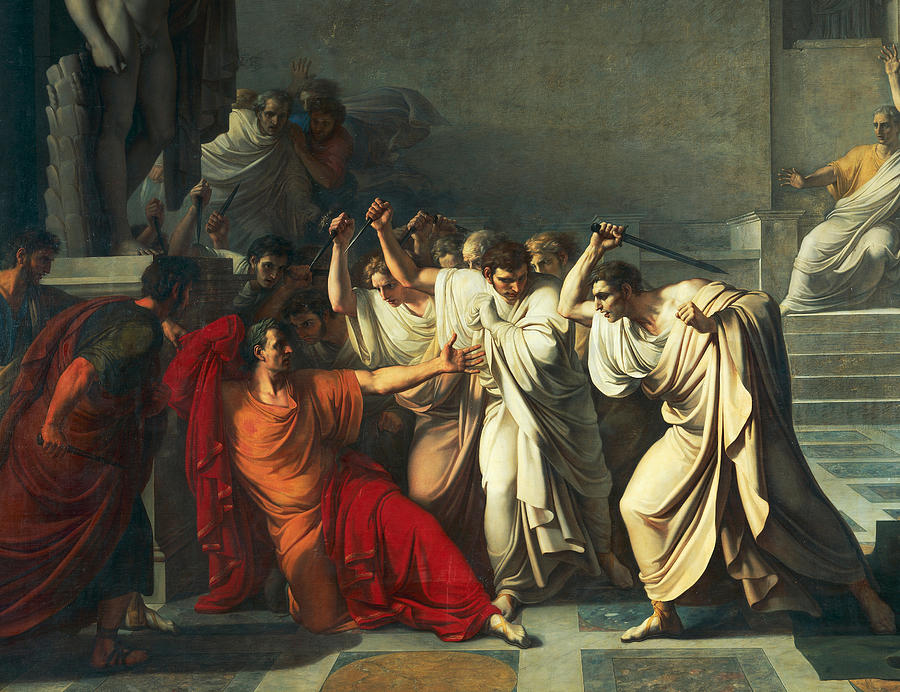
After Caesar’s assassination in 44 BCE, the Tenth Legion’s loyalty cost them dearly. They were transferred to Octavian’s command (the future Augustus), but many veterans were angry over unpaid land and rewards.
Eventually, the original Tenth Legion was disbanded. Later, Augustus reformed a new Legio X Gemina (“the Twin Tenth”), merging the remnants with another unit. The name lived on for centuries — but the original Equestris would never return.
The Assassination of Caesar in The Curia of Pompey in Rome
Legacy: The Symbol of Loyalty and Discipline
The story of the Tenth Legion is more than just a tale of military success. It’s the story of personal loyalty — of men who followed their commander not because they had to, but because they believed in him.
To Caesar, they were his brothers in arms. To Rome, they were living proof of what Roman discipline could achieve.
And to history, they remain one of the greatest legions ever to march under the eagle.
“No legion in Caesar’s army was more trusted, more loyal, or more feared than the Tenth.”