
Why Julius Caesar Arrived in Egypt After the Roman Civil War
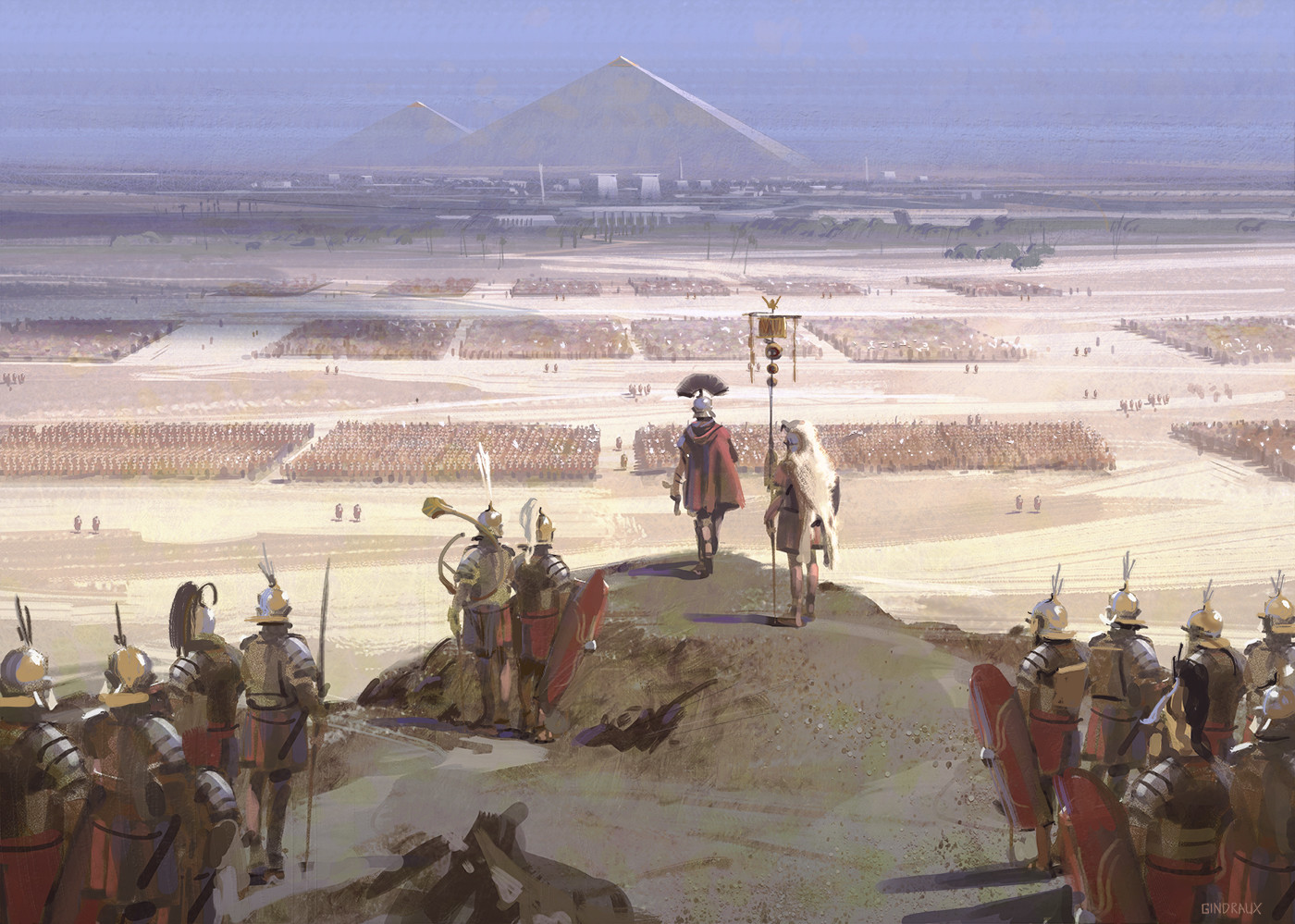
In 48 BC, Julius Caesar arrived in Egypt during one of the most important moments in Roman history. His arrival came near the end of the Roman Civil War, a massive conflict that divided the Roman Republic and turned Rome’s greatest leaders against each other. What began as Caesar’s pursuit of his defeated rival, Pompey, would eventually pull him into the dangerous politics of Egypt and lead directly to the famous Alexandrian War.
Before the civil war, Caesar and Pompey had once been close political allies. Together with Marcus Licinius Crassus, they formed the First Triumvirate, an unofficial alliance that dominated Roman politics during the late Republic. Caesar became famous through his conquest of Gaul, where he spent years expanding Roman territory and building one of the most loyal armies in Roman history. Pompey, meanwhile, had already earned enormous prestige because of his victories in the East and his destruction of Mediterranean pirate fleets.
Over time, however, the alliance between Caesar and Pompey collapsed. Crassus died during a failed war against Parthia, removing the balance that had held the Triumvirate together. At the same time, many senators feared Caesar’s growing military power and popularity with the Roman people. Pompey slowly aligned himself with the Senate and Caesar’s political enemies. Eventually, the Senate ordered Caesar to disband his army and return to Rome as a private citizen.
For Caesar, obeying this order would have been extremely dangerous. Without his army and political protection, he could face prosecution, humiliation, or exile. Instead of surrendering his power, Caesar made one of the most famous decisions in Roman history. In 49 BC, he crossed the Rubicon River with his legions, an illegal act that officially began the Roman Civil War. Ancient historians later claimed Caesar declared, “The die is cast,” as he marched into Italy.
Pompey and many senators quickly fled Rome because Caesar advanced faster than expected. Caesar captured Italy with little resistance and then launched campaigns across Roman territories loyal to Pompey. Although Caesar won several victories, Pompey still controlled powerful forces in the eastern Mediterranean. The war finally reached its decisive moment at the Battle of Pharsalus in 48 BC.
At Pharsalus, Pompey commanded a larger army, but Caesar’s experienced veterans proved far superior in discipline and battlefield tactics. Caesar achieved a complete victory, destroying Pompey’s forces and breaking the Senate’s military resistance. Pompey escaped the battlefield and fled across the Mediterranean Sea in search of safety.
Pompey chose to flee to Egypt because he believed the Egyptian royal family would support him. Egypt was ruled by the Ptolemaic Dynasty, descendants of one of Alexander the Great’s former generals. Although Egypt remained officially independent, Roman influence over the kingdom had become extremely strong. Pompey had previously helped members of the dynasty during earlier political conflicts, so he expected protection from the young king Ptolemy XIII.
However, Egypt itself was already in chaos. Ptolemy XIII and his sister, Cleopatra VII, were locked in a bitter struggle for control of the throne. Their rivalry had divided the kingdom, and powerful advisers surrounding the young king feared Caesar’s growing power after Pharsalus. Hoping to gain favor with the victorious Roman general, Ptolemy’s advisers made a brutal decision.
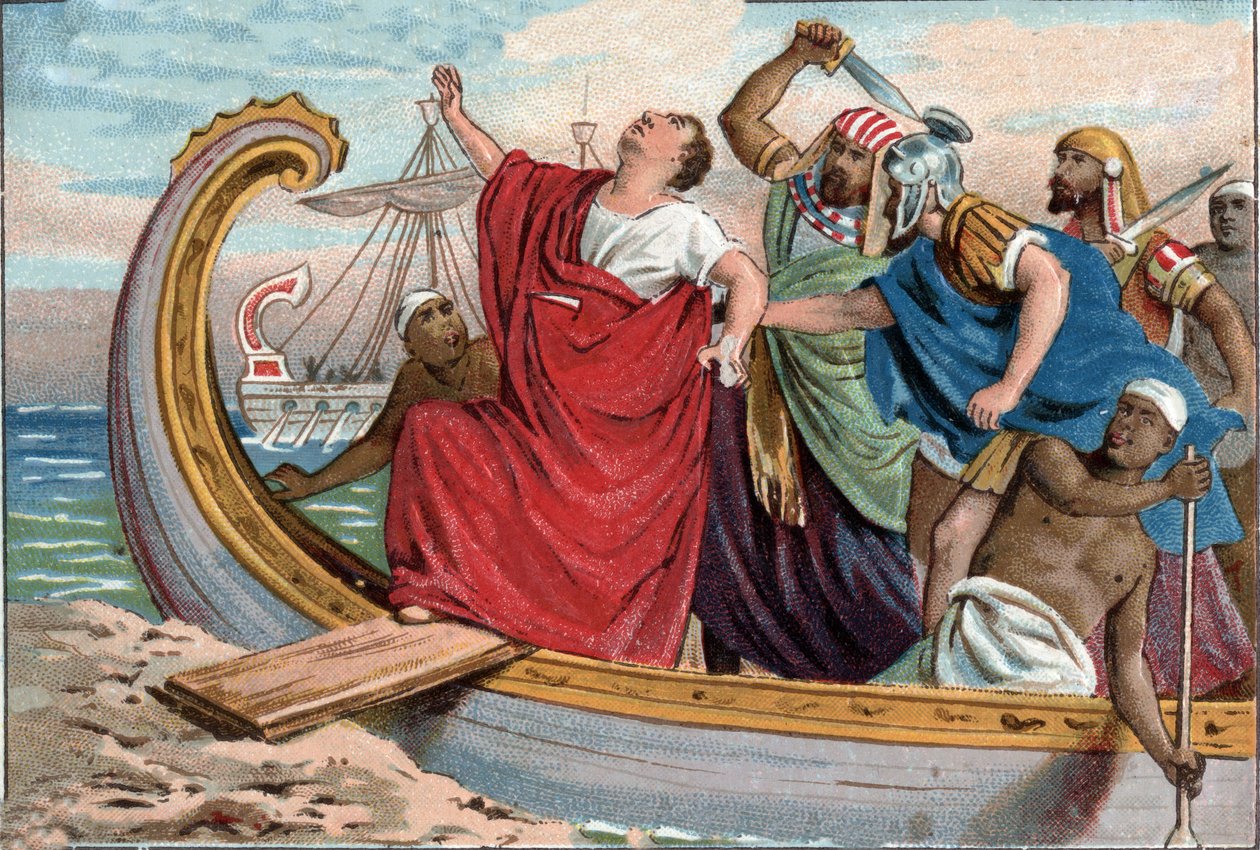
When Pompey arrived on the Egyptian coast near Pelusium, he was invited onto a small boat supposedly for a diplomatic meeting. Instead, Egyptian soldiers murdered him before he could even step onto land. His head was cut off and prepared as a gift for Caesar.
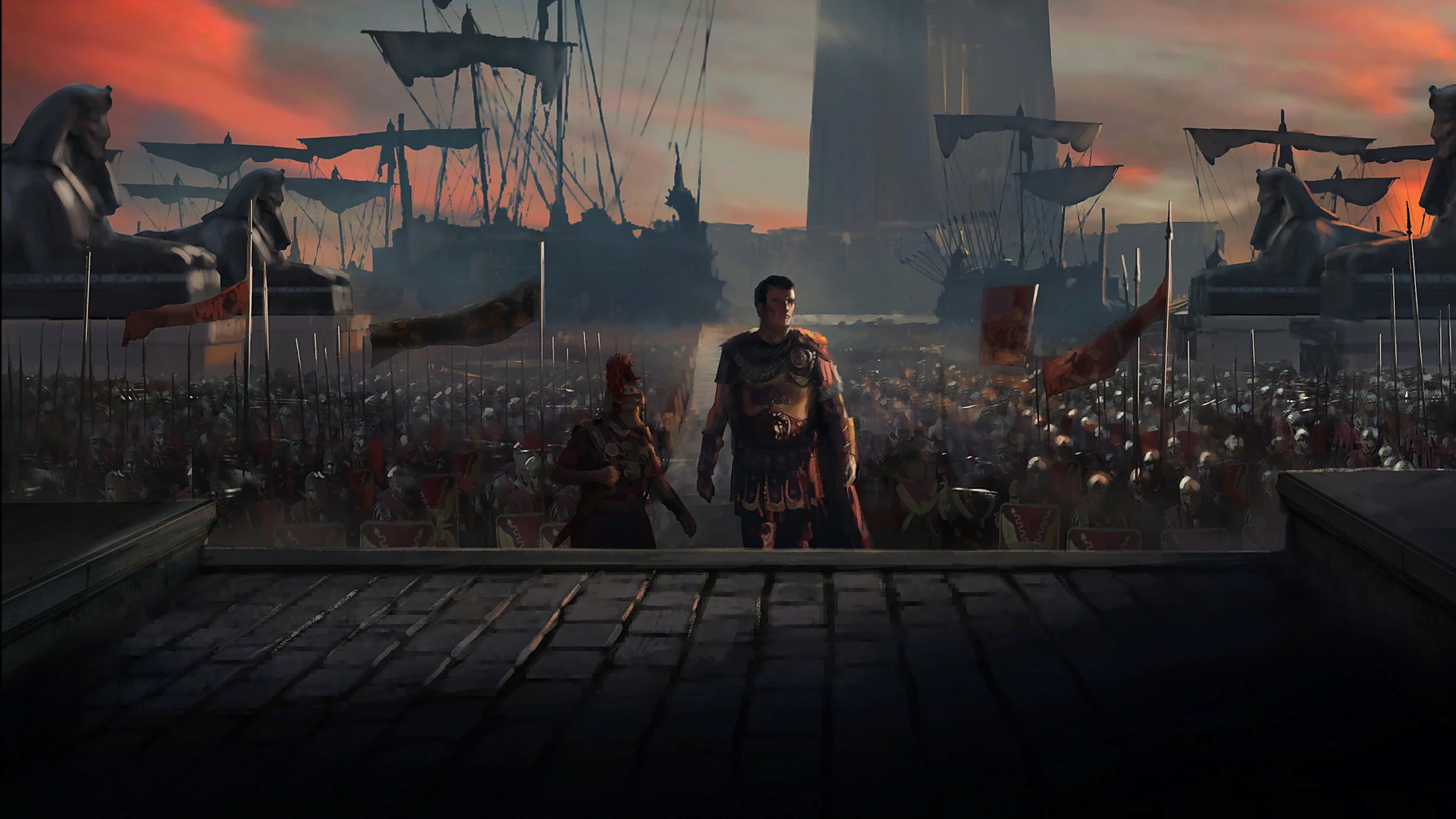
Soon afterward, Caesar arrived in Alexandria with only a relatively small military force. He expected to continue hunting Pompey, but instead he was presented with the severed head of his former ally and rival. Ancient Roman historians claim Caesar was horrified by the sight. Although Pompey had fought against him during the civil war, he had once been Caesar’s son-in-law and one of Rome’s greatest commanders. Caesar reportedly turned away in disgust and mourned Pompey’s death.
The Egyptians believed they had earned Caesar’s gratitude by eliminating his enemy, but they misunderstood Roman political culture. Romans respected defeated enemies who possessed honor and status, and Pompey’s murder appeared dishonorable and treacherous. Instead of leaving Egypt peacefully, Caesar now became deeply involved in its political crisis.
Caesar declared that he intended to settle the dispute between Cleopatra and Ptolemy XIII. Officially, he claimed Rome had the authority to mediate because the previous Egyptian king had left instructions in his will requesting Roman support. In reality, Egypt’s enormous wealth and strategic importance made it impossible for Caesar to ignore the opportunity. Egypt produced vast quantities of grain that helped feed Rome, and controlling influence there would strengthen Caesar’s power across the Mediterranean world.
Despite his confidence, Caesar’s position quickly became dangerous. He had entered Alexandria with only a small number of troops, while tensions inside the city continued to rise. Supporters of Ptolemy XIII resented Roman interference and feared Caesar’s growing influence over Cleopatra. Before long, the conflict exploded into open warfare, trapping Caesar inside Alexandria and beginning the brutal Siege of Alexandria.
Main Ideas
- Julius Caesar arrived in Egypt in 48 BC after defeating Pompey in the Roman Civil War.
- The civil war began when Caesar crossed the Rubicon River against the Senate’s orders.
- Pompey fled to Egypt after losing the Battle of Pharsalus.
- Ptolemy XIII’s advisers murdered Pompey to gain Caesar’s favor.
- Caesar became involved in the struggle between Cleopatra and Ptolemy XIII.
- Egypt’s grain and wealth made the kingdom extremely important to Rome.
- Caesar entered Alexandria with only a small force, putting himself in danger.
- The growing conflict eventually led to the Alexandrian War and the Siege of Alexandria.
The Murder of Pompey and Caesar’s Reaction in Egypt
After losing the Battle of Pharsalus in 48 BC, Pompey fled Greece in desperation. The once-powerful Roman commander, who had controlled armies, territories, and much of the Roman Senate, suddenly found himself defeated and hunted by his former ally, Julius Caesar. Pompey knew that remaining anywhere within Roman territory would be extremely dangerous, so he searched for a kingdom that might still offer him protection and support. He chose Egypt, believing the Ptolemaic rulers would remain loyal to him because of his past assistance to their dynasty.
At this time, Egypt was ruled by the young king Ptolemy XIII and his sister Cleopatra VII, who were already fighting for control of the throne. Although Egypt was officially independent, Roman influence over the kingdom had become extremely powerful. The advisers surrounding Ptolemy XIII understood that Caesar had become the strongest man in the Roman world after Pharsalus. Because of this, they feared supporting Pompey openly.
Pompey arrived near the Egyptian city of Pelusium, located on the eastern edge of the Nile Delta. He came with only a small group of followers and hoped the Egyptian court would welcome him. Instead, Ptolemy XIII’s advisers secretly decided that killing Pompey would be the safest way to gain Caesar’s favor. The men most responsible for this decision included the eunuch Pothinus, the general Achillas, and the Greek adviser Theodotus. These men believed Caesar would reward Egypt for eliminating his greatest enemy.
The assassination of Pompey became one of the most shocking moments of the late Roman Republic. When Pompey approached the Egyptian shore, he was invited onto a small boat supposedly sent to escort him safely to land. Several of Pompey’s former Roman soldiers, now serving Egypt, were waiting aboard. As the boat moved away from his ship, the trap was revealed.
Pompey was stabbed to death before even reaching shore.
Ancient historians described the murder as especially tragic because Pompey’s wife and companions watched helplessly from the larger ship offshore. Unable to save him, they witnessed one of Rome’s greatest generals murdered by men pretending to offer friendship. After killing Pompey, the assassins cut off his head and left his body abandoned on the beach. According to ancient accounts, one loyal servant later returned secretly to cremate Pompey’s remains with simple materials gathered from the shore.
The Egyptians believed they had solved their political problem. In their minds, Caesar would arrive, see that Pompey was dead, and reward Ptolemy XIII for supporting the victor of the Roman Civil War. However, they completely misunderstood both Caesar’s personality and Roman traditions regarding honor and power.
A short time later, Caesar arrived in Alexandria with a relatively small military force. He came expecting to continue his pursuit of Pompey and finish the civil war once and for all. Instead, Egyptian officials presented him with Pompey’s severed head as a gift.
Rather than celebrating, Caesar reacted with horror.
Ancient Roman writers claim Caesar turned away in disgust when he saw Pompey’s head. Some sources even state that he wept. Although Pompey had become his enemy during the civil war, the two men shared a long and complicated history. Pompey had once been Caesar’s political ally, and he had married Caesar’s daughter, Julia. Her death years earlier had weakened the alliance between the two men and helped push Rome closer to civil war.
Caesar also understood that Pompey had been one of the greatest Romans of his generation. Before the civil war, Pompey had earned enormous fame through campaigns in Spain, victories against pirates, and successful wars in the East. Even after defeating him at Pharsalus, Caesar reportedly hoped Pompey might surrender rather than die. The brutal murder offended Roman ideas about dignity and honorable treatment of defeated enemies.
The reaction of Caesar was politically important as well. If Caesar openly approved the assassination, he could appear cruel and dishonorable before the Roman people. By condemning the murder instead, Caesar presented himself as merciful and civilized, qualities Roman leaders often wanted to display publicly.
The death of Pompey also changed the political situation in Egypt immediately. Caesar no longer needed to chase his rival, but he now found himself trapped inside a dangerous struggle for power between Cleopatra and Ptolemy XIII. Since Egypt was rich, strategically valuable, and essential to Rome’s grain supply, Caesar could not simply ignore the kingdom’s instability.
Caesar decided to remain in Alexandria and involve himself in the dynastic conflict. He declared that he would settle the dispute between Cleopatra and Ptolemy XIII as a representative of Roman authority. This decision angered many supporters of the young king, who viewed Caesar as a foreign invader interfering in Egyptian affairs.
At the same time, Caesar’s military position was extremely risky. He had entered Alexandria with only a few thousand troops, far fewer than the forces Egypt could potentially raise against him. The city itself was enormous, wealthy, crowded, and politically divided. Tensions increased rapidly as Caesar attempted to assert control.
Meanwhile, Cleopatra saw an opportunity. Knowing Caesar now possessed enormous influence, she secretly entered Alexandria to meet him personally. Their alliance would soon change the future of both Egypt and Rome.
Pompey’s assassination therefore became much more than the death of a defeated Roman general. It marked the final collapse of organized resistance against Caesar during the civil war, drew Caesar directly into Egyptian politics, and set the stage for the brutal Alexandrian War that followed. What Ptolemy XIII’s advisers believed would secure Caesar’s friendship instead helped create a deadly conflict that nearly destroyed them.
Main Ideas
- Pompey fled to Egypt after losing the Battle of Pharsalus in 48 BC.
- Ptolemy XIII’s advisers believed killing Pompey would gain Caesar’s favor.
- Pompey was assassinated near Pelusium after boarding a small Egyptian boat.
- His head was cut off and presented to Julius Caesar in Alexandria.
- Caesar reacted with shock and disgust instead of gratitude.
- Pompey had once been Caesar’s ally and son-in-law before the civil war.
- Pompey’s death pulled Caesar directly into Egypt’s political crisis.
- The assassination helped trigger the Alexandrian War and the Siege of Alexandria.
How Cleopatra Secretly Met Julius Caesar in Alexandria
When Julius Caesar arrived in Alexandria in 48 BC, Egypt was already on the edge of civil war. The kingdom was divided between the young king Ptolemy XIII and his sister Cleopatra VII, who were locked in a dangerous struggle for control of the throne. Caesar had come to Egypt while pursuing his defeated rival Pompey, but after Pompey’s murder, Caesar suddenly found himself involved in Egypt’s internal politics. This created an enormous opportunity for Cleopatra.
At the time of Caesar’s arrival, Cleopatra had already been pushed out of Alexandria by Ptolemy XIII’s supporters. Although she had once ruled jointly with her brother according to Egyptian tradition, powerful advisers surrounding the young king had turned against her. The most influential among them included the eunuch Pothinus, the general Achillas, and the Greek teacher Theodotus. Together, they controlled much of the Egyptian government and wanted Cleopatra removed completely.
Forced into exile, Cleopatra gathered supporters in eastern Egypt and near the borders of Syria. Despite losing direct control of Alexandria, she refused to surrender her claim to the throne. Cleopatra understood that whoever gained Caesar’s support would likely control Egypt, because Rome had become the dominant power in the Mediterranean world.
Caesar soon ordered both Cleopatra and Ptolemy XIII to appear before him so he could settle their dispute. Officially, he claimed he was acting according to the wishes of their father’s will, which had requested Roman assistance in protecting the royal family. In reality, Caesar wanted stability in Egypt and greater Roman influence over its enormous wealth and grain supply.
For Cleopatra, however, reaching Caesar was extremely dangerous.
Alexandria remained controlled by the forces loyal to Ptolemy XIII, and anyone connected to Cleopatra risked arrest or death. If she openly entered the city, her enemies could stop her before she ever reached Caesar. She needed a secret way into the royal palace where Caesar was staying.
According to ancient historians, Cleopatra devised one of the most famous entrances in ancient history.
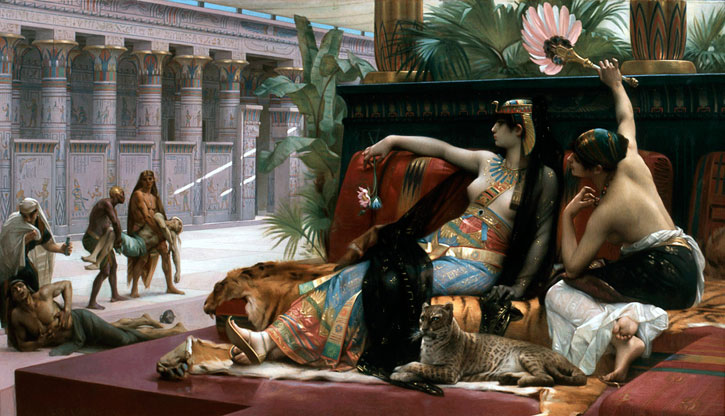
With the help of her loyal ally Apollodorus the Sicilian, Cleopatra secretly entered Alexandria by boat under cover of darkness. To avoid detection, she was reportedly hidden inside a large bed sack or rolled tightly within a carpet or rug. Apollodorus carried the bundle into Caesar’s quarters inside the palace and presented it to him as a gift. When the covering was opened, Cleopatra emerged before the Roman general.
Whether every detail of this story is completely true remains debated by historians, but the event became legendary because it perfectly captured Cleopatra’s intelligence, boldness, and political skill.
At the time, Cleopatra was around 21 years old, while Caesar was over 50 and already one of the most powerful men in the world. Yet Cleopatra immediately impressed him. Unlike many rulers of the eastern Mediterranean, Cleopatra was highly educated and politically experienced. She reportedly spoke several languages and understood diplomacy extremely well. Ancient writers often described her greatest strength not as physical beauty alone, but as her charisma, intelligence, and ability to influence powerful people.
The meeting between Caesar and Cleopatra quickly changed the political situation in Egypt.
Caesar began supporting Cleopatra’s claim to the throne, believing she would be a more reliable ally than Ptolemy XIII and his advisers. This decision enraged the king’s supporters, who already distrusted Roman interference in Egyptian affairs. Tensions inside Alexandria increased rapidly as rumors spread that Caesar favored Cleopatra.
For Caesar, supporting Cleopatra also offered major strategic advantages. Egypt was one of the richest kingdoms in the Mediterranean and supplied enormous quantities of grain to Rome. A friendly ruler in Egypt would strengthen Caesar’s control over the Roman world after the civil war. Cleopatra, meanwhile, needed Roman military support to regain her throne permanently.
The alliance between Caesar and Cleopatra soon became both political and personal. Ancient sources claim the two developed a romantic relationship during Caesar’s stay in Egypt. Their connection would later produce a son known as Caesarion, although his exact status remained controversial in Rome.
Meanwhile, supporters of Ptolemy XIII reacted with growing anger. They viewed Caesar’s actions as an insult to Egyptian sovereignty and feared losing their influence over the young king. The situation exploded when Caesar attempted to force a settlement between the rival siblings while remaining inside Alexandria with only a small Roman force.
Soon, open violence broke out in the city.
The general Achillas gathered a large Egyptian army and marched against Caesar’s position in Alexandria. What began as a political dispute over the Egyptian throne now transformed into the brutal Alexandrian War. Caesar suddenly found himself trapped inside a hostile city far from Rome, surrounded by enemies and heavily outnumbered.
Cleopatra’s secret meeting with Caesar therefore became one of the most important moments in ancient history. Her bold decision secured Caesar’s support, restored her path to power, and changed the future of Egypt forever. At the same time, it drew Caesar deeper into a deadly conflict that nearly ended in disaster for both him and his army.
Main Ideas
- Cleopatra and Ptolemy XIII were fighting for control of Egypt when Caesar arrived.
- Cleopatra had been forced out of Alexandria by her brother’s supporters.
- Julius Caesar ordered both rulers to appear before him to settle the conflict.
- Cleopatra secretly entered Alexandria to avoid being captured by her enemies.
- Ancient historians claim she was smuggled into Caesar’s palace inside a carpet or sack.
- Cleopatra impressed Caesar with her intelligence, confidence, and political skill.
- Caesar decided to support Cleopatra’s claim to the Egyptian throne.
- The alliance between Caesar and Cleopatra helped trigger the Alexandrian War.
Why Julius Caesar Supported Cleopatra’s Claim to the Egyptian Throne
When Julius Caesar became involved in the political chaos of Egypt in 48 BC, he was not simply acting as an outsider trying to solve a local dispute. Instead, his decisions were shaped by the aftermath of the Roman Civil War, his victory over Pompey, and the enormous strategic importance of Egypt itself. The struggle between Cleopatra VII and Ptolemy XIII quickly became one of the most important political questions of Caesar’s entire campaign, and his choice to support Cleopatra changed both Egyptian and Roman history forever.
After Pompey’s murder in Egypt, Caesar’s position in Alexandria became extremely complex. He had originally arrived in pursuit of Pompey after the Battle of Pharsalus, expecting to finish the Roman Civil War. Instead, he was now trapped inside a foreign kingdom experiencing a violent succession crisis. The Egyptian throne was unstable, and the advisers of Ptolemy XIII had already shown they were willing to use extreme violence to achieve political goals. This made Egypt unpredictable and dangerous for Roman involvement.
At first, Caesar attempted to act as a neutral mediator between Cleopatra and her brother. Officially, he claimed that he was fulfilling the wishes of their father, Ptolemy XII, who had requested Roman assistance in ensuring a stable succession. However, neutrality in this situation was almost impossible. Both sides expected Caesar’s support, and both understood that Roman backing would likely determine the outcome of the conflict.
Cleopatra quickly became the more attractive option for Caesar for several important reasons:
- Cleopatra showed intelligence, independence, and political skill, unlike her brother who relied heavily on advisers.
- Egypt’s grain supply was essential to Rome, and Caesar needed stability there to secure food for the Republic.
- Cleopatra was capable of cooperating with Roman power, making her a more reliable long-term ally.
- Ptolemy XIII’s faction had already murdered Pompey, making them politically untrustworthy in Caesar’s eyes.
One of the most significant factors was political reliability. Cleopatra demonstrated intelligence, strategic thinking, and a willingness to cooperate with Rome’s interests. Unlike Ptolemy XIII, who was controlled by advisers such as Pothinus, Achillas, and Theodotus, Cleopatra appeared capable of making independent decisions. Caesar needed a ruler in Egypt who could stabilize the region and ensure continued grain shipments to Rome.
Another crucial factor was Egypt’s economic importance. Egypt was one of the richest kingdoms in the ancient Mediterranean world. It produced enormous amounts of grain, which were essential for feeding the population of Rome. Whoever controlled Egypt could influence food supplies across the Roman Republic. Caesar understood that supporting a stable and cooperative ruler in Egypt would strengthen his own position after the civil war and ensure Rome’s food security.
Caesar also distrusted Ptolemy XIII’s faction because of their role in Pompey’s assassination. The murder of Pompey had been carried out by Egyptian officials who believed they were helping Caesar. Instead of gaining favor, they had demonstrated dishonorable behavior that violated Roman expectations of respect for defeated enemies. This act made Caesar question whether Ptolemy’s advisers could be trusted in any diplomatic arrangement.
Cleopatra’s personal meeting with Caesar also had a major impact. Her intelligence, confidence, and political awareness impressed him deeply. Ancient writers describe Cleopatra not simply as a beautiful figure, but as a highly educated and persuasive leader who understood multiple languages and could engage directly in political negotiation. This made her extremely valuable as a potential ally in a region as complex as Egypt.
As tensions increased in Alexandria, Caesar made his decision clear: he would support Cleopatra’s claim to the throne. This decision was not only political but also strategic. By supporting Cleopatra, Caesar could secure a friendly government in Egypt, gain influence over one of Rome’s most important grain supplies, and ensure that Egypt would not become a hostile base for his enemies.
However, Caesar’s choice immediately escalated tensions inside the city. Ptolemy XIII and his advisers viewed Caesar’s support for Cleopatra as a direct threat to their power. They believed that if Cleopatra regained control, they would lose influence and possibly face punishment for their earlier actions, including the murder of Pompey.
The situation inside Alexandria became extremely unstable. Caesar’s small Roman force was now surrounded by a hostile population and a royal faction that was willing to go to war. Despite this danger, Caesar refused to abandon Cleopatra or withdraw from the city. Instead, he began preparing for what would become the Siege of Alexandria.
Cleopatra, meanwhile, strengthened her alliance with Caesar and positioned herself as the legitimate ruler of Egypt. Her relationship with Caesar was both political and personal, reinforcing her claim to the throne and increasing her influence over Roman decisions in the region. This alliance gave her a critical advantage over her brother, whose position was weakening rapidly.
Ultimately, Caesar’s support for Cleopatra was driven by a combination of strategy, economics, and distrust of Ptolemy XIII’s faction. Egypt’s wealth, its grain supply, and its geopolitical importance made stability essential. Cleopatra offered the best chance of achieving that stability, even if it meant becoming involved in a dangerous and escalating conflict.
Main Ideas
- Caesar first tried to remain neutral between Cleopatra and Ptolemy XIII.
- Egypt’s grain supply made it extremely important to Rome’s survival and stability.
- Cleopatra showed intelligence, independence, and political capability.
- Ptolemy XIII’s advisers were distrusted due to Pompey’s murder.
- Cleopatra’s meeting with Caesar strengthened her political legitimacy.
- Caesar believed Cleopatra would bring long-term stability to Egypt.
- Supporting Cleopatra secured Roman influence over Egypt.
- The decision angered Ptolemy XIII’s faction and escalated tensions.
- This choice directly helped trigger the Alexandrian War.
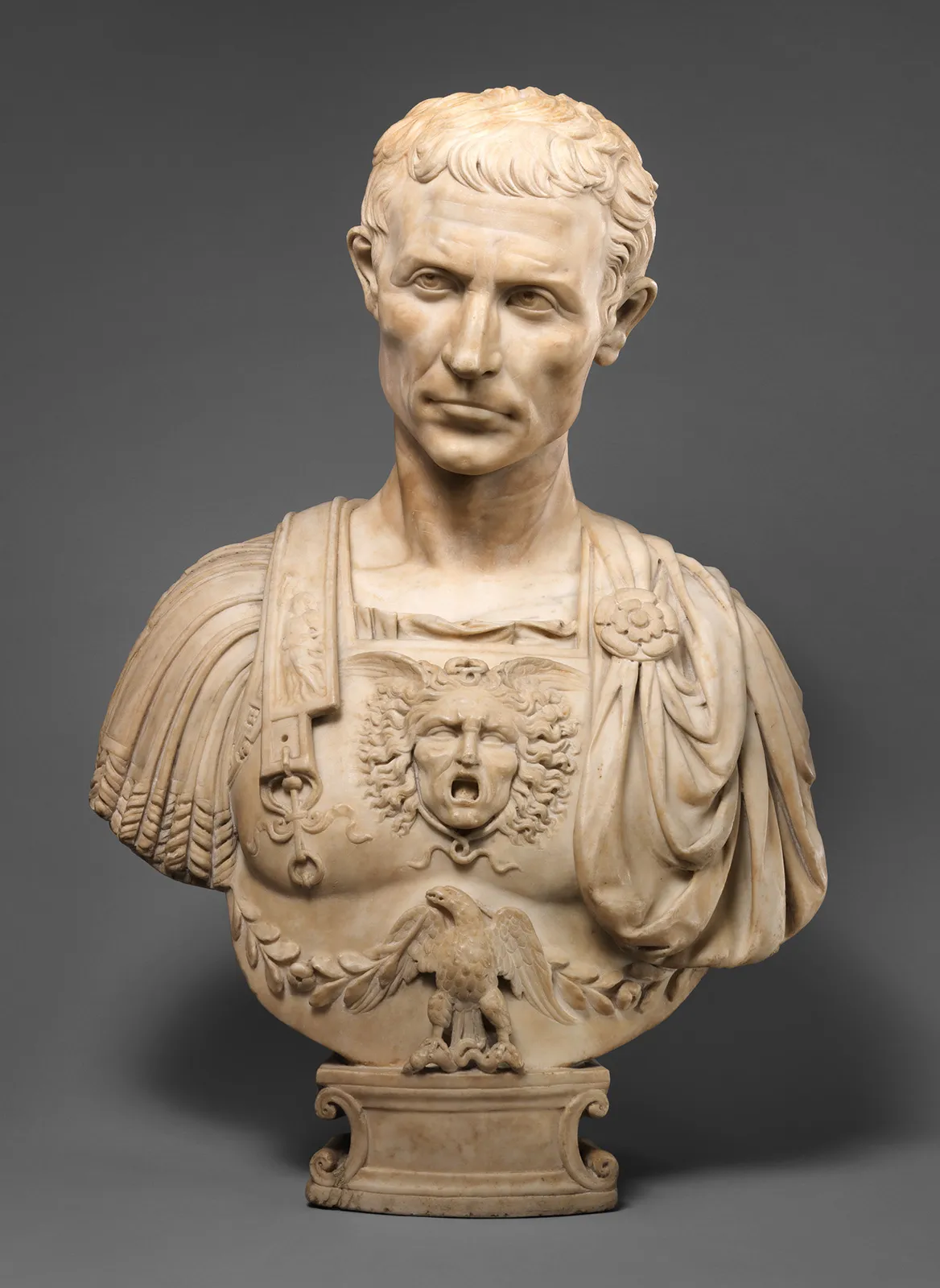
The Siege of Alexandria and Caesar’s Dangerous Position in Egypt
When Julius Caesar became trapped in Alexandria in 48 BC, the situation in Egypt escalated from political negotiation into full-scale war. What began as a dispute between Cleopatra VII and Ptolemy XIII had now turned into a deadly conflict involving Roman forces, Egyptian armies, and the unstable power vacuum left after the death of Pompey. Caesar, one of the greatest military commanders in history, suddenly found himself besieged inside a foreign capital with limited troops, hostile territory, and no easy escape.
The siege began when Egyptian forces led by Achillas, one of Ptolemy XIII’s top generals, moved against Caesar’s position in Alexandria. The city was enormous, crowded, and politically divided, making it extremely difficult to control. Caesar had arrived with only a relatively small force—far fewer soldiers than were normally needed to occupy or defend such a major urban center. This immediately placed him in a strategically vulnerable position, even though he was the most experienced commander in the region.
At the start of the conflict, Caesar attempted to hold key areas of the royal quarter, including the palace complex and nearby harbor structures. However, Egyptian forces quickly surrounded Roman positions and cut off access to reinforcements. The streets of Alexandria became chaotic battle zones, with fighting breaking out between Roman troops and Egyptian soldiers. Caesar was forced to adapt rapidly to urban warfare, a very different type of combat compared to the large field battles he had fought during the Roman Civil War.
One of the most dangerous aspects of the siege was Caesar’s lack of reinforcements. He had entered Egypt expecting a political resolution, not a prolonged military campaign. Although he had veteran soldiers loyal to him, their numbers were too small to guarantee safety in a large and hostile city. This forced Caesar to rely heavily on defensive tactics, fortifying positions and securing supply routes wherever possible.
At the same time, the political situation inside Alexandria made the siege even more unstable. The Egyptian population was divided in loyalty between Cleopatra and Ptolemy XIII, and many citizens viewed Roman intervention as foreign domination. This created a constant risk of uprisings, sabotage, and internal resistance. Caesar had to fight not only the Egyptian army but also the unpredictable environment of a politically fractured city.
During the siege, Caesar became increasingly dependent on his alliance with Cleopatra. Her position as a claimant to the throne gave Caesar a political justification for his presence in Egypt. Without her support, his involvement would have looked like an invasion rather than mediation. Cleopatra, in turn, relied on Caesar’s military power to challenge her brother’s forces. This mutual dependency became one of the key factors holding their alliance together during the crisis.
The fighting in Alexandria soon intensified. Egyptian forces attempted to isolate Caesar by controlling key infrastructure, including water supplies and harbor access points. Control of the harbor of Alexandria was especially important, since it was the city’s main link to the outside world. Whoever controlled the harbor could receive supplies and reinforcements. Caesar understood this and fought aggressively to maintain access, knowing that losing it could trap him completely.
One of the most dramatic moments of the siege occurred when parts of Alexandria were set on fire during clashes around the harbor district. Ancient accounts describe widespread destruction, with buildings and docks burning as both sides fought for control. The chaos created confusion but also danger for both Romans and Egyptians. Caesar’s forces had to operate in extremely difficult conditions, with smoke, fire, and collapsing structures affecting visibility and movement.
Despite being outnumbered, Caesar relied on his experience, discipline, and tactical flexibility. He reorganized his troops into defensive formations, secured strong points within the palace district, and maintained strict control over his limited resources. His ability to remain calm under pressure became crucial in preventing a complete collapse of Roman positions.
Meanwhile, Cleopatra’s political influence continued to grow inside the palace. Her alliance with Caesar strengthened her legitimacy as ruler of Egypt, while Ptolemy XIII’s faction struggled to maintain unity among their supporters. However, this did not immediately weaken the siege. Instead, it intensified the conflict, as opposing forces fought not only for military control but also for political survival.
As the siege dragged on, Caesar’s position remained extremely dangerous. He was surrounded in a foreign capital, cut off from Rome, and dependent on uncertain alliances. Any major defeat could have ended his career and possibly his life. The situation represented one of the most critical moments of risk in Caesar’s entire military career.
Eventually, Caesar realized that he needed reinforcements if he was going to survive. This led to one of the most important developments of the Alexandrian War: the arrival of additional Roman support forces from the eastern provinces. These reinforcements would later play a decisive role in shifting the balance of power in Caesar’s favor.
The Siege of Alexandria therefore marked a turning point. It transformed Caesar from a political mediator into a commander fighting for survival in enemy territory. It also demonstrated how quickly Egypt had become a central battleground in Roman power politics. What began as Caesar’s pursuit of Pompey had evolved into a full-scale war that would shape the future of both Egypt and Rome.
Main Ideas
- Caesar became trapped in Alexandria with a small Roman force during a major Egyptian uprising.
- Achillas led Egyptian forces that began the siege against Caesar’s position.
- Caesar was forced into defensive urban warfare inside a hostile capital city.
- He lacked sufficient reinforcements to secure full control of Alexandria.
- The harbor of Alexandria became a critical strategic objective during the siege.
- Cleopatra’s alliance with Caesar became politically and militarily essential.
- Fighting in the city caused widespread destruction, including fires near the harbor.
- Caesar relied on discipline, strategy, and fortifications to survive.
- The siege marked a major escalation of the Alexandrian War.
- Caesar’s position remained extremely dangerous until reinforcements arrived.
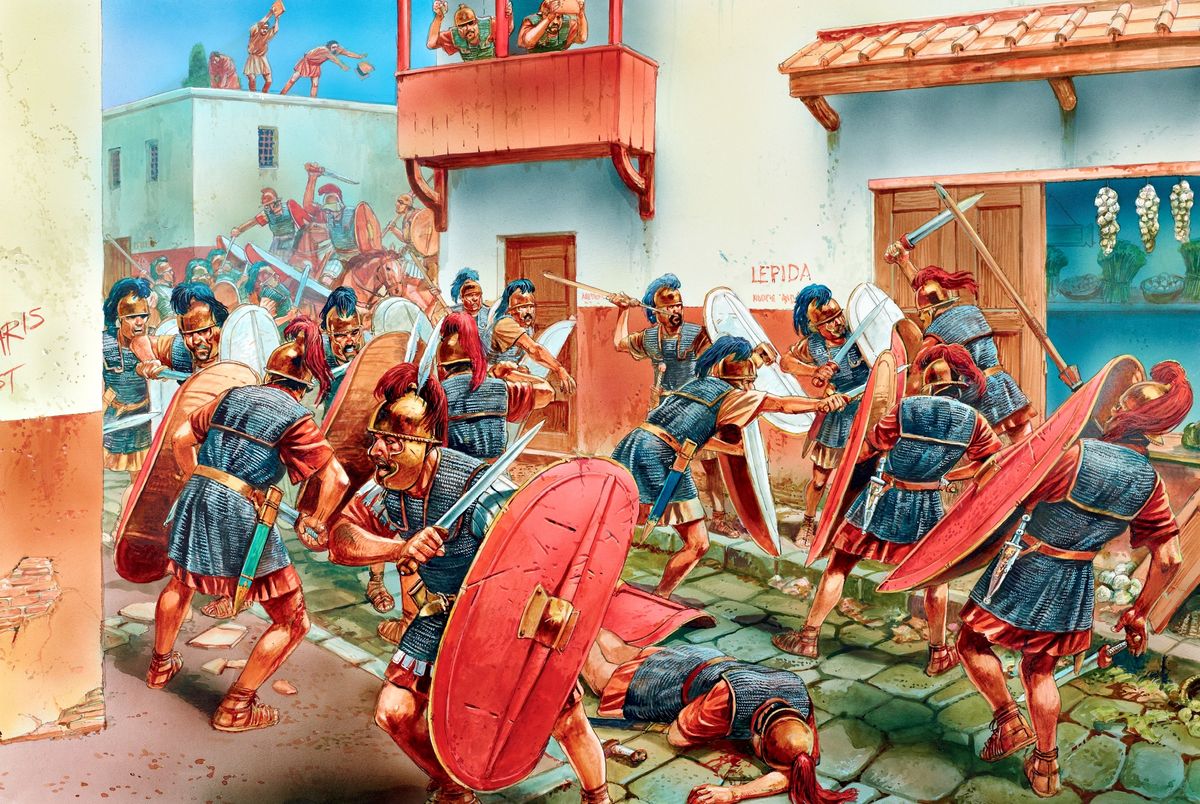
Caesar Trapped in the Palace During the Alexandrian War
When Julius Caesar found himself trapped inside the royal quarter of Alexandria during the Alexandrian War in 48 BC, the situation became one of the most dangerous moments of his entire career. What had begun as a political mission in Egypt—deciding between Cleopatra VII and Ptolemy XIII—had now turned into a full siege inside a hostile capital city. Caesar was no longer simply a mediator or even an invader; he was a commander cut off, surrounded, and fighting for survival inside the palace complex itself.
The royal palace in Alexandria was not just a single building but a vast fortified district connected to key parts of the city, including the harbor. When Egyptian forces under Achillas intensified their attack, Caesar and his small Roman force were pushed back into this heavily defended area. The palace became his headquarters, his fortress, and effectively his prison. Outside its walls, Alexandria was under the control of hostile forces loyal to Ptolemy XIII, and tensions inside the city were escalating into open warfare.
One of the most critical problems Caesar faced was isolation. His forces were trapped inside a limited area, cut off from open movement through the city. Egyptian troops controlled the surrounding streets and attempted to prevent Roman soldiers from breaking out or receiving supplies. This meant that Caesar had to carefully ration food, organize defenses, and maintain strict discipline among his troops while under constant pressure.
At the same time, Caesar had to think strategically about how to avoid being completely overwhelmed. Despite being outnumbered, he understood that his experience and the training of his legions gave him an advantage in structured combat. However, fighting inside a palace complex and urban environment was unpredictable. Narrow corridors, courtyards, and enclosed spaces reduced the effectiveness of traditional Roman battlefield formations.
Another major challenge was control of the harbor of Alexandria, which was essential for communication and supply lines. The harbor represented the lifeline of the city. Whoever controlled it could bring in reinforcements or cut off their enemies. Caesar recognized this immediately and placed enormous importance on defending access points leading toward the sea. Losing the harbor would mean complete isolation and likely defeat.
Inside the palace, Caesar also had to deal with political tension. His alliance with Cleopatra VII gave him legitimacy in the eyes of some Egyptians, but it also intensified hostility from supporters of Ptolemy XIII. Cleopatra herself was not always physically secure during this period, and her presence inside the conflict added another layer of danger. Caesar was effectively protecting a claimant to the throne while being attacked by the opposing faction at the same time.
One of the most dramatic aspects of Caesar’s situation was how quickly his role shifted. He had entered Egypt expecting to settle a dynastic dispute, but now he was acting as a besieged military commander inside a foreign capital. The palace, once a symbol of royal authority, had become a battlefield command center surrounded by enemy forces.
The Egyptian attackers attempted multiple strategies to break Caesar’s defenses. They used large numbers of troops to pressure Roman positions and tried to cut off access routes within the city. In response, Caesar ordered the construction of barricades and defensive positions inside the palace district. He also relied on veteran discipline, ensuring his troops maintained formation even under chaotic conditions.
Despite the danger, Caesar remained highly active in directing operations. Ancient accounts emphasize his ability to move between defensive positions, issue commands under pressure, and maintain control over his limited forces. His leadership was crucial in preventing panic among his soldiers, who were far from home and surrounded by enemies.
During this period, Caesar also had to manage psychological pressure. Being trapped in a foreign palace, away from Rome, with no immediate reinforcements, placed him in one of the most vulnerable positions of his career. Any major breach of the defenses could have ended his life and potentially changed the entire course of Roman history.
The situation became even more serious when Egyptian forces intensified their attacks on key parts of the palace complex. Skirmishes broke out in narrow corridors and open courtyards, with both sides suffering casualties. Caesar’s men had to fight continuously while also repairing damaged defenses and maintaining control of strategic areas.
At the same time, Cleopatra’s political influence continued to grow inside the palace. Her alliance with Caesar strengthened her position, but it also made her a target for Ptolemy XIII’s supporters. The palace became not only a military stronghold but also a center of political struggle, with competing claims to legitimacy playing out alongside physical combat.
Despite the overwhelming odds, Caesar refused to abandon his position. Retreating from the palace would have meant abandoning Cleopatra and conceding control of Egypt to Ptolemy XIII’s faction. Instead, Caesar held his ground, relying on discipline, experience, and the hope that reinforcements would eventually arrive.
The turning point of this phase of the conflict came when Caesar began coordinating for external support. Messages were sent to loyal Roman forces in the eastern Mediterranean, requesting assistance. These reinforcements would later prove essential in breaking the siege and shifting the balance of power in Caesar’s favor.
Ultimately, Caesar’s time trapped inside the palace highlights both the danger and complexity of the Alexandrian War. He was not fighting a traditional enemy army in open battle but surviving inside a dense urban environment filled with political tension, shifting alliances, and constant military pressure. His ability to endure this situation demonstrated why he was considered one of the greatest military commanders in Roman history.
Main Ideas
- Caesar was trapped inside the royal palace complex in Alexandria during the siege.
- Egyptian forces under Achillas surrounded and attacked the palace district.
- The palace became Caesar’s headquarters, fortress, and prison at the same time.
- Caesar was cut off from full movement and supply lines in the city.
- Control of the Alexandria harbor was crucial for survival and reinforcements.
- Cleopatra’s presence increased both political importance and danger inside the palace.
- Caesar had to adapt Roman military tactics to urban combat conditions.
- He relied on discipline and leadership to maintain control of his troops.
- The siege created extreme psychological and strategic pressure on Caesar.
- Caesar held his position while waiting for reinforcements to arrive.
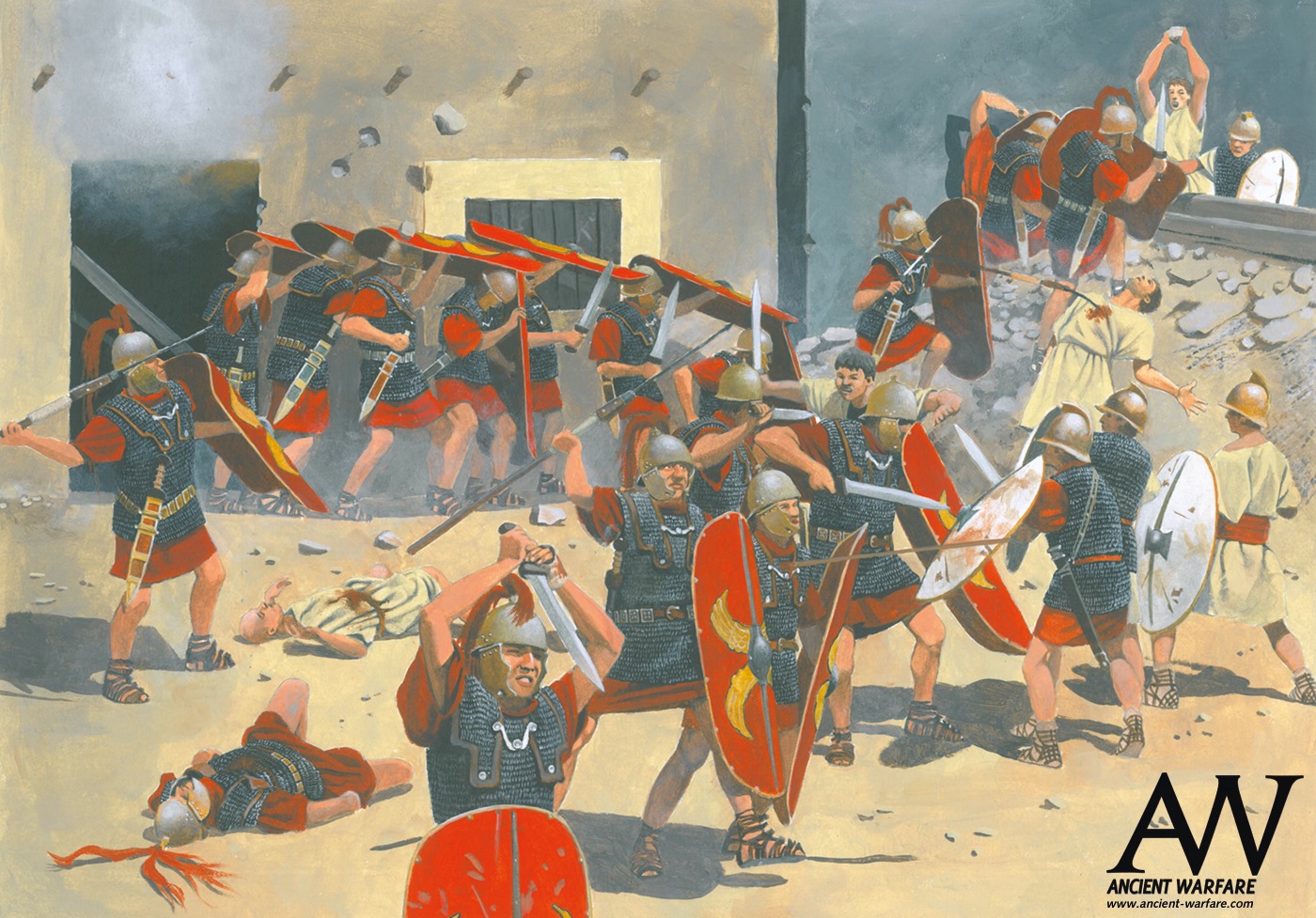
The War Between Julius Caesar and Ptolemy XIII for Control of Egypt
The final phase of the Alexandrian conflict centered on the direct war between Julius Caesar and Ptolemy XIII for control of Egypt, one of the richest and most strategically important kingdoms in the ancient Mediterranean world. By this point, the situation in Alexandria had escalated far beyond a political dispute. It had become a full-scale military confrontation involving Roman legions, Egyptian armies, and the competing claims of Cleopatra VII and her brother Ptolemy XIII.
After the murder of Pompey, Caesar was no longer simply pursuing the final stages of the Roman Civil War. Instead, he was now deeply involved in Egypt’s internal power struggle. His alliance with Cleopatra had already shifted the balance of legitimacy, but the situation remained extremely unstable. Ptolemy XIII and his advisers, particularly Achillas, viewed Caesar as a foreign occupier interfering in Egypt’s sovereignty. This led to open warfare, transforming Alexandria into a battleground.
The Egyptian forces were significantly larger than Caesar’s initial Roman contingent. Ptolemy XIII’s army consisted of trained Egyptian troops, local militias, and experienced commanders who knew the terrain of Alexandria extremely well. Their strategy relied on surrounding Caesar’s positions, cutting off supply routes, and using their numerical advantage to gradually weaken Roman resistance. The goal was to force Caesar into surrender or elimination.
Caesar, however, was not a commander who relied solely on numbers. Even though he was outnumbered, he had several major advantages: discipline, experience, and battlefield adaptability. His troops were veterans of the Gallic Wars and the Roman Civil War, meaning they were highly trained and loyal. Caesar understood that in a siege situation, organization and control mattered more than raw numbers.
The war unfolded across multiple phases. First, Egyptian forces attempted to isolate Caesar within the palace district of Alexandria. They controlled large parts of the city, including key roads and supply routes. Caesar responded by fortifying his positions and securing access points toward the harbor. This allowed him to maintain at least partial communication with the outside world.
One of the most important strategic goals for both sides was control of the harbor of Alexandria. Whoever controlled the harbor could receive reinforcements, supplies, and potentially escape routes. This made the harbor one of the most heavily contested areas of the entire conflict. As fighting intensified, both Roman and Egyptian forces engaged in repeated clashes for control of this vital zone.
The war also became increasingly chaotic due to the urban environment. Unlike traditional battlefield engagements, the fighting in Alexandria involved narrow streets, dense buildings, and shifting control points. Caesar had to constantly adapt Roman military tactics, which were normally designed for open-field battles, to a complex urban war. This required flexibility, quick decision-making, and strong leadership.
At the same time, Cleopatra’s position remained central to the conflict. Her alliance with Caesar provided political legitimacy for his involvement in Egypt, while also strengthening her claim to the throne. Ptolemy XIII, however, was determined to remove both Cleopatra and Caesar from power. This made the conflict not just military but also deeply political, with control of Egypt’s future at stake.
As the war continued, Egyptian forces attempted several coordinated assaults to break Caesar’s defenses. These attacks were designed to overwhelm Roman positions through sheer numbers. However, Caesar’s troops held firm, using disciplined formations and defensive strategies to repel repeated Egyptian advances. Caesar’s ability to maintain order under pressure became a decisive factor in preventing collapse.
The fighting also placed enormous strain on both sides. Supplies were limited, communication was difficult, and the urban environment made sustained combat extremely exhausting. Despite this, neither Caesar nor Ptolemy XIII was willing to compromise. The stakes were too high: control of Egypt meant control of its wealth, grain production, and strategic position in the Mediterranean.
A turning point in the war came when Caesar realized that he could not win through defense alone. He needed reinforcements from outside Egypt. This led to coordination with loyal Roman forces stationed in the eastern provinces. These reinforcements would later arrive and dramatically shift the balance of power in Caesar’s favor, but during this phase of the conflict, Caesar still had to survive without them.
Ptolemy XIII’s forces, meanwhile, began to experience internal pressure. The longer the war continued, the more difficult it became to maintain unity among Egyptian commanders. Some factions disagreed on strategy, while others became increasingly concerned about the destruction of Alexandria itself. Despite this, Achillas continued to push for aggressive action against Caesar.
The war reached a critical level of intensity when Egyptian forces attempted large-scale assaults on Roman-held positions. Caesar responded with counterattacks that demonstrated his tactical genius. Even in a defensive situation, he was able to exploit weaknesses in Egyptian coordination and maintain control of key areas.
Eventually, the war between Caesar and Ptolemy XIII became unsustainable for both sides without external support. Caesar’s survival depended on reinforcements, while Ptolemy XIII’s position depended on breaking Roman resistance quickly. This stalemate set the stage for the arrival of additional Roman forces, which would ultimately decide the outcome of the Alexandrian War.
In the broader historical context, this conflict was not just about Egypt. It represented the expansion of Roman political influence into one of the wealthiest kingdoms in the ancient world. Caesar’s involvement in the war strengthened his personal power, secured Cleopatra’s position as ruler, and demonstrated how Roman civil conflicts could extend far beyond Italy and Greece into the eastern Mediterranean.
Main Ideas
- Caesar and Ptolemy XIII engaged in a full-scale war for control of Egypt.
- Egyptian forces were larger but less disciplined than Roman legions.
- Caesar relied on veteran soldiers, discipline, and tactical flexibility.
- Urban warfare in Alexandria created complex and chaotic battle conditions.
- Control of the harbor was a key strategic objective for both sides.
- Cleopatra’s alliance gave Caesar political legitimacy in Egypt.
- Ptolemy XIII aimed to remove both Caesar and Cleopatra from power.
- Caesar maintained defensive positions while awaiting reinforcements.
- Egyptian internal disagreements weakened their long-term strategy.
- The war set the stage for Roman reinforcement and Caesar’s eventual victory.