Roman Arches, Vaults, and Concrete: The Engineering Secrets Behind Roman Architecture
Roman architecture is famous not only for its beauty, but for its engineering intelligence. Structures such as aqueducts, amphitheaters, baths, bridges, and basilicas were possible because Romans mastered specific construction principles: the arch, the vault, and revolutionary building materials like opus caementicium and opus reticulatum. These innovations allowed Rome to build bigger, stronger, and longer-lasting structures than any civilization before it.
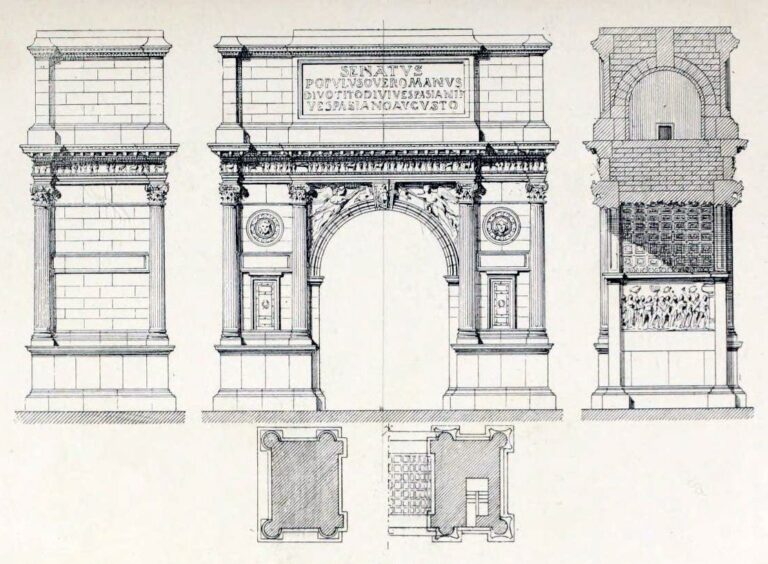
This drawing presents different angles of a Roman triumphal arch, helping viewers understand its structure, proportions, and ornamental design.
What Is a Roman Arch?
A Roman arch is a curved architectural structure designed to distribute weight efficiently from above into side supports called piers or columns. Unlike flat beams, which can crack under pressure, arches convert vertical load into lateral force, making them incredibly strong and durable.
The arch is composed of wedge-shaped stones called voussoirs, with a central locking stone known as the keystone. Once placed, the keystone allows the arch to support itself without additional reinforcement.
Romans did not invent the arch, but they perfected and standardized its use. They applied it in:
Aqueducts
Bridges
Amphitheaters
Gates and monuments
The arch allowed Rome to build higher and wider than traditional post-and-lintel systems used by the Greeks.
Key Ideas
The arch distributes weight sideways, not downward
The keystone locks the structure into place
Arches enabled larger and stronger buildings
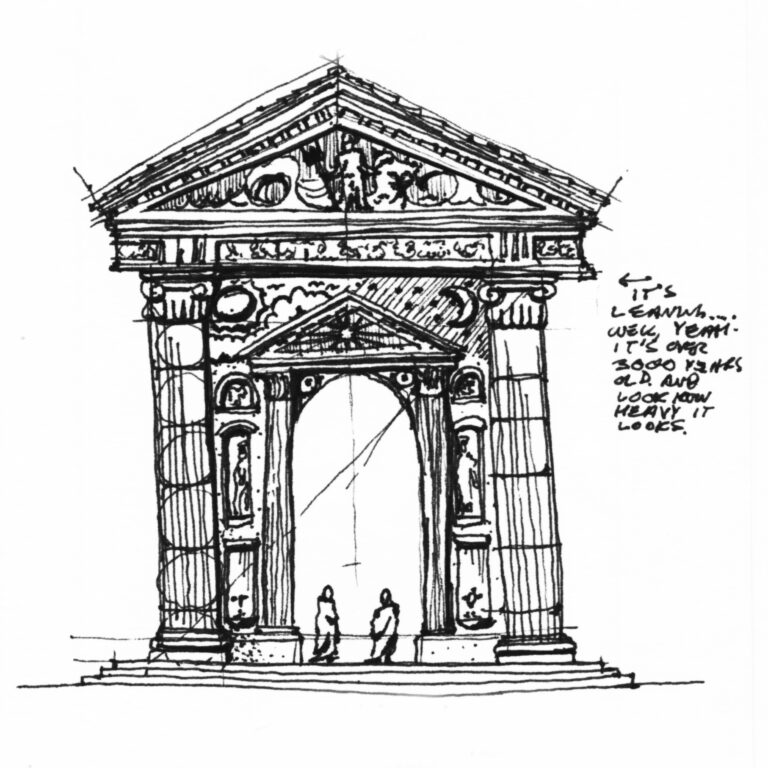
This homemade drawing shows the simple structure of a Roman triumphal arch, helping viewers visualize its shape and key elements in an easy, approachable way.
What Is a Vault in Roman Architecture?
A vault is essentially an arch extended into three dimensions to create a ceiling or roof. Romans used vaults to cover vast interior spaces without needing many supporting columns.
There were several types of vaults:
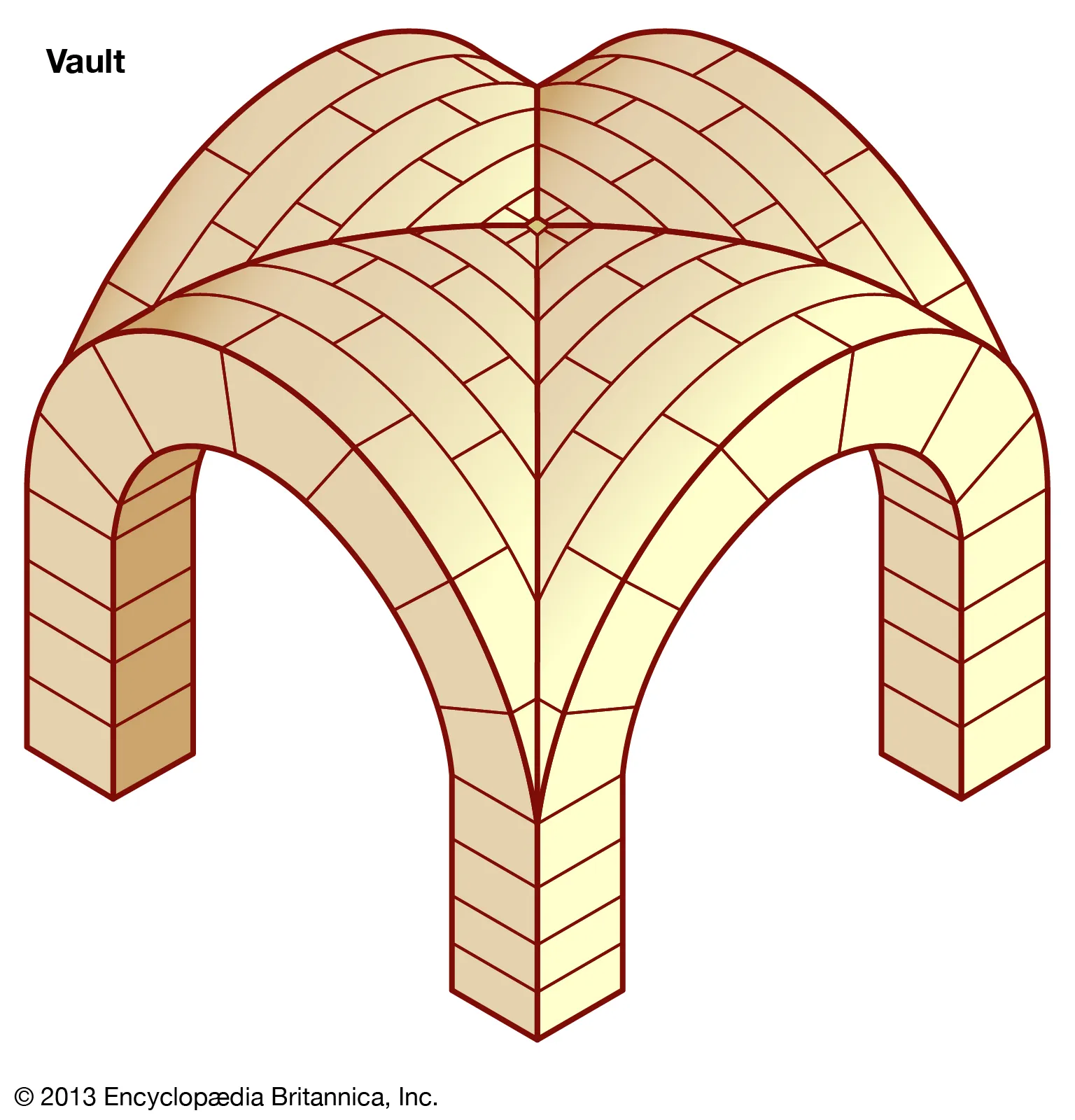
Barrel vault: a continuous tunnel-like arch
Groin vault: two barrel vaults intersecting
Dome: a circular vault rotated around a central point
Vaults allowed Romans to create enormous interior spaces, such as those in bath complexes, basilicas, and temples. The Pantheon’s dome is the most famous example of Roman vaulting mastery.
Key Ideas
A vault is a 3D extension of the arch
Vaults eliminated the need for many columns
They made large indoor spaces possible
This drawing illustrates a Roman vault, demonstrating how the Romans extended the arch to create strong, curved ceilings for large interior spaces.
What Is Opus Caementicium?
Opus caementicium is the Roman form of concrete, made from lime mortar, volcanic ash (pozzolana), water, and small stones. This material was revolutionary because it was:
Strong
Moldable into any shape
Resistant to water and time
Unlike modern concrete, Roman concrete could set underwater and became stronger over time due to chemical reactions with volcanic ash.
This material allowed Romans to pour walls into molds, build arches and vaults easily, and construct durable infrastructure across the empire.
Key Ideas
Roman concrete was stronger and more flexible than stone blocks
It allowed curved and massive structures
Many Roman buildings survive because of this material
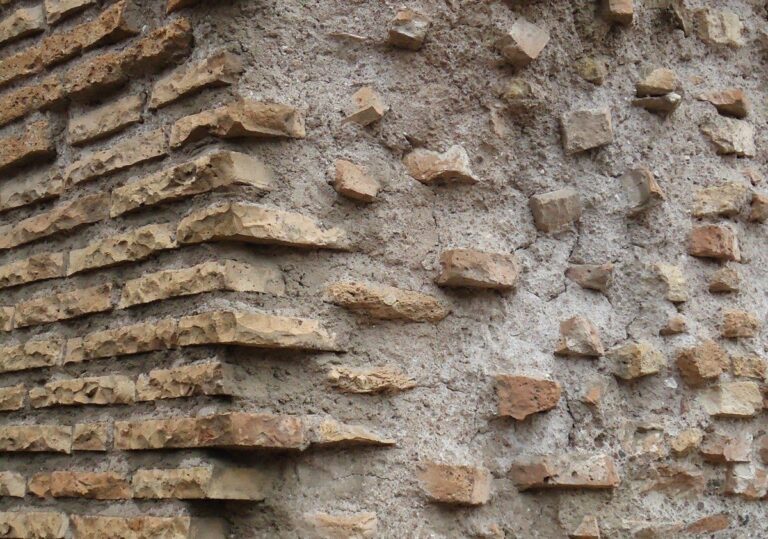
This image shows an authentic Roman wall constructed in opus reticulatum, highlighting the distinctive net-like diamond pattern used to reinforce and decorate buildings.
What Is Opus Reticulatum?
Opus reticulatum was a decorative and structural wall pattern made by placing small diamond-shaped stones into concrete at an angle, creating a net-like appearance.
This technique:
Strengthened walls
Reduced material costs
Provided an attractive, uniform appearance
It was widely used in villas, baths, and public buildings, especially during the late Republic and early Empire.
Key Ideas
A net-pattern stone facing over concrete walls
Combined strength with visual order
Common in elite and public architecture
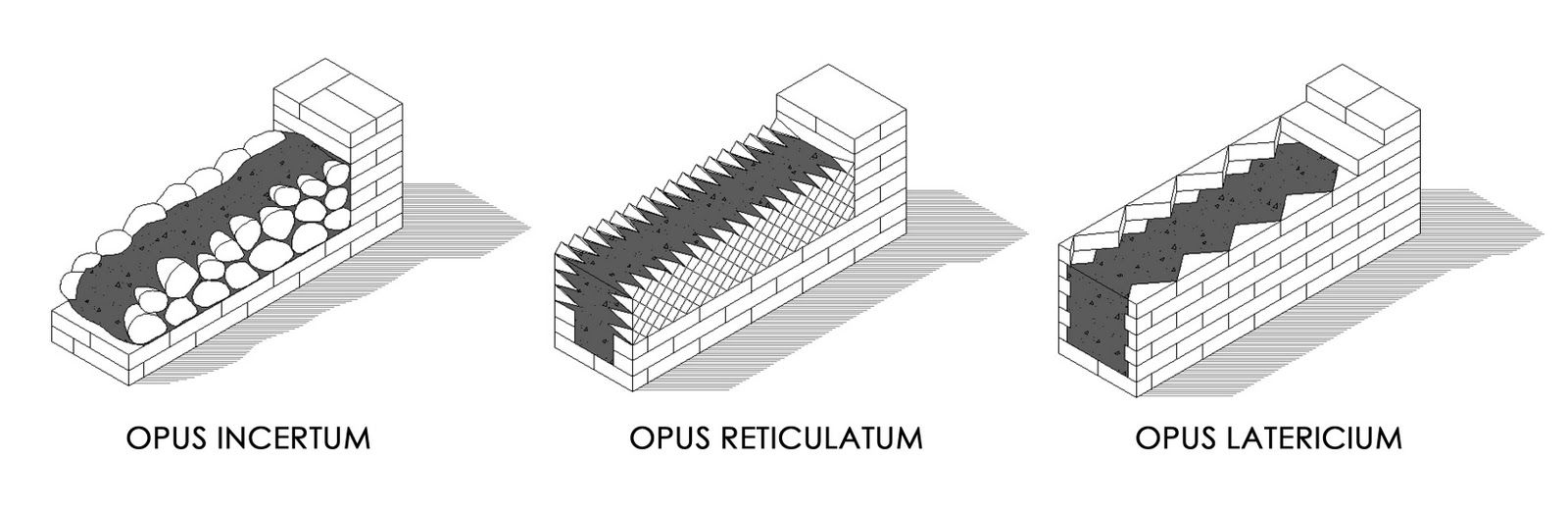
This 3D depiction compares three Roman concrete styles—incertum, reticulatum, and latericium—demonstrating how each technique was used to build strong and visually distinct Roman walls.
Why Did Romans Use Arches Everywhere?
Romans used arches extensively because they were practical, strong, and adaptable. Arches could support immense weight while allowing openings for doors, windows, bridges, and aqueduct channels.
Reasons for widespread use:
Structural efficiency
Ability to build higher and wider
Compatibility with concrete construction
Arches became the foundation for vaults, domes, aqueducts, amphitheaters, and bridges. They were not decorative choices but engineering solutions.
Key Ideas
Arches solved structural problems efficiently
They worked perfectly with Roman concrete
Most large Roman structures depended on arches
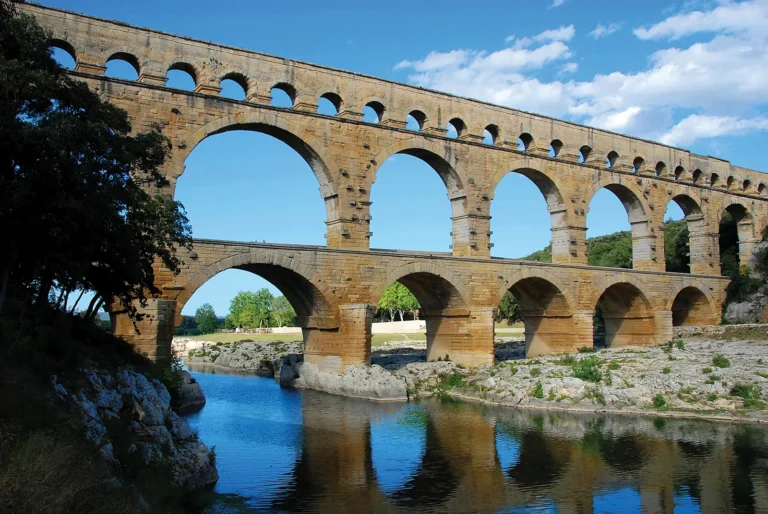
Roman aqueduct spanning a valley, illustrating ancient Roman engineering for transporting water over long distances
Conclusion: The Engineering Logic Behind Roman Greatness
Roman architectural success was not accidental or purely aesthetic. It was based on a deep understanding of physics, materials, and structural design. The arch, vault, and concrete techniques allowed Rome to build on a scale never seen before and rarely matched afterward.
These innovations explain why Roman structures still stand today.
Key Ideas
Roman architecture was based on engineering principles