
Music was an important part of everyday life in Ancient Rome, even though almost none of the actual sounds have survived. Romans used music during religious ceremonies, military activities, theatre performances, public festivals, banquets, weddings, funerals, and other important events. Music could be loud and powerful, especially when played by groups of musicians using instruments such as trumpets, horns, flutes, drums, and cymbals.
Roman music was strongly influenced by the cultures that Rome encountered as it expanded. The Romans adopted many ideas from Ancient Greece, while also absorbing musical traditions from Egypt, Syria, Asia Minor, and other parts of the Mediterranean world. As the Roman Empire grew, its music became increasingly diverse.
Music could serve many different purposes. In the Roman army, instruments were used to communicate orders and organize soldiers. Trumpets and horns could signal movements, changes in formation, or other military commands. In religious ceremonies, music accompanied sacrifices, processions, festivals, and ceremonies dedicated to the gods. Religious music helped create a dramatic atmosphere and marked important moments.
Entertainment was another major part of Roman musical culture. Musicians performed alongside actors, dancers, singers, and other entertainers in theatres and at public celebrations. Music could accompany dramatic performances or be used as part of pantomime and other popular shows. Wealthy Romans could also hire musicians to perform during private banquets and celebrations.
The Romans used a surprisingly wide range of instruments. Flutes and pipes, including the tibia, were common, while lyres and other string instruments were used for musical performances. Large wind instruments such as the cornu and tuba had powerful sounds and were particularly useful for military or public occasions. Percussion instruments such as cymbals, tambourines, and drums added rhythm to performances and ceremonies.
Musicians occupied different positions in Roman society. Some were professional performers who worked for wealthy households, theatres, religious institutions, or public events. Others could become highly skilled and well known. However, performers did not always receive the same social respect as members of the Roman elite.
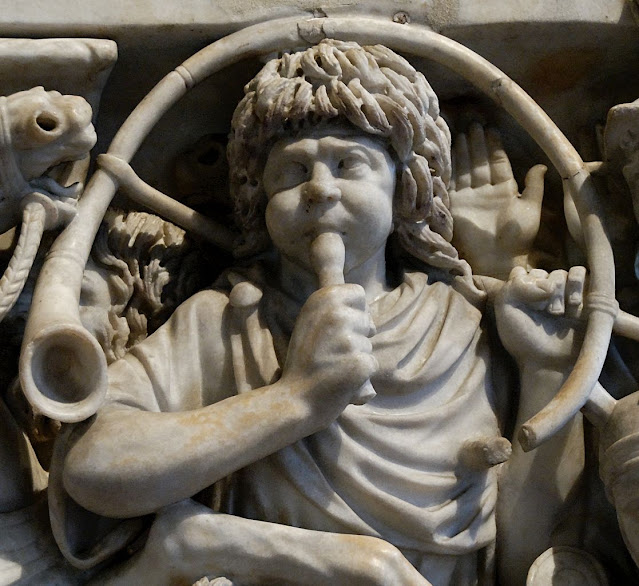
Although Roman music disappeared as a living tradition, historians can still learn about it through ancient mosaics, frescoes, sculptures, written sources, and surviving instruments. These sources show musicians performing with their instruments and provide clues about how music was used.
Roman music was therefore much more than background entertainment. It was connected to religion, warfare, theatre, celebrations, and everyday social life, making it an important part of Ancient Roman culture.
I. How Roman Music Developed and Why It Was Important
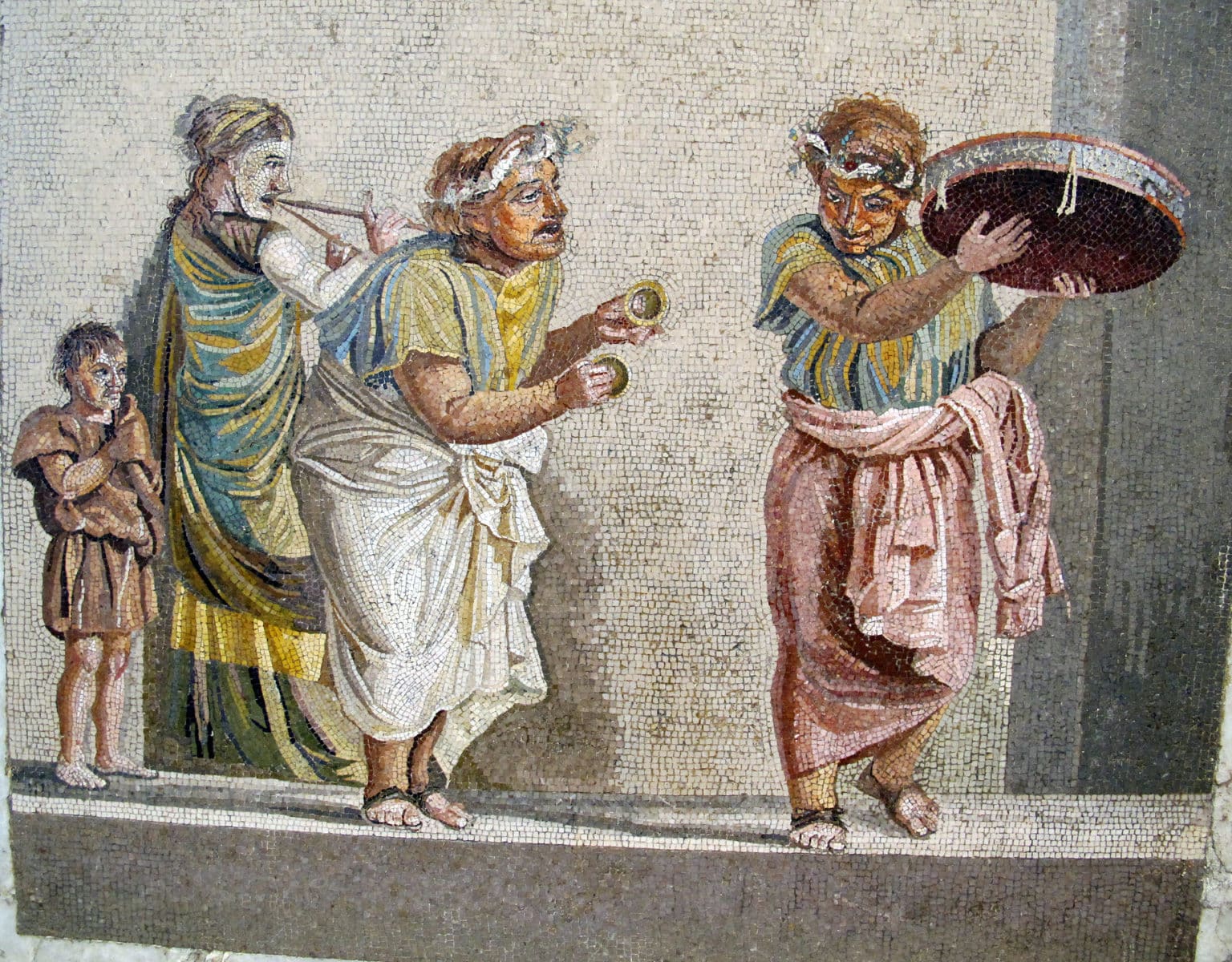
Music was already an important part of Mediterranean culture before Rome became a major power. As the Roman Republic expanded, Romans encountered many different musical traditions and gradually incorporated them into their own society. Roman music was therefore not created from a single tradition. It developed through a mixture of early Italian customs, Greek influence, and musical traditions from across the growing Roman world.
One of the most important influences was Ancient Greece. As Rome expanded into the Greek-speaking regions of the Mediterranean, Roman elites became increasingly interested in Greek literature, philosophy, art, theatre, and music. Greek musicians and teachers were brought to Roman cities, while Roman writers discussed Greek musical ideas. Romans adopted and adapted many Greek instruments and performance practices, although they used them for their own religious, military, and social purposes.
Roman expansion also brought contact with Egypt, Syria, Asia Minor, North Africa, and other regions. Musicians from these areas could appear in Roman cities, introducing different instruments and performance styles. The enormous size of the empire meant that Roman musical culture could become quite diverse. A performance in Rome could contain instruments and traditions that originated hundreds or even thousands of kilometres away.
Music became especially important in religion. Roman religious ceremonies often included music, singing, processions, and instruments. Priests and religious groups could use music during festivals and ceremonies dedicated to the gods. Certain instruments became strongly associated with particular religious traditions. Music helped make religious events more dramatic and gave important ceremonies a recognizable sound.
Music also played a practical role in the Roman military. Soldiers used powerful wind instruments to communicate across large formations. Instruments such as the tuba, cornu, and buccina could transmit signals over distances where spoken commands might not be heard. Different sounds could help soldiers understand when to move, stop, assemble, or perform other actions. Military music was therefore not simply entertainment—it could have an important organizational purpose.
Public entertainment created another major demand for musicians. Roman theatres featured music, singing, dancing, and instrumental performances alongside dramatic productions. Music was particularly important in forms of entertainment such as pantomime, where movement and performance were combined with musical accompaniment.
Music was also part of private life. Wealthy Romans could employ musicians to perform during banquets, parties, weddings, and other celebrations. Music could help create an atmosphere of luxury and entertainment, especially during large gatherings. Instruments such as flutes, lyres, and percussion instruments could accompany singers and dancers.
Different types of musicians had different social positions. Some performers were highly skilled professionals who could become famous or receive wealthy patrons. However, professional entertainers often occupied a lower social position than Roman senators, politicians, and wealthy landowners. This did not mean that music was unimportant. In fact, the demand for musicians across Roman society shows how widely music was valued.
Music was also closely connected with Roman identity and public life. Large festivals, triumphal celebrations, military ceremonies, and religious processions could involve musicians and singers. The sound of instruments helped turn ordinary gatherings into major public spectacles.
Although we cannot hear an actual Roman performance today, archaeological discoveries and ancient artwork give historians important evidence. Mosaics, frescoes, sculptures, written descriptions, and surviving instruments reveal the variety of musical traditions that existed throughout the Roman world.
Roman music therefore developed through cultural exchange and Roman expansion. It became part of nearly every major area of Roman life, from religion and warfare to entertainment and private celebrations.
Main Ideas
- Roman music developed from Italian, Greek, and wider Mediterranean influences.
- Roman expansion brought new instruments and musical traditions into the empire.
- Music was important in religion, military life, entertainment, and celebrations.
- Professional musicians performed for both public and private audiences.
- Ancient artwork and surviving instruments help historians reconstruct Roman musical culture.
II. The Instruments Used in Ancient Rome
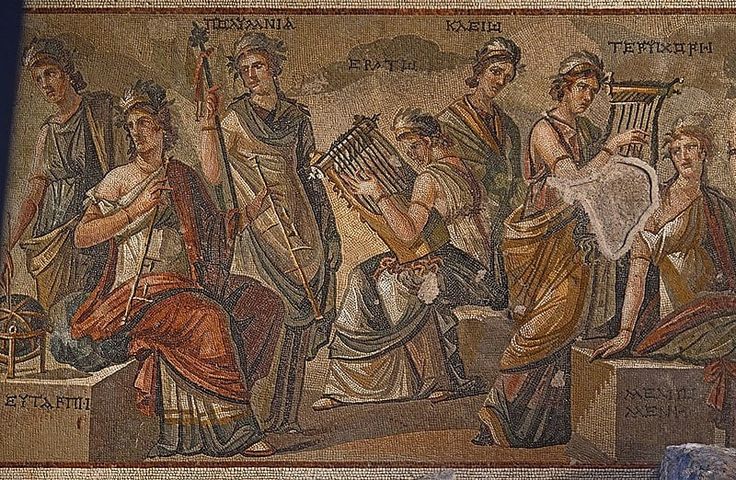
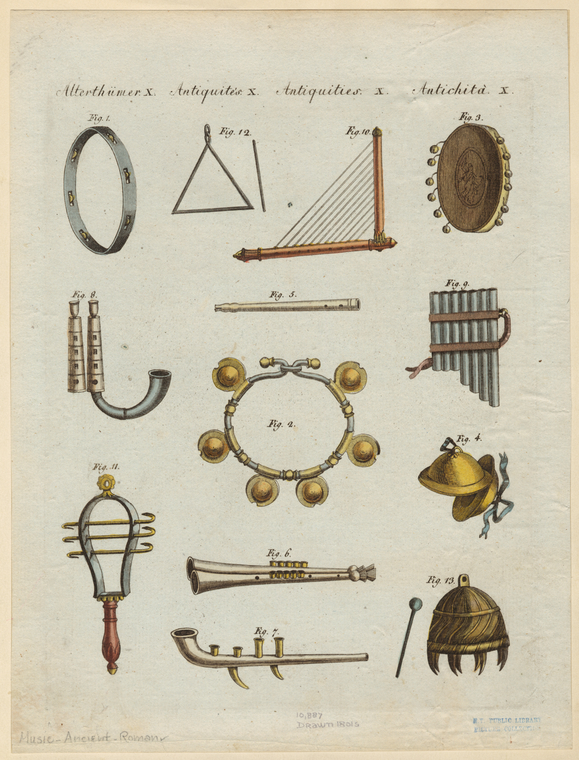
Ancient Romans used a wide variety of musical instruments, and different instruments served different purposes. Some were used for entertainment, while others were important in religious ceremonies, military communication, theatre, festivals, and private celebrations. Roman instruments were also influenced by cultures across the Mediterranean, especially the Greeks and peoples of the eastern Roman world.
One of the most common groups of Roman instruments was wind instruments. The tibia was a type of double-reed pipe that was widely used in Roman music. It was similar in some ways to instruments found in ancient Greece and could be played during theatre performances, religious ceremonies, and other events. A musician could play one or sometimes two pipes at once.
Another important wind instrument was the tuba. Despite its name, the Roman tuba was not like the modern brass instrument called a tuba. It was a straight metal trumpet that produced a strong sound. The Roman military used it to communicate commands and signals across large groups of soldiers. It could also appear during public ceremonies and important events.
The cornu was another famous Roman wind instrument. It was a large curved or circular horn, usually made from metal. Its shape allowed it to be carried while producing a powerful sound. Like the tuba, the cornu was especially associated with the Roman army, although it could also be used in public performances and ceremonies.
The buccina was another curved wind instrument used by the Romans. Ancient sources associate it particularly with military signaling. Its powerful sound made it useful for communicating across large spaces, especially when soldiers needed signals that could be heard over crowds or battlefield noise.
Romans also used many string instruments. The lyre was a small stringed instrument with a frame and strings that could be plucked with the fingers or a pick. It had a long history in Greek culture and became part of Roman musical traditions. Similar string instruments could accompany singing, poetry, and entertainment.
The cithara was another important string instrument. It was related to the Greek kithara and was generally larger and more powerful than a simple lyre. Skilled musicians could perform with it during public entertainment and private gatherings.
Percussion instruments provided rhythm. Romans used cymbals, tambourines, drums, and rattles in different settings. Percussion was particularly useful for dancing, festivals, religious ceremonies, and energetic performances.
One unusual instrument was the hydraulis, or water organ. It used water pressure to help control air flowing through pipes. The instrument could produce a loud and distinctive sound and was sometimes used in public entertainment and large performances.
Roman artwork provides valuable evidence of these instruments. Mosaics, frescoes, sculptures, and coins often show musicians holding or playing instruments. Archaeologists have also discovered actual ancient instruments or fragments, allowing researchers to understand their construction.
Together, these instruments created a diverse Roman musical world. Some produced powerful sounds for armies and public ceremonies, while others were designed for singing, dancing, theatre, or private entertainment. Their variety shows how deeply music was connected to Roman culture.
Main Ideas
- Romans used wind, string, and percussion instruments.
- The tuba, cornu, and buccina were important wind instruments.
- The lyre and cithara were major string instruments.
- Cymbals, drums, and tambourines provided rhythm for performances and ceremonies.
- The hydraulis, or water organ, was one of the most unusual Roman instruments.
III. Music in Roman Religious Ceremonies and Festivals
Music played an important role in Roman religion, where it was used to accompany ceremonies, processions, festivals, and sacrifices. The Romans believed that religious rituals had to be performed correctly, and music could help create the appropriate atmosphere and mark important moments during ceremonies.
Roman religious life included many festivals dedicated to different gods and goddesses. These celebrations could involve large public processions through the streets of Rome. Priests, musicians, dancers, and other participants could move through the city while instruments were played. Music helped make these events more visible and dramatic, especially when large crowds gathered to watch.
One important religious instrument was the tibia, a double-reed wind instrument. It could be played during sacrifices and religious ceremonies. Ancient Roman writers sometimes connected the sound of the tibia with ritual activity, showing that musicians were an established part of religious life.
Another important part of Roman religious music was the use of singing and chanting. Priests and religious groups could recite or sing traditional words during ceremonies. These performances helped preserve religious traditions and ensured that important prayers and formulas were remembered.
Some religious groups had their own distinctive musical traditions. The Salii, a group of priests associated with the god Mars, performed ritual dances and songs during important ceremonies. Their celebrations included movement, chanting, and the use of instruments, creating a highly public religious spectacle.
The Cybeline and Isis cults, which became popular in parts of the Roman world, also had distinctive musical traditions. Their ceremonies could include drums, cymbals, flutes, singing, and dancing. These traditions demonstrate how Roman religious music changed as new religious practices entered the empire.
Music was also important during Roman triumphs and public celebrations. When a victorious general entered Rome in a triumphal procession, musicians could accompany the event while soldiers, prisoners, officials, and crowds filled the streets. Although a triumph was primarily a political and military celebration, music helped transform it into a huge public spectacle.
Festivals could involve more than religious ceremonies. The Roman calendar contained numerous public festivals, and these events could include games, theatrical performances, processions, dancing, and music. Music therefore connected religious traditions with wider Roman entertainment.
The sounds of these ceremonies would have been very different from modern religious services. Large groups of people could participate, while wind instruments, percussion, singing, and movement created a powerful atmosphere. In crowded cities such as Rome, music could carry through streets and public spaces, making important ceremonies audible to large numbers of people.
Music also helped connect ordinary Romans with their religious traditions. Even people who did not participate directly in a ceremony could watch processions or hear music from nearby streets. Religious music was therefore both a ritual activity and a public experience.
Archaeological evidence supports the importance of music in Roman religion. Mosaics, frescoes, sculptures, inscriptions, and written sources show musicians participating in ceremonies and festivals. These sources help historians understand how closely music was connected to Roman religious life.
Roman religious music was therefore not simply decoration. It helped organize ceremonies, accompany movement, preserve traditions, and create a powerful atmosphere during some of the most important events in Roman public life.
Main Ideas
- Music was an important part of Roman religious ceremonies.
- Priests, musicians, and dancers could participate in public religious events.
- Instruments such as the tibia, drums, and cymbals were used in different traditions.
- Religious festivals and processions made music a major part of public life.
- Music helped Romans preserve traditions and create a dramatic religious atmosphere.
IV. Music in the Roman Army
Music played a practical and important role in the Roman army. Roman soldiers operated in large formations, sometimes numbering thousands of men, so commanders needed reliable ways to communicate orders. Loud musical instruments could send signals across a battlefield, military camp, or marching column, making them an important part of Roman military organization.
The most important military instruments were powerful brass and metal wind instruments. The tuba was a straight trumpet that produced a strong sound. It could be used to communicate signals to soldiers and help coordinate their movements. Because its sound could travel over long distances, it was particularly useful when spoken commands could not easily be heard.
The cornu was another important military instrument. It had a large curved shape and was carried by a specialized musician known as a cornicen. The cornu could produce loud signals and was used to help communicate commands within military formations. Its distinctive shape also made it practical for a musician carrying it while moving with the army.
The buccina was another curved instrument associated with Roman military life. A musician who played the buccina was known as a buccinator. Like other military instruments, it could be used for signaling and organizing soldiers.
These musicians were not simply entertainers. They had a specific role within the Roman military system. Their signals could help soldiers understand when to assemble, march, stop, change activity, or respond to orders. The exact meaning of particular signals is not always clear to modern historians, but ancient sources make it clear that military music was an important communication system.
Music could also help organize the daily routine of a Roman military camp. Soldiers followed strict schedules involving duties, guard shifts, training, meals, and rest. Signals from military musicians could help mark different activities and keep large groups organized.
During battles, communication was especially difficult. Thousands of soldiers could be moving at the same time, while shouting, weapons, and crowd noise made ordinary speech difficult to hear. A loud trumpet or horn could therefore provide an effective way of sending signals across a formation.
Military musicians could also contribute to the ceremonial side of the Roman army. Roman soldiers participated in religious ceremonies, military parades, triumphs, and other public events. Instruments could accompany these occasions and demonstrate the discipline and organization of the army.
Music also helped create a sense of Roman military identity. The sound of trumpets and horns could announce the presence of Roman troops and make military ceremonies more impressive. In a Roman city, hearing military instruments might signal that soldiers were marching through the streets or participating in an official event.
Archaeological evidence provides additional information about military music. Roman monuments, sculptures, mosaics, and reliefs sometimes depict military musicians carrying instruments. The famous Trajan’s Column in Rome, for example, contains detailed scenes of Roman soldiers and military equipment, providing valuable evidence about Roman army life.
Roman military music therefore had a very different purpose from music played at a private banquet. It was closely connected to communication, organization, ceremony, and discipline. The tuba, cornu, and buccina helped Roman commanders coordinate large numbers of soldiers while also contributing to the impressive public image of the Roman army.
Main Ideas
- Music was an important communication system in the Roman army.
- The tuba, cornu, and buccina were major military instruments.
- Military musicians helped soldiers respond to signals and commands.
- Music was also used during parades, ceremonies, and triumphs.
- Military music strengthened the army’s image of discipline and organization.
V. Music in Roman Theatres, Amphitheatres, and Public Entertainment
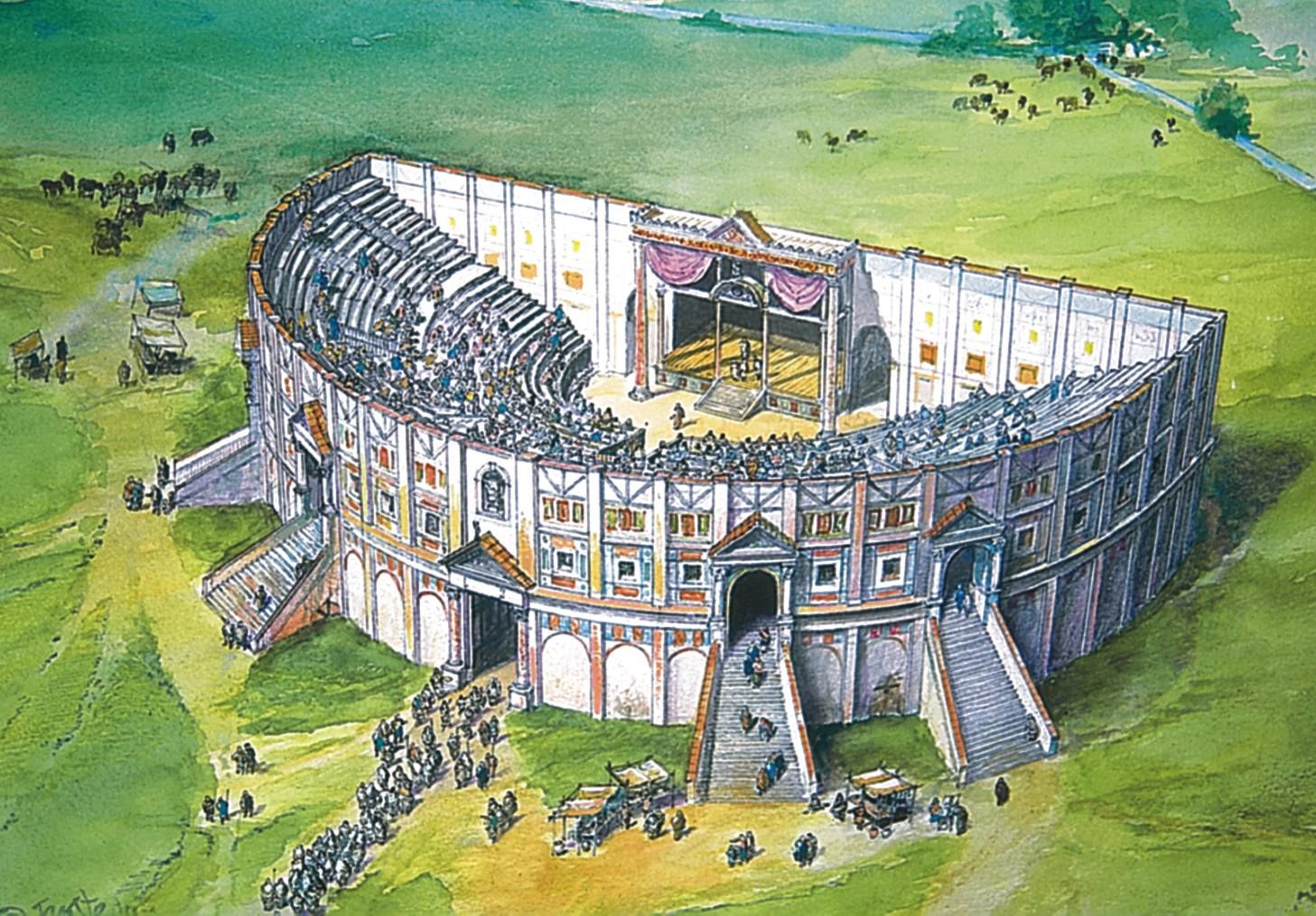
Music was a major part of Roman public entertainment, and audiences could hear musicians in many different types of venues. Theatres, amphitheatres, festivals, and other public events used music to create excitement, accompany performers, and keep large crowds entertained. Music was therefore closely connected with the wider Roman culture of spectacle and entertainment.
In Roman theatres, music was often performed alongside actors, singers, and dancers. Traditional plays could include instrumental accompaniment, while other performances relied heavily on music and movement. Instruments such as the tibia, lyre, and percussion instruments could accompany performances and help establish the mood of a scene.
Music was especially important in pantomime, a popular Roman theatrical form. Pantomime performers told stories through dance, gestures, and movement, while musicians provided accompaniment. A performer could portray different characters during the same performance, with music helping audiences understand changes in mood and action.
Mime was another popular form of entertainment. Unlike modern mime, Roman mime could involve spoken dialogue, jokes, singing, dancing, and music. Performances could be humorous and often focused on recognizable situations from everyday life. Music helped make these performances energetic and entertaining for large audiences.
Music could also appear in amphitheatres, although the main attractions there were usually gladiatorial contests, animal hunts, executions, or other spectacles. Musicians could perform before events, during ceremonies, or between different parts of a program. Large instruments could help announce the beginning of an event and add to the atmosphere.
Public festivals provided even more opportunities for music. Roman ludi, or public games and festivals, could include theatrical performances, religious processions, races, and other forms of entertainment. Musicians could accompany performers and processions, creating a continuous atmosphere of celebration.
Music was also useful for large-scale spectacles. Roman rulers and wealthy officials sometimes sponsored enormous public events to demonstrate their generosity and entertain the population. These events could involve hundreds or even thousands of spectators. Music helped create a sense of occasion and made the performances more dramatic.
The sound of Roman entertainment would have been very different from a modern theatre or concert hall. There were no microphones or electronic speakers, so musicians had to rely on the natural power of their instruments. Wind instruments and percussion could be particularly effective in large open spaces because their sounds could carry across crowds.
Musicians worked closely with other performers. Actors, singers, dancers, and instrumentalists could form teams that created complete performances. Behind the scenes, other workers prepared costumes, scenery, props, and stage equipment. Entertainment was therefore a large collaborative activity rather than the work of a single performer.
Public entertainment also created opportunities for performers to become famous. Some musicians and theatrical performers could attract enthusiastic audiences and wealthy patrons. However, professional entertainers generally did not have the same social standing as members of Rome’s political and aristocratic elite.
Music could even influence the behavior of the audience. A fast rhythm or loud instrumental passage could increase excitement, while slower music could create a more serious or dramatic mood. Performers could therefore use music as an important part of the overall experience.
Roman public entertainment shows how widely music was used throughout Roman culture. Whether accompanying a theatrical performance, pantomime, festival, or large public spectacle, music helped turn an ordinary gathering into a memorable event.
Main Ideas
- Music was an important part of Roman public entertainment.
- Theatres used music alongside actors, singers, and dancers.
- Pantomime and mime depended heavily on musical accompaniment.
- Musicians could also perform during amphitheatre events and public festivals.
- Music helped create excitement, drama, and atmosphere for large Roman audiences.
VI. Music at Roman Banquets, Weddings, and Private Celebrations
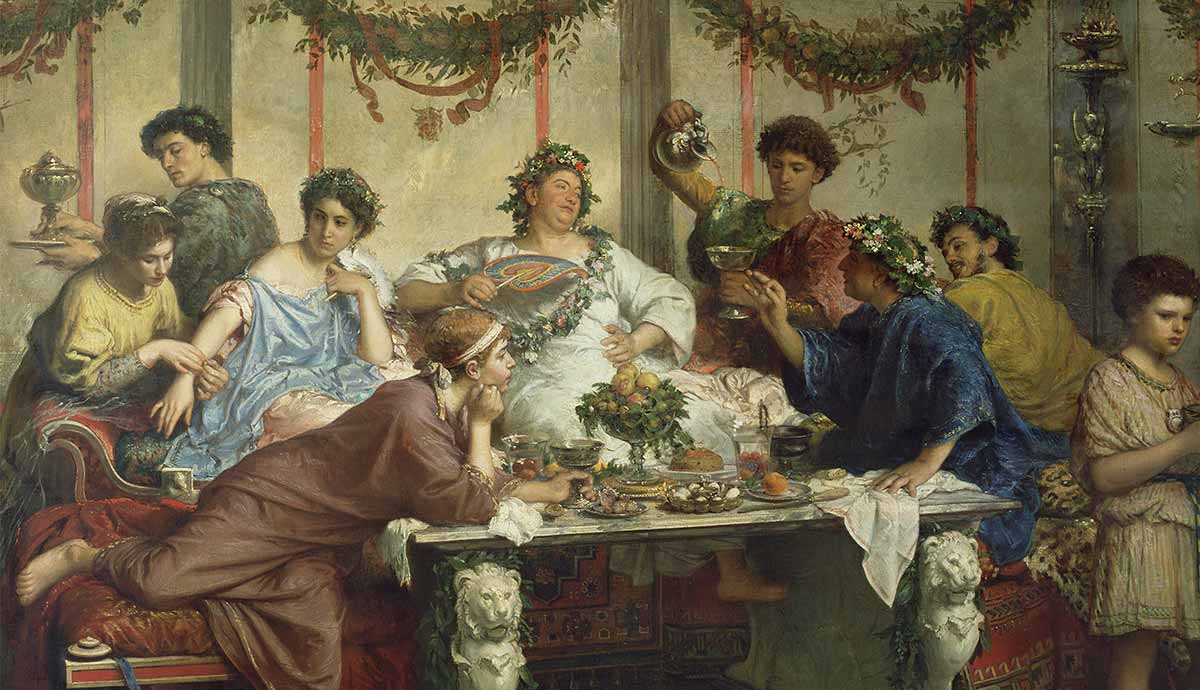
Music was not limited to public festivals, theatres, and military ceremonies. It was also an important part of private Roman life. Wealthy Romans could include musicians, singers, and dancers at banquets, weddings, family celebrations, and private parties. For the upper classes, music could help turn an ordinary meal into an impressive social event.
The Roman banquet, or convivium, was an important setting for private entertainment. Wealthy hosts could invite relatives, friends, political connections, and business associates to large meals. Food and wine were central to the occasion, but entertainment could continue throughout the evening. Musicians and performers could provide music while guests ate, talked, and socialized.
Different instruments could be used during these gatherings. The lyre and cithara were suitable for accompanying singing and quieter performances, while flutes and percussion instruments could create more energetic music. The choice of performers and instruments could depend on the wealth of the host and the type of celebration.
Music could also accompany singing and poetry. Educated Romans valued literature, and wealthy households could employ performers to recite or sing poems for their guests. This connected music with the Roman appreciation of poetry and literature. A banquet could therefore involve not only eating and drinking but also listening to stories, songs, and performances.
Dancers could perform alongside musicians as well. Music and dance were closely connected in Roman entertainment, particularly during celebrations. A group of musicians could provide rhythms while dancers performed for the guests. These performances added movement and spectacle to private events.
Weddings were another important occasion for music. Roman marriage ceremonies involved several traditions and celebrations, and music could accompany parts of the wedding festivities. Singing, instruments, and processions helped create a festive atmosphere as families and guests celebrated the marriage.
Music was also connected with funerals and mourning. Roman funerals could include processions through the streets, and professional musicians known as tibicines could play pipes during funeral ceremonies. Their music helped accompany the procession and gave the event a formal and emotional character.
The use of professional entertainers at private events also reflected wealth and social status. Hiring skilled musicians required money, so having several performers at a banquet could demonstrate that the host was wealthy enough to afford elaborate entertainment. A successful host could use a large celebration to impress guests and strengthen important social relationships.
However, the social position of performers was complicated. A wealthy Roman might enjoy listening to an exceptionally talented musician while still considering professional entertainers socially inferior. This contrast shows an important feature of Roman society: entertainment could be highly valued even when entertainers themselves did not enjoy high social status.
Private music was not restricted entirely to the richest Romans. Ordinary people also used music during family celebrations, religious occasions, weddings, and community gatherings, although the scale of the entertainment would have depended on their resources.
Music could also help create different moods. A lively performance could encourage celebration and dancing, while quieter music could accompany conversation or poetry. At funerals, music could contribute to the solemn atmosphere of the ceremony.
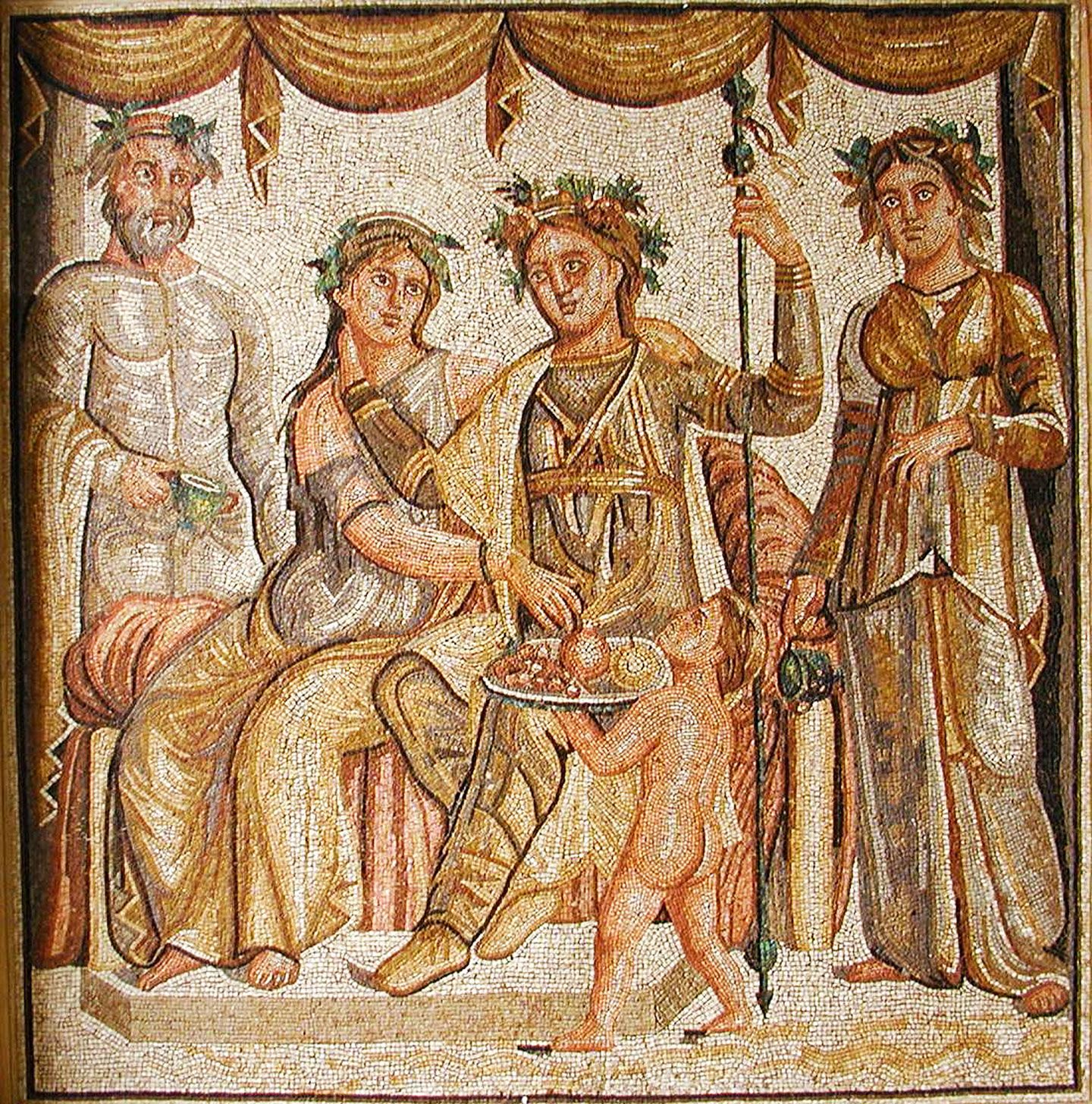
Archaeological discoveries provide evidence of musicians participating in private celebrations. Roman mosaics and frescoes sometimes depict musicians, dancers, banquets, and social gatherings. These images show that music was closely connected with the Roman idea of celebration and hospitality.
Private music therefore played an important role in Roman social life. From enormous aristocratic banquets to weddings and funerals, music helped Romans celebrate important moments, entertain guests, and express the importance of an occasion.
Main Ideas
- Music was common at Roman banquets and private celebrations.
- Wealthy Romans could hire musicians, singers, and dancers.
- Weddings could include music, singing, and festive performances.
- Professional tibicines could perform during Roman funerals.
- Private music could demonstrate wealth, celebration, hospitality, and social status.
VII. Roman Musicians, Singers, and Professional Performers
Music in Ancient Rome depended on a large community of professional musicians, singers, dancers, and entertainers. These performers worked in many different settings, from theatres and religious ceremonies to private banquets and public festivals. Some performed independently, while others worked for wealthy households, theatrical groups, religious organizations, or public events.
Roman musicians could specialize in particular instruments. A skilled player might become known for playing the tibia, lyre, cithara, cornu, or other instruments. Different performers were needed for different occasions. A military musician had a very different role from a musician performing at a wealthy banquet, while theatrical musicians had to work closely with actors and dancers.
Singers were also important in Roman entertainment. They could perform songs during private celebrations, theatrical productions, festivals, and other events. Singing was often combined with instrumental accompaniment, allowing performers to create more elaborate performances.
Dancers frequently worked alongside musicians. Roman entertainment often combined several forms of performance rather than keeping music, acting, and dancing completely separate. This was particularly important in pantomime, where a dancer or actor could tell stories through movement while musicians and singers provided accompaniment.
Some performers were highly skilled and could gain considerable fame and popularity. Wealthy Romans might develop relationships with talented entertainers and employ them regularly. Successful performers could therefore find opportunities to earn money and build reputations, even though their social position could remain relatively low.
The Roman attitude toward professional entertainers was complicated. Music itself was widely valued, particularly in religion and entertainment, but people who performed professionally were not always treated as members of respectable high society. Roman elites could enjoy performances while still looking down on performers because of their occupation.
Some musicians and entertainers were enslaved people or freedpeople. Wealthy households could train enslaved workers in music and entertainment and use them to perform for their owners and guests. Freedpeople could also continue working as entertainers after gaining their freedom. This means that the world of Roman music was closely connected with the wider Roman system of slavery and social hierarchy.
Performers needed more than musical talent. They had to understand rhythm, timing, performance, and cooperation with other entertainers. Theatre musicians, for example, needed to follow actors and dancers closely so that the music matched the performance.
There were also people working behind the scenes. Instrument makers, costume workers, stage assistants, teachers, and managers all contributed to Roman entertainment. Large performances could therefore involve many different occupations.
Roman musicians also travelled. Performers could move between cities looking for opportunities, particularly as entertainment became widespread across the empire. The growth of Roman cities created demand for skilled entertainers in different regions.
Ancient artwork gives us some idea of how these performers looked. Mosaics, frescoes, sculptures, and reliefs often show musicians holding their instruments or performing alongside dancers and actors. These images are especially valuable because very little Roman music itself survived.
Written sources also mention famous performers and musical competitions. Music could be part of elite education as well, meaning that some wealthy Romans learned instruments or singing even if they did not perform professionally.
Professional performers were therefore an important part of Roman culture. They entertained audiences, supported religious ceremonies, accompanied military and public events, and helped create the music that filled Roman cities.
Main Ideas
- Ancient Rome had many professional musicians, singers, dancers, and entertainers.
- Performers specialized in different instruments and types of entertainment.
- Music, singing, and dancing often worked together in Roman performances.
- Performers could become famous but often had lower social status.
- Roman music depended on a much larger entertainment industry, including instrument makers and stage workers.