1. The Colosseum: The Arena That Defined Roman Power
Few buildings in human history are as instantly recognizable as the Colosseum. More than just an arena, it became the ultimate symbol of Roman engineering, imperial authority, and public entertainment. Built nearly two thousand years ago, the Colosseum still stands today as one of the greatest architectural achievements of the ancient world. Its enormous size, advanced design, and cultural importance made it far more than a place for games—it was a representation of Rome itself.
Construction of the Colosseum began under Vespasian around 72 CE and was completed under his son Titus in 80 CE. The project was part of the Flavian dynasty’s effort to restore stability and gain public support after years of political chaos. The location of the Colosseum was highly symbolic. It was built on land that had previously been occupied by the luxurious palace complex of Nero, known as the Domus Aurea. By replacing a private imperial space with a public entertainment arena, the Flavian emperors presented themselves as rulers who served the people rather than themselves.
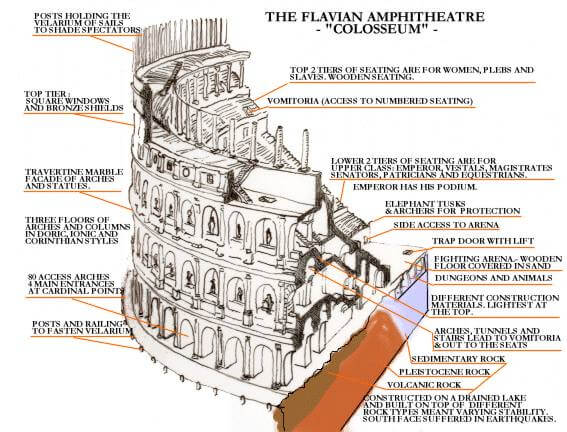
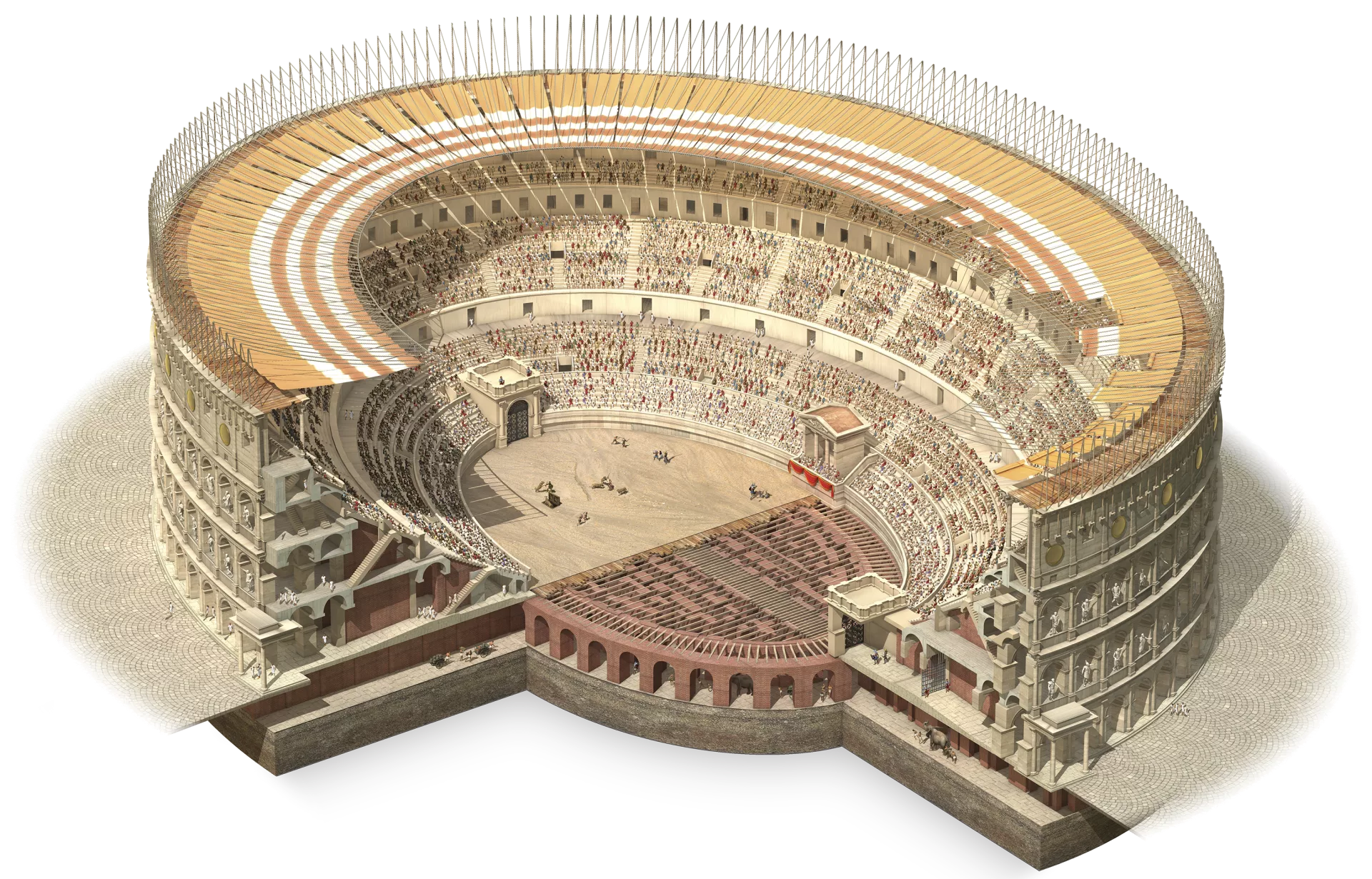
Architecturally, the Colosseum was revolutionary. Unlike earlier amphitheaters, which were often built into hillsides for support, the Colosseum was a freestanding structure made possible by Roman mastery of concrete and arches. Standing around 48 meters tall and capable of holding tens of thousands of spectators, it demonstrated the Romans’ ability to combine scale with functionality.
The building’s exterior featured multiple levels of arches supported by columns in different architectural styles. The first level used the Doric order, the second the Ionic order, and the third the Corinthian order. This combination reflected Roman appreciation for Greek architectural traditions while adapting them into something uniquely Roman. Above these levels was an attic section that supported the velarium, a massive retractable awning used to shade spectators from the sun.
Inside, the Colosseum was carefully organized to handle enormous crowds efficiently. It had around 80 entrances, allowing spectators to enter and exit quickly. The seating arrangement reflected the strict hierarchy of Roman society. The emperor and elite sat closest to the arena, while lower classes occupied higher sections. This design reinforced social order and political structure every time the public gathered.
The arena floor itself was made of wood covered with sand, which absorbed blood during events. Beneath it was the hypogeum, an underground network of tunnels, cages, elevators, and machinery. This hidden system allowed gladiators, animals, and stage equipment to appear suddenly in the arena, creating dramatic and surprising spectacles. The engineering behind the hypogeum was extremely advanced, involving pulleys, lifts, and coordinated labor to operate efficiently.
The events held in the Colosseum were central to Roman public life. Gladiator battles, animal hunts, public executions, and theatrical performances attracted massive audiences. These spectacles were not only entertainment—they were political tools. Emperors sponsored games to gain popularity and demonstrate their power. This was part of the Roman concept often described as “bread and circuses,” where entertainment and food helped maintain public loyalty and social stability.
The Colosseum also symbolized the vast reach of the Roman Empire. Exotic animals such as lions, elephants, and crocodiles were brought from distant regions, demonstrating Rome’s ability to control and exploit territories across three continents. Every spectacle reminded spectators of the empire’s wealth, military strength, and global influence.
One of the most remarkable aspects of the Colosseum is its engineering durability. Despite earthquakes, fires, and centuries of stone removal, much of the structure still survives. Roman concrete, arches, and vaulting techniques allowed the building to withstand enormous pressure and remain stable for nearly two millennia. Many modern stadiums still use principles first perfected in structures like the Colosseum, especially in crowd management and tiered seating design.
However, the Colosseum’s legacy is not only one of achievement. It is also connected to the violence and brutality of Roman society. Thousands of people and animals died within its walls. Gladiators fought for survival, criminals were executed publicly, and dangerous spectacles became a form of mass entertainment. This dual nature is what makes the Colosseum so historically powerful—it represents both the greatness and the cruelty of ancient Rome.
As the Roman Empire declined, the Colosseum gradually lost its original function. Gladiatorial games disappeared, and the building was reused for other purposes. Earthquakes damaged sections of the structure, and stones were taken to build churches and palaces elsewhere in Rome. Yet even in ruins, the Colosseum remained a symbol of the city’s ancient glory.
Today, the Colosseum is one of the most visited historical landmarks in the world. Millions travel to Rome each year to see it, not just because of its size, but because of what it represents. It stands as a monument to Roman engineering, political ambition, cultural influence, and the complexity of one of history’s greatest civilizations.
In conclusion, the Colosseum was far more than an entertainment venue. It was a carefully designed symbol of Roman power, organization, and technological brilliance. Through its architecture, engineering, and spectacles, it reflected the strengths and contradictions of the Roman Empire itself. Even after two thousand years, it continues to inspire awe and remains one of the defining structures of human history.
Main Ideas
- Built under Vespasian and completed by Titus
- Replaced the palace complex of Nero
- Symbolized Roman engineering and imperial authority
- Used arches, concrete, and advanced construction techniques
- Included hypogeum with underground machinery
- Hosted gladiator games, hunts, and public executions
- Reflected strict Roman social hierarchy
- Part of “bread and circuses” political strategy
- Demonstrated the empire’s wealth and global reach
- Represents both Roman greatness and brutality
2. The Pantheon: Engineering the Perfect Dome
Among all the surviving buildings of ancient Rome, the Pantheon is perhaps the greatest example of Roman architectural genius. While the Colosseum symbolized public spectacle and imperial power, the Pantheon represented something different: mathematical perfection, engineering innovation, and religious symbolism. Nearly two thousand years after its construction, its dome remains one of the most extraordinary achievements in architectural history.
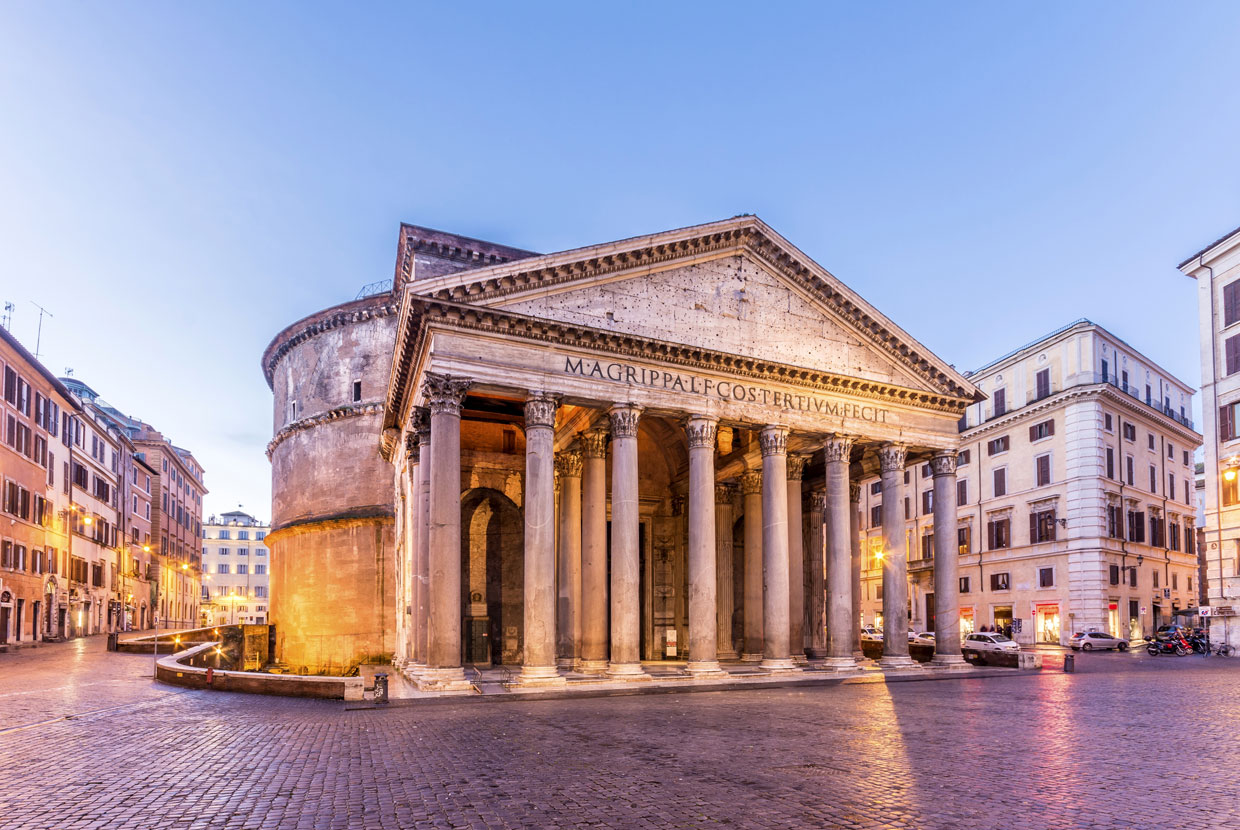
The original Pantheon was built during the reign of Marcus Agrippa in the late 1st century BCE, but that structure was destroyed by fire. The building that survives today was reconstructed under Hadrian around 118–125 CE. Interestingly, Hadrian kept Agrippa’s name on the front inscription, which still reads: “Marcus Agrippa built this.” This reflected Roman respect for tradition and continuity, even when rebuilding on a much larger and more advanced scale.
The Pantheon was originally designed as a temple dedicated to all Roman gods. In fact, the word “Pantheon” comes from Greek, meaning “all gods.” However, unlike many earlier Roman temples, the Pantheon’s design broke traditional architectural expectations. Instead of focusing only on an exterior façade, the Romans created a building where the interior space itself became the main spectacle.
The most famous feature of the Pantheon is undoubtedly its dome. Measuring around 43 meters in diameter, it remains the largest unreinforced concrete dome ever built. What makes this achievement even more incredible is that the Romans accomplished it without modern steel reinforcement or advanced machinery. The dome’s design required an extraordinary understanding of weight distribution, geometry, and materials.
To reduce pressure on the structure, Roman engineers used different types of concrete throughout the dome. Heavier materials such as stone were placed near the base, while lighter volcanic materials were used higher up. This gradual reduction in weight prevented collapse and allowed the dome to remain stable for centuries. The walls supporting the dome are also incredibly thick, helping distribute the enormous force created by the structure above.
At the center of the dome is the oculus, a circular opening about 9 meters wide. This is the only direct source of natural light inside the building. The oculus serves both practical and symbolic purposes. Practically, it reduces the weight at the top of the dome. Symbolically, it creates a connection between the temple and the heavens. As sunlight moves across the interior throughout the day, the Pantheon almost feels alive, changing constantly with the movement of light.
The interior of the Pantheon was designed to inspire awe. The proportions are nearly perfect: the height of the building and the diameter of the dome are almost exactly the same, creating the impression of a perfect sphere. This harmony reflected Roman interest in order, balance, and cosmic design. The building was not just functional—it was meant to express ideas about the universe and the relationship between humanity and the divine.
The entrance to the Pantheon features a massive portico supported by enormous granite columns imported from Egypt. Transporting these columns across the Mediterranean and into Rome was a logistical achievement in itself, showing the vast resources and organizational power of the Roman Empire. The use of imported materials also demonstrated Rome’s global reach and wealth.
Unlike many ancient Roman buildings, the Pantheon survived largely intact. One major reason for this is that it was converted into a Christian church in the 7th century CE. Because it continued to serve a religious purpose, it avoided the destruction or abandonment that affected many other Roman structures. Over time, it became not only a monument of ancient Rome but also part of the continuing cultural and religious life of the city.
The influence of the Pantheon on later architecture is enormous. During the Renaissance, architects such as Michelangelo admired and studied it closely. Michelangelo reportedly described it as “angelic, not human design.” The Pantheon inspired countless domed structures throughout history, including churches, government buildings, and memorials across Europe and the United States. Modern buildings such as the U.S. Capitol and many neoclassical structures owe part of their design to Roman innovations first perfected in the Pantheon.
The Pantheon also demonstrates the Roman ability to combine engineering with artistic vision. The building was not only technically advanced—it was emotionally powerful. Visitors entering the interior still experience the same sense of scale, light, and harmony that ancient Romans would have felt nearly two millennia ago. Few buildings in history have maintained such an impact across so much time.
Another important aspect of the Pantheon is how it reflects Roman adaptability. While inspired by Greek temple traditions, the Romans transformed those ideas into something entirely new. Instead of copying earlier architecture, they expanded it using concrete, arches, and domes to create spaces never before possible. This ability to innovate while building on older traditions was one of the greatest strengths of Roman civilization.
In conclusion, the Pantheon stands as one of the greatest architectural achievements in human history. Through its perfect proportions, massive dome, and advanced engineering, it demonstrated the brilliance of Roman design and construction. More than just a temple, it became a symbol of Roman innovation, ambition, and understanding of space and structure. Even today, it remains one of the clearest examples of how ancient Rome shaped the future of architecture for centuries to come.
Main Ideas
- Rebuilt under Hadrian after original by Marcus Agrippa
- Dedicated to all Roman gods
- Features the world’s largest unreinforced concrete dome
- Dome designed using advanced weight distribution techniques
- Oculus provides light and symbolic connection to heavens
- Interior based on perfect geometric proportions
- Granite columns imported from Egypt
- Preserved because it became a Christian church
- Influenced Renaissance and modern architecture
- Represents Roman mastery of engineering and artistic design
3. The Circus Maximus: The Largest Stadium of the Ancient World
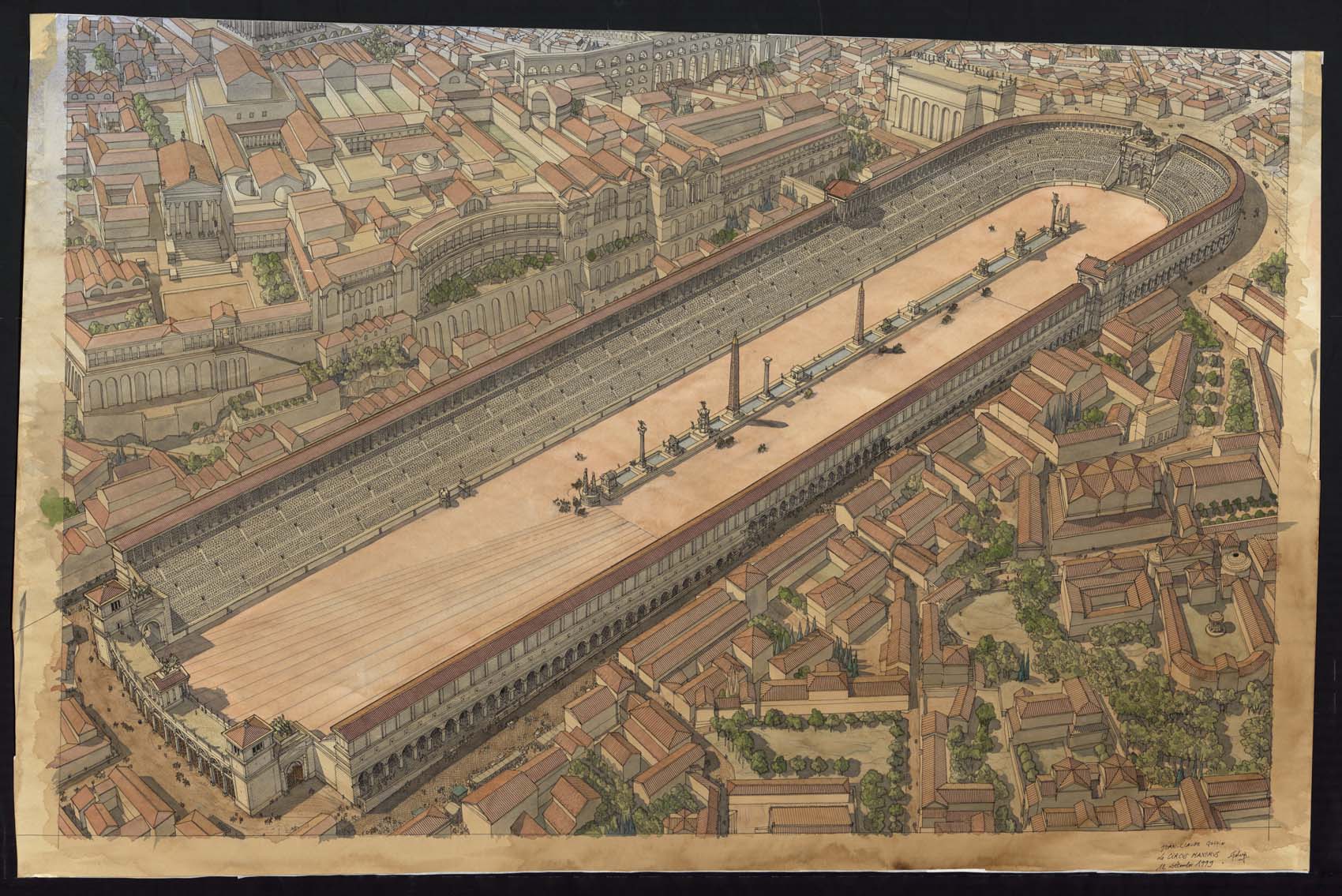
The Circus Maximus was one of the greatest entertainment venues ever built in the ancient world. While the Colosseum is often the most famous Roman arena today, the Circus Maximus was actually much larger and, for centuries, even more important to daily Roman life. It was the center of chariot racing, public festivals, imperial ceremonies, and mass entertainment, capable of holding hundreds of thousands of spectators at its peak. More than just a stadium, it was a symbol of Roman society, politics, and engineering on a massive scale.
The origins of the Circus Maximus go back to the early days of Rome itself. Tradition connects its earliest form to the Roman kings, long before the empire existed. Over time, what began as a simple open racing ground evolved into an enormous and highly sophisticated structure. Successive rulers expanded and improved it, turning it into the largest stadium of the ancient world.
The Circus Maximus was located in the valley between the Aventine and Palatine Hills, a position that allowed for large-scale construction and easy access. Its elongated shape was specifically designed for chariot racing, the most popular spectator sport in Rome. Unlike amphitheaters such as the Colosseum, which focused on central arena events, the Circus Maximus was built around speed, movement, and competition.
At its height, the stadium may have held more than 150,000 spectators, with some ancient estimates placing the number even higher. Whether or not the highest estimates are accurate, there is no doubt that the Circus Maximus was enormous. The sheer size of the structure reflected the Roman desire to create public spaces capable of bringing together massive crowds for shared experiences.
The central feature of the Circus Maximus was the spina, a long barrier running down the middle of the track. Chariots raced around this structure at extremely high speeds, creating dangerous and exciting competitions. The spina itself was decorated with statues, monuments, obelisks, and lap counters, making it both functional and symbolic. Egyptian obelisks brought to Rome demonstrated imperial power and Rome’s dominance over conquered territories.
Races usually involved teams identified by colors such as red, blue, green, and white. These factions developed loyal fan bases, much like modern sports teams. Supporters passionately followed their favorite racers and teams, creating an atmosphere of intense excitement. Charioteers became some of the most famous celebrities in Roman society, admired for their skill, bravery, and success.
Chariot racing was also extremely dangerous. Drivers raced lightweight vehicles pulled by powerful horses at high speed around sharp turns. Crashes, known as naufragia (“shipwrecks”), were common and often deadly. Spectators were drawn to both the skill and the danger of the sport, making races thrilling public spectacles.
Architecturally, the Circus Maximus demonstrated Roman mastery of large-scale engineering and crowd management. Multiple tiers of seating surrounded the track, organized according to social class. The emperor and elite occupied privileged positions, while ordinary citizens filled the higher sections. This arrangement reflected the hierarchy of Roman society while allowing enormous numbers of people to attend events simultaneously.
The starting gates, known as the carceres, were another remarkable feature. They were designed so that all chariots could begin the race fairly despite the curved shape of the track. This required careful geometric planning and shows the Roman ability to combine engineering with practical problem-solving.
The Circus Maximus was not used only for races. It also hosted religious festivals, triumphal processions, military celebrations, and public ceremonies. Victorious generals sometimes passed through the stadium during triumphs, linking military success with public spectacle. In this way, the Circus became deeply connected to Roman political and cultural life.
Like other forms of Roman entertainment, the games held in the Circus Maximus were tied to the political idea of “bread and circuses.” Emperors sponsored races and festivals to maintain public support and demonstrate generosity. By providing free entertainment to the masses, rulers strengthened their connection with the people and reinforced social stability.
The Circus Maximus also reflected the economic power of Rome. Organizing races required enormous resources: horses, chariots, maintenance crews, performers, and infrastructure. The ability to sustain such events on a regular basis demonstrated the wealth and organizational capabilities of the empire.
Over time, the Circus Maximus evolved and expanded under various emperors, including Julius Caesar and later rulers such as Trajan. Fires and structural damage occasionally affected the stadium, but it was repeatedly rebuilt and improved. This constant reconstruction reflected its central importance in Roman public life.
As the Western Roman Empire declined, the importance of the Circus Maximus gradually faded. Chariot races became less frequent, and the massive structure fell into disrepair. Over centuries, much of the original construction disappeared. Today, only parts of the outline remain visible, but the site still conveys the enormous scale of what once stood there.
Despite its physical decline, the legacy of the Circus Maximus remains significant. It influenced the design of later stadiums and racecourses, and it demonstrated how architecture could shape public experience on a massive scale. More importantly, it reveals how deeply entertainment, politics, and social structure were connected in Roman civilization.
In conclusion, the Circus Maximus was far more than a racetrack. It was a monumental symbol of Roman engineering, mass entertainment, and imperial culture. Through its enormous size, dangerous races, and role in public ceremonies, it became one of the most important spaces in the Roman world. Even in ruins, it remains a reminder of the scale and ambition of ancient Rome.
Main Ideas
- Largest stadium in the ancient world
- Center of chariot racing and public entertainment
- Located between Aventine and Palatine Hills
- Featured the central spina with monuments and obelisks
- Racing factions created passionate fan communities
- Chariot racing was dangerous and highly popular
- Demonstrated Roman skill in engineering and crowd management
- Used for ceremonies, triumphs, and festivals
- Connected to “bread and circuses” political strategy
- Symbolized Roman wealth, organization, and mass culture
4. The Roman Forum: The Political and Religious Heart of Rome
The Roman Forum was the true center of ancient Roman civilization. While structures like the Colosseum and Circus Maximus focused on entertainment, the Forum was the place where politics, religion, law, business, and public life all came together. For centuries, it served as the beating heart of Rome, shaping the decisions and traditions that influenced an empire stretching across three continents.
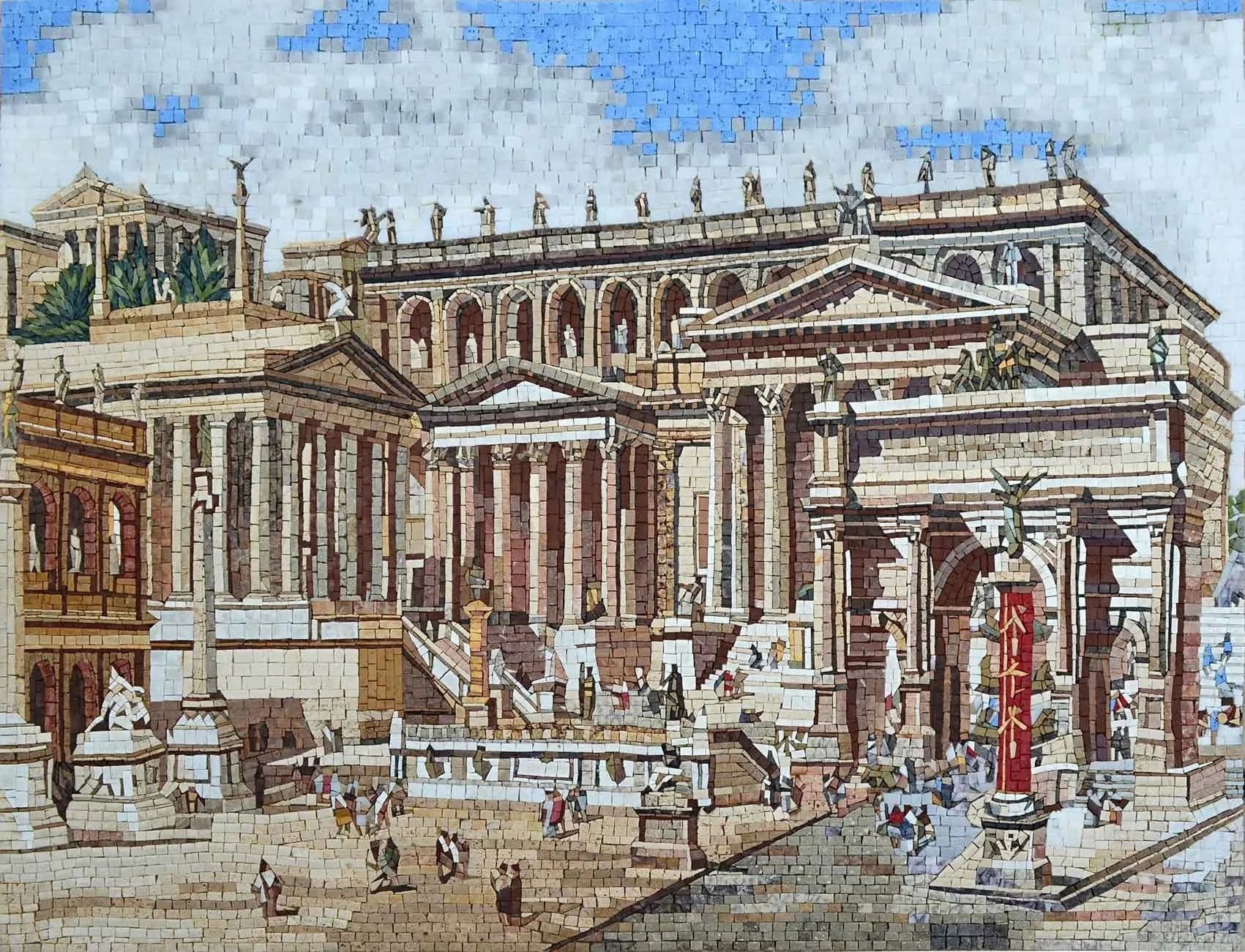
Located in a valley between the Palatine and Capitoline Hills, the Roman Forum began as a simple marketplace during the early days of the city. Over time, it developed into a vast complex filled with temples, government buildings, monuments, and public spaces. As Rome expanded from a small kingdom into a republic and then an empire, the Forum evolved alongside it, becoming a physical representation of Roman power and identity.
One of the most important functions of the Forum was politics. It was here that senators debated laws, magistrates addressed citizens, and public announcements were made. The Forum was not only the center of government—it was also the stage where Roman leaders built reputations and competed for influence. Figures such as Julius Caesar, Cicero, and Augustus all used the Forum to shape public opinion and strengthen their political authority.
The Senate House, known as the Curia, stood within the Forum and served as the meeting place for the Roman Senate. Decisions made there affected not only Rome itself but also provinces across the empire. Wars, alliances, taxes, and laws were all debated within this political center. The presence of the Curia highlights how the Forum was deeply connected to Roman governance and administration.
Religion was equally important in the Forum. Roman society closely linked politics and religion, and many of the city’s most important temples stood within the area. Temples dedicated to gods such as Saturn, Castor and Pollux, and Vesta reflected the spiritual side of Roman life. Public ceremonies, sacrifices, and festivals often took place in or around these sacred spaces, reinforcing the connection between divine favor and state authority.
One of the most famous structures in the Forum was the Temple of Saturn, which also housed the Roman treasury. This shows how religion and economics were intertwined in Roman culture. Wealth and sacred authority existed side by side, symbolizing the belief that Rome’s success was connected to the favor of the gods.
The Forum was also a center of law and justice. Courts operated there, and legal disputes were settled in public spaces or basilicas. Basilicas in ancient Rome were not churches, as later Christianity would make them, but large public buildings used for administration, commerce, and legal proceedings. These spaces allowed Rome to manage the complex legal system that governed its expanding empire.
Commerce and daily life were also deeply connected to the Forum. Merchants, traders, and ordinary citizens gathered there to buy goods, exchange information, and participate in public events. In many ways, the Forum functioned as both a government center and a social gathering place. This constant activity made it one of the busiest and most dynamic locations in the city.
Architecturally, the Forum reflected the growth and ambition of Rome. Over centuries, rulers added new temples, arches, statues, and monuments. Victorious generals celebrated military success by constructing triumphal arches or dedicating temples. Emperors used architecture to leave political legacies and demonstrate their achievements. Every new structure added another layer to the story of Rome.
One important example is the Arch of Septimius Severus, built to commemorate military victories. Such monuments transformed the Forum into a visual narrative of Roman power and conquest. Citizens walking through the area were constantly surrounded by reminders of the empire’s achievements and authority.
The Forum also played a major role during periods of political crisis. Public speeches, protests, and even violent conflicts occurred there. The assassination of Julius Caesar in 44 BCE led to major events connected to the Forum, including public funerals and political unrest. Because it was the center of public life, the Forum became the stage for both the rise and collapse of political power.
As the Roman Empire changed, so did the Forum. During the imperial period, emperors began building additional forums nearby, such as the Forum of Augustus and the Forum of Trajan. These expansions reflected the growing scale of the empire and the increasing authority of emperors. However, the original Roman Forum remained symbolically important as the historical core of Roman civilization.
After the fall of the Western Roman Empire, the Forum gradually declined. Buildings collapsed, stones were removed for other construction projects, and the once-busy center became buried over time. During the Middle Ages, much of the area was used for grazing animals, earning it the nickname “Campo Vaccino” or “cow field.”
Despite this decline, the Forum was never forgotten. Archaeological excavations in later centuries revealed the remains of temples, arches, and government buildings, allowing historians to reconstruct the story of ancient Rome. Today, visitors walking through the ruins can still sense the importance of the site and imagine the crowds, speeches, ceremonies, and political struggles that once filled the area.
In conclusion, the Roman Forum was far more than a collection of buildings. It was the political, religious, legal, and social center of Roman civilization. Decisions that shaped the ancient world were made there, and its monuments reflected the ambitions and achievements of Rome across centuries. More than any other place, the Forum represented the daily life and power of the Roman world.
Main Ideas
- The Forum was the center of Roman political and public life
- Began as a marketplace and evolved into a monumental complex
- Included the Senate House (Curia) and important temples
- Combined politics, religion, law, and commerce
- Connected to leaders like Julius Caesar and Augustus
- Hosted speeches, ceremonies, and legal proceedings
- Monuments celebrated Roman victories and achievements
- Reflected Rome’s growth from republic to empire
- Declined after the fall of the Western Roman Empire
- Remains one of the most important archaeological sites in Roman history
5. The Aqueduct of Segovia and Roman Aqueducts: Mastering Water Engineering
One of the greatest achievements of ancient Roman engineering was the development of the aqueduct system, a network that transformed cities by delivering fresh water across enormous distances. While temples, arenas, and forums demonstrated Roman political and cultural power, aqueducts revealed something equally important: Rome’s ability to solve practical problems on a massive scale. Among the most famous surviving examples is the Aqueduct of Segovia, a structure that still stands today as a symbol of Roman engineering brilliance.
Water was essential for Roman civilization. As cities grew larger and populations increased, simple wells and local springs were no longer enough to meet demand. Rome needed reliable systems capable of supplying water for drinking, baths, fountains, agriculture, and sanitation. Aqueducts solved this problem by transporting water from distant sources into urban centers using carefully designed channels and gravity-based engineering.
The Romans did not invent aqueducts, but they perfected them on a scale never seen before. Earlier civilizations had created basic water channels, but Roman engineers expanded the concept into vast networks stretching across entire regions. By the height of the empire, Rome itself was supplied by multiple aqueducts carrying millions of liters of water every day.
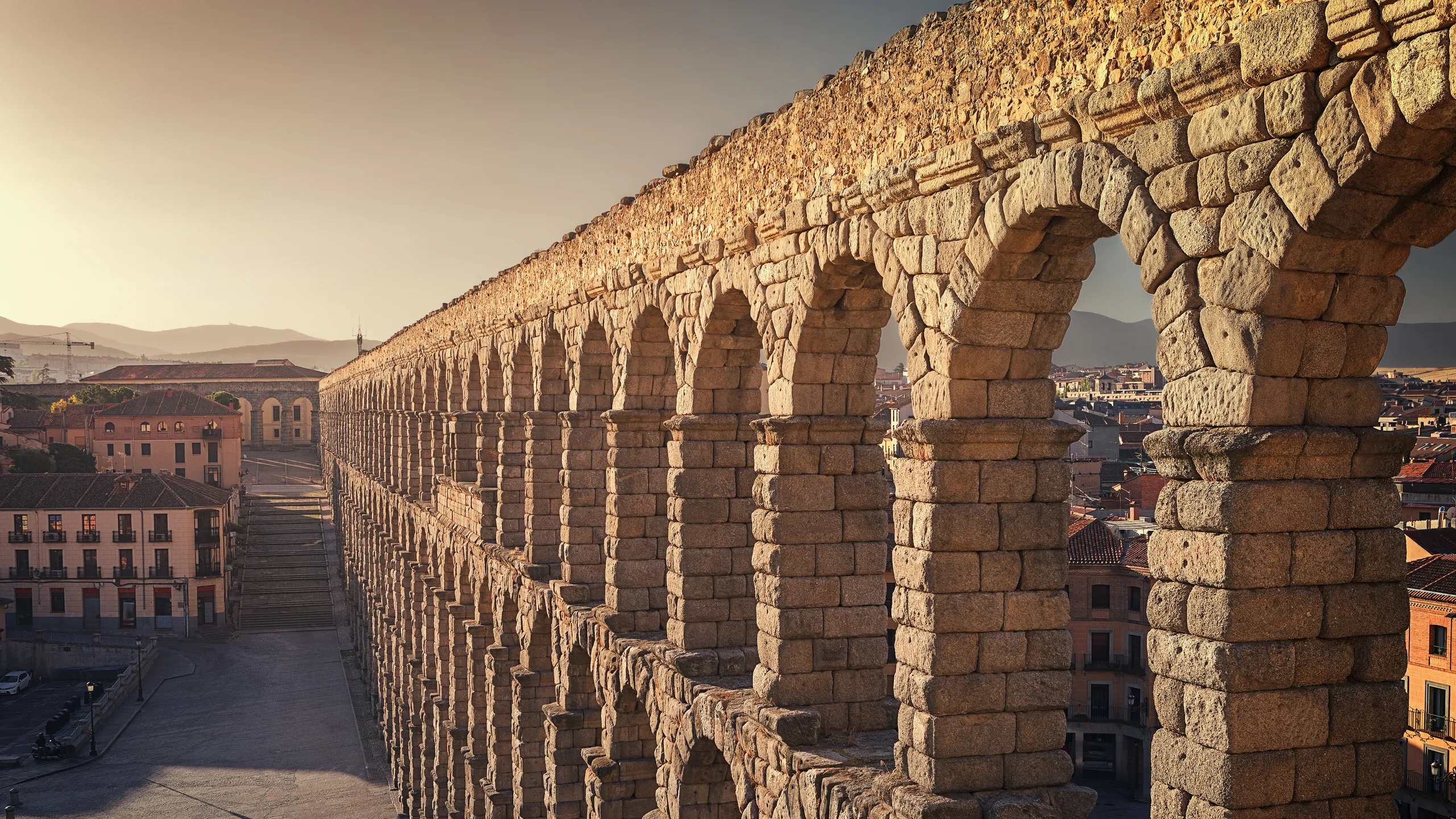
The Aqueduct of Segovia is one of the best-preserved examples of this technology. Built around the late 1st or early 2nd century CE, likely during the reign of Trajan or Domitian, it carried water from mountain springs into the city of Segovia. What makes it especially remarkable is its massive series of arches, some reaching nearly 30 meters high.
The structure was built using granite blocks fitted together without mortar. Instead of relying on cement to hold the stones in place, Roman engineers used precise cutting and weight distribution to maintain stability. The arches transferred pressure downward and outward, allowing the structure to support enormous weight while remaining durable for nearly two thousand years.
Roman aqueducts relied heavily on gravity. Engineers carefully calculated gradients so that water would flow steadily downhill without stagnating or moving too quickly. Even small errors in slope could disrupt the entire system. This required advanced knowledge of surveying, mathematics, and construction techniques.
Most aqueducts were actually underground for much of their route. Elevated arches, like those seen in Segovia, were used mainly when valleys or uneven terrain had to be crossed. This means that the dramatic arch systems visible today represented only part of a much larger and more complex network.
The impact of aqueducts on Roman life was enormous. Public fountains provided fresh water to ordinary citizens, while wealthy households could sometimes access private water supplies. Aqueducts also supported the famous Roman bath complexes, such as the Baths of Caracalla, which required vast amounts of water every day. Without aqueducts, these large-scale public facilities would not have been possible.
Sanitation was another major benefit. Constant water flow helped maintain sewers and remove waste from cities, improving urban hygiene. While Roman sanitation was not modern by today’s standards, it was far more advanced than that of many earlier civilizations. The availability of water allowed Roman cities to grow larger and more organized than most ancient urban centers.
Aqueducts also reflected Roman political and imperial power. Constructing these systems required huge investments of labor, resources, and engineering expertise. Emperors and officials often sponsored aqueduct projects to demonstrate generosity and strengthen public support. Providing water became a visible sign of effective Roman rule.
In conquered territories, aqueducts symbolized the arrival of Roman civilization. They introduced Roman urban culture into provinces across Europe, North Africa, and the Middle East. Cities connected to aqueduct systems became more economically and socially integrated into the empire. In this way, water engineering also became a tool of Roman expansion and cultural influence.
The maintenance of aqueducts was equally important. Roman officials regularly inspected channels, repaired damage, and removed blockages. Specialized workers and administrators were responsible for ensuring the systems functioned properly. This highlights another Roman strength: not only building large projects, but also organizing the systems needed to maintain them over time.
The durability of Roman aqueducts continues to impress modern engineers. Many remained functional long after the fall of the Western Roman Empire, and some sections were reused or repaired in later centuries. The survival of structures like the Aqueduct of Segovia demonstrates the effectiveness of Roman construction methods and the quality of their materials.
Roman aqueducts also influenced later engineering traditions. Medieval and Renaissance builders studied surviving Roman systems, and many principles of water management used in later Europe were inspired by Roman designs. Even modern infrastructure projects still rely on some of the same engineering concepts, especially regarding gravity-fed water systems and arch construction.
Beyond their practical function, aqueducts became architectural symbols of Roman order and technological achievement. Their long lines of arches crossing landscapes represented the ability of Rome to reshape nature itself. They showed that Roman engineering was not limited to monuments for entertainment or politics—it also focused on improving daily life and supporting urban civilization.
In conclusion, Roman aqueducts were among the most important engineering achievements of the ancient world. Structures like the Aqueduct of Segovia demonstrated the Roman mastery of water management, architecture, and large-scale infrastructure. By supplying cities with reliable water, aqueducts transformed urban life, strengthened imperial control, and helped make Rome one of the most advanced civilizations of antiquity. Their legacy continues to influence engineering and architecture even today.
Main Ideas
- Roman aqueducts supplied cities with fresh water
- Essential for drinking, baths, fountains, and sanitation
- Aqueduct of Segovia is one of the best-preserved examples
- Built with arches and precise stone construction
- Relied on gravity and advanced surveying
- Supported Roman baths and urban growth
- Improved sanitation and public health
- Symbolized Roman engineering and imperial power
- Required constant maintenance and administration
- Influenced later engineering and modern infrastructure
6. The Baths of Caracalla: Luxury, Leisure, and Roman Social Life
The Baths of Caracalla were among the largest and most luxurious public bath complexes ever built in the Roman world. More than simple places for washing, Roman baths functioned as social centers, cultural spaces, athletic facilities, and symbols of imperial generosity. They reflected the Roman belief that public life, hygiene, and leisure should be closely connected. The Baths of Caracalla, in particular, demonstrated the incredible scale and sophistication that Roman architecture and engineering could achieve.
Construction of the baths began under Caracalla around 212 CE and was completed a few years later. Covering an enormous area, the complex could accommodate thousands of visitors each day. It included not only bathing rooms, but also gardens, libraries, exercise spaces, shops, and meeting areas. In many ways, the baths functioned like a combination of a modern gym, spa, park, and community center.
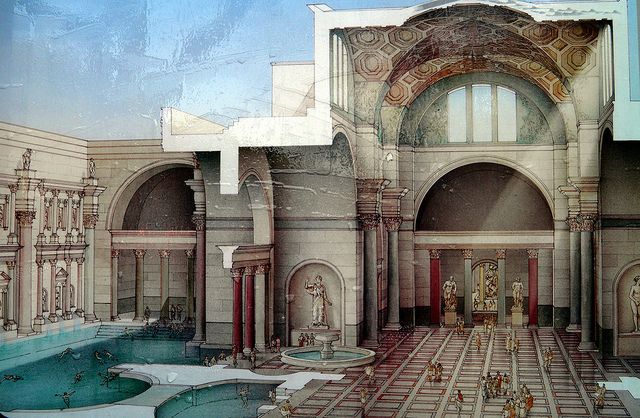
The scale of the Baths of Caracalla immediately impressed visitors. Massive halls with vaulted ceilings, marble floors, decorative mosaics, and giant columns created an atmosphere of luxury and power. The Romans designed these spaces not just for practicality, but also to inspire awe. Public architecture was meant to demonstrate the wealth and organizational ability of the empire, and the baths achieved this perfectly.
One of the most important features of Roman baths was the sequence of heated rooms. Visitors typically moved through different sections in a specific order. The frigidarium contained cold baths, the tepidarium offered warm temperatures, and the caldarium housed hot baths and steam rooms. This progression created a carefully controlled bathing experience that combined relaxation with hygiene.
The engineering behind this system was remarkable. Roman baths relied on a heating method known as the hypocaust system. Furnaces generated hot air, which circulated beneath raised floors and through hollow walls. This allowed entire rooms to be heated efficiently, creating warm environments even during colder seasons. The hypocaust was one of the greatest technological innovations of Roman architecture and demonstrated their advanced understanding of heating and airflow.
Water supply was equally important. The baths required enormous quantities of fresh water every day, supplied through aqueducts connected to Rome’s broader water system. Without Roman mastery of water engineering, facilities on this scale would have been impossible. The connection between aqueducts and bath complexes shows how different parts of Roman infrastructure worked together as a coordinated system.
The Baths of Caracalla were not limited to bathing alone. They also included palaestrae, or exercise courtyards, where visitors could train, wrestle, or play sports before entering the baths. Physical fitness was closely tied to Roman culture, and bathing often followed athletic activity. This combination of exercise and relaxation made the baths an important part of daily urban life.
Libraries and gardens within the complex added another dimension. Visitors could read, walk, socialize, or discuss politics and philosophy. The baths became spaces where different parts of Roman society interacted. Rich and poor citizens alike attended public baths, although social distinctions still existed in certain areas and access levels.
The baths also had a strong political role. Emperors sponsored these enormous public projects to gain popularity and demonstrate generosity toward the people. By providing free or affordable access to luxury facilities, rulers strengthened their public image and reinforced loyalty. This connected the baths to the broader Roman political strategy often called “bread and circuses.” Public entertainment and public amenities both helped maintain social stability and support for imperial authority.
Architecturally, the Baths of Caracalla displayed Roman mastery of vaults, arches, and concrete construction. The massive interior spaces were made possible by advanced engineering techniques that distributed weight efficiently. Large windows allowed natural light to enter, creating bright and open interiors despite the huge scale of the building. Decorative marble, statues, and mosaics further emphasized the grandeur of the complex.
The baths were also symbols of Roman wealth and global reach. Materials used in construction came from across the empire, including marble from distant provinces. Sculptures and decorations reflected the artistic traditions of conquered territories, showing how Rome combined resources and influences from different cultures into a unified imperial style.
However, maintaining such a large complex required enormous resources. Water systems, furnaces, cleaning, and repairs all demanded constant labor and administration. This highlights another Roman strength: the ability not only to build massive structures, but also to organize the systems needed to keep them functioning over long periods.
As the Roman Empire declined, the baths gradually lost importance. Invasions, economic problems, and damage to aqueduct systems reduced their functionality. Without a reliable water supply, enormous bath complexes could no longer operate effectively. Over time, the Baths of Caracalla fell into ruin, though their remains continued to inspire admiration.
During the Renaissance and later periods, artists and architects studied the ruins of Roman baths to understand ancient engineering and design. The surviving structures influenced later European architecture, especially in the use of monumental interior spaces and vaulted ceilings. Even in ruin, the Baths of Caracalla remained symbols of Roman achievement.
Today, visitors to the Baths of Caracalla can still sense the scale and ambition of the complex. Although much of the decoration has disappeared, the surviving walls and halls reveal the sophistication of Roman engineering and urban planning. The baths continue to represent the Roman belief that architecture should serve both practical needs and public experience.
In conclusion, the Baths of Caracalla were far more than bathing facilities. They were monumental centers of social life, engineering innovation, and imperial power. Through advanced heating systems, massive architectural spaces, and public accessibility, they demonstrated the ability of Rome to combine luxury with infrastructure on an enormous scale. The baths remain one of the clearest examples of how Roman architecture shaped everyday life while also expressing the grandeur of the empire.
Main Ideas
- Built under Caracalla in the 3rd century CE
- Functioned as social, athletic, and cultural centers
- Included hot, warm, and cold bathing rooms
- Used the advanced hypocaust heating system
- Relied on aqueducts for massive water supply
- Included gardens, libraries, and exercise areas
- Symbolized imperial generosity and public luxury
- Demonstrated Roman mastery of vaults, arches, and concrete
- Reflected Roman wealth and global resources
- Influenced later architecture and remains a major Roman landmark
7. The Hadrian's Wall: The Frontier of the Roman Empire
The Hadrian’s Wall was one of the most impressive defensive structures ever built by ancient Rome. Stretching across northern Britain from coast to coast, the wall symbolized the limits of Roman expansion and the empire’s determination to control, defend, and organize its frontiers. Unlike the Colosseum or Pantheon, which reflected entertainment and religion, Hadrian’s Wall represented military power, imperial administration, and strategic engineering.
Construction of the wall began around 122 CE during the reign of Hadrian. Unlike earlier emperors who focused heavily on conquest and expansion, Hadrian believed in securing and stabilizing the empire’s borders. His reign marked a shift from aggressive territorial growth to consolidation and defense. Hadrian’s Wall became the clearest expression of this policy.
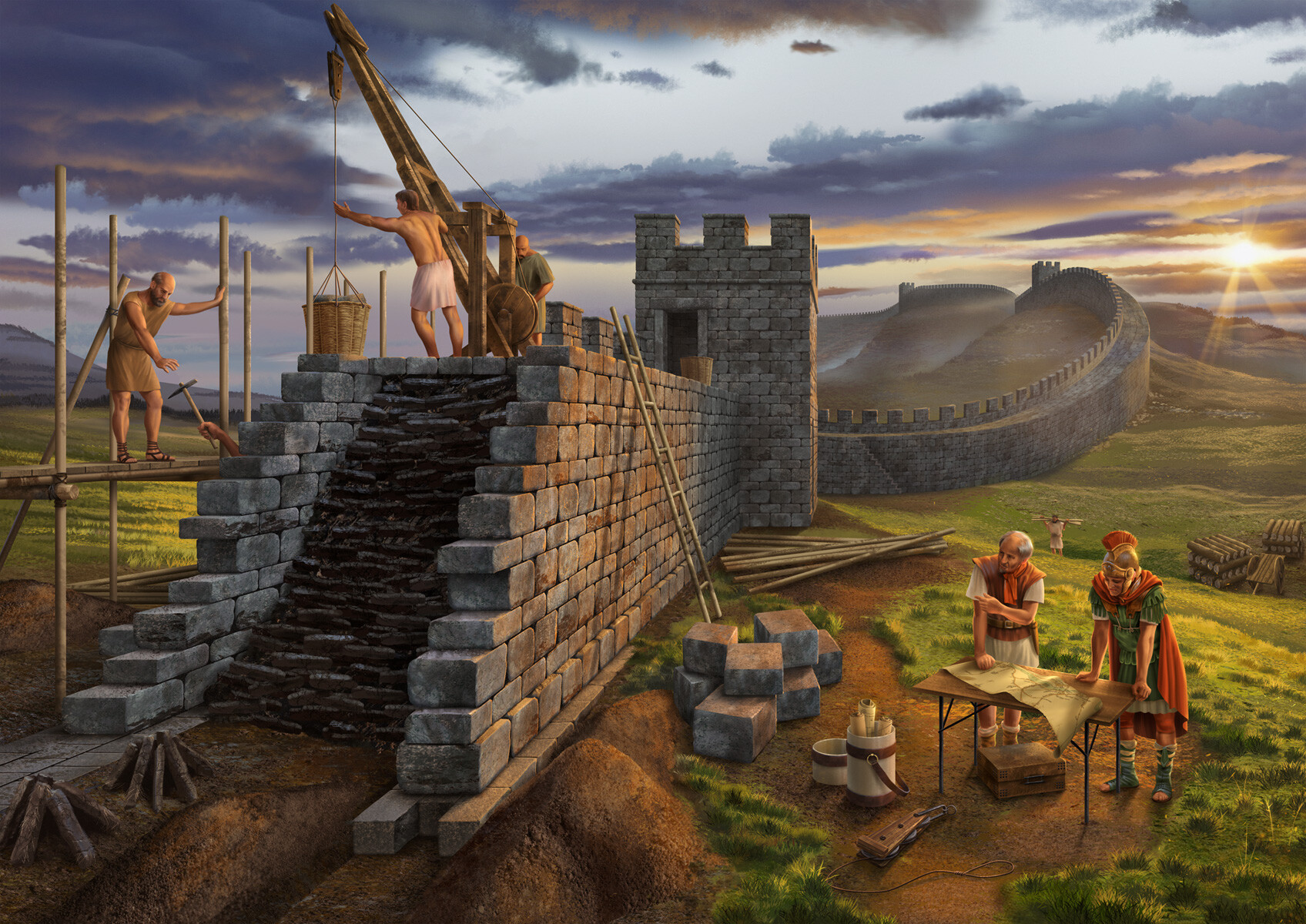
The wall stretched for approximately 117 kilometers across the width of Britain, from the River Tyne in the east to the Solway Firth in the west. It crossed hills, valleys, rivers, and difficult terrain, demonstrating the incredible organizational and engineering abilities of the Roman military. Building such a structure required enormous amounts of labor, materials, and planning. Roman legions stationed in Britain carried out much of the construction themselves, combining military discipline with engineering skill.
Architecturally, Hadrian’s Wall was not just a single barrier. It was a complex defensive system. The wall itself was built primarily from stone in the eastern sections and turf in some western areas. Along its length were forts, milecastles, watchtowers, roads, and defensive ditches. These features worked together to create a layered frontier capable of monitoring movement and responding quickly to threats.
Milecastles were small fortified gateways placed at regular intervals, roughly one Roman mile apart. They allowed controlled passage through the wall and housed small groups of soldiers. Between them stood watchtowers where guards could observe the surrounding landscape and communicate using signals. Larger forts stationed along the wall housed substantial garrisons of troops, ensuring rapid military response if attacks occurred.
One of the most important aspects of Hadrian’s Wall was that it was not designed simply to keep enemies out completely. Instead, it acted as a system of control and regulation. Trade, travel, and communication could be monitored through controlled crossing points. This allowed Rome to manage movement across the frontier while also collecting taxes and maintaining security. In this sense, the wall functioned as both a military and administrative boundary.
The construction of the wall also reflected Roman logistical excellence. Supplying soldiers stationed across such a long frontier required roads, storage facilities, and organized transport systems. Forts contained granaries, workshops, barracks, and administrative buildings, creating self-sustaining military communities. Roman roads connected the forts and allowed troops and supplies to move efficiently along the frontier.
Life on Hadrian’s Wall was demanding. Soldiers stationed there faced cold weather, isolation, and the constant possibility of conflict with northern tribes. However, the frontier was not purely a zone of war. Civilian settlements often developed near forts, including traders, craftsmen, and families connected to the military presence. Over time, the wall became part of a broader frontier society shaped by both Roman and local influences.
The wall also carried enormous symbolic importance. To the people within the empire, it represented the reach and strength of Roman civilization. To those beyond it, the wall demonstrated Rome’s power and determination to defend its territory. The massive structure physically marked the boundary between the Roman world and lands outside imperial control.
Hadrian’s Wall highlights an important change in Roman strategy. Earlier generations of leaders, such as Julius Caesar, focused on conquest and expansion. By Hadrian’s time, Rome had reached a size where securing borders became more important than constant expansion. The wall symbolized this transition from an empire of rapid conquest to one focused on stability and defense.
The structure also demonstrates Roman mastery of military engineering. Building a wall across difficult terrain required careful surveying, coordinated labor, and advanced construction techniques. Roman engineers adapted the design depending on the environment, showing flexibility and practical problem-solving. This ability to combine architecture with military function was one of Rome’s greatest strengths.
Over time, Hadrian’s Wall continued to evolve. Additional forts were built, defenses were repaired, and troop deployments changed depending on political and military needs. Even after parts of Britain became unstable, the wall remained an important frontier line for centuries.
After the decline of Roman rule in Britain during the 5th century CE, the wall gradually fell into disrepair. Stones were removed for local construction projects, and many sections collapsed over time. However, large portions survived, preserving one of the clearest examples of Roman frontier engineering.
Today, Hadrian’s Wall is recognized as a UNESCO World Heritage Site and remains one of the most famous Roman landmarks outside Italy. Archaeological discoveries along the wall continue to reveal information about Roman military life, frontier society, and imperial administration. Visitors walking along its remains can still appreciate the enormous ambition and scale of the project.
In conclusion, Hadrian’s Wall was far more than a defensive barrier. It was a monumental expression of Roman military organization, engineering skill, and imperial strategy. Through its forts, roads, watchtowers, and controlled crossings, it demonstrated how Rome defended and managed the edges of its empire. Even centuries after the fall of Rome, the wall continues to stand as one of the most powerful symbols of Roman authority and architectural achievement.
Main Ideas
- Built under Hadrian beginning in 122 CE
- Marked the northern frontier of Roman Britain
- Included walls, forts, watchtowers, and roads
- Designed for control and defense, not just exclusion
- Required advanced Roman logistics and engineering
- Supported military communities and frontier settlements
- Symbolized Roman power and imperial boundaries
- Reflected Rome’s shift from conquest to consolidation
- Demonstrated adaptability in difficult terrain
- Remains one of the greatest examples of Roman military architecture