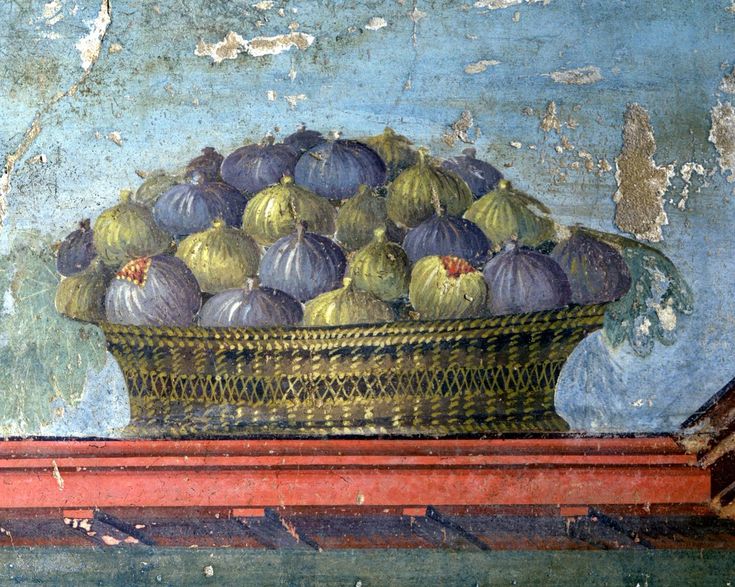
The Roman diet was surprisingly varied and depended heavily on a person’s wealth, location, social status, and access to different foods. There was no single Roman diet that everyone followed. What an ordinary worker ate every day could be very different from what a wealthy senator, merchant, or military officer was served. The Roman Empire covered a huge area across Europe, North Africa, and the Middle East, meaning that local ingredients and traditions also influenced Roman food.
For most ordinary Romans, everyday meals were based on simple and affordable foods. Bread, grains, beans, vegetables, olives, and fruit were some of the most important parts of the diet. Grain was especially important because it could be made into bread, porridge, and other filling dishes. Vegetables and legumes were also common, while olive oil was widely used for cooking and adding flavor.
Wealthier Romans had access to a much wider selection of foods. They could afford more meat, fish, seafood, expensive spices, imported fruits, nuts, sauces, and higher-quality wine. Wealthy households sometimes employed cooks who prepared complicated meals with many different ingredients. Some foods were transported from distant parts of the empire, showing how Roman trade networks helped bring new ingredients to wealthy dining tables.
The Roman diet also depended on where a person lived. People near the Mediterranean had greater access to fish, seafood, olives, grapes, and other regional products. People living farther north or in rural areas often depended more on local grains, vegetables, livestock, and preserved foods.
Overall, Roman food ranged from simple everyday meals eaten by farmers and laborers to elaborate feasts enjoyed by wealthy elites. What Romans ate gives us a fascinating look at Roman society, agriculture, trade, wealth, and everyday life, because food was closely connected to a person’s economic position and the region where they lived.
Bread: The Most Important Food in Ancient Rome
Bread was one of the most important foods in the Roman diet and was eaten by people across almost every level of Roman society. For ordinary Romans, bread was a basic source of energy and could make up a large part of a person’s daily food. Farmers, workers, soldiers, and urban residents all depended heavily on grain and bread, although the quality and type of bread could vary depending on a person’s wealth.
The main grain used for bread was wheat, which was especially valuable because it produced a good-quality loaf. Other grains, including barley and millet, were also used, particularly when wheat was less available or more expensive. Grain could be ground into flour and baked into different types of bread, while it could also be prepared as porridge or other simple grain dishes.
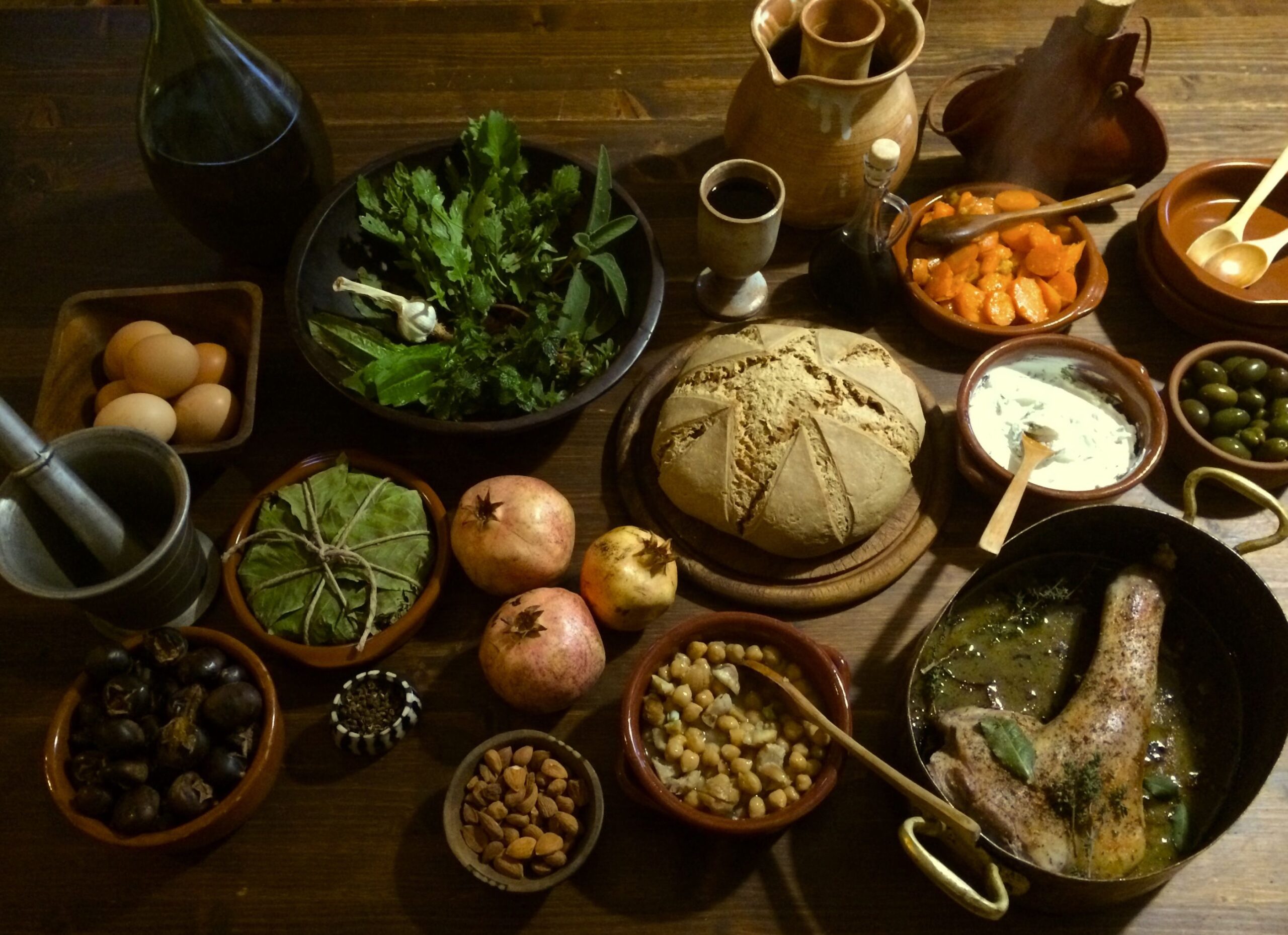
Roman bread was not necessarily the same as the sliced bread people commonly eat today. Bakers produced different shapes, sizes, and qualities, ranging from relatively simple loaves for ordinary people to higher-quality bread made from finely processed flour for wealthy households. Archaeological discoveries, including preserved loaves from Pompeii, have provided evidence of the types of bread produced by Roman bakers.
In large cities such as Rome, bread was closely connected to the enormous grain supply needed to feed the population. Grain was transported from different parts of the empire, particularly North Africa and Egypt, and was distributed through markets and government-supported systems. The Roman authorities understood that keeping the capital supplied with grain was extremely important.
Bread was rarely eaten completely by itself. Romans often combined it with olives, cheese, vegetables, beans, fruit, fish, or meat, depending on what they could afford. Olive oil, vinegar, and sauces could also be used to add flavor. For poorer Romans, bread combined with inexpensive foods such as beans or vegetables could create a filling everyday meal without requiring expensive ingredients.
The difference between rich and poor could also be seen in the quality of their bread. Wealthier Romans could afford better flour and more elaborate meals, while poorer households generally focused on filling and affordable foods. Soldiers also relied heavily on grain as part of their regular food supply.
Bread therefore wasn’t simply another food in Ancient Rome. It was a foundation of everyday life, connected to agriculture, trade, government, economics, and social class. The enormous importance of grain meant that Roman leaders had to pay close attention to food supplies, especially in major cities.
Main Ideas
- Bread was a major Roman staple
- Wheat was the most important grain for quality bread
- Barley and millet were also used
- Bread was eaten with olives, cheese, vegetables, beans, fish, and meat
- Wealth affected the quality and variety of food
- Grain was imported from regions such as Egypt and North Africa
- Bread was important to farmers, workers, soldiers, and wealthy Romans
- The Roman grain supply was closely connected to trade and government
2. Grains and Porridge: A Staple of the Roman Diet
Grains were another fundamental part of the Roman diet, providing affordable and filling food for millions of people throughout the Roman Empire. Although bread was extremely important, Romans also consumed grain in other forms, especially as porridge, soups, and simple cooked dishes. Grain was relatively easy to store and transport, making it an essential food for both cities and rural communities.
The most important grain was wheat, particularly for people who could afford higher-quality food. Wheat could be ground into flour for bread or cooked into other dishes. Barley was also widely consumed, especially among poorer communities and in regions where it grew well. Other grains, including millet and oats, were used in different parts of the empire depending on local agriculture and climate.
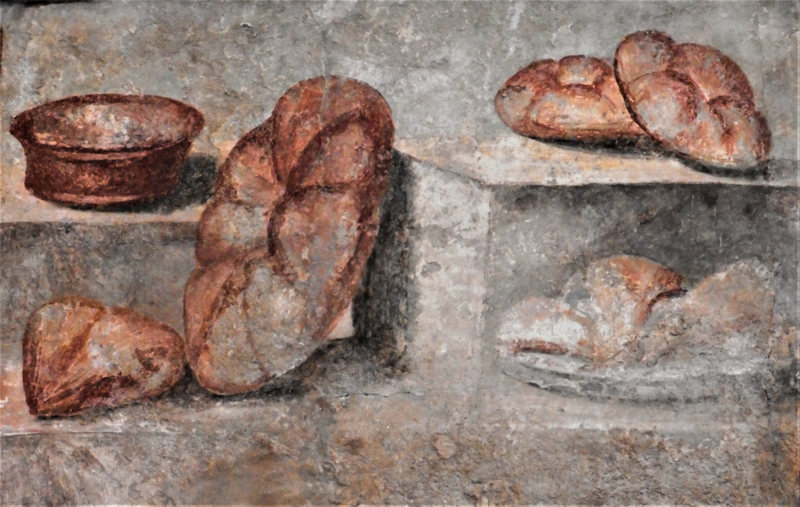
One common way of eating grain was as a type of porridge. Grain could be boiled with water or other ingredients until it became soft and filling. These dishes were practical because they did not require complicated preparation and could feed an entire household relatively cheaply. Porridge could also be combined with vegetables, beans, herbs, cheese, or olive oil to make a more substantial meal.
Grain was especially important for ordinary Romans because it was much more affordable than foods such as large quantities of meat or expensive seafood. A worker or farmer could rely on grain-based meals to provide much of their daily energy. Wealthier Romans also ate grain, but they had access to a much greater variety of ingredients and could add meat, fish, sauces, spices, and other expensive foods.
The importance of grain also shaped the Roman economy and government. Rome itself had a huge urban population that could not produce enough food within the city. Large quantities of grain therefore had to be transported from agricultural regions across the empire. Egypt and North Africa became particularly important suppliers of grain to Rome.
The government became heavily involved in maintaining the grain supply. The annona, the Roman system for supplying grain and other food to Rome, helped provide grain to eligible citizens. This was important because shortages could cause serious economic and political problems. Keeping the capital supplied with food was therefore a major responsibility of Roman administration.
Grain was also essential to the Roman military. Soldiers needed reliable supplies during campaigns and while stationed at forts throughout the empire. Grain could be transported and stored more easily than many fresh foods, making it practical for feeding large numbers of soldiers.
Overall, grains were much more than an ordinary ingredient in Roman cooking. They were a foundation of Roman food security and played a major role in agriculture, trade, military logistics, and government policy. Whether eaten as bread, porridge, or another simple dish, grain was one of the foods that helped sustain Roman society for centuries.
Main Ideas
- Wheat, barley, millet, and oats were important grains
- Grain could be made into bread, porridge, and soups
- Porridge was a practical and affordable everyday meal
- Poorer Romans depended heavily on grain-based foods
- Wealthier Romans could combine grains with more expensive ingredients
- Egypt and North Africa were major grain suppliers
- Grain was essential for the Roman army
- The annona helped supply grain to Rome
- Grain was central to the Roman economy and food supply
3. Olives and Olive Oil: Essential Foods in the Roman Diet
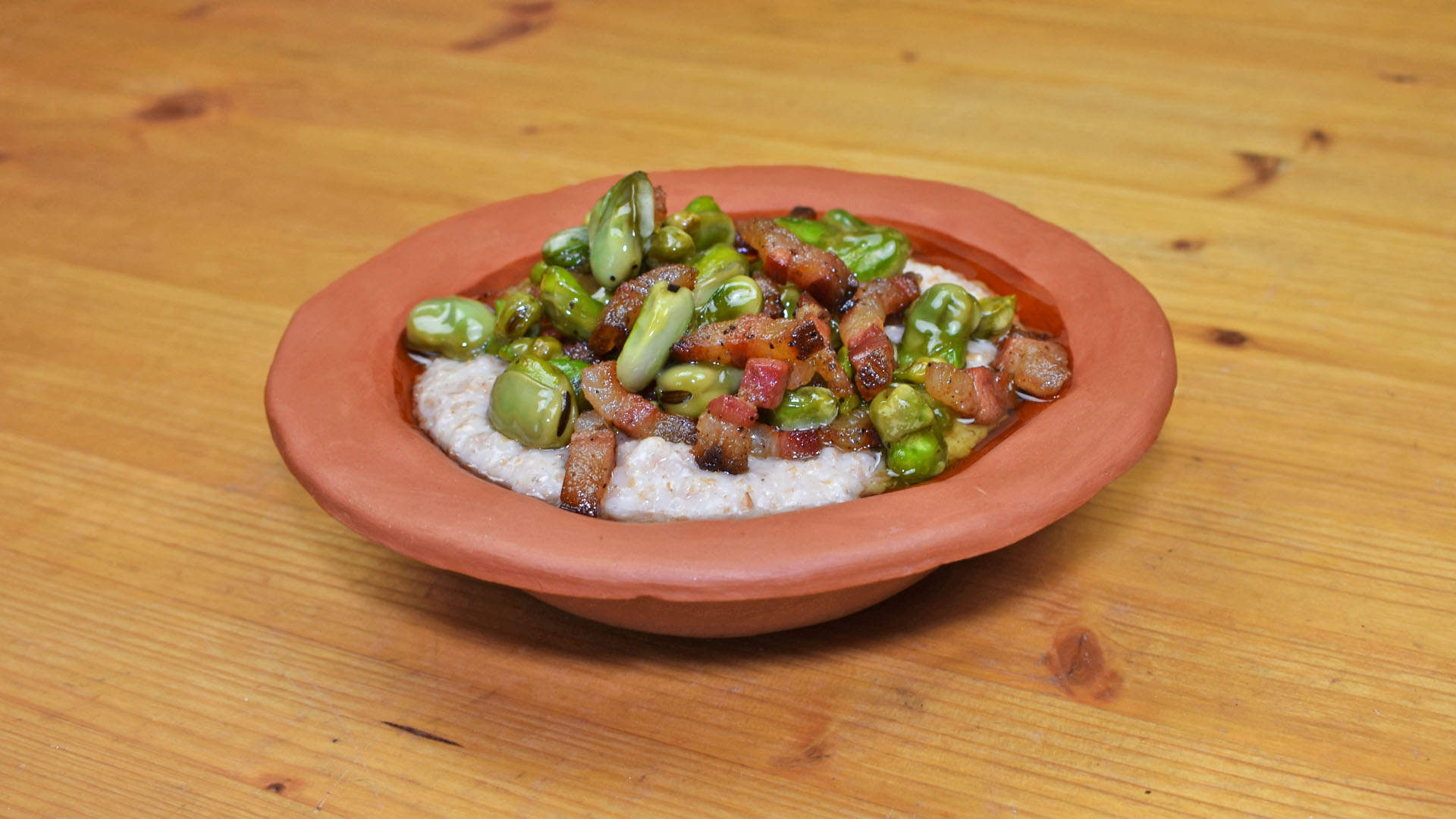
Olives and olive oil were among the most important foods in Ancient Rome. They were eaten and used by people throughout Roman society, from farmers and laborers to wealthy senators. Olive trees grew particularly well around the Mediterranean, making olives and their oil an important part of Roman agriculture, trade, cooking, and everyday life.
Fresh olives could be eaten as part of a simple meal, although they usually needed to be processed before they became pleasant to eat. Romans preserved olives using methods involving salt, brine, vinegar, or other preparations. Different varieties could have different flavors and uses, and preserved olives could be stored and transported relatively easily.
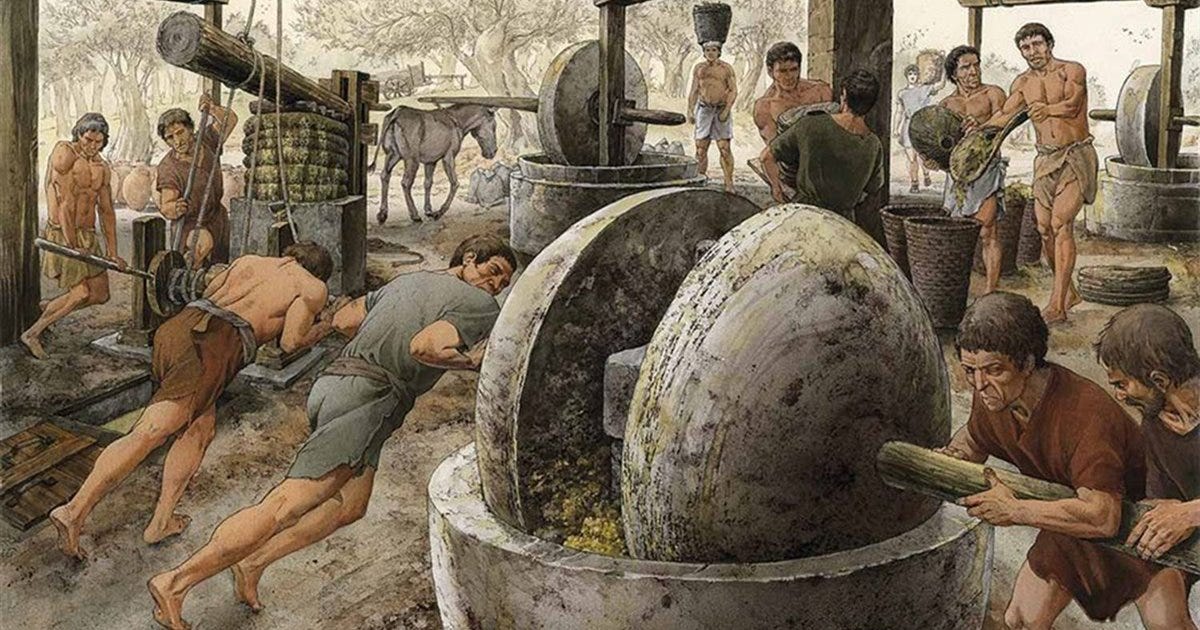
Olive oil was even more important. Romans used it for cooking, preparing food, making sauces, dressing vegetables, and preserving certain foods. It could also be used outside the kitchen for lighting, cosmetics, and other everyday purposes. Because of this wide range of uses, olive oil was an extremely valuable agricultural product.
Olive oil production was a major industry in several parts of the Roman world. Important production areas included Italy, Hispania, North Africa, and other Mediterranean regions. Large estates could contain extensive olive groves and produce substantial quantities of oil for local consumption and export.
The Romans developed an extensive trade network that allowed olive oil to travel long distances. Amphorae, large ceramic containers used to transport liquids and other goods, were commonly used to move oil around the empire. Archaeological discoveries have revealed enormous quantities of discarded amphora fragments, showing the scale of Roman trade.
For ordinary Romans, olives could provide an affordable addition to a basic meal. They could be eaten alongside bread, vegetables, beans, cheese, and other simple foods. A small amount of olive oil could also make otherwise plain food more flavorful and easier to prepare.
Wealthier Romans had access to higher-quality oils and could use larger quantities in more elaborate cooking. Their meals could contain numerous ingredients, with olive oil combined with herbs, vinegar, honey, spices, and fish sauces to create different flavors.
Olives and olive oil were also important because they could be stored for relatively long periods compared with many fresh foods. This made them useful in both households and commercial trade. Farmers could produce olives seasonally, process them, and then sell or transport the resulting products.
The importance of olives extended beyond food. Olive cultivation was closely connected to the Mediterranean economy, and olive oil was one of the commodities traded throughout the Roman Empire. Large-scale production provided income for landowners, farmers, workers, merchants, transporters, and other people involved in the agricultural economy.
Olive oil was also used by the Roman military and urban populations. Soldiers and travelers could use it as part of their food supplies, while urban households could purchase it in markets. Its many uses made it a practical product to transport across long distances.
The role of olives and olive oil demonstrates how Roman food was connected to much more than eating. Their production influenced agriculture, commerce, transportation, household life, and Roman expansion across the Mediterranean. For centuries, olives remained one of the most recognizable foundations of Roman and wider Mediterranean cuisine.
Main Ideas
- Olives and olive oil were major parts of the Roman diet.
- Olives were commonly preserved in salt, brine, or vinegar.
- Olive oil was used for cooking and food preparation.
- It was also used for lighting, cosmetics, and other purposes.
- Major production areas included Italy, Hispania, and North Africa.
- Olive oil was transported throughout the empire in amphorae.
- Poorer Romans could eat olives with bread, beans, and vegetables.
- Wealthy Romans used olive oil in more elaborate dishes.
- Olive production was an important part of the Roman agricultural economy.
4. Vegetables: Everyday Foods in the Roman Diet
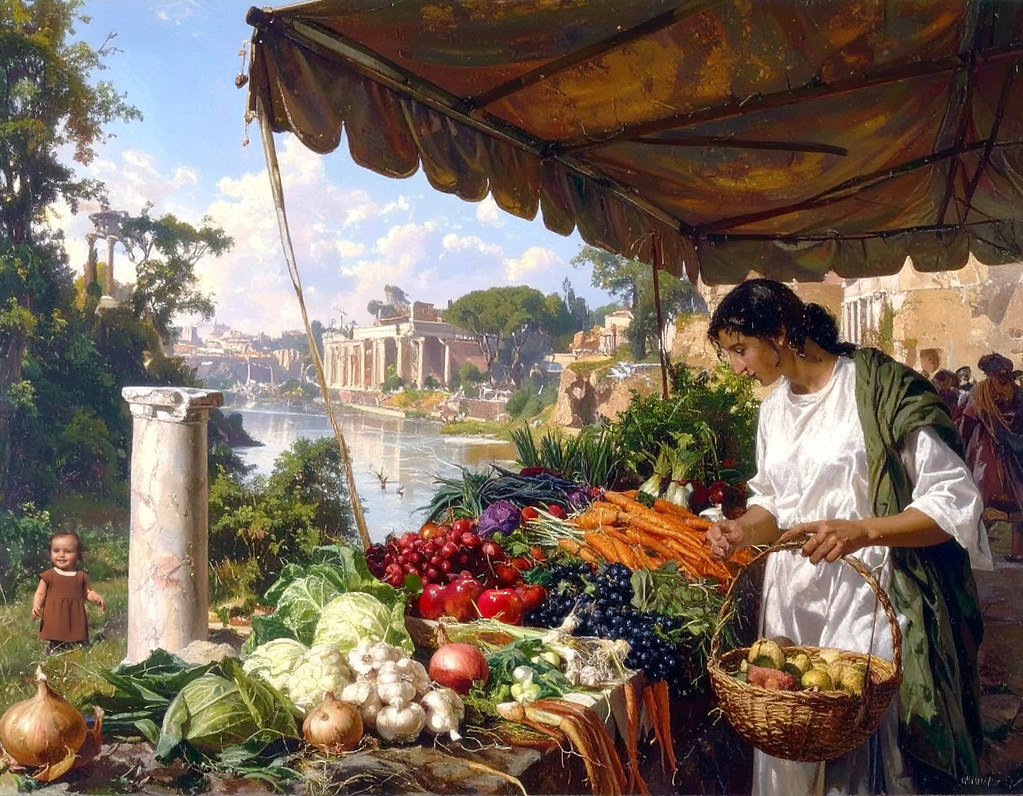
Vegetables were an important part of everyday Roman food, especially for ordinary people who could not regularly afford large amounts of meat or expensive seafood. Roman farmers grew many different vegetables, while others were gathered or purchased in local markets. The exact selection depended on the season, region, climate, and wealth of the household.
One of the most common vegetables was cabbage, which was eaten in several forms and was considered an important food by Roman writers. Romans also consumed lettuce, onions, leeks, garlic, cucumbers, carrots, turnips, radishes, peas, and various leafy greens. Some of these foods were eaten raw, while others were boiled, roasted, or cooked into more substantial dishes.
Onions and garlic were particularly useful because they added strong flavor to otherwise simple meals. A household could combine vegetables with bread, beans, grains, or olive oil to create a filling meal without needing expensive ingredients. This made vegetables especially valuable for farmers, laborers, and other ordinary Romans.
Roman cooking also relied heavily on olive oil, vinegar, herbs, and sauces. Vegetables could be prepared with these ingredients to improve their flavor. Wealthier Romans had access to a wider range of ingredients and could create more elaborate vegetable dishes, while poorer families generally relied on whatever was affordable and available locally.
Vegetables were also closely connected to Roman agriculture. Many households maintained gardens where they could grow their own food. Wealthy estates could have large gardens producing vegetables for both the household and workers. Urban residents, meanwhile, could purchase fresh produce from markets and street sellers.
The Roman writer Columella, who wrote about agriculture during the first century AD, discussed the cultivation of various crops and vegetables. Roman agricultural knowledge helped farmers make productive use of land across different parts of the empire.
The availability of vegetables changed throughout the year. Seasonality was an important part of the Roman diet because preserving fresh produce was more difficult than it is today. Some foods could be preserved through drying, salting, pickling, or other methods, allowing households to consume certain ingredients outside their normal growing season.
Vegetables were often combined with other inexpensive foods. A simple Roman meal might include bread, vegetables, legumes, olives, and a little cheese or fish sauce. This combination could provide a substantial meal without the cost of large quantities of meat.
For wealthy Romans, vegetables were not simply “poor people’s food.” They could appear alongside meat, seafood, and other expensive ingredients at elaborate meals. The difference was usually in the variety, preparation, and quantity rather than whether vegetables were eaten at all.
Overall, vegetables helped make the Roman diet more varied and practical. They were relatively accessible, could be grown locally, and could be combined with many other foods. Their importance shows that Roman cuisine was not based entirely on bread and meat, but included a wide selection of plant-based foods.
Main Ideas
- Vegetables were common in the everyday Roman diet.
- Popular choices included cabbage, lettuce, onions, garlic, leeks, cucumbers, and turnips.
- They were often cooked with olive oil, vinegar, herbs, and sauces.
- Vegetables were especially useful for ordinary Romans.
- Many households grew vegetables in gardens.
- Fresh produce depended heavily on season and location.
- Vegetables could be preserved for later use.
- Wealthy Romans also ate vegetables as part of elaborate meals.
- They were an important part of Roman agriculture and everyday food culture.
5. Fruit: Sweet Foods in the Roman Diet
Fruit was another important part of the Roman diet, providing natural sweetness and variety to everyday meals. Romans ate many different kinds of fruit, and the selection depended on the season, region, and wealth of the household. Some fruits were grown locally, while others were transported from different parts of the Roman Empire.
Common fruits included grapes, figs, apples, pears, plums, cherries, dates, pomegranates, and melons. Grapes were particularly important because they could be eaten fresh, dried into raisins, or used to produce wine. Figs were also extremely popular and could be eaten fresh or dried, making them easier to store and transport.
Fruit could be eaten as a simple snack or served alongside other foods. Ordinary Romans might enjoy fruit with bread, cheese, olives, or nuts, while wealthy households could include a much wider variety of fruit in elaborate meals. Some fruits could also be used in sauces, desserts, or other prepared dishes.
Dried fruit was especially useful in the ancient world because it could last much longer than fresh fruit. Dried figs, dates, and raisins could be stored and carried on journeys, making them practical foods for travelers, soldiers, merchants, and households.
The Roman Empire’s extensive trade network also introduced wealthy Romans to fruits that were not naturally available in their local areas. As Rome expanded, new agricultural products moved between different regions. Wealthy households could therefore obtain imported or unusual fruits, while poorer families were more likely to depend on seasonal local produce.
Fruit was closely connected to Roman agriculture. Orchards and vineyards were common on farms and estates, particularly in Mediterranean regions. Landowners could produce fruit for their own households while also selling crops in local markets or transporting them to other communities.
Dates were especially associated with warmer regions of the empire, including parts of North Africa and the eastern Mediterranean. Their sweetness made them useful as a food and ingredient, while their ability to be dried made them valuable for storage.
Romans also used honey to sweeten certain dishes because refined sugar was not part of the typical Roman diet. Fruit and honey could therefore provide natural sweetness in meals and prepared foods.
Overall, fruit added flavor, variety, and sweetness to Roman cuisine. While access to certain expensive or imported fruits depended on wealth, many types of fruit were available to ordinary people when they were in season. Fruit therefore played a useful role in Roman food culture, connecting everyday eating with agriculture, trade, preservation, and social class.
Main Ideas
- Romans ate grapes, figs, apples, pears, dates, plums, and pomegranates.
- Grapes and figs were especially important.
- Fruit could be eaten fresh or dried.
- Dried fruit was useful because it was easy to store and transport.
- Wealthy Romans could access more imported and unusual fruits.
- Orchards and vineyards were important parts of Roman agriculture.
- Fruit could be combined with bread, cheese, nuts, and honey.
- Seasonal fruit was generally more accessible to ordinary Romans.
- Fruit added sweetness and variety to the Roman diet.