1. Unskilled Laborer in Ancient Rome
Approximate pay: 1 denarius per day
Monthly pay: ~25 denarii
Annual pay: ~300 denarii
Modern comparison: ~$15–$30 per day or ~$375–$750 per month
Social status: Low
Work: Construction, farming, carrying goods, digging, cleaning, and other manual labor
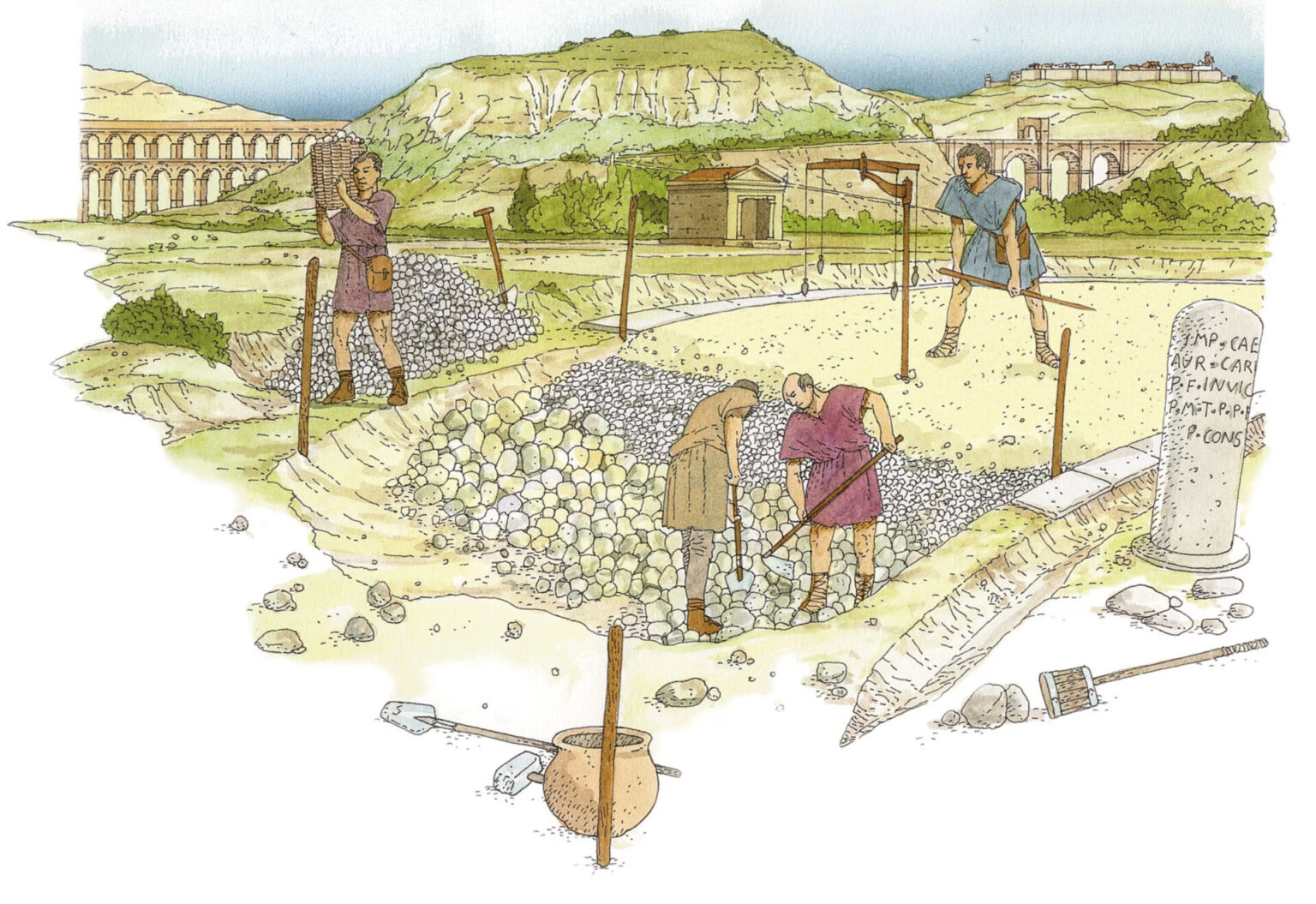
The unskilled laborer was one of the lowest-paid free workers in Ancient Rome. These workers performed basic physical jobs that did not require years of training or specialized knowledge. They could be hired to carry heavy materials, dig, clean, unload ships, work on construction sites, maintain roads, or help with agricultural work.
A commonly used estimate for a basic laborer is around 1 denarius per day. If a worker managed to find employment for about 25 days in a month, this would equal approximately 25 denarii per month, or around 300 denarii per year. Work was not always guaranteed, however, so actual yearly earnings could be lower.
In a very rough modern comparison, this could be considered around $15–$30 per day, or approximately $375–$750 per month. This should not be treated as a direct conversion from denarii into dollars. The Roman economy was very different from the modern economy, so the comparison is mainly intended to show the worker’s general economic position.
The social status of an unskilled laborer was relatively low. Wealthy Romans generally looked down on manual labor, while occupations involving landownership, politics, military command, law, or specialized skills could provide greater prestige. Nevertheless, ordinary laborers were absolutely essential to the Roman economy.
Large Roman cities required enormous amounts of manual work. Roads, buildings, aqueducts, ports, farms, warehouses, and public spaces all depended on workers doing physically demanding tasks. Rome’s impressive infrastructure could not have existed without thousands of ordinary people performing this work.
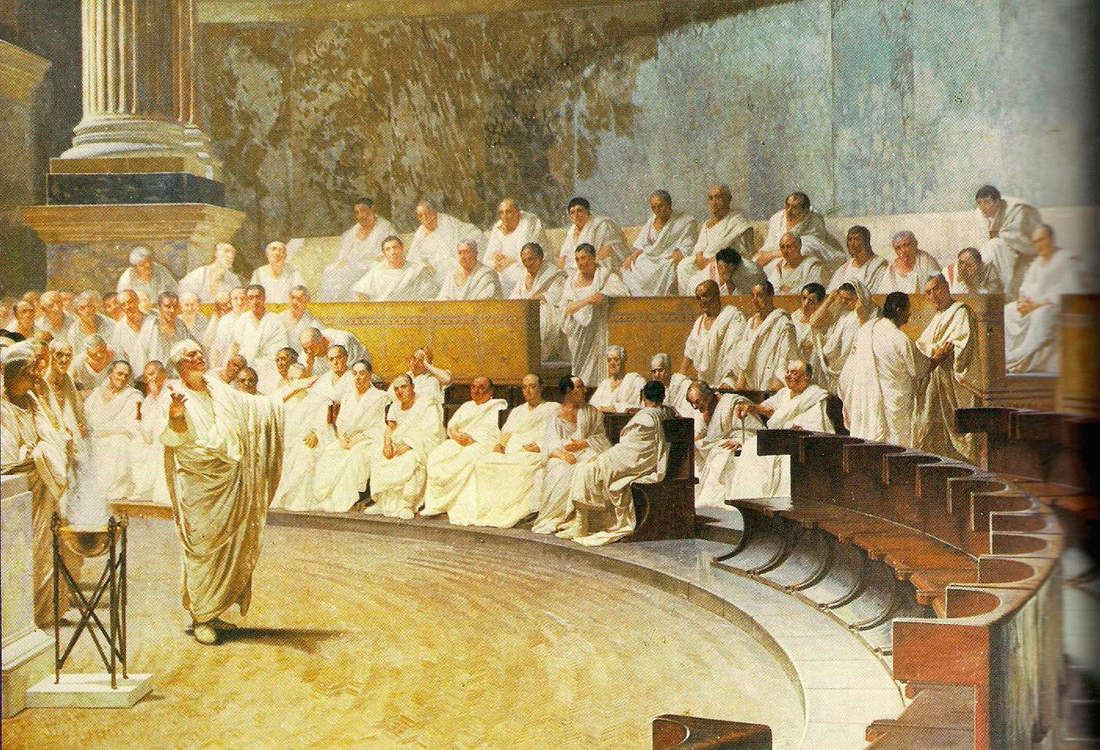
Unlike wealthy Romans, laborers generally depended on wages rather than property. A wealthy landowner could earn income from farms and estates, while a laborer usually had to work to earn money. This made their financial situation much less secure.
Overall, the unskilled laborer represents the lower end of the Roman wage system: low pay, low social status, physically demanding work, and limited financial security.
Main Ideas
- ~1 denarius per day
- ~25 denarii per month
- ~300 denarii per year
- Rough modern comparison: ~$15–$30 per day
- Low social status
- Mostly physical, unskilled work
- Employment could be irregular
- Essential to Roman construction, agriculture, and infrastructure
2. Roman Farmer in Ancient Rome
Approximate pay: ~1 denarius per day for agricultural labor
Monthly pay: ~25 denarii
Annual pay: ~300 denarii
Modern comparison: ~$15–$30 per day or ~$375–$750 per month
Social status: Low to medium
Work: Growing crops, caring for animals, plowing fields, harvesting, and maintaining farms
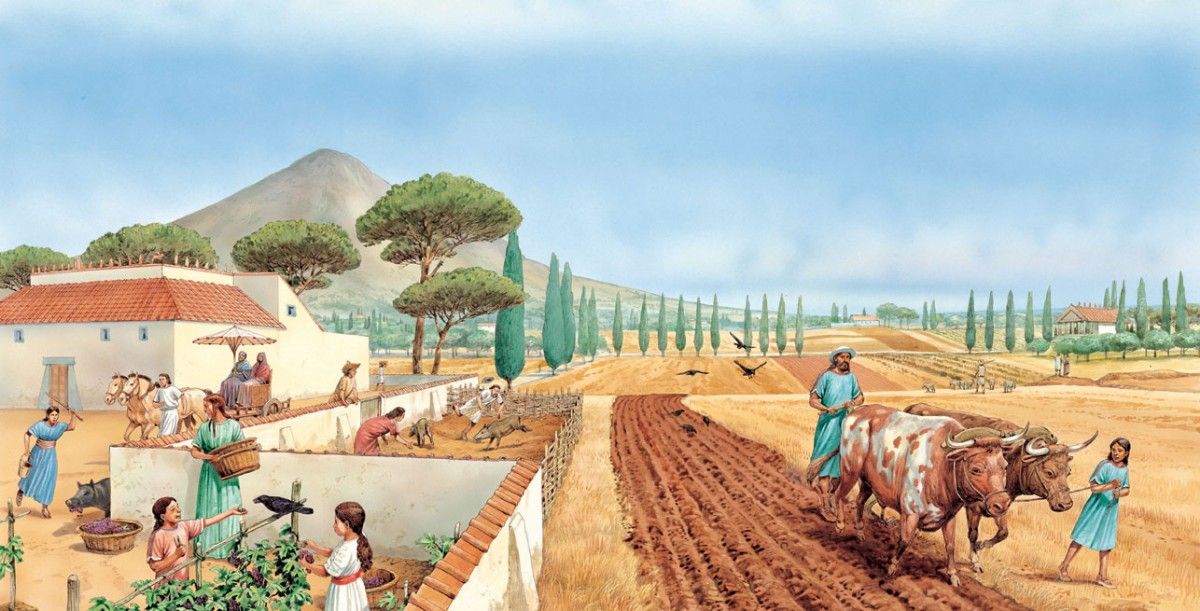
The farmer was one of the most important occupations in Ancient Rome because Roman society depended heavily on agriculture. Farmers produced grain, olives, grapes, vegetables, and livestock that fed cities and armies across the empire.
Not every farmer was poor. A small landowner could own his own farm, while a hired agricultural worker earned wages for working on someone else’s land. This meant that the financial position of farmers could vary greatly.
A farm worker could earn around 1 denarius per day, similar to other low-paid manual workers. If they worked about 25 days in a month, that would be around 25 denarii monthly. In a very rough modern comparison, this is approximately $15–$30 per day.
Farm work was physically demanding and often followed the agricultural seasons. Planting and harvesting could require especially long periods of intense work. Farmers also faced risks from droughts, floods, pests, and poor harvests, which could directly affect their income and food supply.
The social status of ordinary farm workers was generally low, although independent landowning farmers could have considerably more respect and financial security. Wealthy landowners, meanwhile, could control enormous agricultural estates and were among the richest people in Roman society.
Overall, farming was one of the most important jobs in Ancient Rome, even though many agricultural workers earned relatively little.
Main Ideas
- ~1 denarius per day
- ~25 denarii per month
- ~300 denarii per year
- Rough modern comparison: ~$15–$30 per day
- Low to medium social status
- Essential to Roman food production
- Work was physically demanding and seasonal
- Wealth varied greatly between farm workers and landowners
3. Roman Legionary in Ancient Rome
Approximate pay: ~300 denarii per year
Monthly pay: ~25 denarii
Annual pay: ~300 denarii
Modern comparison: ~$15–$30 per day equivalent or ~$375–$750 per month
Social status: Medium
Work: Military service, training, marching, guarding, construction, and campaigning
The Roman legionary was a professional soldier who served in one of Rome’s legions. Legionaries were trained to fight, but much of their daily work also involved marching, building camps, maintaining equipment, guarding territory, and constructing roads and fortifications.
In the early Imperial period, a legionary’s basic pay was around 300 denarii per year. This worked out to roughly 25 denarii per month, although soldiers could have money deducted for certain supplies and expenses. They could also receive bonuses and other rewards during their service.
Military service offered a more stable career than many ordinary civilian jobs. Legionaries received regular pay and could eventually receive retirement benefits after completing their service. Soldiers could also gain status, citizenship, and opportunities for promotion depending on their circumstances.
The social status of a legionary was generally above that of an ordinary laborer, although legionaries were still far below senators and wealthy members of the Roman elite.
The Roman army was also one of the largest employers in the empire. Legionaries helped Rome defend its borders, control territories, build infrastructure, and maintain imperial authority across a huge geographical area.
Overall, becoming a legionary provided a relatively stable income and respected position, especially compared with many low-paid civilian workers.
Main Ideas
- ~300 denarii per year
- ~25 denarii per month
- Rough modern comparison: ~$375–$750 per month
- Medium social status
- Professional Roman soldier
- Received regular military pay
- Could receive bonuses and retirement benefits
- Helped defend and maintain the Roman Empire

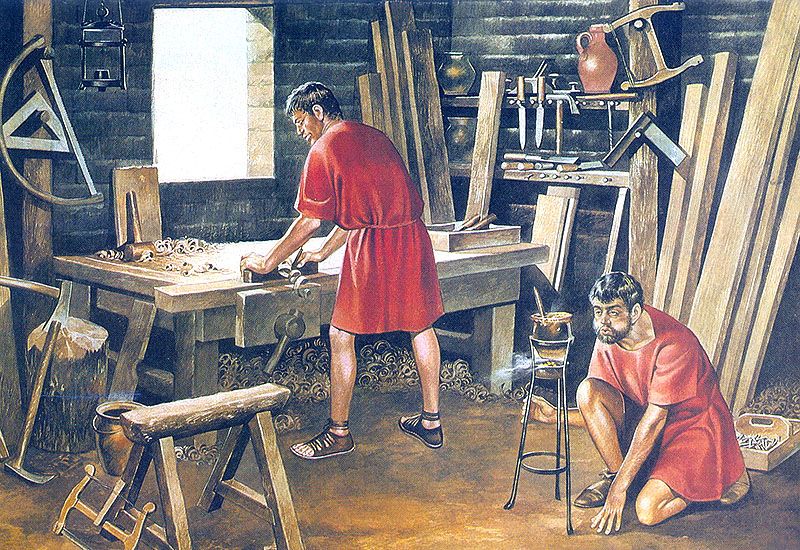
4. Roman Carpenter in Ancient Rome
Approximate pay: ~1.5–2 denarii per day
Monthly pay: ~38–50 denarii
Annual pay: ~450–600 denarii
Modern comparison: ~$25–$40 per day or ~$625–$1,000 per month
Social status: Medium
Work: Building houses, roofs, furniture, doors, carts, scaffolding, and other wooden structures
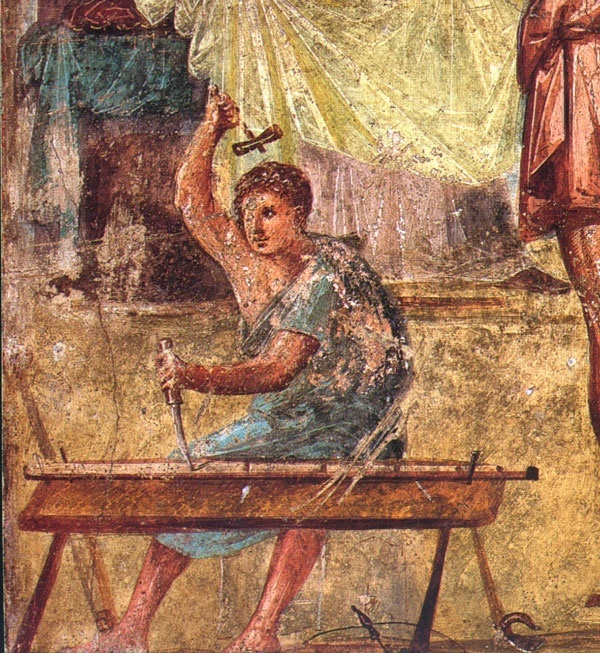
The Roman carpenter was a skilled worker who earned more than an unskilled laborer because carpentry required training, experience, and specialized tools. Carpenters were needed throughout Roman society, from private homes to large public construction projects.
Their work included making doors, furniture, roofs, carts, scaffolding, and wooden supports. They could work for wealthy families, construction projects, workshops, or sometimes run their own businesses.
The exact wage depended on the period, location, experience, and type of work. A rough estimate of 1.5–2 denarii per day gives us a useful comparison, but it was not a fixed Roman salary.
Their social status was generally higher than that of an unskilled laborer because skilled trades were valuable. However, carpenters were still far below wealthy landowners, politicians, and senators.
The work was also physically demanding, requiring long hours of cutting, shaping, measuring, and moving wood. A successful independent carpenter could potentially earn more by having regular customers and running a workshop.
In a rough modern comparison, a Roman carpenter could be thought of as a skilled tradesperson. Their income and status were better than those of basic laborers, but they were still dependent on their work rather than wealth from property.
Main Ideas
- ~1.5–2 denarii per day
- ~38–50 denarii per month
- ~450–600 denarii per year
- Rough modern comparison: ~$25–$40 per day
- Medium social status
- A skilled trade
- Worked with wood and construction
- Could earn more by owning a workshop
5. Roman Blacksmith in Ancient Rome
Approximate pay: ~1.5–2.5 denarii per day
Monthly pay: ~38–63 denarii
Annual pay: ~450–750 denarii
Modern comparison: ~$25–$45 per day or ~$625–$1,125 per month
Social status: Medium
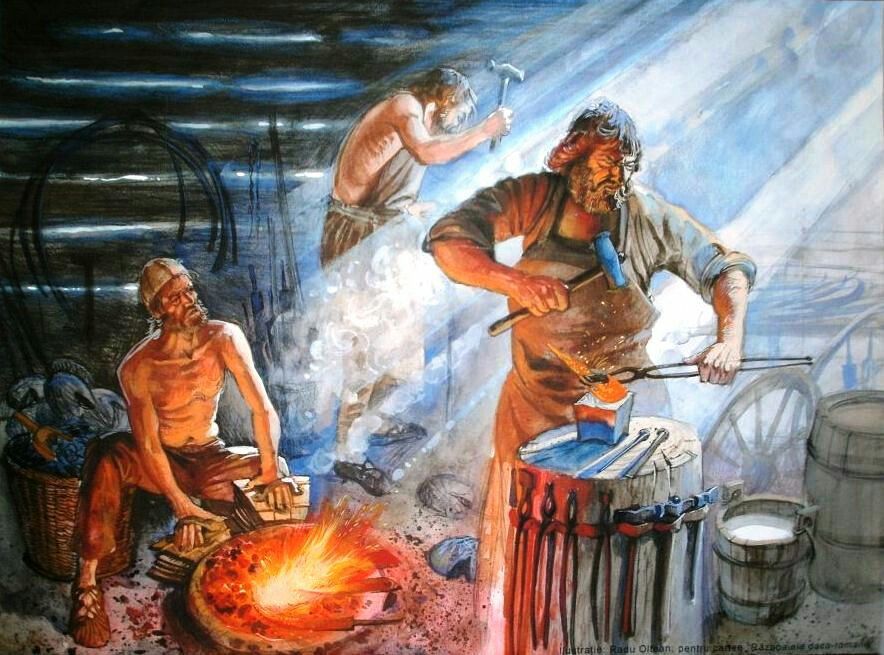
Work: Making and repairing tools, horseshoes, nails, farming equipment, and other metal objects
The Roman blacksmith was an important skilled worker who earned more than many unskilled laborers because blacksmithing required training, experience, and specialized tools. Farmers, builders, soldiers, and ordinary households all depended on metalworkers.
Blacksmiths made and repaired tools, nails, horseshoes, farming equipment, hinges, chains, and other metal goods. Some also produced military equipment. They could work independently, in a workshop, or for a wealthy customer.
The exact wage depended on experience, location, demand, and whether the blacksmith owned a workshop. The estimate of 1.5–2.5 denarii per day is only a rough guide rather than a fixed Roman salary.
Their social status was generally above that of unskilled laborers because they had a valuable trade. A successful blacksmith who owned a workshop could become relatively comfortable, although skilled craftsmen remained below wealthy landowners and political elites.
The work was physically demanding, involving long hours of heating, shaping, and repairing metal. A blacksmith could increase his income by owning a workshop, training apprentices, and gaining regular customers.
In modern terms, the Roman blacksmith was roughly comparable to a skilled tradesperson, with better earning potential than a basic laborer but still dependent on active work for income.
Main Ideas
- ~1.5–2.5 denarii per day
- ~38–63 denarii per month
- ~450–750 denarii per year
- Rough modern comparison: ~$25–$45 per day
- Medium social status
- Important skilled trade
- Worked with metal and tools
- Could earn more by owning a workshop
6. Roman Merchant in Ancient Rome
Approximate pay: ~2–5 denarii per day
Monthly pay: ~50–125 denarii
Annual pay: ~600–1,500 denarii
Modern comparison: ~$30–$75 per day or ~$750–$1,875 per month
Social status: Medium to high
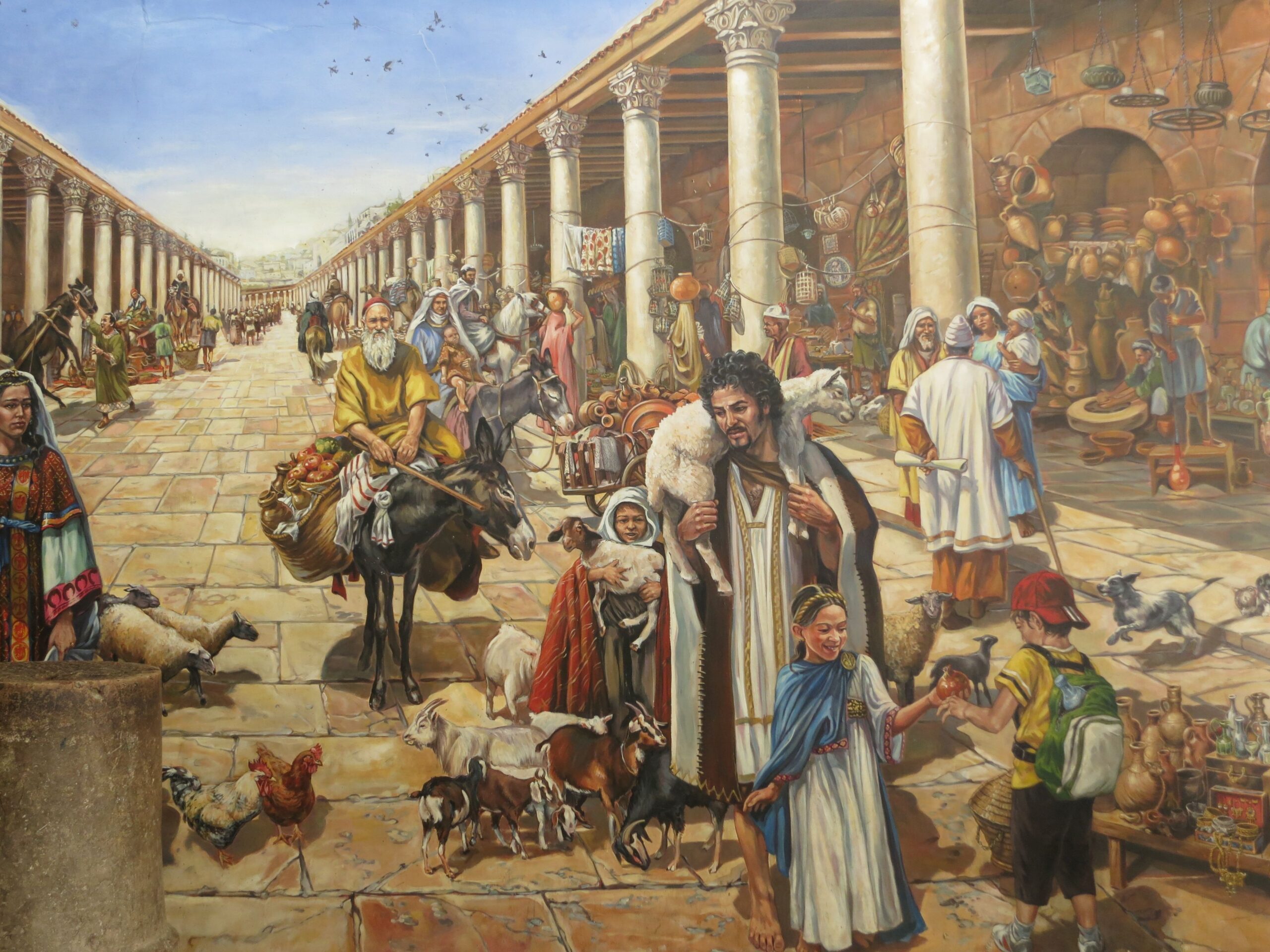
Work: Buying, selling, transporting, and trading goods
The Roman merchant could earn significantly more than ordinary laborers because merchants made money from trade and profit rather than a fixed daily wage. They sold goods such as grain, wine, olive oil, pottery, textiles, spices, and luxury products.
Merchants operated in local markets and across the Roman Empire, using roads, rivers, and Mediterranean shipping routes to move goods. Their income depended heavily on what they traded, where they operated, and how successful their business was.
Unlike a normal worker, a merchant could potentially earn much more than the estimated figures if a business was successful. However, merchants also faced risks from damaged goods, changing prices, transportation problems, and unsuccessful deals.
Their social status could vary widely. Small market traders might have had an ordinary working-class position, while wealthy merchants could become very prosperous and own property, businesses, and slaves.
A successful merchant therefore had greater opportunities for wealth and independence than most manual workers. However, the income was less predictable because it depended on business conditions rather than a regular salary.
Main Ideas
- ~2–5 denarii per day
- ~50–125 denarii per month
- ~600–1,500 denarii per year
- Rough modern comparison: ~$30–$75 per day
- Medium to high social status
- Earned money through trade and profit
- Could become very wealthy
- Income was less predictable than a fixed wage
7. Roman Teacher in Ancient Rome
Approximate pay: ~2–4 denarii per day
Monthly pay: ~50–100 denarii
Annual pay: ~600–1,200 denarii
Modern comparison: ~$30–$60 per day or ~$750–$1,500 per month
Social status: Medium
Work: Teaching reading, writing, grammar, literature, and mathematics
The Roman teacher played an important role in Roman education, especially for children from families who could afford regular schooling. Teachers could teach reading, writing, grammar, literature, mathematics, and public speaking, depending on their level of education and specialization.
Education was usually divided into different stages. Younger children learned basic reading and writing, while older students studied grammar and literature. Wealthier families sometimes hired private tutors, who could provide more personal instruction than teachers working in ordinary schools.
Teacher income depended on experience, reputation, location, number of students, and the type of education provided. Some teachers earned relatively modest amounts, while successful private tutors could make considerably more. There was therefore no single fixed salary for all Roman teachers.
Their social status was generally medium. Education was respected, but teaching was not normally considered one of the highest-status professions in Roman society. A well-educated tutor working for an influential family could nevertheless enjoy a better position and greater income.
Teachers were particularly important because literacy and education could help Romans enter administrative, commercial, or political careers. Their work therefore contributed to the education of future officials, businessmen, writers, and other members of Roman society.
In a rough modern comparison, a Roman teacher’s income could resemble that of a lower-to-middle paid educator, although the comparison is only approximate. Roman wages and modern salaries cannot be directly converted because the two economies were very different.
Main Ideas
- ~2–4 denarii per day
- ~50–100 denarii per month
- ~600–1,200 denarii per year
- Rough modern comparison: ~$30–$60 per day
- Medium social status
- Taught reading, writing, grammar, and literature
- Wealthy families could hire private tutors
- Income depended on students, reputation, and experience

8. Roman Centurion in Ancient Rome
Approximate pay: ~3,000–4,800 denarii per year
Monthly pay: ~250–400 denarii
Annual pay: ~3,000–4,800 denarii
Modern comparison: ~$3,000–$5,000 per month
Social status: High
Work: Commanding soldiers, training troops, maintaining discipline, and leading military units
The Roman centurion was a professional officer who commanded groups of legionaries. Centurions were experienced soldiers who had risen through the military hierarchy and were responsible for training, discipline, organization, and leadership.
Centurions earned substantially more than ordinary legionaries. Their pay could vary depending on rank, period, legion, and position, with senior centurions receiving considerably higher compensation. They could also receive bonuses and other rewards during their careers.
Their social status was relatively high compared with ordinary soldiers and manual workers. Successful centurions could accumulate wealth and property, and some remained influential within their communities after military service.
The job was demanding because centurions had responsibilities both during campaigns and in everyday military life. They needed strong leadership, experience, and knowledge of Roman military organization.
A centurion could potentially build a successful career through long service and promotion. Some reached very senior positions within the army and became among the most respected professional soldiers in the Roman military.
Main Ideas
- ~3,000–4,800 denarii per year
- ~250–400 denarii per month
- Rough modern comparison: ~$3,000–$5,000 per month
- High social status
- Commanded Roman legionaries
- Responsible for training and discipline
- Could receive bonuses and rewards
- Promotion depended on experience and military service

9. Roman Doctor in Ancient Rome
Approximate pay: ~3–8 denarii per day
Monthly pay: ~75–200 denarii
Annual pay: ~900–2,400 denarii
Modern comparison: ~$50–$120 per day or ~$1,250–$3,000 per month
Social status: Medium to high
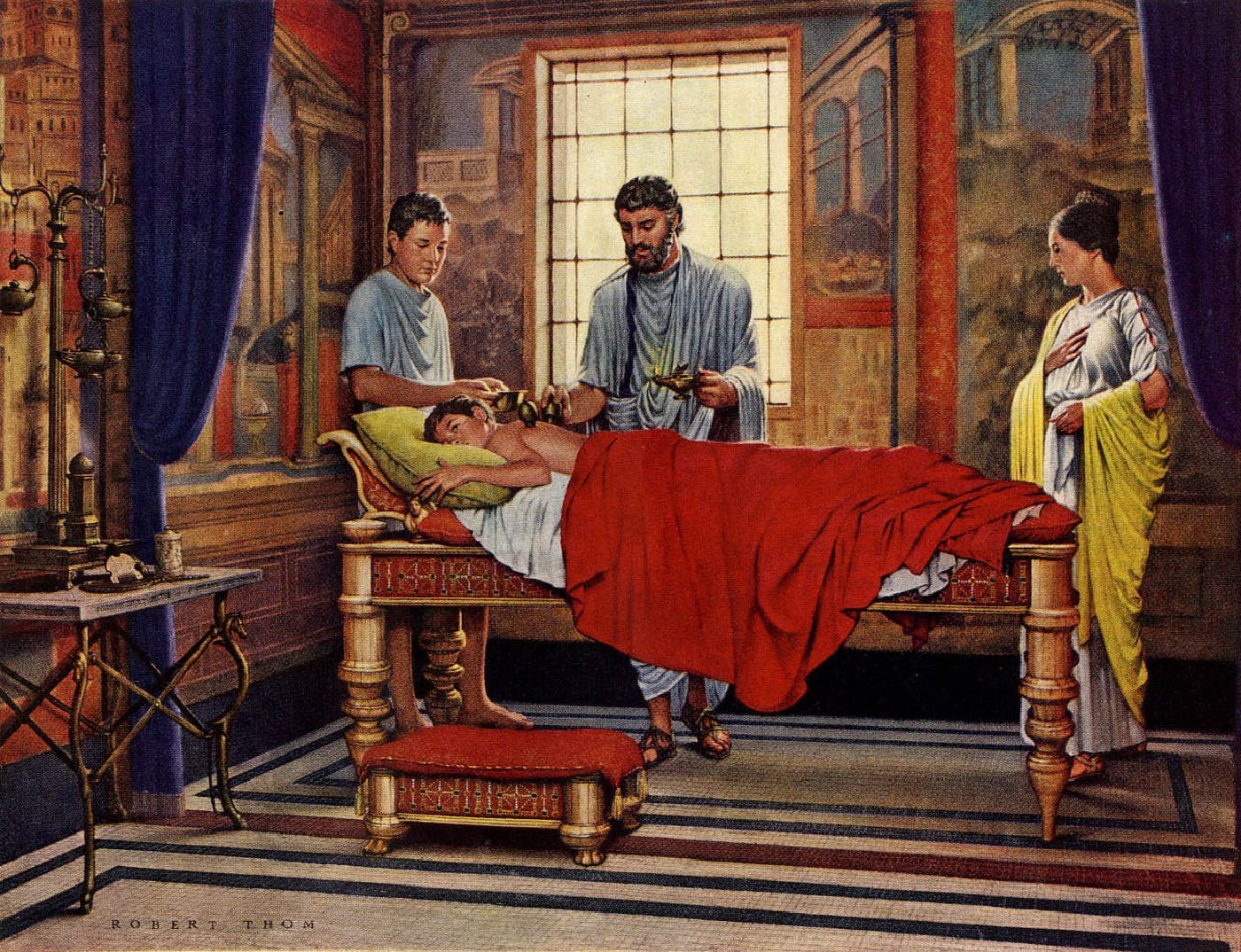
Work: Treating illnesses, injuries, wounds, and providing medical care
The Roman doctor, known as a medicus, was a skilled professional who provided medical treatment to people throughout the Roman Empire. Doctors could work in private practices, military hospitals, wealthy households, or public settings. Medical knowledge was strongly influenced by earlier Greek medicine, and many Roman doctors were trained in Greek medical traditions.
Doctors treated a wide variety of conditions using medicines, herbal preparations, diets, basic surgical procedures, and other treatments available at the time. Their knowledge and success could vary greatly, since Roman medicine did not have the scientific understanding available to modern doctors.
A doctor’s income depended on experience, reputation, location, specialization, and clientele. Doctors who served wealthy families could potentially earn considerably more than those treating poorer patients. Some successful physicians accumulated significant wealth through their profession.
Their social status was generally higher than that of ordinary manual workers because medical knowledge was considered a valuable skill. However, doctors did not all have the same position. A highly respected physician serving an elite household could have a much higher social position than a poorly paid local practitioner.
Doctors were especially important in the Roman military, where medical workers treated soldiers and helped maintain the health of large military communities. Their skills were also valuable in major cities, where wealthy residents could afford professional medical care.
In a rough modern comparison, a successful Roman doctor could be thought of as a well-paid skilled professional, although Roman and modern salaries cannot be directly converted. The estimated modern dollar range is therefore only a broad comparison rather than an actual equivalent salary.
Main Ideas
- ~3–8 denarii per day
- ~75–200 denarii per month
- ~900–2,400 denarii per year
- Rough modern comparison: ~$50–$120 per day
- Medium to high social status
- Provided medical treatment
- Often influenced by Greek medical knowledge
- Wealthy doctors could earn considerably more
- Some worked with the Roman military or wealthy families
10. Roman Lawyer in Ancient Rome
““`Approximate pay: ~5–10 denarii per day
Monthly pay: ~125–250 denarii
Annual pay: ~1,500–3,000 denarii
Modern comparison: ~$75–$150 per day or ~$1,875–$3,750 per month
Social status: High
Work: Representing clients, preparing legal arguments, giving legal advice, and speaking in court
The Roman lawyer, often called an advocatus or orator, could have an important position in Roman society. Lawyers helped clients deal with property disputes, contracts, inheritance, criminal accusations, business disagreements, and other legal matters.
Roman law was complicated, and successful advocates needed strong knowledge of legal procedures, public speaking, and persuasive argument. A lawyer’s reputation was extremely important because wealthy and powerful clients wanted someone who could represent them effectively in court.
Income could vary significantly. Some lawyers received fees or gifts from clients, while others built their wealth through political connections, family property, or other activities. The estimate of 5–10 denarii per day is therefore a rough comparison rather than a fixed salary.
Their social status could be high, especially for lawyers from respected families who developed political careers. Successful advocates could gain influential clients and eventually enter public life. Legal experience and public speaking could also help a man pursue positions in Roman government.
The profession was particularly connected with the Roman elite and political world. Famous speakers could become well known throughout Rome, and legal ability was considered an important skill for anyone seeking influence.
In a rough modern comparison, a successful Roman lawyer could be viewed as a well-paid professional, although Roman wealth and modern salaries cannot be converted precisely into one another.
Main Ideas
- ~5–10 denarii per day
- ~125–250 denarii per month
- ~1,500–3,000 denarii per year
- Rough modern comparison: ~$75–$150 per day
- High social status
- Worked with Roman law and legal disputes
- Required strong speaking and legal skills
- Successful advocates could gain wealth and political influence

11. Roman Government Official in Ancient Rome
Approximate pay: ~5–15 denarii per day
Monthly pay: ~125–375 denarii
Annual pay: ~1,500–4,500 denarii
Modern comparison: ~$75–$200 per day or ~$1,875–$5,000 per month
Social status: High
Work: Managing government administration, collecting taxes, overseeing provinces, and organizing public affairs
The Roman government official could hold an important position within the administration of the Roman Empire. Officials worked in many different roles, including tax collection, public administration, military logistics, legal matters, and provincial government.
The exact income depended heavily on the official’s rank, position, location, and period of Roman history. Some government positions were connected to political careers rather than simple salaried employment, while others provided official payments, benefits, or opportunities to gain wealth through property and connections.
Their social status was generally high because government officials often came from wealthy or well-connected families. Senior officials could have authority over large territories, manage important financial responsibilities, and interact directly with governors, military commanders, and other members of the Roman elite.
Officials working in the provinces could have especially important responsibilities. They might help organize taxes, public works, records, courts, and supplies while working under higher-ranking administrators.
Government service could also provide a path toward greater political influence. Successful officials could build relationships with powerful families and gain experience that helped them advance into higher positions.
In a rough modern comparison, a Roman government official could be considered a well-paid administrator or senior public official, although Roman compensation was very different from modern government salaries.
Main Ideas
- ~5–15 denarii per day
- ~125–375 denarii per month
- ~1,500–4,500 denarii per year
- Rough modern comparison: ~$75–$200 per day
- High social status
- Managed government administration
- Could work with taxes and provincial affairs
- Often benefited from wealth and political connections
- Senior positions carried significant authority
orem ipsum dolor sit amet, consectetur adipiscing elit. Ut elit tellus, luctus nec ullamcorper mattis, pulvinar dapibus leo.
12. Roman Senator and Wealthy Landowner in Ancient Rome
Approximate income: ~20–100+ denarii per day equivalent
Monthly income: ~600–3,000+ denarii
Annual income: ~7,200–36,000+ denarii
Modern comparison: ~$10,000–$50,000+ per month
Social status: Very high
Work: Managing estates, overseeing investments, participating in politics, and managing family wealth
The Roman senator and wealthy landowner belonged to the highest levels of Roman society. Unlike workers such as farmers, carpenters, or blacksmiths, wealthy senators usually did not depend on a normal daily wage. Their wealth came primarily from land, agriculture, property, investments, and family fortunes.
Large landowners could control extensive farms and estates, producing grain, wine, olive oil, livestock, and other valuable goods. Their estates could generate substantial income, especially when they were located in productive regions or near important markets.
Senators also participated in Roman politics and government. A senator’s position could provide significant influence, although political office itself was not simply equivalent to receiving a modern salary. Much of a senator’s financial power came from his existing wealth and property.
Their social status was extremely high. Senators belonged to Rome’s political and economic elite and generally possessed far greater wealth than ordinary workers or soldiers. Wealthy landowners could also use their resources to support political careers, maintain large households, and build connections with other powerful families.
The enormous difference between a senator’s wealth and the earnings of ordinary workers shows how unequal Roman society could be. While a laborer might depend on daily wages, a wealthy landowner could earn income from property and agricultural production without personally performing manual work.
The modern-dollar comparison is especially uncertain because Roman wealth cannot be directly converted into modern currency. These figures are therefore only broad estimates intended to show the enormous difference in economic scale between the Roman elite and ordinary workers.
Main Ideas
- ~20–100+ denarii per day equivalent
- ~600–3,000+ denarii per month
- ~7,200–36,000+ denarii per year
- Rough modern comparison: ~$10,000–$50,000+ per month
- Very high social status
- Wealth came mainly from land and property
- Senators were part of the Roman political elite
- Large estates could generate substantial agricultural income
- Roman society had major wealth differences between elites and ordinary workers