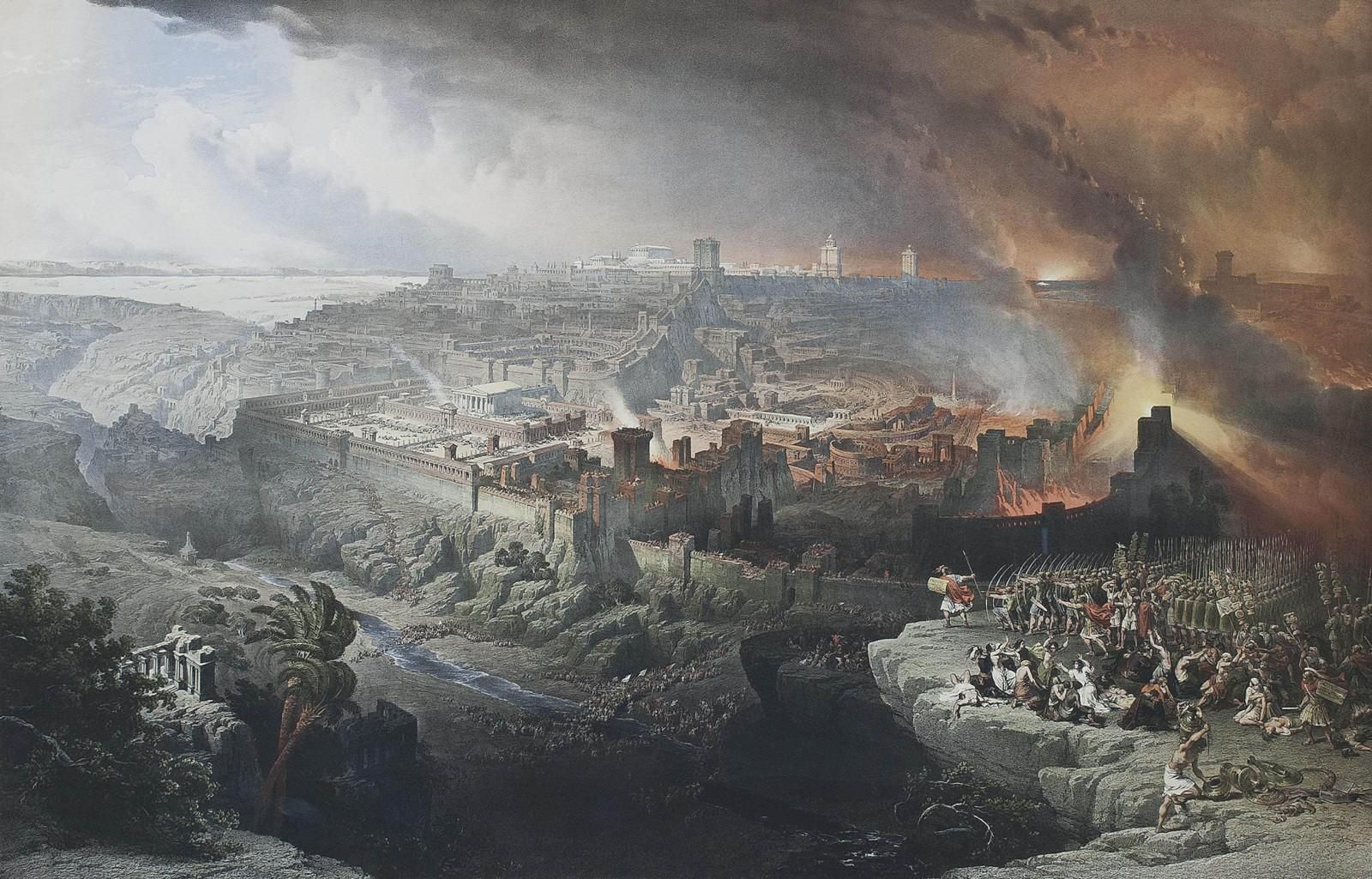
The Siege of Jerusalem in 70 AD was one of the most important and destructive events of the First Jewish-Roman War. The siege brought the Roman army into direct conflict with the defenders of Jerusalem, one of the most important religious and political centers in the ancient Jewish world. After years of rebellion against Roman rule, the city became the main target of a massive Roman military campaign led by Titus, the son of the Roman emperor Vespasian.
The conflict had begun in 66 AD, when a major Jewish revolt broke out against Roman authority in the province of Judaea. Fighting spread across the region, and Roman forces were eventually sent to restore control. By 70 AD, Titus had gathered a large army and marched toward Jerusalem with several Roman legions. The city was heavily fortified, and thousands of defenders were prepared to resist the Roman attack.
The siege became a long and difficult struggle. Roman forces surrounded Jerusalem and gradually tightened their control over the city. Inside the walls, the defenders faced growing shortages of food and supplies, while divisions between different groups within the city made the situation even more complicated. Outside the walls, the Romans used their military engineering skills, siege equipment, fortifications, and disciplined legions to slowly overcome Jerusalem’s defenses.
The most significant event of the siege was the destruction of the Second Temple, one of the most important religious buildings in the Jewish world. The Temple was destroyed during the Roman capture of the city, marking a major turning point in Jewish history. Much of Jerusalem was also destroyed, while many survivors were captured.
The fall of Jerusalem did not immediately end every part of the Jewish revolt, but it represented a major Roman victory and greatly weakened organized resistance in Judaea. The siege also became an important event in Roman history, Jewish history, and the history of the wider Mediterranean world.
To understand how Jerusalem fell, we first need to look at why the Jewish revolt against Rome began and why Jerusalem became the center of the conflict.
I. Why the First Jewish-Roman War Began and Why Jerusalem Rebelled Against Rome
The First Jewish-Roman War began in 66 AD after years of growing tension between the population of Judaea and Roman rule. Judaea had been under Roman control for decades, but relations between the Roman authorities and parts of the local population were often difficult. Disagreements over taxation, administration, religion, and the behavior of individual Roman officials contributed to increasing unrest.
Judaea was a particularly sensitive province for Rome because of its strong religious traditions and the importance of Jerusalem. The Jewish population followed religious practices that were different from those of many other peoples within the Roman Empire. While Rome generally allowed conquered communities to maintain their religions, conflicts could arise when Roman policies or officials were seen as interfering with important religious customs.
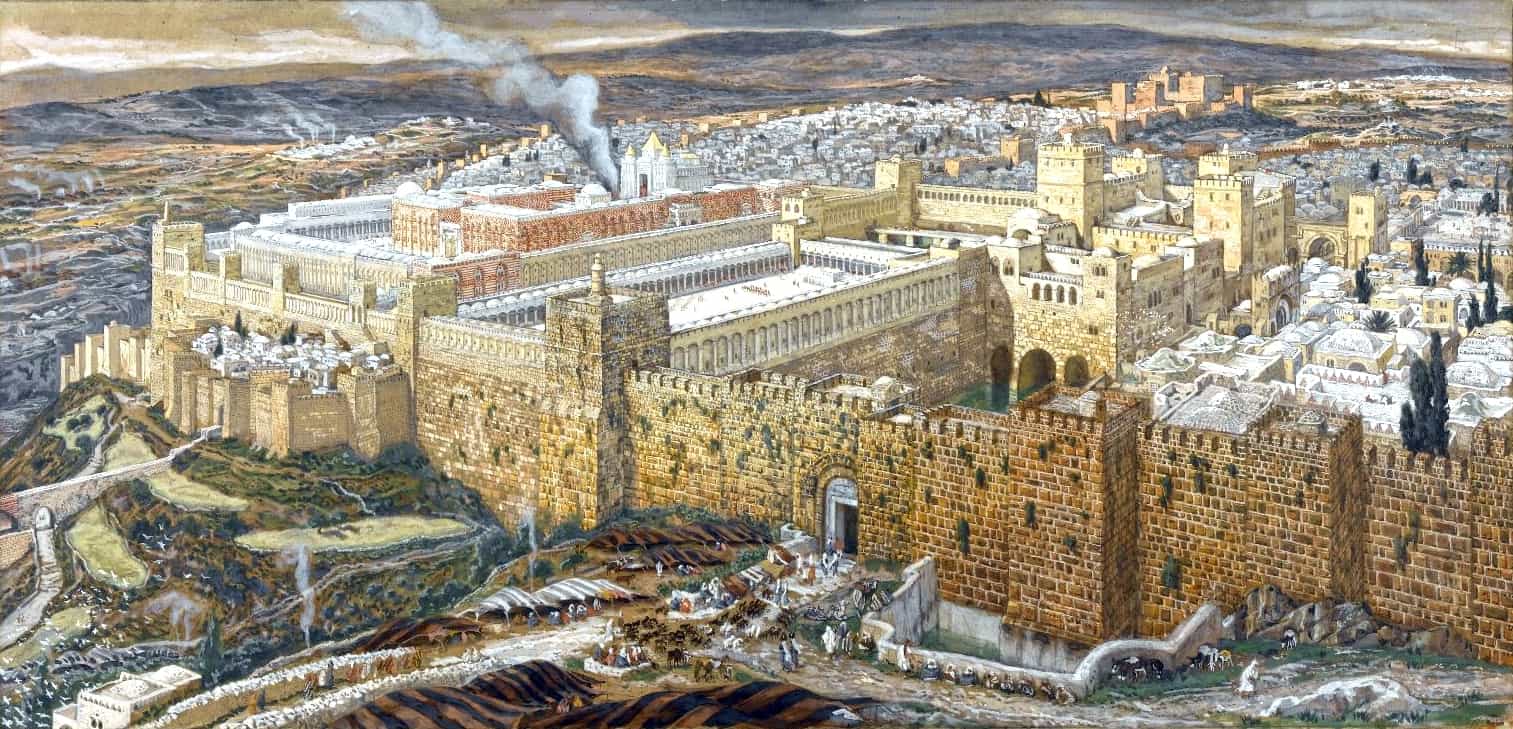
During the first century AD, Jerusalem was the political and religious center of Jewish life in the region. The Second Temple stood at the heart of the city and was one of the most important religious sites in Judaism. Control of Jerusalem therefore had significance far beyond the city itself.
Tensions increased during the rule of Roman officials in Judaea. One particularly controversial governor was Gessius Florus, whose administration in the 60s AD contributed to growing hostility toward Roman authority. Ancient sources, especially the Jewish historian Josephus, describe serious disputes over Roman actions and financial demands. Josephus’s account is extremely important for understanding the war, although historians also recognize that he wrote from a particular perspective and that some details are difficult to verify independently.
In 66 AD, the situation finally erupted into open rebellion. Fighting broke out in Jerusalem and other parts of Judaea, and Roman authority temporarily collapsed in several areas. A Roman force sent under Cestius Gallus, the governor of Syria, attempted to suppress the revolt but was forced to withdraw after failing to capture Jerusalem.
The Roman defeat encouraged the rebels and demonstrated that the conflict could not be solved with a limited military operation. Rome responded by preparing a much larger campaign. The emperor Nero appointed the experienced general Vespasian to lead the Roman response, giving him a substantial army.
Vespasian arrived in the region in 67 AD and began systematically reconquering areas controlled by the rebels. His campaign gradually isolated Jerusalem from other parts of Judaea. Vespasian’s forces captured important towns and territories, while the rebellion became increasingly concentrated around the strongest remaining centers of resistance.
In 69 AD, events in the Roman Empire changed the situation dramatically. Nero died, and Rome entered a period of civil war known as the Year of the Four Emperors. Vespasian was eventually proclaimed emperor by his supporters, leaving his son Titus to continue the campaign against Jerusalem.
By 70 AD, Jerusalem had become the main target of the Roman military effort. Titus brought several legions toward the city, preparing to confront the defenders and end the strongest remaining center of the rebellion.
The siege that followed would become one of the most significant events of the entire war. Jerusalem’s location, walls, population, and religious importance made its capture extremely challenging, while the Romans had the military organization, engineering skills, and manpower needed to conduct a major siege.
Main Ideas
- The First Jewish-Roman War began in 66 AD after years of increasing tension.
- Disputes involving Roman rule, taxation, administration, and religion contributed to the rebellion.
- Jerusalem and the Second Temple were central to Jewish religious and political life.
- Vespasian led the major Roman campaign before becoming emperor in 69 AD.
- Titus, Vespasian’s son, took command of the campaign against Jerusalem in 70 AD.
II. How the Roman Army Prepared to Besiege Jerusalem
By 70 AD, the Roman campaign against the Jewish revolt had reached its most important stage. After years of fighting across Judaea, the Romans were preparing to attack Jerusalem, the strongest remaining center of resistance. Command of the campaign had passed to Titus, the son of Emperor Vespasian, who brought a large and experienced Roman army toward the city.
Titus had several Roman legions available for the campaign, including forces that had already gained experience fighting in Judaea. The Roman army was particularly well suited to siege warfare because Roman soldiers were trained not only for open battles but also for building fortifications, roads, camps, ramps, and siege works. These skills would become extremely important around Jerusalem.
The Romans understood that directly attacking the city’s walls would be difficult. Jerusalem was surrounded by strong defenses, and the city contained a large population that could support a prolonged resistance. Titus therefore needed to organize his army carefully before beginning the main assault.
As the Roman forces approached Jerusalem, they established military camps around the city. Roman camps were normally organized according to strict layouts, with defensive walls, entrances, streets, and designated areas for different units. These camps provided soldiers with secure bases from which they could launch attacks and maintain control of the surrounding area.
The Romans also brought siege equipment and engineering tools. Roman armies could construct towers, battering devices, ramps, and other equipment designed to overcome fortified positions. Engineers and soldiers worked together to prepare the battlefield and reduce the advantages provided by Jerusalem’s walls.
Another major challenge was supplying the army. A large Roman force required enormous quantities of food, water, weapons, building materials, and other supplies. The Romans therefore needed secure routes for transporting resources while preventing the defenders from interfering with their operations.
Titus also had to consider the city’s geography. Jerusalem stood on hilly terrain, meaning that the Romans could not simply surround it from a flat battlefield. The city’s different defensive walls and elevated positions gave the defenders important advantages.
Inside Jerusalem, meanwhile, preparations were also taking place. The defenders knew that the Roman army was approaching and prepared to resist the siege. Jerusalem contained different groups involved in the revolt, and political and military divisions within the city would become increasingly important during the siege.
For the Romans, the objective was clear: surround Jerusalem, break through its defenses, capture the city, and destroy the remaining organized resistance. But Titus could not simply rush his legions against the walls. A successful siege required patience, engineering, supplies, and careful coordination.
As the Roman army completed its preparations, thousands of soldiers moved into position around Jerusalem. The city was about to become the center of one of the most famous sieges of the Roman Empire.
Main Ideas
- Titus led the Roman campaign against Jerusalem in 70 AD.
- Roman legions were highly experienced in siege warfare and military engineering.
- The Romans established fortified camps around the city.
- Roman forces prepared siege equipment, supplies, and engineering works.
- Jerusalem’s strong walls and hilly terrain made the coming siege extremely difficult.
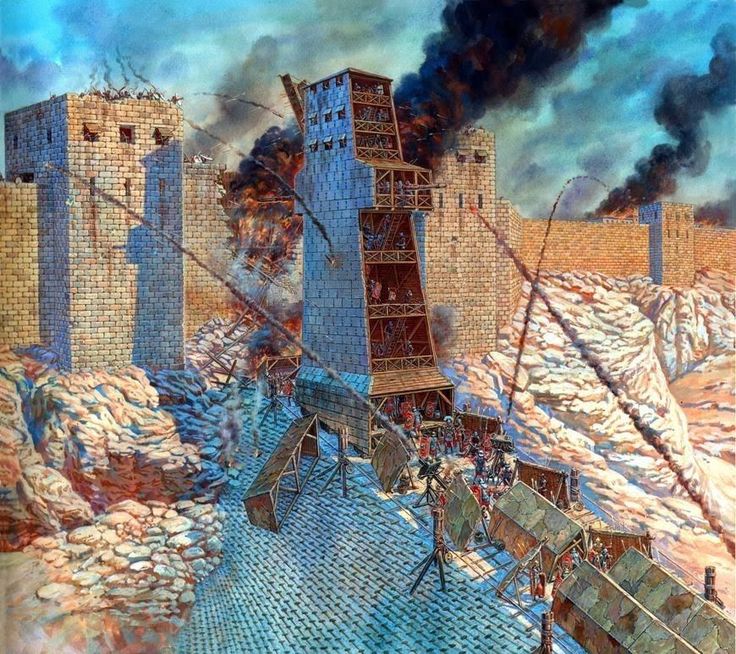
III. How Titus and the Roman Legions Encircled Jerusalem
When Titus arrived outside Jerusalem in 70 AD, the Roman army faced a city that was heavily defended and filled with people prepared to resist. Jerusalem’s defenders had spent years preparing for a Roman attack, and the city possessed several layers of fortifications. Titus therefore needed to surround the city before attempting to break through its defenses.
The Roman army approached Jerusalem with several legions and supporting troops. The soldiers established positions around the city, creating a military presence that made it increasingly difficult for people inside Jerusalem to leave or bring in supplies. The Roman objective was to isolate the city and prevent the defenders from receiving outside assistance.
Jerusalem’s geography made the operation complicated. The city stood on a series of hills and ridges, while its walls followed the surrounding terrain. The Romans had to position their troops carefully so that the defenders could not easily exploit gaps between Roman units.
The defenders also had their own advantages. Jerusalem’s walls were strong, and the city’s elevated positions gave defenders opportunities to observe Roman movements. From behind the fortifications, they could use projectiles and defensive weapons against Roman soldiers attempting to approach.
Titus responded by organizing his forces into different positions around the city. Roman soldiers constructed fortified camps that provided protection and allowed the army to maintain its siege operations. These camps also helped the Romans coordinate movements between different parts of the battlefield.
One of the most important parts of Roman siege warfare was controlling the area outside the city. If defenders could freely leave Jerusalem, obtain food, or attack Roman supply lines, the siege could become much more difficult. The Romans therefore worked to make their encirclement increasingly secure.
The situation inside Jerusalem was becoming more difficult as well. The city contained a large population, including people who had come to Jerusalem because of the importance of the Jewish religious festivals. The presence of so many people increased the demand for food and water at exactly the moment when the Romans were attempting to cut the city off.
Political and military divisions inside Jerusalem also complicated the defense. Several groups were involved in the resistance, and they did not always agree with one another. Despite these divisions, the defenders continued to resist the Roman attack.
Titus gradually tightened the Roman position. His army constructed additional siege works and defensive lines, reducing the opportunities for movement in and out of the city. The Romans were not simply waiting outside the walls; they were actively reshaping the battlefield to make Jerusalem’s defenses less effective.
The encirclement also created a major supply crisis. As the Roman blockade became stronger, obtaining food became increasingly difficult for those inside the city. This was one of the most important weapons available to the Romans because a well-defended city could potentially withstand direct attacks for a long time, but maintaining a large population without sufficient supplies was much harder.
The Roman strategy was therefore based on a combination of military pressure, engineering, and isolation. Titus did not need to destroy the entire city immediately. Instead, he could gradually weaken the defenders and then attack the city’s defenses when the Roman army had created the right conditions.
As the Roman lines closed around Jerusalem, the defenders found themselves increasingly trapped. The city was still standing, its walls were still strong, and its defenders remained determined. But the Romans had established the foundation for a full-scale siege.
The next stage would be even more difficult. Titus would have to bring his legions and siege equipment directly against Jerusalem’s defensive walls, while the defenders attempted to prevent the Romans from breaking through.
Main Ideas
- Titus surrounded Jerusalem with Roman legions and supporting troops.
- The Romans built fortified camps and siege positions around the city.
- Jerusalem’s hilly terrain and strong walls gave its defenders important advantages.
- The Roman encirclement increasingly cut off food and supplies from the city.
- Titus used isolation, engineering, and military pressure to weaken Jerusalem before launching the major assaults.
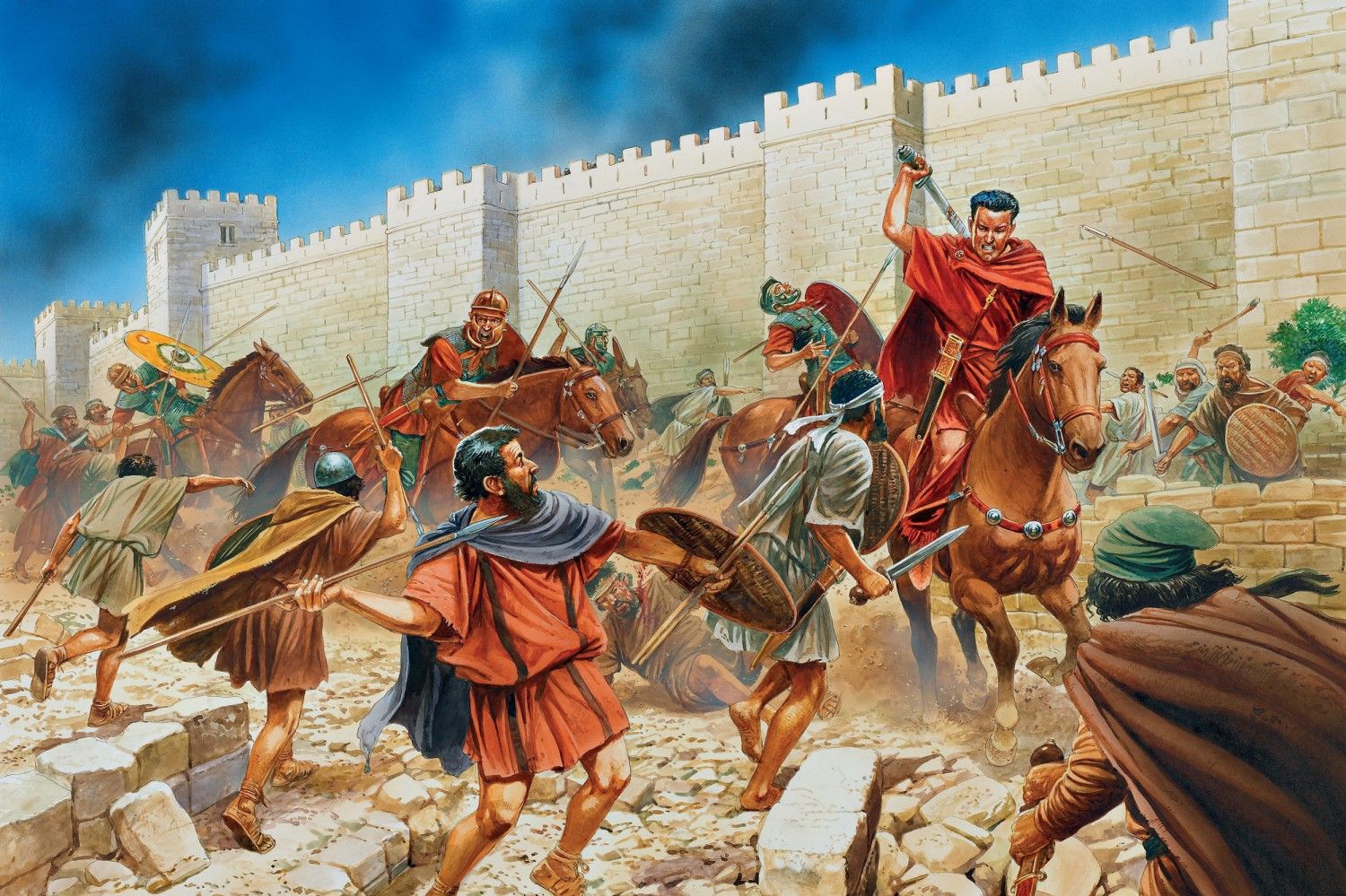
IV. What Life Was Like Inside Jerusalem During the Roman Siege
As the Roman army tightened its siege of Jerusalem in 70 AD, life inside the city became increasingly difficult. Jerusalem had been filled with people when the Roman forces arrived, and the large population placed enormous pressure on the city’s available supplies. As the Romans strengthened their blockade, bringing additional food and supplies into the city became increasingly difficult.
The defenders were also dealing with serious political and military divisions. Several groups were involved in the resistance against Rome, and their leaders did not always agree about how the city should be defended. Despite these disagreements, the threat from the Roman army outside the walls forced the defenders to continue organizing resistance.
For ordinary people inside Jerusalem, the most immediate concern was food. A city under siege could not rely on its normal trade networks, because Roman troops controlled the surrounding countryside and roads. As supplies became harder to obtain, food became increasingly valuable. People had to depend on whatever provisions had already been stored inside the city.
The ancient historian Josephus provides the most detailed surviving account of conditions during the siege. His writings describe severe suffering and shortages inside Jerusalem. However, his account was written after the war and contains dramatic descriptions, so historians compare his statements with archaeological evidence and other ancient sources when reconstructing what happened.
The city’s population also had to live with the constant threat of Roman attacks. Roman soldiers were building siege works and preparing equipment outside the walls, while defenders watched the Roman positions from Jerusalem’s fortifications. The sound and movement of the Roman army would have been a constant reminder that the city was surrounded.
Jerusalem’s defenders continued to fight back. They could launch attacks from behind the walls and attempt to interfere with Roman siege operations. The city’s strong defensive positions made it dangerous for Roman soldiers to approach directly.
The situation became even more complicated because of the enormous number of people inside the city. Refugees and pilgrims had entered Jerusalem before the siege, contributing to the population that now needed food and water. The Roman blockade therefore created pressure not only on soldiers but also on families, workers, religious figures, and other civilians.
As the siege continued, social conditions deteriorated. Scarcity could create conflict over access to supplies, and maintaining order became increasingly difficult. The political divisions that had existed before the siege became even more serious as the population faced the consequences of the Roman blockade.
Despite these problems, the defenders did not immediately surrender. Jerusalem’s religious importance gave the resistance enormous significance. The Second Temple stood at the center of the city, and its protection was closely connected with the identity and religious traditions of the population.
The Romans understood that capturing Jerusalem would require more than simply defeating individual groups of defenders. They needed to break through the city’s defenses and gain control of its important areas. Their strategy therefore continued to combine blockade, siege engineering, and military assaults.
Inside Jerusalem, conditions continued to worsen as the Roman army moved closer to the city’s strongest defensive positions. Food shortages, overcrowding, internal divisions, and constant military pressure were weakening the city’s ability to resist.
Yet the walls remained standing.
For Titus and his legions, the next challenge was to break through Jerusalem’s defenses. The Romans would now have to use their engineering skills and military equipment against one of the strongest fortified cities they had encountered during the war.
Main Ideas
- The Roman blockade made food and supplies increasingly difficult to bring into Jerusalem.
- Overcrowding placed additional pressure on the city’s limited resources.
- Political and military divisions among the defenders made the situation more difficult.
- Josephus provides the main ancient account of conditions inside the city, although his descriptions must be treated carefully.
- Despite worsening conditions, the defenders continued resisting while the Romans prepared to break through Jerusalem’s walls.
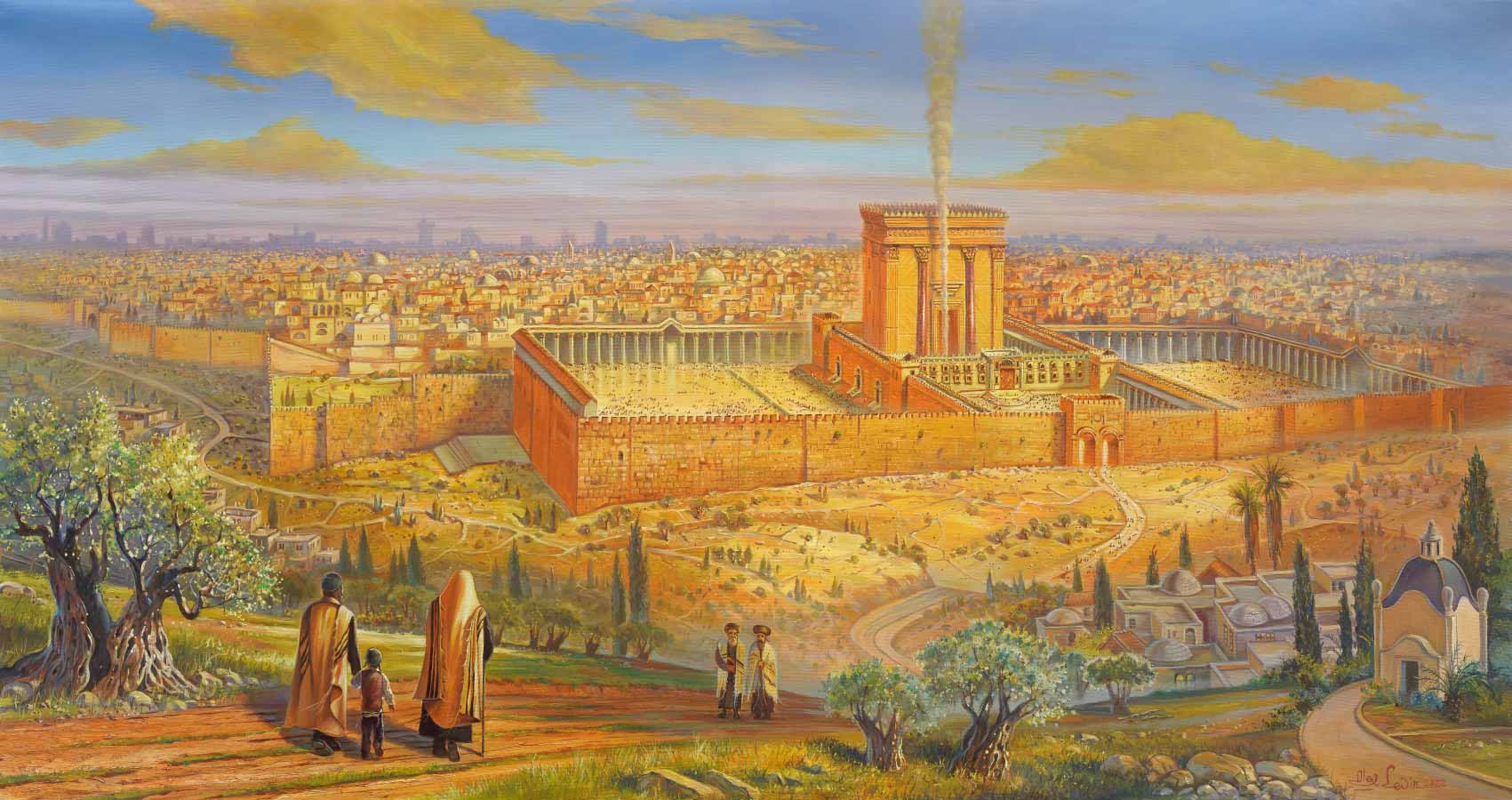
V. How the Romans Broke Through Jerusalem's Defenses
As the siege continued, Titus and the Roman legions began focusing on breaking through Jerusalem’s powerful defensive system. The city was protected by several walls and fortified positions, making a direct assault extremely difficult. Rather than relying on one attack, the Romans used a combination of siege engineering, artillery, infantry, and carefully organized assaults to gradually overcome the city’s defenses.
One of the first major objectives was the Third Wall, which protected the newer northern part of Jerusalem. Roman soldiers constructed siege works and brought up equipment designed to attack the fortifications. Roman artillery could fire projectiles toward defenders, while soldiers attempted to approach the walls under protection.
The Romans eventually succeeded in taking the Third Wall. This allowed them to move closer to the city’s more heavily defended inner areas. The defenders continued fighting and attempted to prevent the Romans from advancing farther into Jerusalem.
The next major obstacle was the Second Wall. Roman soldiers attacked this defensive line and managed to break through it. However, the defenders launched counterattacks and temporarily pushed Roman troops back in some areas. The fighting demonstrated how difficult it was for the Romans to maintain their positions after entering the city’s defenses.
Titus reorganized his forces and continued the siege. Roman armies were experienced at adapting their tactics when an initial attack failed. Engineers could build new structures, soldiers could reposition their camps, and commanders could change the direction of their assaults.
The Romans also constructed siege ramps that allowed their soldiers and equipment to approach fortified positions more effectively. These ramps were particularly useful when the defenders occupied elevated positions. Building them required enormous amounts of labor and materials, demonstrating the logistical strength of the Roman military.
Roman soldiers also used siege towers and battering equipment against the city’s defenses. These machines allowed the Romans to attack walls from a greater height or attempt to damage defensive structures. The defenders responded by attacking Roman equipment and trying to prevent the siege works from being completed.
The battle for Jerusalem was therefore not simply a series of soldiers fighting at the walls. It was a massive engineering operation. Thousands of Roman soldiers had to construct fortifications, transport materials, protect engineers, operate siege equipment, and maintain supplies while simultaneously fighting the defenders.
Eventually, the Romans pushed deeper into the city. Each defensive position that fell reduced the defenders’ ability to coordinate their resistance. The Romans could establish new positions closer to the heart of Jerusalem while continuing to pressure the remaining defenses.
The defenders still resisted fiercely, but the Roman army possessed a major advantage in manpower, engineering, organization, and resources. The longer the siege continued, the more difficult it became for Jerusalem’s defenders to replace lost supplies and maintain their defensive positions.
By this stage, the Romans were approaching the most important part of the city: the area surrounding the Second Temple. The Temple complex was not only a religious center but also one of the strongest and most significant fortified areas in Jerusalem.
The struggle for the city was reaching its final stage. Titus and his soldiers had broken through several layers of defense, but they still faced the most important objective of the entire campaign. The coming fighting would determine the fate of Jerusalem and the Second Temple.
Main Ideas
- The Romans used siege engineering and military assaults to overcome Jerusalem’s defenses.
- Titus’s army captured the Third Wall and advanced toward the inner parts of the city.
- Roman forces also broke through the Second Wall, although defenders launched counterattacks.
- Siege ramps, towers, artillery, and other equipment helped Roman soldiers attack fortified positions.
- The fall of successive defenses brought the Romans closer to the Second Temple and the heart of Jerusalem.
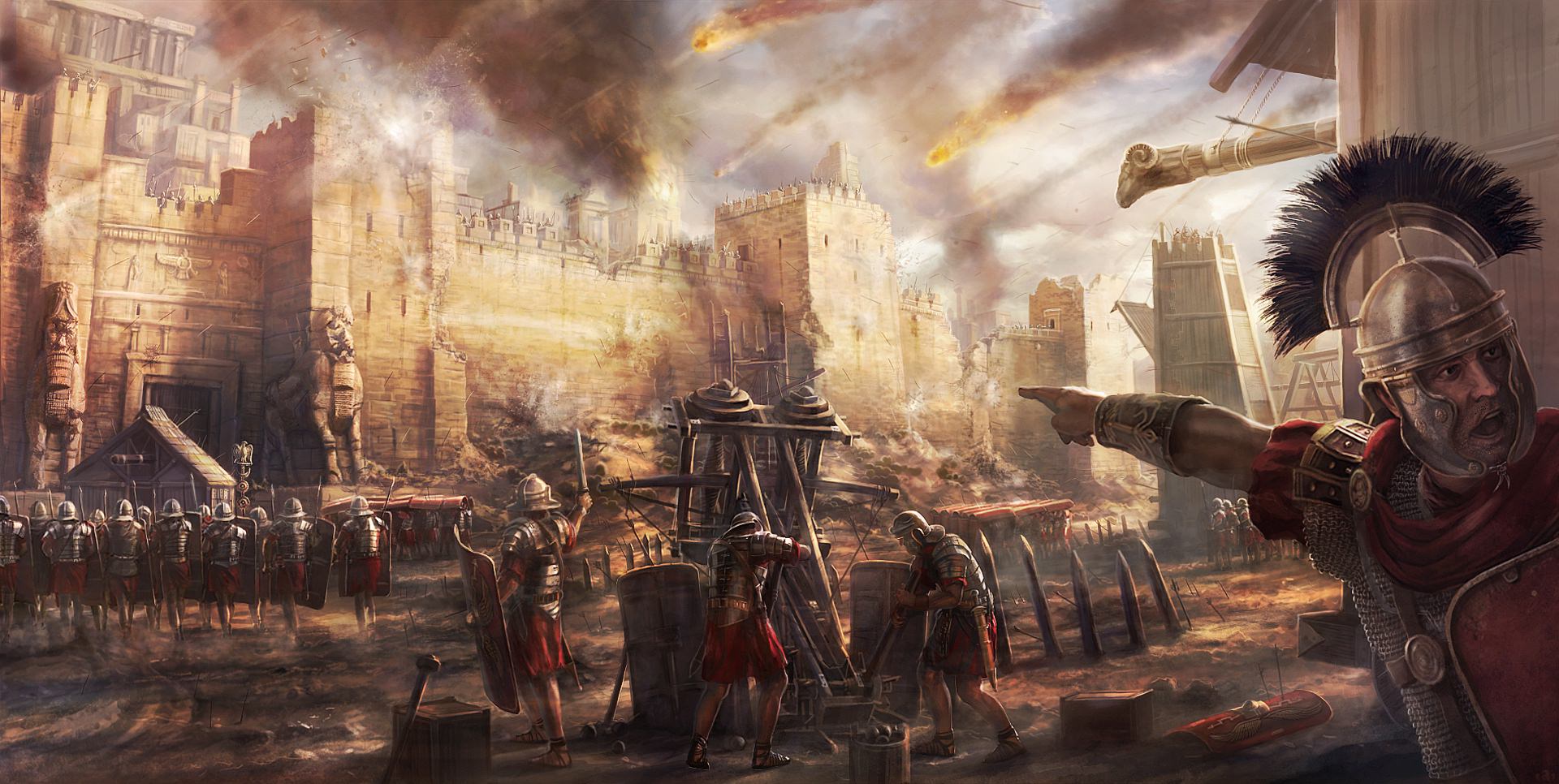
VI. The Destruction of the Second Temple and the Fall of Jerusalem
By the final stages of the Siege of Jerusalem in 70 AD, the Roman army had broken through several of the city’s major defensive positions. Titus and his legions were now fighting their way toward the central areas of Jerusalem, where the Second Temple stood. The Temple was the most important religious building in the city and had enormous significance for Jewish religious life.
The fighting around the Temple complex was extremely intense. Roman soldiers continued advancing while the defenders attempted to hold their remaining positions. The Temple area itself was surrounded by strong structures and walls, making it difficult for the Romans to take control quickly.
Ancient sources give different details about exactly how the Temple was destroyed. The most famous account comes from Josephus, who wrote that Titus wanted to preserve the Temple, but that during the fighting a Roman soldier threw a burning object into the building, causing a fire that spread rapidly. However, historians debate the precise circumstances, and it is difficult to establish exactly what Titus intended during the fighting.
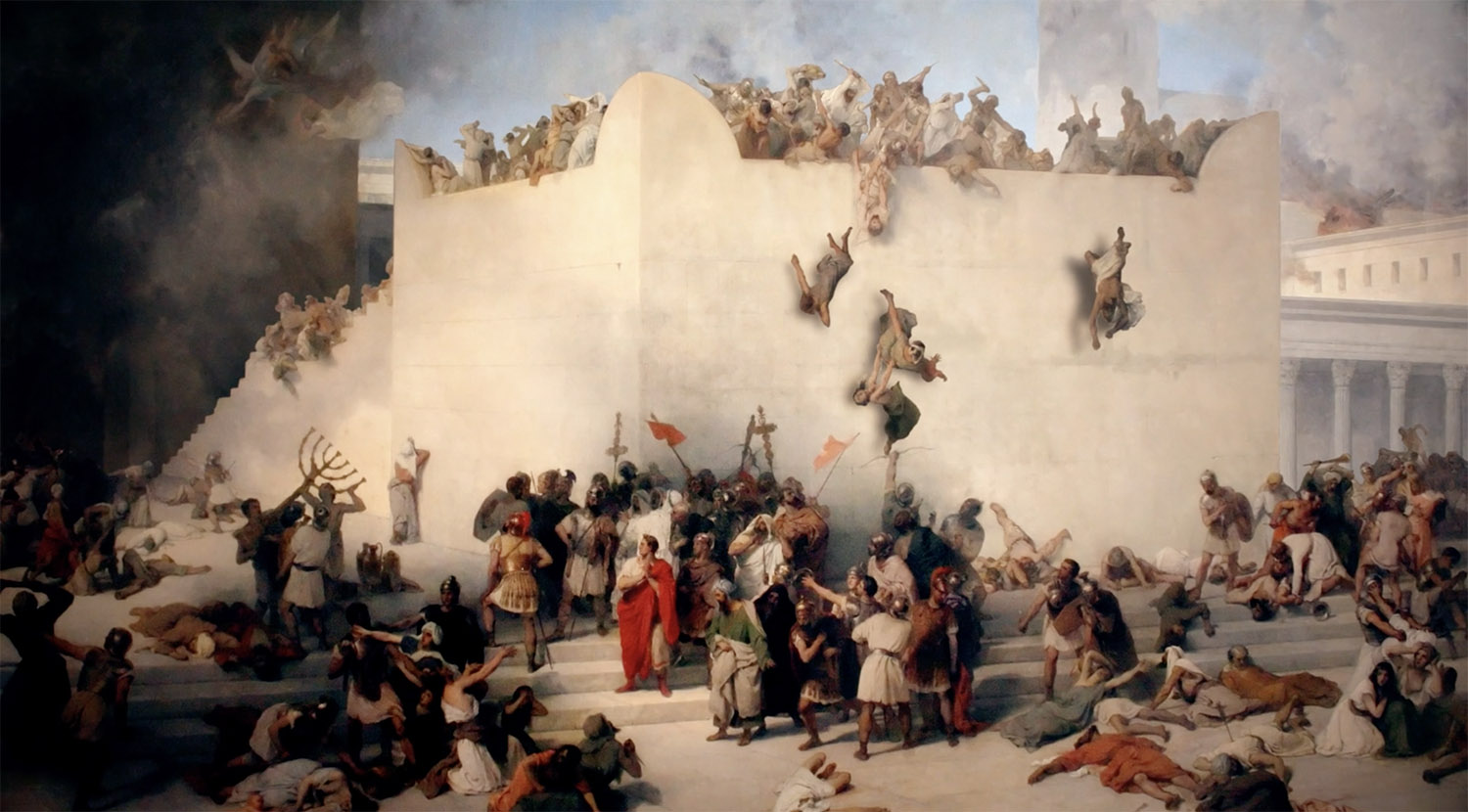
Whatever the circumstances, the Second Temple was destroyed by fire during the Roman capture of Jerusalem. The destruction was an enormous event in Jewish history. The Temple had stood at the center of Jewish religious life for centuries, and its destruction permanently changed the religious landscape of the region.
The Romans continued fighting through the city after the Temple’s destruction. Jerusalem’s remaining defenders were gradually overwhelmed as Roman forces gained control of more areas. The city’s defensive system had been broken, and organized resistance inside Jerusalem was collapsing.
The Romans then began taking control of the city’s important buildings and positions. Large parts of Jerusalem were destroyed, although not every structure disappeared. Some major buildings and sections of the city survived the siege.
The fall of Jerusalem was a major victory for the Roman Empire. Titus had succeeded in capturing the most important remaining center of the Jewish revolt, greatly weakening organized resistance in Judaea. The Roman victory was later celebrated in Rome, including through the construction of the Arch of Titus, which famously depicts Roman soldiers carrying objects from the Temple.
The destruction of the Temple also had consequences far beyond the immediate military victory. Jewish communities throughout the Mediterranean world had to adapt to the loss of the Temple as the central sanctuary of Judaism. Over time, Jewish religious life developed in new directions, with greater importance placed on synagogues, religious teachers, and the study of Jewish law and tradition.
However, the war itself was not completely finished with the fall of Jerusalem. Some Jewish strongholds continued resisting Roman rule, most famously Masada, which remained in rebel hands until approximately 73 or 74 AD.
The capture of Jerusalem therefore represented the decisive turning point of the First Jewish-Roman War. Rome had destroyed the strongest center of resistance, captured the city, and demonstrated the enormous power of its legions and siege engineering.
For Jerusalem, however, the consequences were devastating. The destruction of the Second Temple became one of the defining events of Jewish history, while the Roman victory permanently changed the political and religious history of the region.
Main Ideas
- Roman forces fought their way toward the Second Temple during the final stages of the siege.
- The Second Temple was destroyed by fire during the Roman capture of Jerusalem.
- Much of Jerusalem was destroyed or damaged as Roman forces took control of the city.
- Titus became associated with the Roman victory, which was later commemorated by the Arch of Titus.
- The fall of Jerusalem was a decisive turning point in the First Jewish-Roman War, although resistance continued elsewhere.
VII. What Happened to Jerusalem After the Roman Siege
After the Roman capture of Jerusalem in 70 AD, the city entered a completely different period of its history. The siege had left large parts of Jerusalem damaged or destroyed, the Second Temple had been destroyed, and many of the city’s inhabitants had been killed, captured, or displaced. Roman soldiers now controlled the city, and the rebellion that had made Jerusalem the center of resistance had been largely crushed.
The Roman victory was followed by the removal of enormous quantities of war spoils. Some of the most important objects taken from the Temple were eventually brought to Rome. These included the famous Menorah, which was later represented on the Arch of Titus. The monument, built in Rome after the war, celebrated the Roman victory and remains one of the best-known surviving reminders of the capture of Jerusalem.
Jerusalem itself remained under Roman military control. A Roman legion was stationed in or near the city, helping maintain order and prevent another large-scale rebellion. The destruction of the Temple also meant that Jerusalem’s role in Jewish religious life changed dramatically.
The Second Temple had been the central sanctuary of Judaism, and its destruction created a major turning point. Jewish communities throughout the Roman world had to adapt to religious life without the Temple. Over the following centuries, Jewish religious traditions increasingly developed around synagogues, rabbis, religious study, prayer, and Jewish law.
The fall of Jerusalem also had a major effect on the wider province. Although the city had fallen, the war was not immediately finished. Jewish resistance continued at several strongholds, most famously Masada, where rebels held out against the Romans until approximately 73 or 74 AD.
Rome eventually restored its authority across Judaea. The province became more heavily controlled by the Roman government, and the rebellion had demonstrated the consequences of challenging Roman rule. The Roman military presence remained an important part of maintaining order in the region.
For the people who survived the war, the consequences were significant. Some were taken away as prisoners, while others remained in the region or moved elsewhere. Jewish communities also continued to exist throughout Judaea and across the wider Roman Empire.
Jerusalem itself did not simply disappear after 70 AD. The city continued to exist under Roman rule and remained an important location. Over the following centuries, its population, buildings, political status, and religious importance would continue to change.
The siege therefore had consequences that lasted far beyond the military victory of Titus. The destruction of the Temple became one of the defining events of Jewish history, while the Roman victory strengthened imperial control over Judaea.
The Siege of Jerusalem also demonstrated the power of the Roman military. Rome had brought several legions, enormous resources, and advanced siege techniques against a heavily fortified city. After months of fighting, the Roman army had eventually broken through Jerusalem’s defenses.
The events of 70 AD remain historically important because they connected Roman military expansion, Jewish resistance, religion, politics, and the development of the ancient Mediterranean world. The fall of Jerusalem did not end the history of the city or its people. Instead, it marked the beginning of a new and very different chapter.
Main Ideas
- Jerusalem came under Roman control after the siege of 70 AD.
- The Second Temple was destroyed, fundamentally changing Jewish religious life.
- Roman soldiers took important Temple treasures, including the Menorah depicted on the Arch of Titus.
- Jewish resistance continued after Jerusalem’s fall, most famously at Masada.
- The siege became a major turning point in the history of Jerusalem, Judaism, and the Roman Empire.