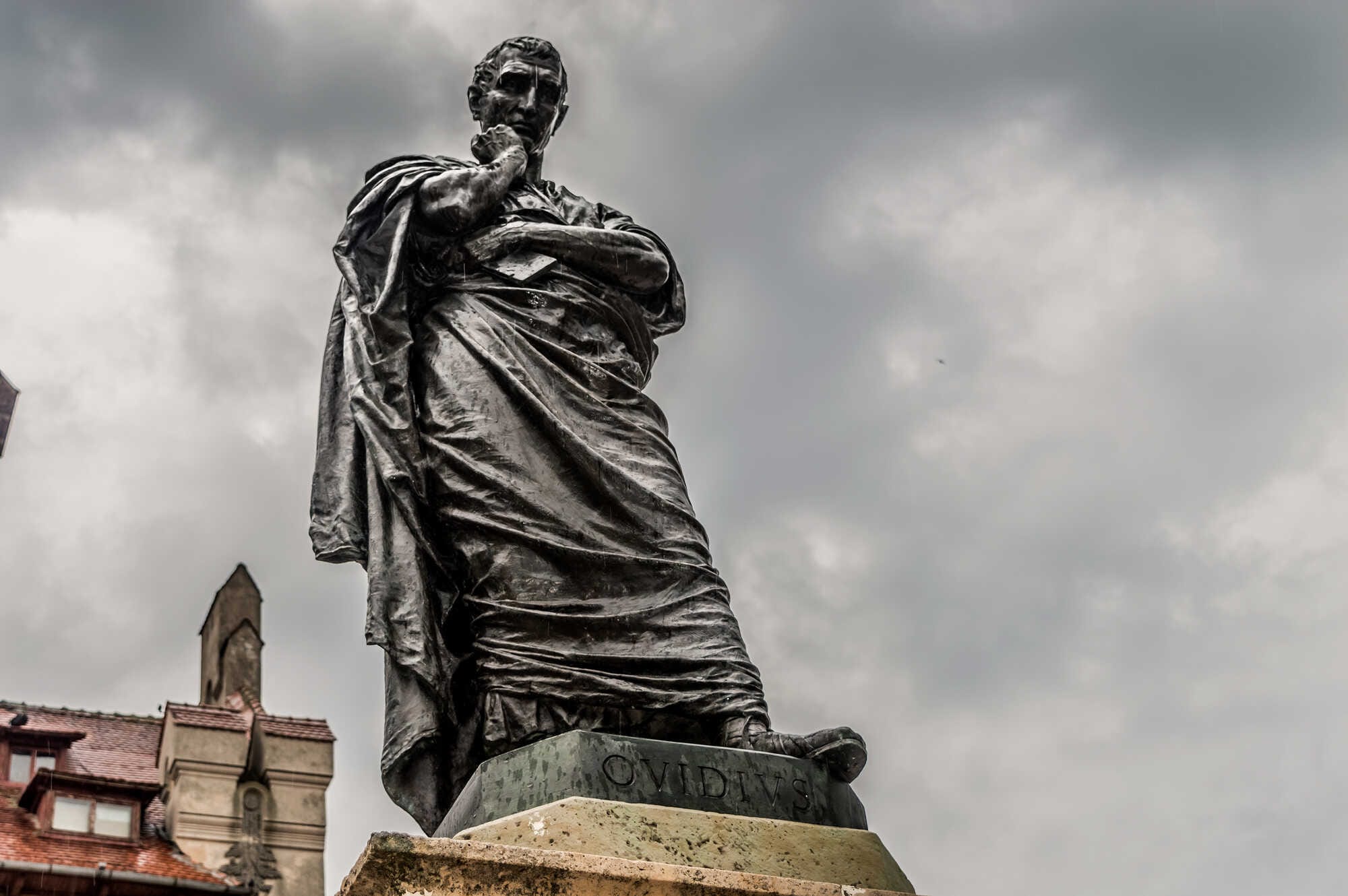
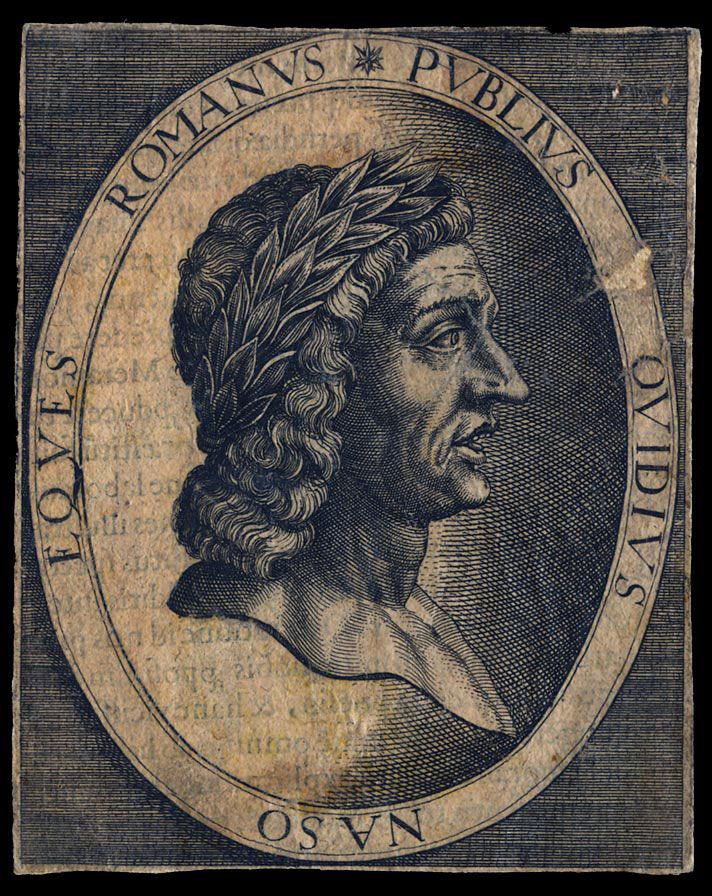
Ovid was one of the most famous and influential poets of ancient Rome. Born as Publius Ovidius Naso in 43 BC, he lived during a major turning point in Roman history, when the Roman Republic had collapsed and Augustus was establishing the Roman Empire. Ovid became famous for his imaginative writing about love, mythology, transformation, human behavior, and the complicated lives of gods and heroes.
Unlike Roman writers who mainly focused on war, politics, or military achievements, Ovid explored subjects that were often more personal and entertaining. His poetry could be humorous, dramatic, clever, and provocative, making him one of the most distinctive writers of the Augustan period. His ability to tell stories and create memorable characters helped make his works popular during his lifetime and influential for centuries afterward.
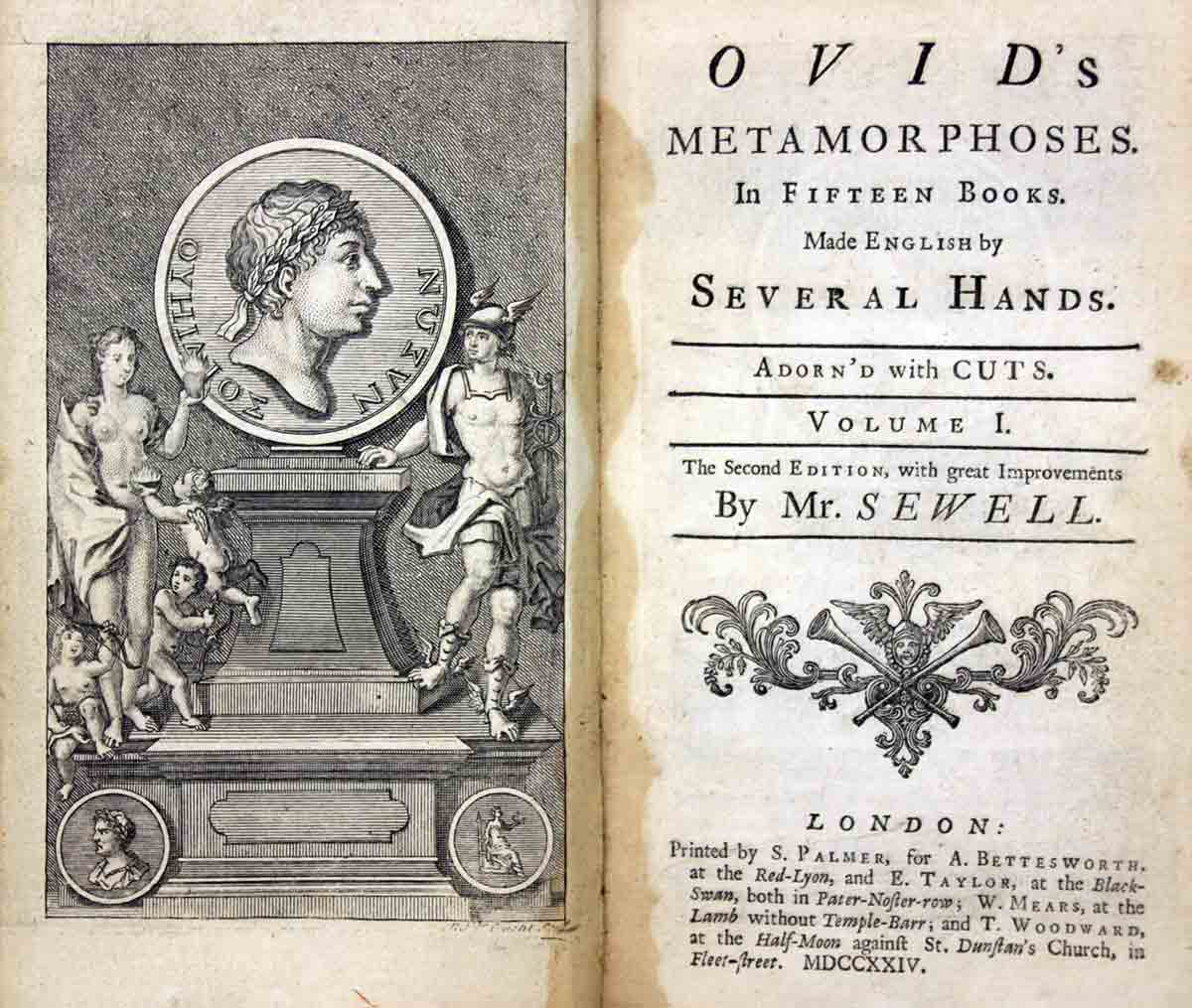
Ovid’s greatest work was the Metamorphoses, a massive poem containing hundreds of stories involving gods, heroes, monsters, and ordinary people. The stories are connected by the theme of transformation, with characters frequently being changed into animals, plants, stones, stars, or other forms. Ovid drew heavily from Greek and Roman mythology, but he retold these traditional stories with his own style and perspective.
Ovid also became famous for his love poetry. Works such as the Amores and Ars Amatoria explored romance, attraction, relationships, and the behavior of people in love. His playful approach to these subjects was particularly interesting because he was writing during the reign of Augustus, who was promoting traditional Roman values surrounding marriage, family, and morality.
In AD 8, Ovid’s life changed dramatically when Augustus ordered him to leave Rome and live in exile at Tomis, a distant settlement on the Black Sea. Ovid later described the reason for his exile with the phrase carmen et error, meaning “a poem and a mistake.” However, he never clearly explained what the mistake was. As a result, historians still debate exactly what happened.
Ovid continued writing during his years in exile, producing poems that expressed his feelings about Rome, separation, loneliness, and life far from his homeland. He never returned to Rome and died around AD 17.
His influence, however, continued to grow after his death. The stories in the Metamorphoses became an enormous source of inspiration for European writers, artists, poets, and scholars. Many famous works of later literature and art drew directly or indirectly from Ovid’s stories.
Ovid’s life therefore gives us an extraordinary look into Roman literature under Augustus. His works reveal how Roman writers explored mythology, love, society, and human nature, while his mysterious exile shows the complicated relationship between literature and political power in the early Roman Empire.
I. Who Was Ovid and How Did He Become a Famous Roman Poet?
Ovid, whose full name was Publius Ovidius Naso, was born in 43 BC in the town of Sulmo, east of Rome. He came from a wealthy family and was given a strong education, especially in rhetoric, literature, and public speaking. His family expected him to have a successful career in government, but Ovid was more interested in poetry.
As a young man, Ovid traveled to Athens, an important center of Greek education and culture. He also spent time traveling around the Mediterranean before returning to Rome. His education exposed him to both Greek literature and the traditions of Roman writing, which later became important influences on his poetry.
Ovid eventually became part of Rome’s literary world during the reign of Augustus. Rome at this time was experiencing major political and cultural changes. Augustus was presenting himself as the leader who had restored order after years of civil war, while also encouraging traditional Roman values, including marriage, family, and religious traditions.
Ovid’s poetry was very different from the serious political and patriotic writing associated with some other poets of the Augustan Age. He became especially famous for writing about love, relationships, mythology, and human emotions. His writing was often playful and imaginative, and he enjoyed exploring complicated situations from different points of view.
One of his earliest major works was the Amores, a collection of poems about love. Ovid’s success with love poetry helped establish his reputation among Roman readers. He later wrote the Ars Amatoria, a playful poem about relationships and romance. The work became extremely famous, but its subject matter would later become important when considering Ovid’s relationship with Augustus and the emperor’s moral reforms.
Ovid’s greatest achievement came with the Metamorphoses. Written in Latin hexameter and divided into 15 books, the poem brought together hundreds of stories from Greek and Roman mythology. Instead of simply repeating traditional myths, Ovid transformed them through his own storytelling style.
His ability to create dramatic stories, memorable characters, and descriptions of transformation made him one of the most recognizable Roman poets. His work was also accessible to readers because it combined serious themes with humor, romance, tragedy, and adventure.
However, Ovid’s success did not protect him from political consequences. In AD 8, Augustus ordered him into exile at Tomis on the Black Sea. Ovid later described the reason as carmen et error — “a poem and a mistake.” The exact meaning of the phrase remains uncertain.
Even though Ovid died in exile around AD 17, his reputation continued to grow. His stories became some of the most influential works of Roman literature, inspiring writers and artists for many centuries.
Main Ideas
- Ovid was born in 43 BC in Sulmo.
- He received an advanced education in rhetoric and literature.
- He became famous for love poetry and mythology.
- His greatest work was the 15-book Metamorphoses.
- Augustus later sent Ovid into exile at Tomis, for reasons that remain uncertain.
II. The Metamorphoses: Ovid’s Greatest Work of Roman Literature
The Metamorphoses is Ovid’s most famous work and one of the most important surviving pieces of Roman literature. Written during the reign of Augustus, the poem contains 15 books and tells hundreds of stories connected by one major idea: transformation.
The Latin word metamorphosis means a change of form or shape, and transformation appears throughout Ovid’s stories. Gods, heroes, lovers, monsters, and ordinary people can be transformed into animals, plants, stones, stars, or other forms. These changes are often caused by love, anger, punishment, revenge, jealousy, or the actions of the gods.
Rather than telling one single story, the Metamorphoses connects many different Greek and Roman myths together. Stories involving famous figures such as Apollo, Daphne, Narcissus, Phaethon, Orpheus, Perseus, and Hercules appear throughout the poem. Ovid uses these stories to explore emotions and experiences that were familiar to Roman readers, including love, ambition, fear, loss, pride, and revenge.
One of the most interesting features of the Metamorphoses is the way Ovid reworked older myths. Many of the stories existed long before Ovid wrote them down. Greek poets and storytellers had already developed numerous legends about the gods and heroes. Ovid took these traditional stories and gave them a distinctly Roman literary form, adding detailed descriptions, dramatic speeches, humor, and emotional depth.
The poem also moves through a huge period of mythological history. It begins with the creation of the world and continues through generations of gods and heroes before eventually reaching stories connected with Roman history. Near the end, Ovid includes the legendary history of Rome and figures associated with the Roman past.
The Metamorphoses was written in dactylic hexameter, the same poetic meter traditionally associated with major epic poetry. This helped Ovid present his collection of myths as a major epic poem, even though his style was often more playful and emotionally focused than earlier epic writers such as Virgil.
The work became enormously influential after Ovid’s death. During the Middle Ages and Renaissance, writers and artists repeatedly used stories from the Metamorphoses as inspiration. Paintings, sculptures, poems, and later literary works frequently depicted characters and transformations originally told by Ovid.
Because of this influence, the Metamorphoses became much more than an ancient Roman poem. It became one of the major ways that Greek and Roman mythology was preserved and transmitted to later generations.
Main Ideas
- Metamorphoses is Ovid’s most famous work.
- It contains 15 books and hundreds of mythological stories.
- Transformation is the central theme of the poem.
- Ovid reworked traditional Greek and Roman myths in his own style.
- The poem became enormously influential in European literature and art.
IV. Ovid, Love Poetry, and Roman Society
Before Ovid became famous for the Metamorphoses, he had already built his reputation through love poetry. His works about romance became extremely popular in Augustan Rome, giving him a very different literary identity from writers who concentrated mainly on war, politics, and Roman military achievements.
One of Ovid’s earliest important works was the Amores, a collection of poems about love and relationships. Instead of presenting love as a simple or noble emotion, Ovid often treated it as complicated, humorous, unpredictable, and sometimes frustrating. His poems explored attraction, jealousy, desire, arguments, separation, and reconciliation.
Ovid later wrote the Ars Amatoria, usually translated as The Art of Love. The poem was presented almost like a guide to romance, with Ovid taking the role of a teacher explaining the behavior of people involved in relationships. His approach was often playful and ironic, and he treated romantic relationships as a subject that could be examined through poetry.
This was particularly interesting because Ovid lived under Augustus, who was promoting traditional Roman ideas about marriage, family, and morality. Augustus introduced a series of laws and policies intended to encourage marriage and legitimate childbirth while discouraging certain forms of sexual behavior. These reforms were part of a broader attempt to promote what the emperor considered traditional Roman values.
Ovid’s poetry did not necessarily fit comfortably with this moral program. His writing focused heavily on romance, relationships, and personal pleasure, rather than presenting marriage and family life as the central responsibilities of Roman citizens.
This does not mean that Ovid was openly declaring himself an enemy of Augustus. The relationship between his poetry and Augustan moral policy is more complicated. Ovid was a poet who enjoyed playing with traditional ideas, and scholars continue to debate how seriously his works should be interpreted as criticism of Augustan society.
His situation became especially important in AD 8, when Augustus ordered Ovid to leave Rome and live in exile at Tomis, on the western shore of the Black Sea. Ovid later wrote that the reason was carmen et error, meaning “a poem and a mistake.”
Because Ovid never clearly explained what the “mistake” was, historians cannot be completely certain why Augustus punished him. The Ars Amatoria has often been connected with the exile because of its subject matter, but Ovid’s own statement suggests that there was more than simply a poem involved.
Ovid’s love poetry also provides historians with a useful window into Roman society. His poems reveal how educated Romans could discuss relationships, attraction, reputation, marriage, and social expectations. However, his poetry should not be treated as a perfect description of everyday Roman life. It was literature, often deliberately exaggerated and written for entertainment.
The popularity of Ovid’s love poetry shows that Roman audiences were interested in stories about personal relationships and human emotions, even during a period when Augustus was emphasizing traditional public values.
Ovid therefore became an unusual figure in Augustan literature. His poetry could entertain readers while also raising questions about love, morality, society, and individual freedom. His later exile made these questions even more significant, turning Ovid’s personal story into one of the most famous examples of the complicated relationship between Roman writers and imperial power.
Main Ideas
- Ovid became famous through love poetry before writing the Metamorphoses.
- The Amores explored love, relationships, jealousy, and human emotions.
- The Ars Amatoria presented romance in a playful and unconventional way.
- Ovid’s poetry existed alongside Augustus’s moral reforms.
- His love poetry and later exile created an important connection between literature, society, and imperial power.
V. Why Did Augustus Send Ovid Into Exile?
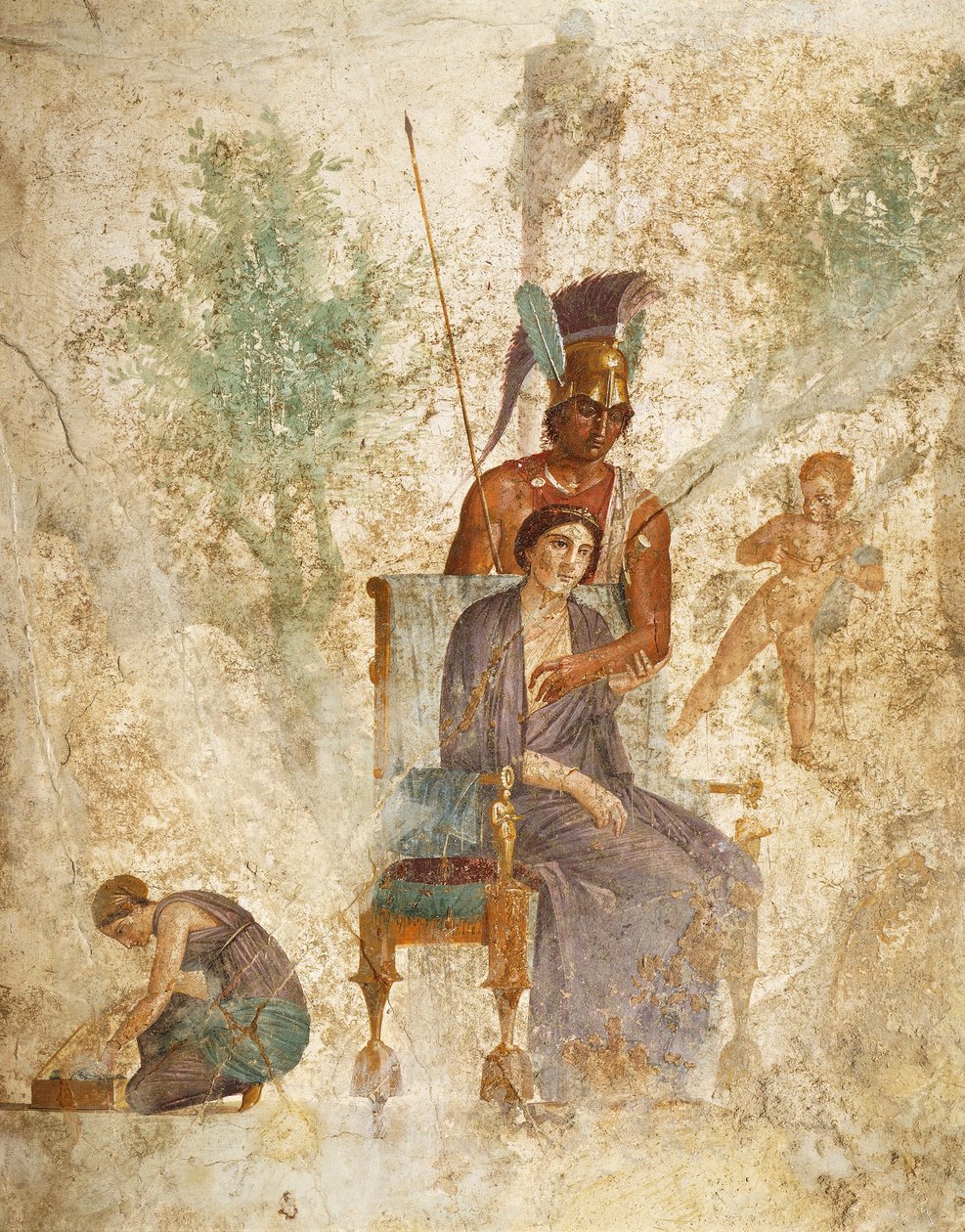
In AD 8, Ovid’s life changed dramatically when Augustus, the first Roman emperor, ordered him to leave Rome and live in exile at Tomis, a distant city on the western coast of the Black Sea. Ovid was not put on trial in the normal way, and the exact reason for his punishment remains one of the great mysteries surrounding his life.
Ovid himself provided only a short explanation. In his later poems, especially the Tristia, he described the cause of his exile as “carmen et error,” meaning “a poem and a mistake.” The phrase has created centuries of debate because Ovid never clearly explained what he meant by the word error.
The “poem” is often connected with his Ars Amatoria. The work discussed love and relationships in a playful way, and this could appear uncomfortable alongside Augustus’s attempts to promote traditional Roman morality. Augustus had introduced laws encouraging marriage and family life and discouraging certain behaviors that he believed threatened traditional Roman values.
However, it would be too simple to say that Ovid was exiled only because he wrote the Ars Amatoria. The poem had already been available for several years before Ovid was sent away. Ovid’s own description of “a poem and a mistake” suggests that another incident was involved.
The nature of this mistake is unknown. Ovid never gave his readers a complete explanation, perhaps because he did not want to reveal information that could create even greater problems for himself. As a result, historians have proposed different interpretations, but there is no surviving evidence that provides a definite answer.
Ovid also described his exile as being ordered by Augustus personally. This is important because it shows the enormous power held by the emperor. Augustus could determine the fate of an important literary figure without the kind of public trial that modern societies would normally expect.
Tomis was also a major change from Ovid’s comfortable life in Rome. He was sent thousands of kilometers away to a frontier region of the Roman world, far from the city where he had built his literary career and social connections.
After Augustus died in AD 14, Ovid still remained in exile. This suggests that his punishment was not automatically cancelled when Augustus’s reign ended. Ovid continued to write poems asking for his situation to be reconsidered, but he never returned to Rome.
His exile became an important part of his literary legacy. In works such as the Tristia and Epistulae ex Ponto, Ovid wrote about separation, homesickness, Rome, and his desire to return. These poems give historians valuable evidence about how Ovid experienced his punishment, although they remain literary works and should not be treated as completely objective accounts.
The exact reason for Ovid’s exile therefore remains uncertain. What is certain is that his punishment permanently changed his life and became one of the most famous examples of the complicated relationship between literature and imperial authority in Ancient Rome.
Main Ideas
- Augustus exiled Ovid in AD 8.
- Ovid was sent to Tomis on the Black Sea.
- He described the cause as “a poem and a mistake.”
- The exact meaning of the “mistake” remains unknown.
- Ovid spent his remaining years in exile, writing about Rome and his separation from home.
VI. Ovid’s Life in Exile and His Final Years
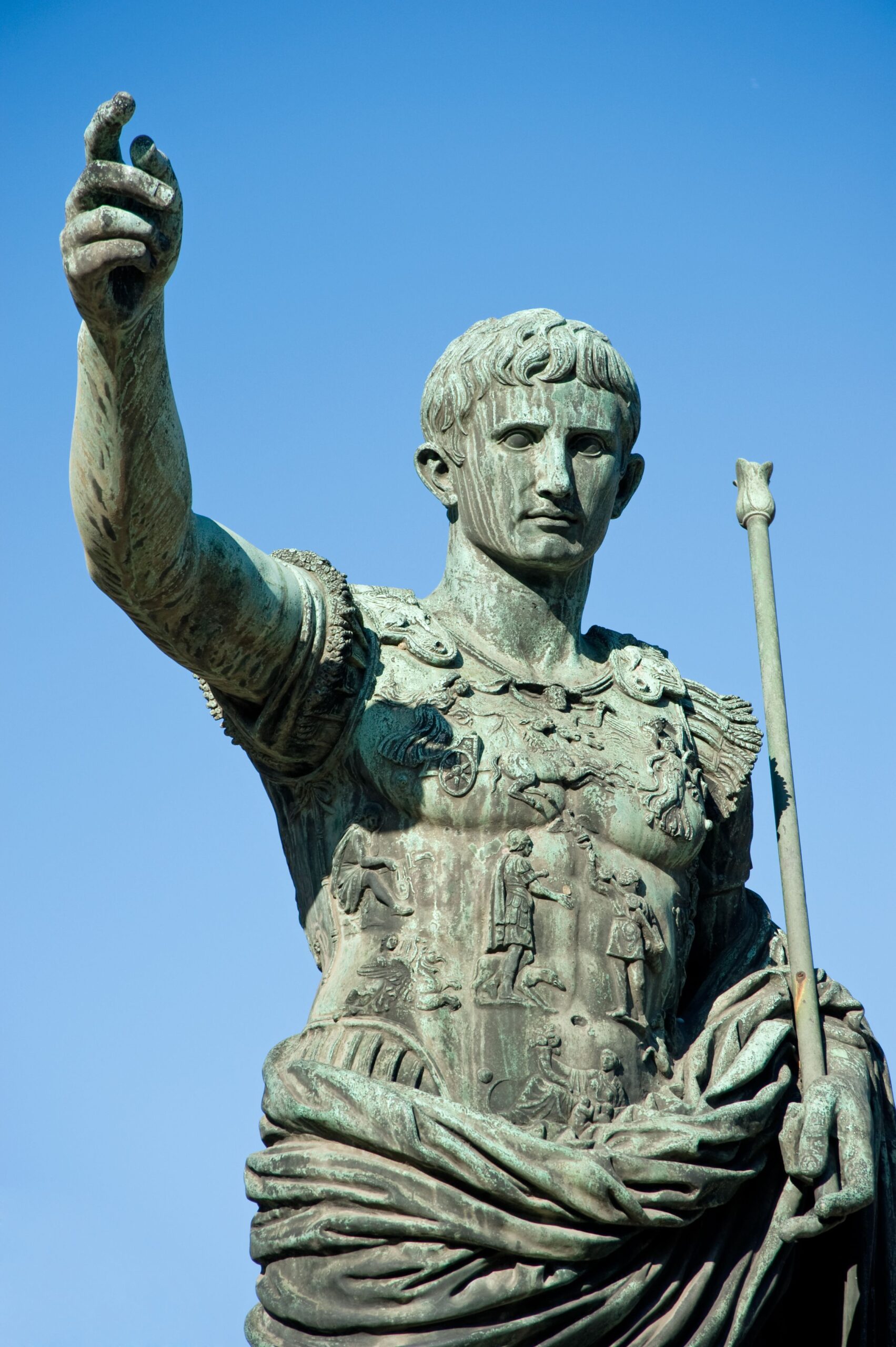
After Augustus ordered Ovid into exile in AD 8, the poet was forced to leave the city where he had spent most of his adult life. He was sent to Tomis, a settlement on the western coast of the Black Sea, in a region that was far from the cultural and literary world of Rome.
For Ovid, the journey to Tomis represented a dramatic change in his life. He had been a successful and well-connected poet in Rome, surrounded by other writers and members of Roman society. In exile, he was separated from his friends, family, literary circles, and familiar Roman environment.
Ovid wrote extensively about his experiences in exile. His most important works from this period include the Tristia, meaning Sorrows, and the Epistulae ex Ponto, meaning Letters from the Black Sea. These poems are very different in tone from some of his earlier playful love poetry.
In the Tristia, Ovid repeatedly expressed his homesickness and sadness about being separated from Rome. He wrote about the difficulties of living far from his homeland and repeatedly appealed for his situation to be reconsidered.
The Black Sea region also felt very different from the world Ovid had known. Tomis was located on the edge of the Roman world and was surrounded by peoples and cultures unfamiliar to the Roman poet. Ovid described the harsh conditions of the region in his poetry, although historians must remember that these descriptions were part of his literary presentation of exile.
Ovid also continued trying to maintain connections with people in Rome. His poems were addressed to friends and influential individuals, and some asked readers to help improve his situation. He hoped that his punishment might eventually be reduced or that he would be allowed to return to Rome.
However, Augustus died in AD 14, and Ovid still remained in exile. The new emperor, Tiberius, did not allow him to return. Ovid therefore spent the final years of his life at Tomis.
During this period, Ovid continued to write despite his difficult circumstances. His poetry became increasingly focused on exile, memory, loneliness, and his connection to Rome. These works are important because they provide a personal perspective on what exile could mean for a Roman intellectual.
Ovid eventually died in Tomis around AD 17, although some sources give AD 18 as a possible date. Unlike many famous Roman figures, he never returned to Rome.
His final years therefore had a major influence on how later generations remembered him. Ovid was not only the author of the Metamorphoses and famous love poetry; he also became known as the Roman poet who spent his final years in exile.
His poems from Tomis preserved his memories of Rome and ensured that his voice survived long after his death. Ironically, although exile removed Ovid from the city he loved, his writing about that separation helped make his personal story an important part of Roman literary history.
Main Ideas
- Ovid was exiled to Tomis in AD 8.
- He wrote the Tristia and Epistulae ex Ponto during exile.
- His later poetry focused on homesickness, loneliness, and separation from Rome.
- Ovid remained in exile even after Augustus died in AD 14.
- He died at Tomis around AD 17, without returning to Rome.
VII. Ovid’s Legacy and Why His Literature Still Matters Today
Ovid’s influence did not end when he died in Tomis around AD 17. His works survived for centuries and eventually became some of the most influential pieces of classical literature. His stories, characters, and ideas continued to appear in European literature, painting, sculpture, theater, and education.
The most important part of Ovid’s legacy is the Metamorphoses. Because the poem contains hundreds of stories from Greek and Roman mythology, it became an important source for later generations who wanted to learn about the ancient mythological world. Many people encountered stories about Apollo and Daphne, Narcissus, Orpheus, Perseus, Pygmalion, and other famous figures through Ovid’s version of their stories.
During the Middle Ages, Ovid’s works continued to circulate among educated Europeans. Medieval writers sometimes interpreted his stories differently from the way ancient Romans had understood them. His myths could be treated as stories containing moral lessons, symbolism, or examples of human behavior.
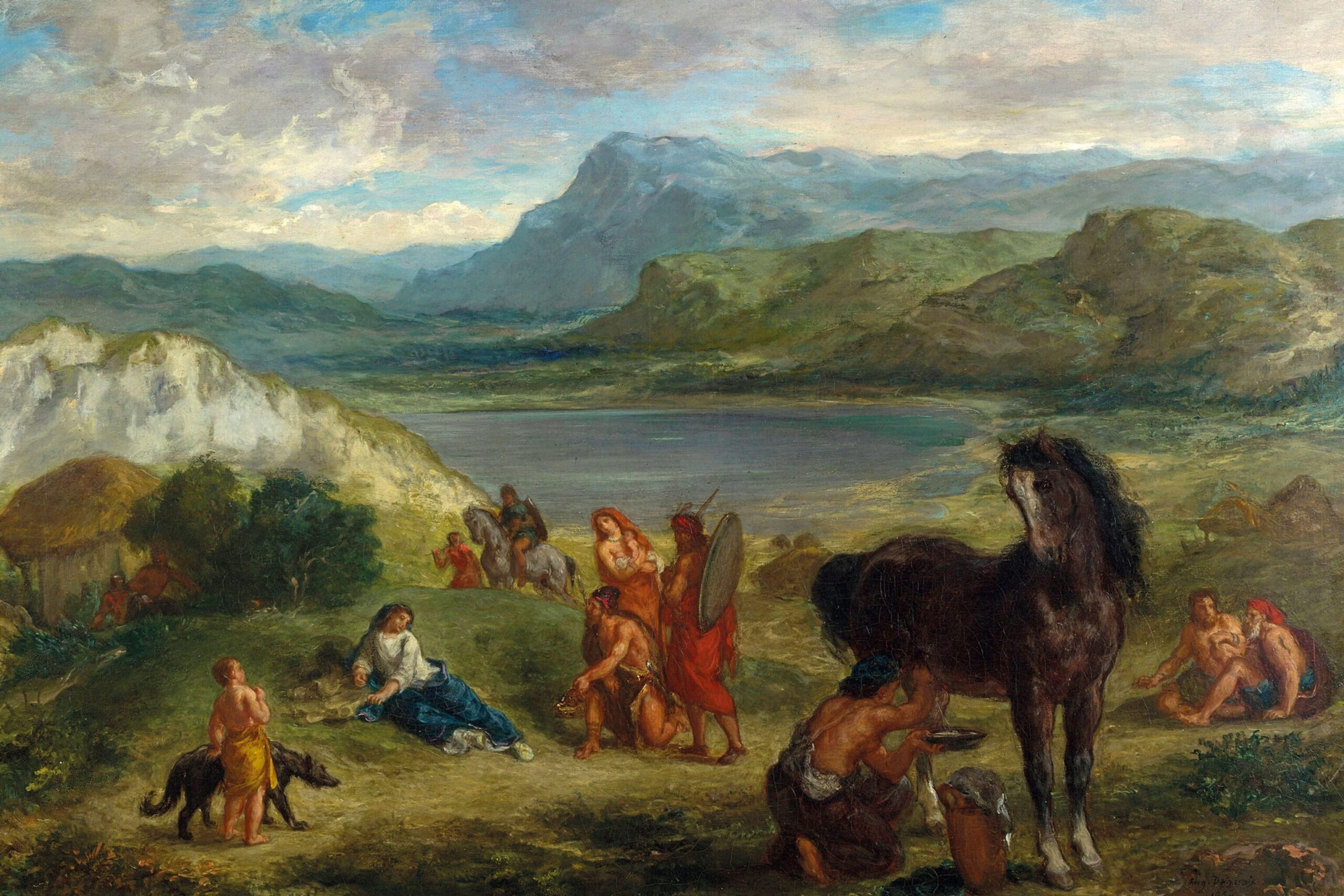
Ovid became even more influential during the Renaissance, when European artists and writers became increasingly interested in the literature and art of ancient Greece and Rome. Artists used scenes from the Metamorphoses as subjects for paintings and sculptures. Ovid’s stories provided artists with dramatic scenes involving gods, heroes, love, transformation, and conflict.
His influence also reached famous writers. Authors such as William Shakespeare and other European poets were familiar with classical mythology, and Ovid’s works became an important part of the literary tradition they inherited. His storytelling style helped keep ancient myths alive while allowing later writers to reinterpret them for their own audiences.
Ovid’s love poetry also remained significant. Works such as the Amores demonstrated how Roman poetry could explore personal emotions, relationships, attraction, and human behavior. His writing showed that Roman literature was not limited to military victories, political speeches, or heroic stories.
His exile also became an important part of his legacy. The Tristia and Epistulae ex Ponto gave later readers a personal perspective on Roman exile and separation from home. Ovid’s experience also illustrates how complicated the relationship between a writer and political authority could become in the Roman Empire.
At the same time, Ovid should not simply be remembered as a poet who was “against Augustus.” The exact reason for his exile remains uncertain, and his surviving works do not provide a complete explanation. What can be said with confidence is that his career shows the tension that could exist between creative literature and the values promoted by imperial government.
Ovid’s greatest achievement was his ability to take ancient stories and make them feel new. He transformed familiar myths into stories filled with emotion, humor, drama, and memorable characters. His fascination with change and transformation also gave his work a theme that remained understandable to readers long after the Roman Empire disappeared.
Today, Ovid remains one of the most studied Roman poets. The Metamorphoses continues to be translated, studied, illustrated, and discussed around the world. His works have helped preserve countless stories from the classical world, making sure that myths created thousands of years ago remain part of modern literature and culture.
Ovid’s legacy therefore extends far beyond his own lifetime. He was a major poet of Augustan Rome, a master of mythology and storytelling, and a writer whose works connected ancient Greek traditions with Roman literature. His exile became part of his story, but his greatest legacy remains the extraordinary influence of his poetry.
Main Ideas
- Ovid became one of the most influential writers of classical literature.
- The Metamorphoses preserved and reshaped hundreds of Greek and Roman myths.
- His works influenced Renaissance artists and later European writers.
- His poetry explored love, transformation, emotions, and human behavior.
- Ovid’s literature continues to influence writers, artists, students, and scholars today.