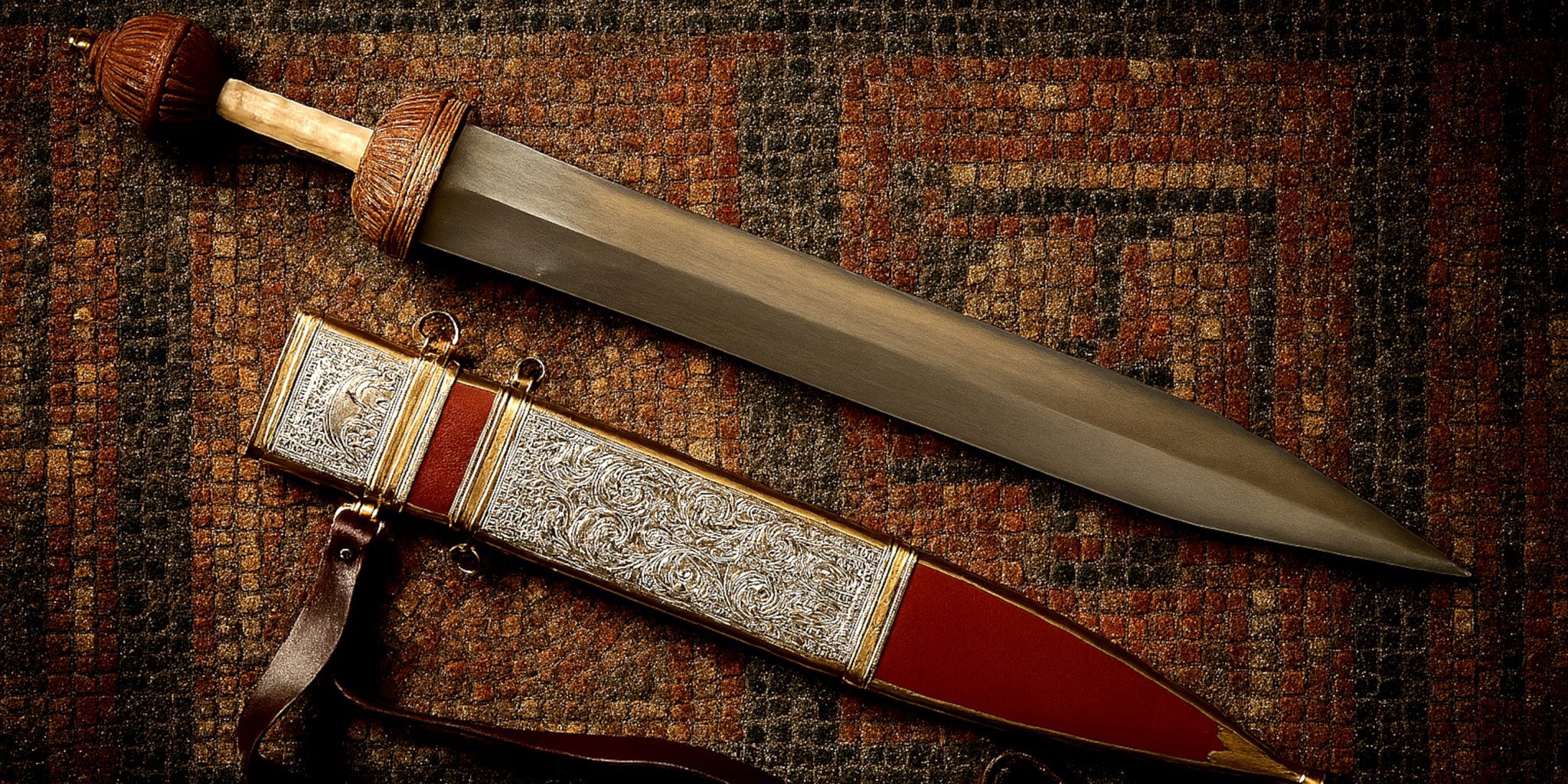
A Roman sword may look like a relatively simple object, but producing one required a huge network of natural resources, workers, mines, forests, workshops, roads, rivers, and military supply systems. Long before a Roman legionary received his sword, its materials had already travelled through several stages of the Roman economy.
The process began with raw materials. The most important was iron, which came from deposits located throughout the Roman Empire. Regions such as Hispania, Noricum, Gaul, and Britannia became important centers of iron production at different times. Miners extracted iron-bearing ore from the ground, while other workers processed the material so that it could eventually become usable metal.
Iron production also depended on another essential resource: wood. Roman metalworkers needed enormous quantities of charcoal as fuel for their furnaces. This meant that forests were an important part of the supply chain. Timber had to be cut, transported, and converted into charcoal before it could support large-scale metal production.
Once materials had been extracted and processed, they had to be moved across the Empire. This could involve carts and pack animals on Roman roads, barges traveling along rivers, or ships crossing the Mediterranean and other seas. Moving heavy materials over long distances was expensive and required an organized transportation network.
Eventually, the materials reached metalworking centers and military workshops, where specialist craftsmen produced and repaired military equipment. The Roman army maintained enormous quantities of equipment, meaning that swords existed within a much larger system that also supplied shields, helmets, armor, tools, nails, and other necessities.
The sword itself also required materials besides iron. Its hilt, grip, scabbard, and fittings could involve wood, leather, bone, bronze, and other materials. These resources did not necessarily come from the same place as the iron, meaning that a single finished sword could represent materials originating from several different parts of the Empire.
The final stage was military distribution. Finished equipment had to reach soldiers stationed across the Roman world, from frontier forts along the Rhine and Danube to armies in Britain, Hispania, North Africa, Syria, and beyond. Warehouses, military bases, roads, rivers, and ports all helped keep this system functioning.
This series will follow the entire journey of a Roman sword: where its materials came from, how they were extracted and processed, how they were transported, where craftsmen worked, and how the finished equipment eventually reached Roman soldiers.
Rather than focusing mainly on the technical details of forging a blade, the goal is to understand the much bigger story behind it: the enormous Roman economic and logistical system that made the production and distribution of military equipment possible.
I. Where Did the Romans Get the Iron for Their Swords?
The first stage in producing a Roman sword began long before a blacksmith entered his workshop. The Romans first needed access to a reliable supply of iron ore, the raw material from which usable iron could eventually be produced. Because the Roman Empire controlled enormous territories, iron resources could be found in many different provinces, allowing the Roman military and civilian economy to draw supplies from several regions.
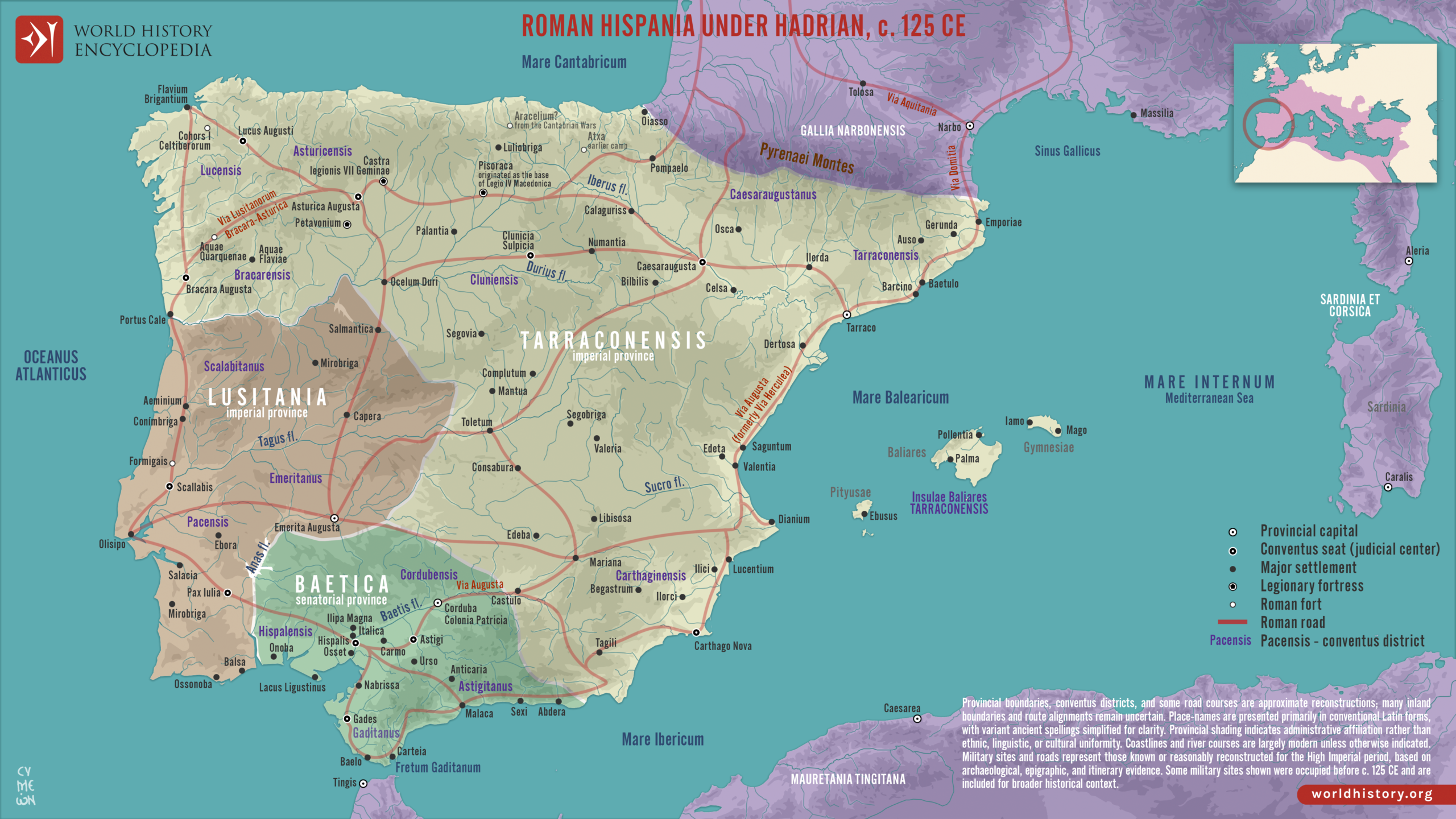
One particularly important area was Hispania, especially parts of the Iberian Peninsula that were rich in mineral resources. The Romans exploited Hispania extensively after conquering the region, extracting iron, silver, copper, lead, and other minerals. Mining became an important part of the provincial economy, and some mining areas were connected to roads, settlements, and ports that allowed their products to be transported elsewhere.
Another famous iron-producing region was Noricum, roughly covering parts of modern Austria and surrounding areas. Roman writers associated Noricum with high-quality iron, and its resources became particularly valuable to the Roman economy. The region’s location near the Alps also connected it to important routes leading toward northern Italy and the Danube frontier.
Iron was also produced in Gaul and Britannia. After the Roman conquest of Britain, iron production expanded in several areas, particularly in the western and southern parts of the province. Archaeological remains of furnaces, slag, and other industrial evidence show that ironworking could take place on a significant scale.
However, it is important to understand that there was not one single Roman “sword mine.” Iron ore was extracted from many different mining regions, and the source of a particular sword could vary depending on its date, location, and the supply network serving the army that received it.
Mining itself required substantial organization. Workers had to identify suitable deposits, remove the ore, transport it out of the extraction area, and prepare it for further processing. In some places, mining was connected with large settlements where workers, craftsmen, administrators, merchants, and transporters supported the industry.
The Roman state was heavily interested in mineral resources because metals were essential to the army and economy. Iron was needed not only for swords but also for spearheads, tools, nails, armor components, agricultural equipment, carts, construction materials, and countless everyday objects.
This meant that the demand for iron was enormous. A legion did not simply need swords. Soldiers also required equipment for building forts, maintaining roads, preparing food, repairing vehicles, and carrying out military operations. Iron therefore formed part of the basic infrastructure of Roman power.
The location of mines mattered because transportation was expensive. Moving heavy quantities of raw ore over long distances by cart could be difficult, so Roman producers often processed materials to some extent near their source before transporting them farther. Rivers were especially valuable because boats could carry much heavier loads than individual pack animals or carts.
From mining regions, iron products could therefore move toward regional workshops, cities, military bases, and ports. Some materials traveled over Roman roads, while others could move along rivers and eventually enter the Mediterranean shipping network.
The most important point is that the iron in a Roman sword was the product of a large supply chain. Before the blade existed, miners had already extracted resources from the ground, workers had processed them, and transporters had moved them toward the workshops where craftsmen could turn the material into military equipment.
Main Ideas
- Hispania was one of Rome’s important mineral-producing regions
- Noricum became famous for high-quality iron
- Iron was also produced in Gaul and Britannia
- Iron was needed for weapons, tools, construction, and agriculture
- A Roman sword began with a huge mining and transportation network
II. Roman Iron Mines: How Ore Was Extracted and Prepared
After the Romans identified an area containing useful iron ore, the next stage was extracting it from the ground. Roman mining could range from relatively small operations to large industrial sites employing many workers. The exact methods depended on the geology of the region, the depth of the deposit, and the scale of production.
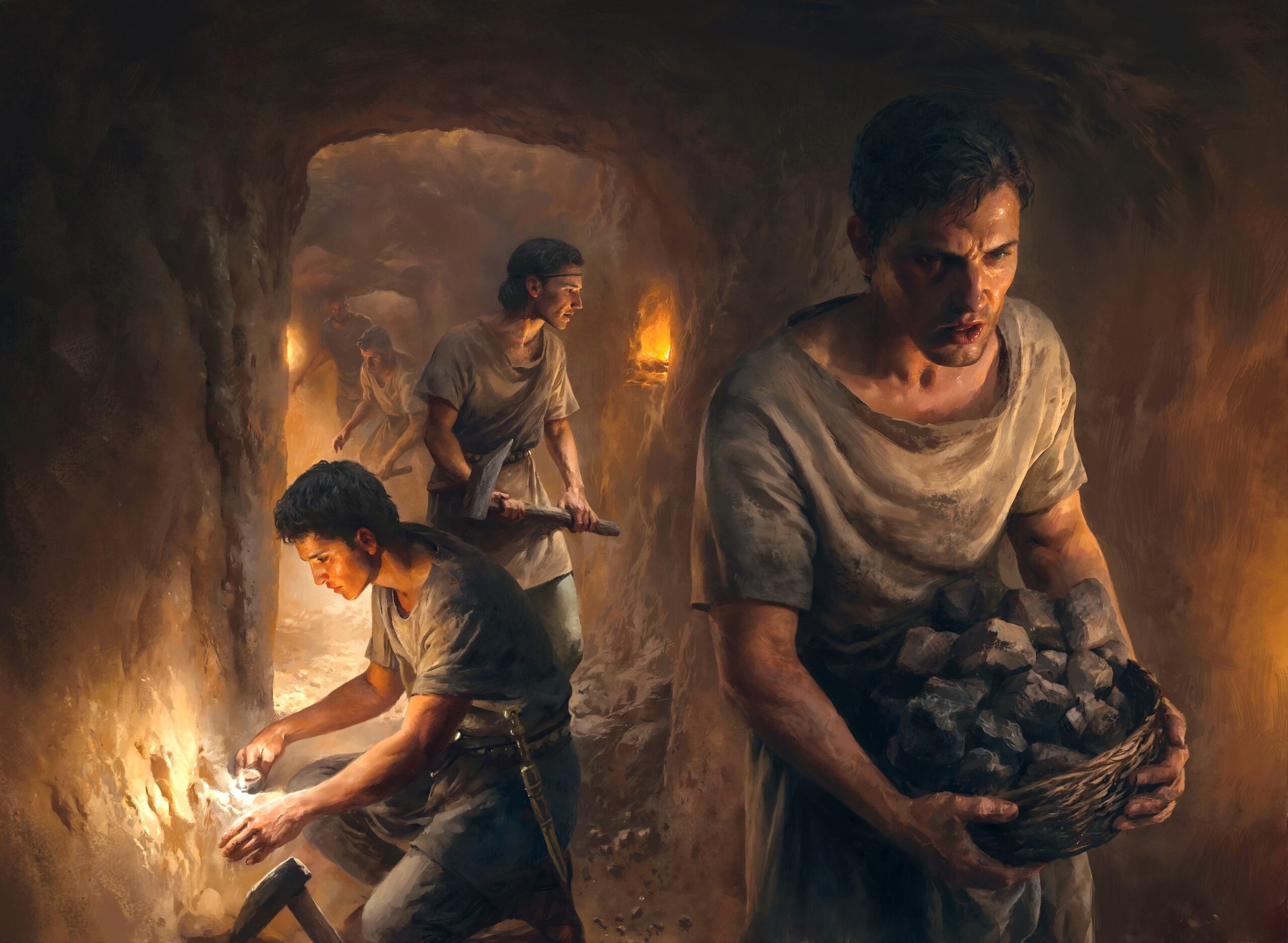
Some iron deposits were found relatively close to the surface. These could be exploited through open-pit or surface mining, where workers removed soil and rock to reach the ore beneath. Other deposits required more complicated underground workings. Roman miners could dig shafts, tunnels, and galleries into hillsides and underground deposits.
Mining was physically demanding. Workers had to break rock, remove unwanted material, carry ore, and keep underground workings usable. Hammers, picks, wedges, shovels, baskets, and other tools were essential. Water could also become a major problem in deeper mines, requiring methods to drain or remove it.
The Roman Empire employed different types of workers in mining. Depending on the location and period, mines could involve enslaved people, condemned laborers, free workers, and specialized craftsmen. Some major mining regions developed permanent settlements around the industry, providing housing, food, tools, administration, and transportation.
Once the ore was removed, it was not immediately ready to become useful iron. Iron ore contains a mixture of iron-bearing minerals and unwanted rock, so it first needed to be prepared. Workers could break the material into smaller pieces and separate more useful ore from some of the surrounding waste.
This initial preparation was important because transporting enormous quantities of useless rock would have been inefficient. The more valuable material could be concentrated near the mining area before being sent to a furnace or another processing site.
The next major requirement was fuel. Roman iron production depended heavily on charcoal, which was produced from wood. This meant that an iron-producing region needed access not only to ore but also to suitable sources of timber and charcoal.
Charcoal was particularly useful because it could provide the intense heat necessary for ancient iron production. Forest resources therefore became closely connected with mining and metallurgy. In areas where iron production expanded, large quantities of wood could be consumed.
The prepared ore and charcoal were then brought to smelting furnaces. Roman furnaces were not modern blast furnaces. Instead, iron was generally produced using a bloomery-type process. The furnace allowed the ore to be heated in the presence of charcoal, producing a solid mass of iron-rich material known as a bloom.
The bloom was not a perfectly clean piece of metal. It contained iron mixed with slag and other impurities, so additional work was required before it could become useful material for craftsmen.
This is where the mining process connected directly to the blacksmithing industry. Miners produced the raw ore, fuel producers supplied charcoal, furnace workers produced iron blooms, and smiths could then refine and work the metal further.
Transportation was also important at this stage. Some processing happened close to the mine because it reduced the amount of unnecessary material that needed to be transported. More refined iron could then travel toward larger workshops and military centers.
This created a chain involving many different occupations: miners extracted the ore, workers prepared it, charcoal burners supplied fuel, furnace workers produced iron, transporters moved the material, and blacksmiths eventually turned it into useful objects.
Therefore, the Roman sword was never simply the product of one blacksmith. Its existence depended on an entire industrial network beginning deep underground.
Main Ideas
- Romans extracted iron through surface and underground mining
- Mining required large numbers of workers, tools, and supporting settlements
- Ore was prepared and concentrated before further processing
- Charcoal and timber were essential to iron production
- Smelting produced an iron bloom that could later be refined by craftsmen
III. Where Did the Romans Get the Wood and Charcoal?
Iron was the most obvious material needed for a Roman sword, but producing that iron required another resource that was just as important: wood. Roman metalworking depended heavily on charcoal, which was made by heating wood in a controlled environment. Without large supplies of timber and charcoal, the furnaces used to produce iron could not operate effectively.
The forests of the Roman Empire therefore became an important part of the military and industrial economy. Different regions supplied different quantities of timber depending on their climate, geography, and proximity to mines and workshops. Areas containing extensive forests could become important sources of fuel for nearby industries.
The connection between iron mines and forests was particularly important. Iron ore could be found in one location while suitable timber was available in another. Producers therefore had to organize the movement of both resources. In some mining districts, forests were located close enough to the furnaces that charcoal could be produced locally.
Charcoal was made from wood, but it was different from ordinary firewood. The wood was heated while being deprived of most of its oxygen, causing much of the moisture and volatile material to leave while leaving behind a carbon-rich fuel. This charcoal could then burn at the high temperatures required for ancient metalworking.
Producing charcoal required specialized workers sometimes referred to as charcoal burners. They worked in or near forests, preparing large quantities of timber for conversion into fuel. Their work was an important but often overlooked part of Roman metallurgy.
The amount of wood required could be enormous. Iron production consumed substantial quantities of charcoal, meaning that large-scale metalworking could place considerable pressure on surrounding forests. Archaeological and environmental evidence from some Roman industrial areas suggests that intensive activity could contribute to local deforestation and changes in woodland use.
However, this did not mean that the entire Roman Empire was stripped of its forests. The impact varied greatly between regions. Some areas experienced intensive exploitation near mines and furnaces, while other forests remained important for agriculture, construction, shipbuilding, and other activities.
Timber itself had many uses beyond charcoal. Romans needed wood for buildings, bridges, carts, tools, ships, scaffolding, mines, and military fortifications. The army in particular consumed enormous amounts of timber when constructing forts and camps.
This made forests an important strategic resource. A Roman military base could require wood not only for fuel but also for construction and everyday activities. Frontier armies operating in heavily forested regions could make use of nearby resources, while armies in areas with fewer trees had to rely more heavily on organized supply networks.
Transportation again played an important role. Rivers were especially useful for moving heavy timber and other bulky materials. Boats and barges could transport large quantities much more efficiently than carts traveling overland.
Charcoal was also easier to transport than raw wood in some circumstances because the conversion process reduced the material’s weight and volume. Producers could therefore manufacture charcoal closer to the forest before moving it toward the furnaces.
The relationship between forests, mines, furnaces, and transportation routes demonstrates how interconnected Roman industries were. A blacksmith working hundreds of kilometers away from a forest might still depend on timber harvested from that region.
Eventually, charcoal reached the smelting and metalworking centers, where it became part of the process that transformed iron ore into usable metal. The charcoal did not become part of the finished sword, but without it, the iron could not have been produced in the first place.
So when looking at a Roman sword, it is useful to think beyond the metal itself. Behind that piece of iron stood foresters, charcoal burners, miners, transport workers, furnace workers, and entire communities whose work connected the Empire’s natural resources to its military industries.
Main Ideas
- Wood and charcoal were essential to Roman iron production
- Charcoal was produced from timber in controlled-burning processes
- Forests near mining regions could become important industrial resources
- Rivers helped transport timber and other heavy materials
- Roman swords ultimately depended on a huge network connecting forests, mines, furnaces, and workshops
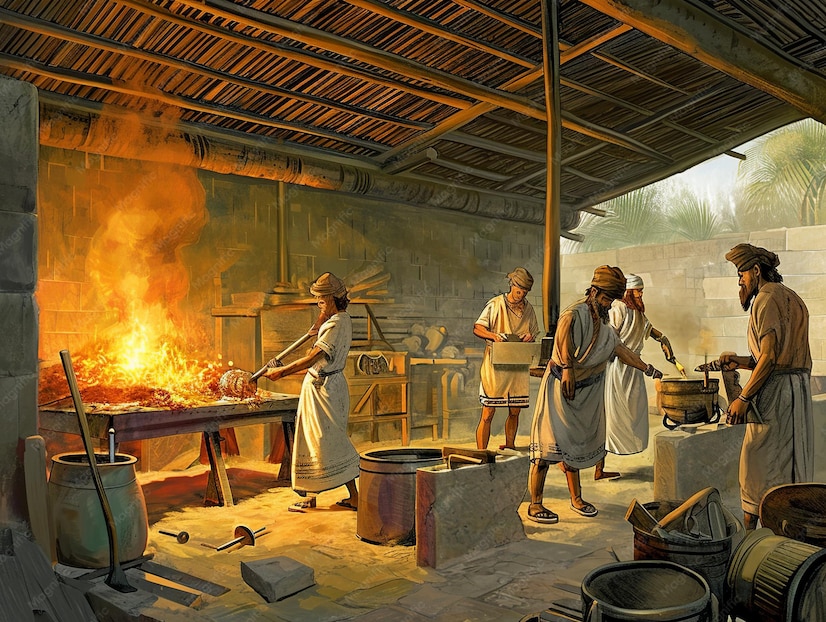
IV. How Were the Materials Transported Across the Roman Empire?
Once the Romans had extracted iron ore, timber, charcoal, and other resources, the next challenge was getting those materials to the places where they were needed. The Roman Empire was enormous, and many important mines and forests were located far from the cities, workshops, and military bases that consumed their products. This made transportation and logistics essential to Roman industry.
The Romans used several major forms of transportation: roads, rivers, canals, ports, ships, carts, and pack animals. The method depended heavily on the material being transported and the geography of the region.
The famous Roman road network was particularly important for moving people and valuable goods across land. Roads connected mining districts with towns, military bases, and ports. Carts could carry materials such as processed iron, tools, charcoal, leather, and other supplies. However, transporting extremely heavy materials over long distances by road was expensive, so producers often tried to take advantage of waterways whenever possible.
Rivers were among the most important transportation routes in the Roman world. A loaded boat could carry far more material than a cart pulled by animals. Major rivers such as the Rhine, Danube, Rhône, and Tiber became important commercial and military transportation routes.
For example, iron and other materials produced in areas near the Rhine or Danube could potentially be moved along those rivers toward settlements and military installations. River transportation was particularly useful for supplying the large armies stationed along Rome’s northern frontiers.
The Mediterranean provided an even larger transportation network. Once goods reached a suitable port, they could be loaded onto merchant ships and transported to distant coastal regions. The Mediterranean connected provinces including Hispania, Gaul, Italy, North Africa, Greece, and the eastern Mediterranean.
Roman ships could carry enormous quantities of cargo compared with individual carts or pack animals. This made maritime transportation extremely important for bulk goods, particularly when materials had to travel long distances.
Ports were therefore much more than places where ships stopped. Major ports could contain warehouses, markets, workshops, administrative buildings, and loading areas. Goods arriving from one province could be stored before continuing their journey to another destination.
The Roman military also depended heavily on this transportation system. Frontier armies required regular supplies of food, weapons, armor, building materials, animals, tools, and replacement equipment. A legion stationed far from the Mediterranean could still receive materials because roads and rivers connected its base to the wider imperial economy.
Transportation could involve many different people. Sailors, merchants, wagon drivers, muleteers, dockworkers, soldiers, and government officials all played roles in moving goods.
Pack animals were especially useful in places where roads were poor or where materials had to travel through mountainous terrain. Mules and donkeys could carry loads along routes where large carts were difficult to use.
The Romans also had to deal with the cost of transportation. Heavy goods were expensive to move over land, which helps explain why rivers and seas were so valuable. A material might therefore travel through several different transportation methods rather than following one continuous route.
For example, iron produced in a mining district might first travel by cart to a nearby river, then by barge toward a larger settlement, and eventually by ship to another province. From there, carts or pack animals could carry it to a military workshop.
This enormous network allowed resources from different parts of the Empire to come together. The iron could come from one province, wood from another region, leather from somewhere else, and skilled craftsmen could work at a major military center.
The Roman sword was therefore the product not only of mining and craftsmanship, but also of an extraordinary transportation system. Roads, rivers, and ships transformed the Empire into an interconnected economic network capable of moving resources over enormous distances.
Main Ideas
- Roman roads connected mines, cities, ports, and military bases
- Rivers were extremely efficient for transporting heavy materials
- Mediterranean ships connected distant provinces
- Carts, mules, and donkeys handled overland transportation
- Roman transportation networks allowed resources from across the Empire to reach military workshops and soldiers.
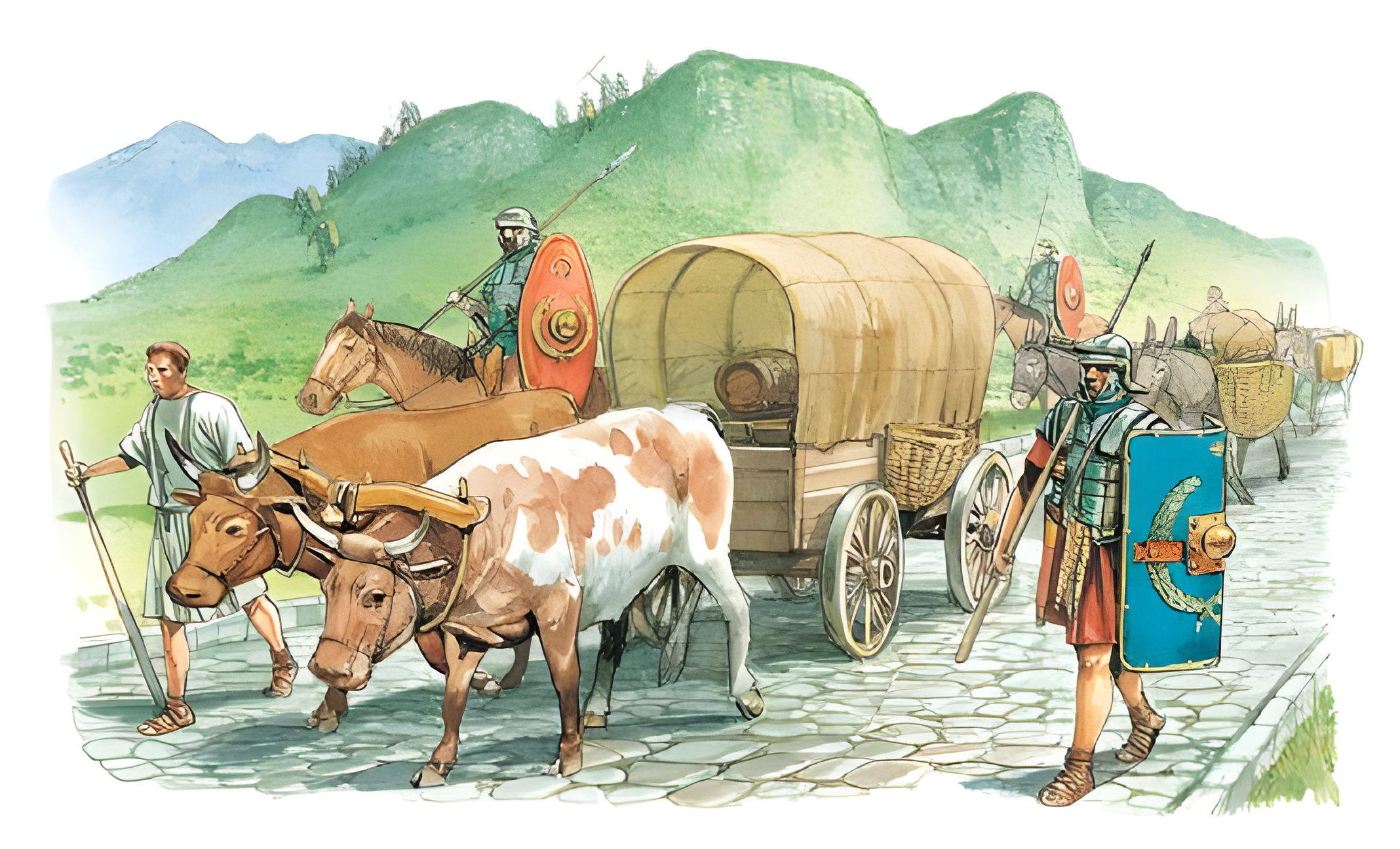
V. From Mining Regions to Roman Workshops
After iron and other raw materials had been extracted and transported, they eventually reached the workshops where Roman craftsmen transformed them into useful equipment. These workshops were an essential link between the Empire’s natural resources and the Roman army. A sword did not simply appear after iron left a mine; it passed through a network of specialists who processed, shaped, assembled, repaired, and distributed military equipment.
Roman workshops could exist in cities, mining settlements, commercial centers, and military bases. Some were relatively small operations run by individual craftsmen, while others were associated with the army and could support large numbers of soldiers.
The Roman military had its own system of specialist production and repair. Military workshops are often referred to as fabricae. These facilities could produce and maintain equipment needed by the army, although their exact organization changed over different periods of Roman history.
A large military base could contain craftsmen with different specialties. Blacksmiths worked with iron and other metals, while other workers could specialize in leather, wood, textiles, or bone. This meant that producing military equipment was a collaborative process rather than the work of one person.
The materials arriving at a workshop were also different from the materials that had left the mines. Iron could arrive as a more refined form of metal rather than raw ore, reducing the amount of waste that needed to be transported. Charcoal was needed to fuel furnaces and forges, while wood could be used for handles, structures, and other components.
Other materials had their own supply chains. Leather came from animals processed by the Roman agricultural and commercial economy. Wood could come from nearby forests or be transported from elsewhere. Bone and other organic materials could be obtained locally, while metals such as bronze could come through mining and recycling networks.
The workshop therefore became a place where different supply chains met.
Military workshops were particularly important because Roman soldiers needed enormous quantities of equipment. A legion did not only require swords. Soldiers needed shields, helmets, armor, spearheads, tools, nails, cooking equipment, carts, and construction hardware.
Equipment also needed to be maintained. A sword could become damaged or worn during military service, and other equipment could break through regular use. Roman armies therefore needed craftsmen capable of repairing and replacing equipment rather than simply producing everything once.
The location of workshops was important. A workshop near a large military base could receive materials from several directions and then supply soldiers stationed nearby. Frontier armies were particularly dependent on organized supply systems because they could be located hundreds of kilometers from the Empire’s major cities.
Some workshops were located near fortresses and legionary bases, while others existed in civilian settlements that supplied the army through commercial networks. The relationship between military and civilian production could therefore vary considerably.
The Roman state could also influence production through contracts, taxation, military administration, and control of important resources. However, the Roman economy was not a single centrally controlled factory system. Private craftsmen, merchants, local communities, military personnel, and government officials could all participate in the production and distribution of equipment.
Once the necessary materials reached a workshop, specialist craftsmen could begin producing the finished components of military equipment. For a sword, this included the blade and its associated fittings, while other craftsmen could work on the grip, scabbard, and decorative or functional components.
The completed equipment could then be inspected, stored, repaired, or issued to soldiers.
This stage demonstrates why the Roman sword should be viewed as part of a much larger industrial system. The mine provided the metal, forests provided fuel and wood, transportation networks moved the resources, and workshops brought everything together.
By the time a sword reached a Roman soldier, it could represent the work of miners, charcoal burners, transport workers, merchants, metalworkers, leatherworkers, carpenters, administrators, and military personnel.
Main Ideas
- Materials from different regions came together in Roman workshops
- Military workshops were known as fabricae
- Different specialists worked with metal, wood, leather, bone, and other materials
- Workshops also repaired and maintained military equipment
- The workshop was the point where Rome’s supply chains became finished military equipment
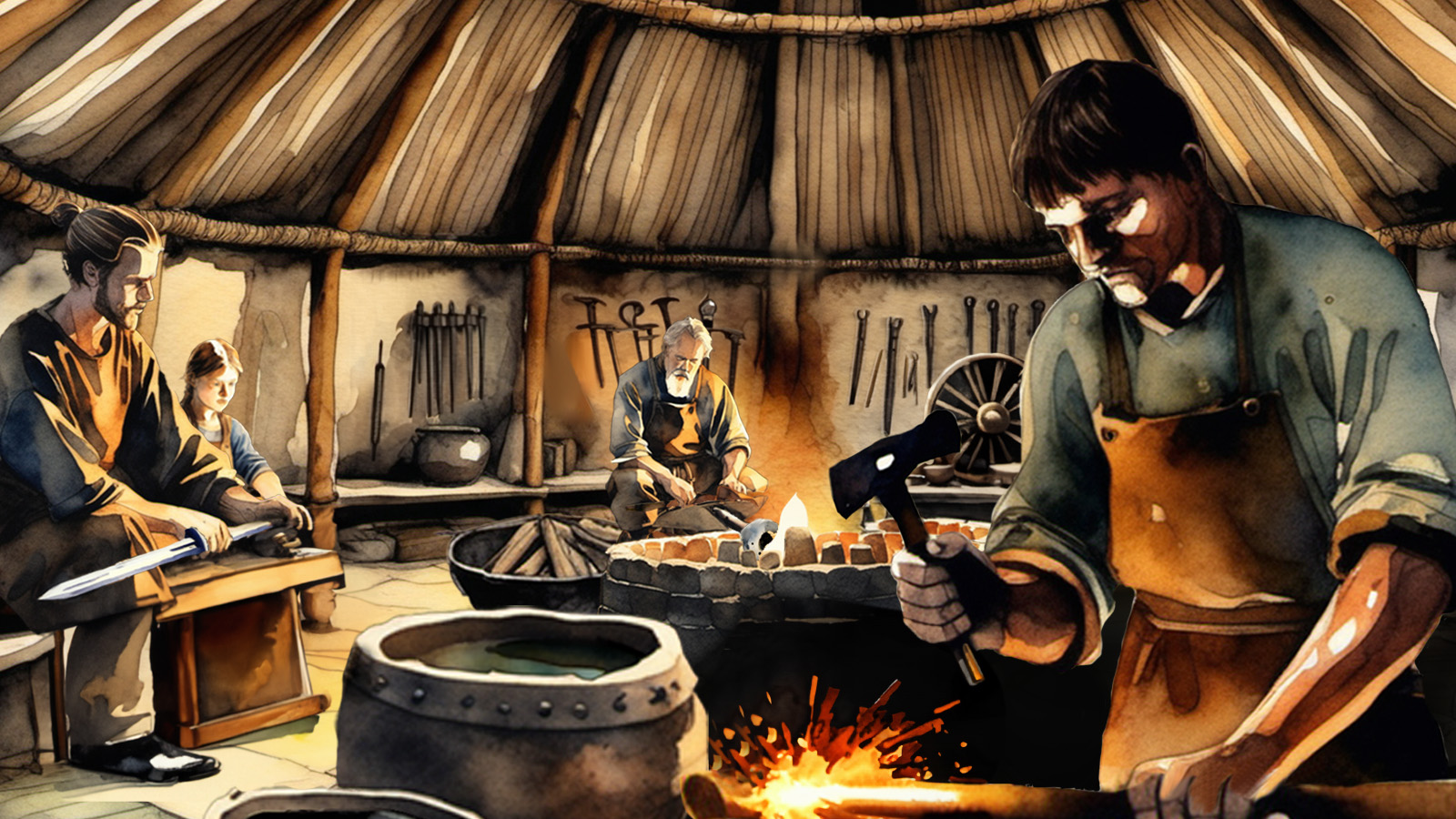
VI. How a Roman Sword Reached a Legionary
Once a sword had been produced in a Roman workshop, the process still was not finished. The completed equipment had to reach the soldiers who needed it. This required another part of the Roman military system: storage, distribution, transportation, and military administration.
The Roman army maintained soldiers across an enormous territory. Legionaries could be stationed in Britannia, along the Rhine and Danube frontiers, in North Africa, Hispania, Syria, Egypt, and other regions. Supplying all of these armies with weapons and equipment required an organized logistical network.
Finished equipment could be kept in military storage facilities, particularly at large forts and legionary bases. These facilities allowed the army to maintain supplies that could be issued to soldiers when necessary. Weapons and other equipment could also be repaired and returned to service rather than immediately replaced.
A sword might therefore spend time in a military warehouse or arsenal before reaching an individual soldier. The army needed to keep track of enormous quantities of equipment, particularly at large permanent bases where thousands of soldiers could be stationed.
Transportation depended on geography. If a workshop was located close to the army it supplied, equipment might travel primarily by road and wagon. If it was farther away, a combination of river and maritime transportation could be used.
The Roman road network was particularly valuable for military logistics. Roads connected forts, towns, cities, and ports, allowing wagons, pack animals, and military transport columns to move supplies.
Rivers could make transportation much easier. A heavily loaded boat could carry large quantities of equipment more efficiently than a wagon traveling overland. This was especially important along the Rhine and Danube, where Roman armies maintained major frontier defenses.
Maritime transportation was also important. Equipment produced in one region could potentially be moved by ship across the Mediterranean, then transferred to another transportation system after reaching a suitable port.
The military itself played an important role in organizing these movements. Roman armies had officers and administrative personnel responsible for managing supplies, storage, transportation, and equipment. Soldiers also had responsibilities for maintaining their own equipment.
A sword was not necessarily permanently associated with one individual from the moment it was produced. Military equipment could be repaired, replaced, transferred, or reused. This meant that the same piece of equipment could potentially have a long service history.
The army also needed to maintain a steady supply of replacement equipment. Swords could be damaged, lost, or simply become unsuitable for continued use. Maintaining a large military force therefore required a continuous flow of materials and manufactured goods.
This system became especially important during military campaigns. An army on campaign could move far away from its permanent base, creating enormous logistical challenges. Food, weapons, armor, animals, tools, and construction materials all had to follow the army or be obtained from nearby sources.
A finished sword could therefore travel through several stages before reaching its user. It might leave a workshop, enter a storage facility, travel by wagon or ship, arrive at a military base, and eventually be issued to a soldier.
The final recipient might be a legionary serving thousands of kilometers from the region where the sword’s iron originated. This demonstrates the extraordinary scale of Roman logistics.
The important point is that the Roman army did not depend solely on soldiers fighting battles. Behind every legion stood an enormous support network of miners, craftsmen, merchants, sailors, drivers, administrators, and laborers.
A Roman sword carried by a legionary was therefore the final product of an imperial supply chain. Its journey began with natural resources and passed through mining, processing, transportation, craftsmanship, storage, and military distribution before finally reaching the battlefield.
Main Ideas
- Finished swords could be stored in military warehouses and arsenals
- Roads, rivers, and ships transported equipment to military bases
- Roman armies required organized supply and administrative systems
- Equipment could be repaired, replaced, transferred, and reused
- A sword could travel hundreds or thousands of kilometers before reaching a legionary
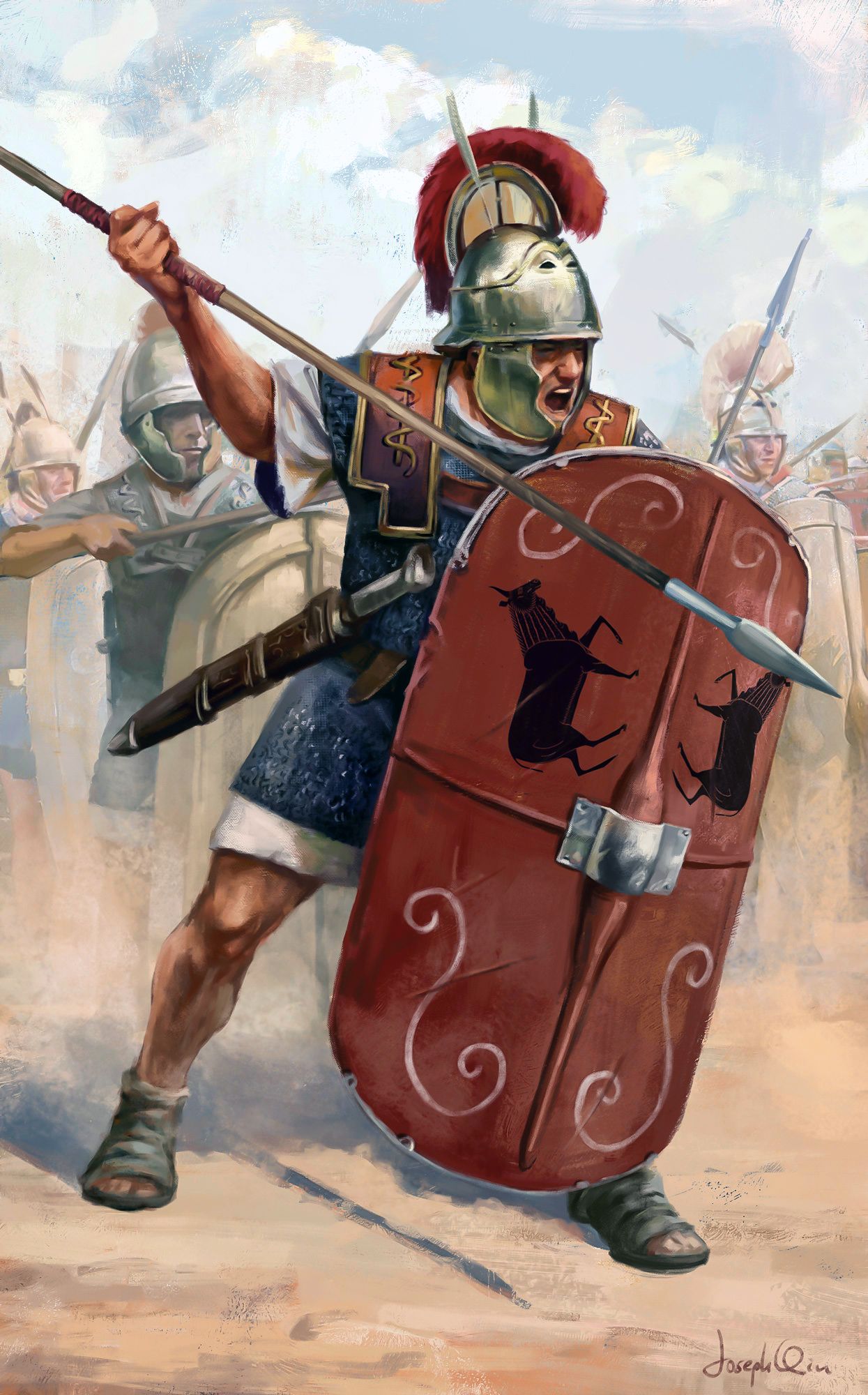
VII. The Complete Journey of a Roman Sword: From Mine to Legionary
A Roman sword was much more than a piece of military equipment. Behind the finished object was an enormous network of mines, forests, workshops, roads, rivers, ports, merchants, craftsmen, and military bases. The sword carried by a Roman soldier represented the combined work of people spread across different parts of the Empire.
The journey began with iron ore. Roman miners extracted iron-bearing material from the ground in regions such as Hispania, Noricum, Gaul, and Britannia. Different provinces became important sources at different times, depending on their mineral deposits and their relationship with Roman military and economic networks.
The ore then had to be processed and smelted. Workers prepared the material and brought it to furnaces where charcoal provided the necessary fuel. The result was an iron-rich bloom that could be further worked by specialist metalworkers.
But the furnace could not operate without charcoal, creating another supply chain. Wood was harvested from forests, processed into charcoal, and transported toward areas of iron production. Forests therefore became an important part of Roman industrial activity.
At the same time, other materials were being collected. A sword required more than iron. Wood, leather, bone, bronze, and other materials could be needed for its various components and fittings. These materials could come from completely different regions and industries.
Transportation then connected these resources. Roman roads allowed carts and pack animals to move materials over land. Rivers provided an efficient method for transporting heavy cargo, while Mediterranean shipping connected distant coastal provinces.
A mining region could therefore be connected to a major city or military base through several different transportation stages. Materials might travel by wagon, river barge, and merchant ship before reaching their destination.
Eventually, the materials reached Roman workshops. Civilian craftsmen and military workshops could process metals and manufacture equipment. Military facilities known as fabricae could be associated with the production and maintenance of army equipment.
The craftsmen working there represented another specialized part of the Roman economy. Blacksmiths, carpenters, leatherworkers, and other specialists contributed to military equipment. A sword’s different components could therefore involve several different crafts.
Once completed, the sword entered the military supply system. It could be stored at a fort, warehouse, arsenal, or other military facility before being issued to a soldier.
The Roman army maintained an enormous network of bases throughout the Empire. Equipment had to reach soldiers stationed in places as distant as Britannia, the Rhine and Danube frontiers, North Africa, and the eastern provinces.
The final stage was therefore not simply handing a sword to a legionary. The army also had to maintain, repair, replace, and redistribute equipment. A sword could remain in service for some time and could potentially pass through different stages of use and repair.
This entire journey demonstrates why Roman military power depended on much more than battlefield tactics. The Empire needed an economy capable of extracting resources, processing them, moving them over enormous distances, and supplying permanent armies.
A legionary holding a sword might never have known where its iron originally came from. The miner who extracted the ore, the charcoal burner who supplied the furnace, the sailor who transported materials, and the blacksmith who worked the metal could all have lived far away from one another.
The sword therefore connected different provinces and different occupations into one enormous imperial system.
From the ground beneath a Roman mining region to the hands of a soldier on the frontier, the journey involved countless people and multiple stages:
Mine → ore processing → charcoal and smelting → refined iron → transportation → workshop → assembly and finishing → storage → military distribution → legionary.
That is the real story behind a Roman sword. It was not simply created by a single craftsman. It was the final product of the Roman Empire’s enormous resource, transportation, industrial, and military network.
Main Ideas
- A Roman sword began with mining and natural resources
- Forests, mines, workshops, roads, rivers, and ports were all connected
- Different specialists contributed to the finished equipment
- The army maintained a huge storage and distribution network
- The sword’s journey ended with the Roman legionary, but began with an entire imperial supply chain