
For an ordinary Roman legionary serving under Julius Caesar during the conquest of Gaul, military life was far more than fighting battles. The famous clashes between Roman and Gallic armies were only a small part of the soldier’s experience. Most of his time was spent marching, carrying equipment, preparing food, maintaining weapons, building camps, standing guard, and carrying out the countless tasks necessary to keep a Roman army functioning in hostile territory. A legionary’s daily routine could be exhausting even when no battle took place.
During the Gallic Wars, which lasted from 58 to 50 BC, Caesar’s army operated across an enormous area. Roman soldiers marched through forests and valleys, crossed rivers, constructed bridges and roads, surrounded fortified settlements, and established camps far from the established Roman world. The army could be required to move quickly, sometimes covering substantial distances in a single day. Soldiers did not simply carry their weapons. They also carried equipment and supplies and were expected to remain capable of fighting after completing a difficult march.
The landscape of Gaul presented additional challenges. Roman soldiers were campaigning in unfamiliar territory where roads and supply networks were not always available. Rivers could delay an army, forests could make movement difficult, and poor weather could turn roads and camps into difficult working environments. Caesar’s army therefore depended heavily on the engineering skills and discipline of its soldiers. Building a fortified camp was a routine part of campaigning, not an occasional activity.
For the legionary, this meant that work continued even after the day’s march was finished. Soldiers could be ordered to dig defensive ditches, raise earthworks, collect timber, construct barriers, prepare shelters, or repair equipment. The Roman army’s ability to establish a fortified position quickly gave it an important advantage, but that ability depended on thousands of soldiers doing physically demanding work.
Food and water were another constant concern. An army of thousands of men required enormous quantities of supplies. Soldiers needed regular access to grain and water, while commanders had to organize the movement and protection of provisions. A shortage could affect an entire campaign. For an individual legionary, however, these enormous logistical problems were experienced in very simple terms: he needed enough food and water to keep marching and fighting.
The possibility of combat made everything more uncertain. A soldier might begin the morning expecting to march and spend the afternoon fighting. Gallic forces could appear unexpectedly, while fortified settlements could turn into lengthy sieges. Even when the army was not fighting, guards had to remain alert and camps had to be protected.
This article follows an illustrative day in the life of an ordinary legionary serving with Caesar’s army during the conquest of Gaul. It is not the diary of one specific historical soldier. Instead, it uses what is known about Roman military organization, equipment, marching, camp construction, and Caesar’s campaigns to reconstruct what a typical day might have looked like.
From waking before sunrise to marching across Gaul, preparing meals, constructing a fortified camp, maintaining weapons, standing guard, and finally getting a few hours of sleep, the routine reveals something important about Caesar’s army. The conquest of Gaul was not achieved only through dramatic battles. It depended on thousands of ordinary legionaries repeatedly performing exhausting work, following orders, maintaining discipline, and preparing themselves to fight again the following day.
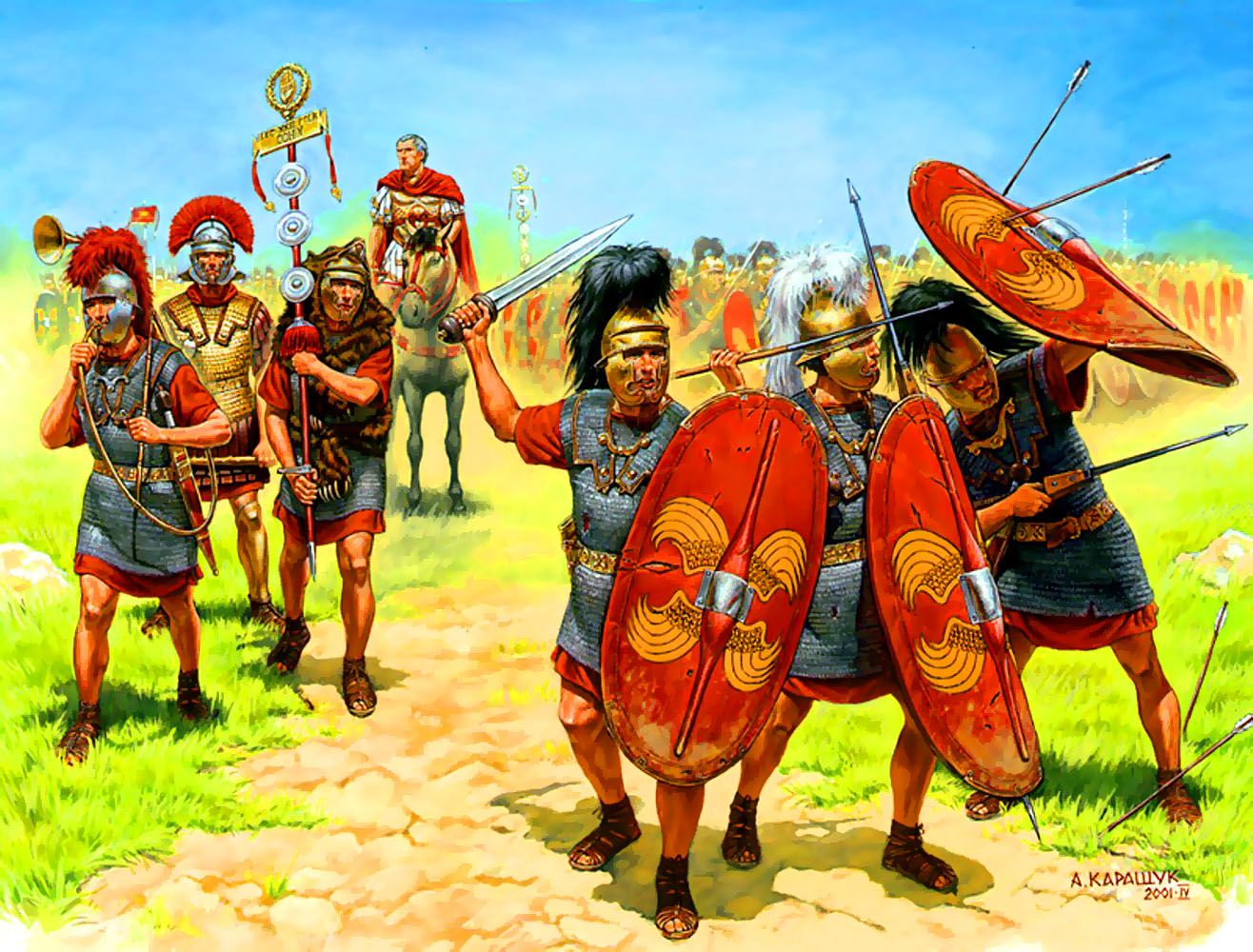
1. Before Sunrise — Waking Up in the Legionary Camp
For the Roman legionary, the day could begin before the sun had risen over the Gallic landscape. After spending the night in a temporary Roman military camp, often sleeping alongside other soldiers, he could be awakened by the sounds of the army beginning its morning routine. Fires were being prepared, soldiers were moving around the camp, animals were being organized, equipment was being packed, and guards were being relieved. There was no leisurely breakfast or quiet morning. If Caesar’s army was preparing to march, thousands of men had to be ready to move at roughly the same time.
The camp itself was an important part of the legionary’s daily experience. Whenever the Roman army stopped for the night, soldiers could be required to construct a fortified camp. Roman camps followed an organized layout, with designated areas for commanders, individual units, supplies, roads, and defensive positions. Ditches and earthworks could surround the camp, while entrances were carefully controlled. Even when the army intended to remain in one location for only a short period, the camp provided protection against a surprise attack.
The soldier therefore woke inside a military installation that had been constructed largely through the labor of the army itself.
Getting out of his sleeping area was only the beginning of his responsibilities.
The legionary first had to inspect his military equipment. His shield, weapons, clothing, footwear, and other personal equipment all had to be ready for another day of campaigning. Roman soldiers depended heavily on their equipment, and a damaged item could become a serious problem during a long march or battle. A soldier could not simply assume that somebody else would fix everything for him. Equipment maintenance was part of everyday military life.
His weapons were particularly important. The legionary needed to know that his equipment would function when required, whether he was marching through the countryside or forming up against an enemy army. After previous days of marching or fighting, equipment could be dirty or damaged and require attention.
Food was another early concern.
Roman soldiers relied heavily on grain, which could be prepared into simple meals suitable for campaigning. The army’s supply system was responsible for moving enormous quantities of food, but the individual soldier still had to prepare and eat his portion. A legionary who was about to spend hours marching could not afford to ignore food or water.
The morning meal was therefore practical rather than luxurious. There was little reason to spend a long time eating when an entire army was preparing to move.
Once the soldier had eaten, his personal equipment and belongings had to be packed. Anything that was not being carried directly had to be secured or loaded with the appropriate supplies. The legionary then had to join his unit and take his assigned place.
This was where Roman military discipline became particularly important.
A Roman legion was not a loose collection of individual fighters. Thousands of soldiers had to move together according to orders. Officers and commanders organized the units, while standards helped soldiers identify and remain with their formations. A soldier who wandered away from his unit could create problems for himself and everyone around him.
The army’s morning routine could therefore be highly organized even when the surroundings were chaotic.
The legionary might hear orders being shouted across the camp. Animals could be making noise. Soldiers could be moving equipment. Officers could be checking their men. Somewhere nearby, supplies were being prepared for transport.
Then came the order to march.
The camp that had been home for one night would be left behind, and the legion would begin moving through Gaul.
For the ordinary soldier, this meant carrying his equipment for mile after mile. He could not simply leave his belongings behind because the army was moving. Weapons, tools, food, and personal equipment all had to travel with the force.
The morning had started with preparation, but the hardest physical part of the day was only beginning.
The legionary had eaten, checked his equipment, packed his belongings, joined his unit, and prepared to march. Now he had to carry everything he needed across the Gallic countryside.
5 Main Ideas
- Legionaries could wake before sunrise when the army was preparing to march.
- Roman camps were fortified and carefully organized to protect soldiers from attack.
- Equipment maintenance was essential, especially before a march or battle.
- Grain and water were basic necessities for soldiers campaigning in Gaul.
- Military discipline kept thousands of soldiers organized as the army prepared to march.
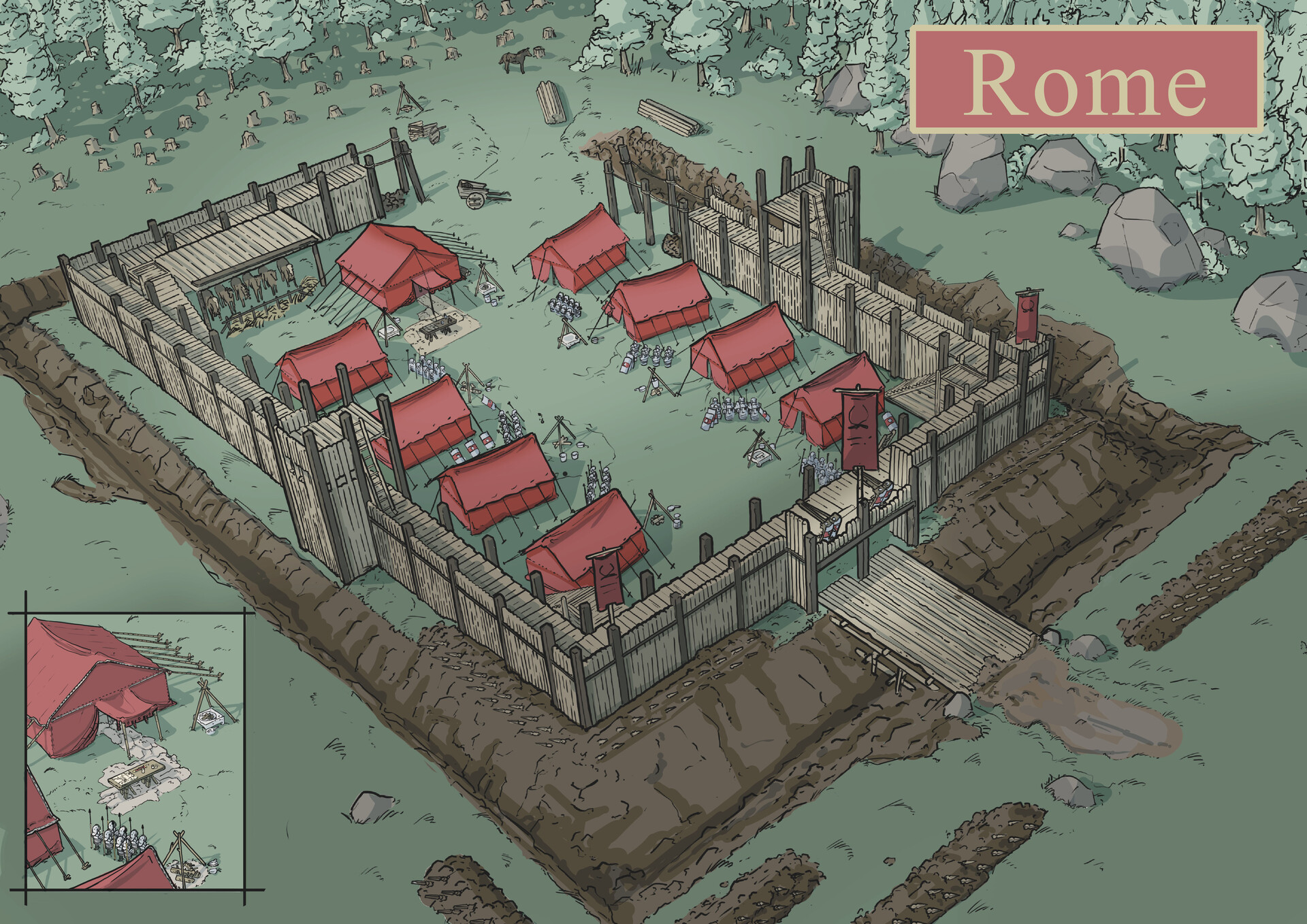
2. The Morning March — Crossing Gaul With Caesar's Army
Once the order to march was given, the legionary joined the long column of Caesar’s army and began moving across the countryside. For an ordinary soldier, this was one of the most physically demanding parts of military life. The famous battles of the Gallic Wars might be what later generations remembered, but a legionary could spend far more time marching than fighting.
The Roman army had to move as an organized force. Soldiers remained with their units while officers maintained order throughout the column. Standards helped identify formations, while commanders and messengers passed instructions through the army. Thousands of men, together with animals, supplies, equipment, and other military personnel, could be moving through the same landscape.
The legionary himself had a heavy load to carry.
His weapons and shield were essential, but they were only part of what accompanied him. Soldiers also carried equipment and tools needed for life on campaign. The Roman army expected its soldiers to be capable of constructing and maintaining their own camps, meaning that a legionary was not simply carrying weapons for battle. He was also carrying some of the equipment necessary to keep the army functioning.
The physical strain could become considerable after several hours.
Gaul was not an easy environment for a marching army. Roman soldiers encountered forests, hills, rivers, mud, and rough ground, depending on where Caesar’s campaigns took them. Roads existed in some areas, but the Romans could not always depend on convenient routes. Sometimes the army had to improve existing paths or create routes through difficult terrain.
Weather could make the situation even worse.
Rain could turn the ground into mud, while cold conditions could make marching uncomfortable and exhausting. Hot weather created its own problems, particularly when soldiers were carrying heavy equipment. The army therefore had to think carefully about routes, water supplies, and places where it could stop.
The legionary’s immediate concern, however, was usually much simpler: keep moving.
Falling behind could be dangerous. A soldier needed to remain with his unit and maintain the pace established by the army. The Roman military system depended on discipline, and individual soldiers could not simply decide when they wanted to stop.
There were also practical reasons for maintaining a steady pace.
Caesar often needed his army to move quickly. Campaigns could change suddenly when information about an enemy arrived. A Gallic army might be gathering nearby, a fortified settlement might need to be reached, or supplies might have to be secured. The ability to move large numbers of soldiers rapidly was an important part of Roman campaigning.
The march was therefore not simply transportation. It was part of the army’s military strategy.
As the column moved through Gaul, the legionary would see a landscape very different from the Mediterranean world in which many Roman soldiers had grown up. Villages, farms, forests, rivers, and fortified settlements could all become part of the campaign. The army was moving through territory where Roman authority was being established by force, and the soldiers could be surrounded by populations whose attitudes toward Rome varied from cooperation to resistance.
The presence of the army itself could also affect the countryside. Thousands of soldiers required food, water, firewood, animals, and other supplies. Supplying such a large force was a constant challenge for Caesar’s commanders.
After hours of marching, the legionary would be tired, but the day was far from over.
The army might finally reach its destination in the afternoon. At that point, the soldier could expect another major responsibility: building the camp.
For the legionary, reaching the end of the march did not necessarily mean getting to rest.
It meant picking up his tools and starting work again.
5 Main Ideas
- Marching was one of the most demanding parts of legionary life.
- Soldiers carried weapons, equipment, and tools while traveling with the army.
- Roman armies had to deal with rivers, forests, hills, mud, and difficult weather.
- Discipline and organization allowed thousands of soldiers to move together.
- Reaching the destination did not mean rest — the legionary still had to help construct the camp.
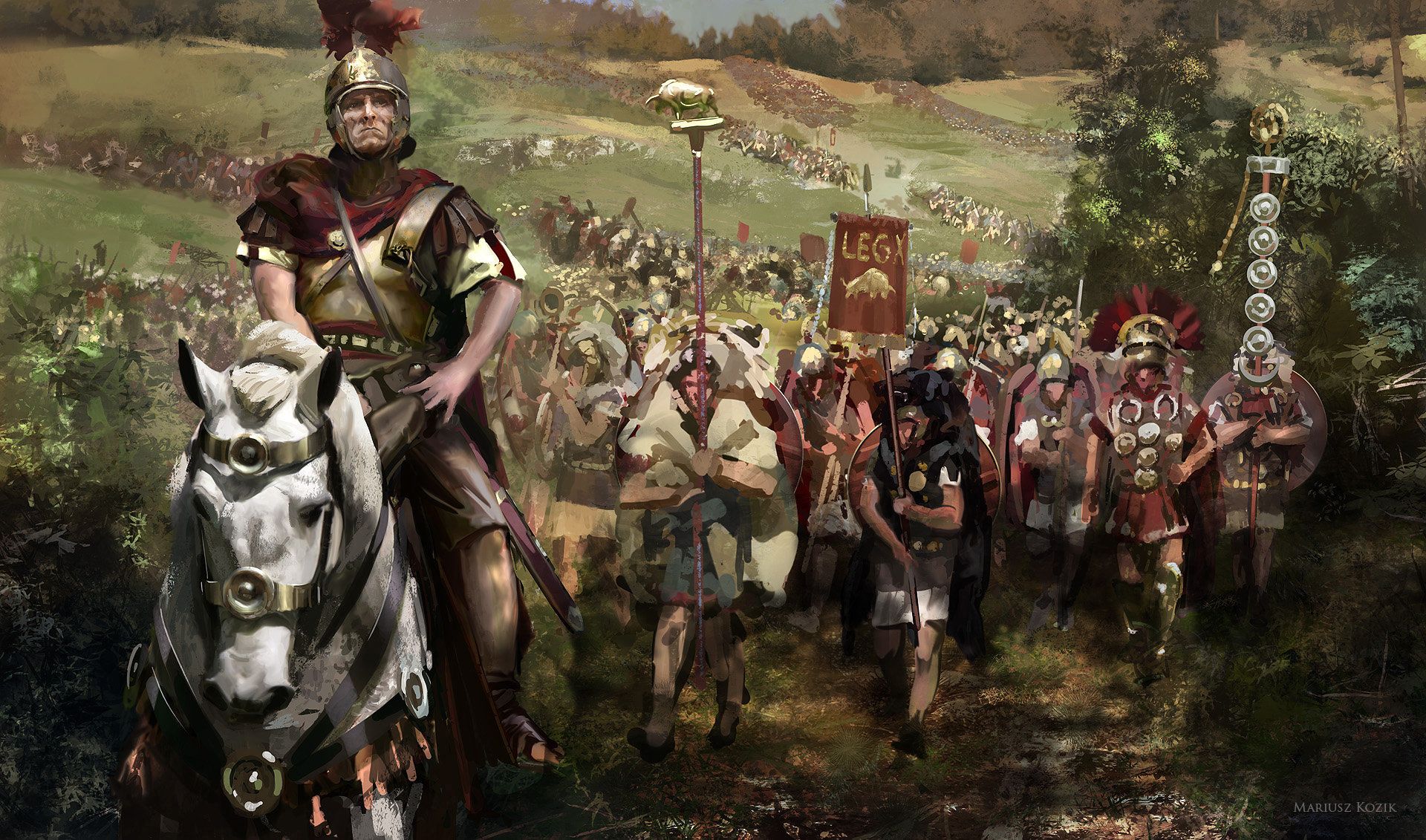
3. Midday on Campaign — Food, Water, and the Long March
By midday, the legionary had already spent several hours on the road. The early morning energy of the column had begun to disappear, replaced by the steady exhaustion that came from walking for hours while carrying military equipment. The Roman army could not simply stop whenever individual soldiers became tired. The entire force had to maintain its pace, and the legionary had to keep moving with his unit.
One of the most important concerns at this point in the day was water.
A large army required enormous quantities of water, and Caesar’s soldiers could not simply assume that a convenient supply would always be available. Rivers, streams, springs, and wells could become strategically important locations. Commanders had to consider access to water when deciding where an army would move and where it would establish its camps.
For the individual soldier, the issue was much more immediate. After hours of marching, he needed to drink.
The same was true of food.
Roman legionaries relied heavily on grain, which was one of the army’s most important food supplies. Soldiers could process the grain and prepare simple meals, making it practical for long campaigns. The Roman army’s ability to transport and distribute food was essential because thousands of soldiers could consume enormous quantities of provisions every day.
A midday pause, when circumstances allowed one, could therefore provide an opportunity to eat, drink, check equipment, and recover before continuing.
It was not necessarily a comfortable break.
The army might still be surrounded by unfamiliar countryside, and commanders could not always afford to let the soldiers relax completely. If enemy forces were nearby, the march had to remain organized and precautions had to be maintained.
The legionary could also use the pause to examine his equipment.
Long marches placed considerable strain on sandals, clothing, shields, weapons, and carrying equipment. Something that seemed like a minor problem in the morning could become much more painful after several more hours on the road. Soldiers therefore had to pay attention to their equipment and make small repairs whenever possible.
The physical environment could make the midday march particularly difficult.
A Roman soldier campaigning in Gaul might encounter muddy ground, steep hills, forests, or rivers. A road that looked manageable in the morning could become difficult after rain. Crossing a river could slow the entire column, while steep terrain could make carrying equipment exhausting.
The legionary had little choice but to continue.
His fellow soldiers were around him, and the standards of his unit helped maintain the formation. The army’s organization allowed thousands of men to move together rather than becoming a scattered crowd.
There was also a psychological side to the march.
The soldier knew that he was not simply traveling through peaceful countryside. He was part of an army engaged in an active war. Somewhere ahead could be a Gallic settlement, an enemy army, or a battlefield. Scouts and commanders were constantly concerned with information about the surrounding area.
This meant that even an apparently ordinary march could carry an element of uncertainty.
A soldier might hear rumors about an enemy nearby. He might see scouts returning with information. He might notice officers discussing a change in direction.
For the ordinary legionary, however, the immediate objective remained simple: keep marching and stay with the unit.
By the afternoon, the army would begin approaching its destination. The soldier would probably be tired, hungry, and ready to stop.
But stopping did not mean resting.
The legion still had to establish a secure position before nightfall.
And that meant the legionary would soon be ordered to put down his equipment, pick up his tools, and begin building the camp.
5 Main Ideas
- Water was essential to keeping a Roman army moving through Gaul.
- Grain was a major part of the legionary’s diet during long campaigns.
- Soldiers could use pauses to eat, drink, and maintain their equipment.
- Terrain and weather could make the Roman march much more difficult.
- Even during a break, the legionary had to remain alert and with his unit because the enemy could be nearby.
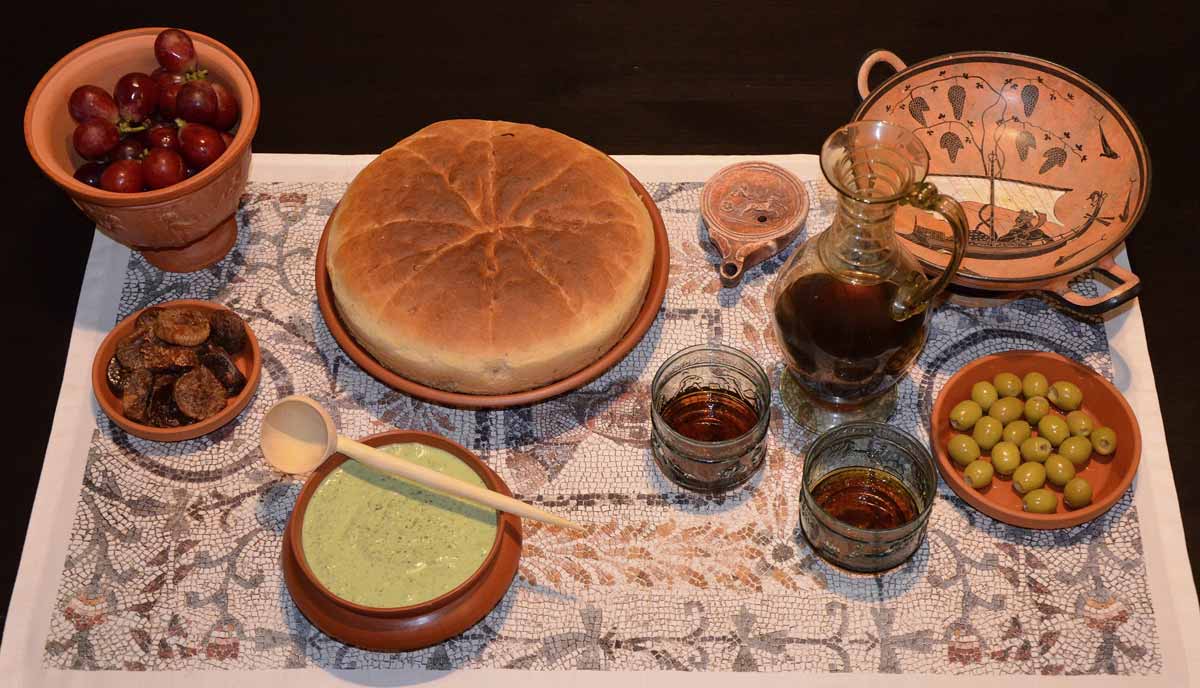
4. The Army on the Move — Scouts, Supplies, and Danger
For a Roman legionary marching through Gaul with Caesar’s army, the road ahead was never completely predictable. The army might have a destination, but what waited between the camp and that destination was not always known. Roman commanders needed information about roads, rivers, settlements, enemy movements, and the surrounding countryside. For the ordinary soldier, this meant that even a normal day of marching required attention and discipline.
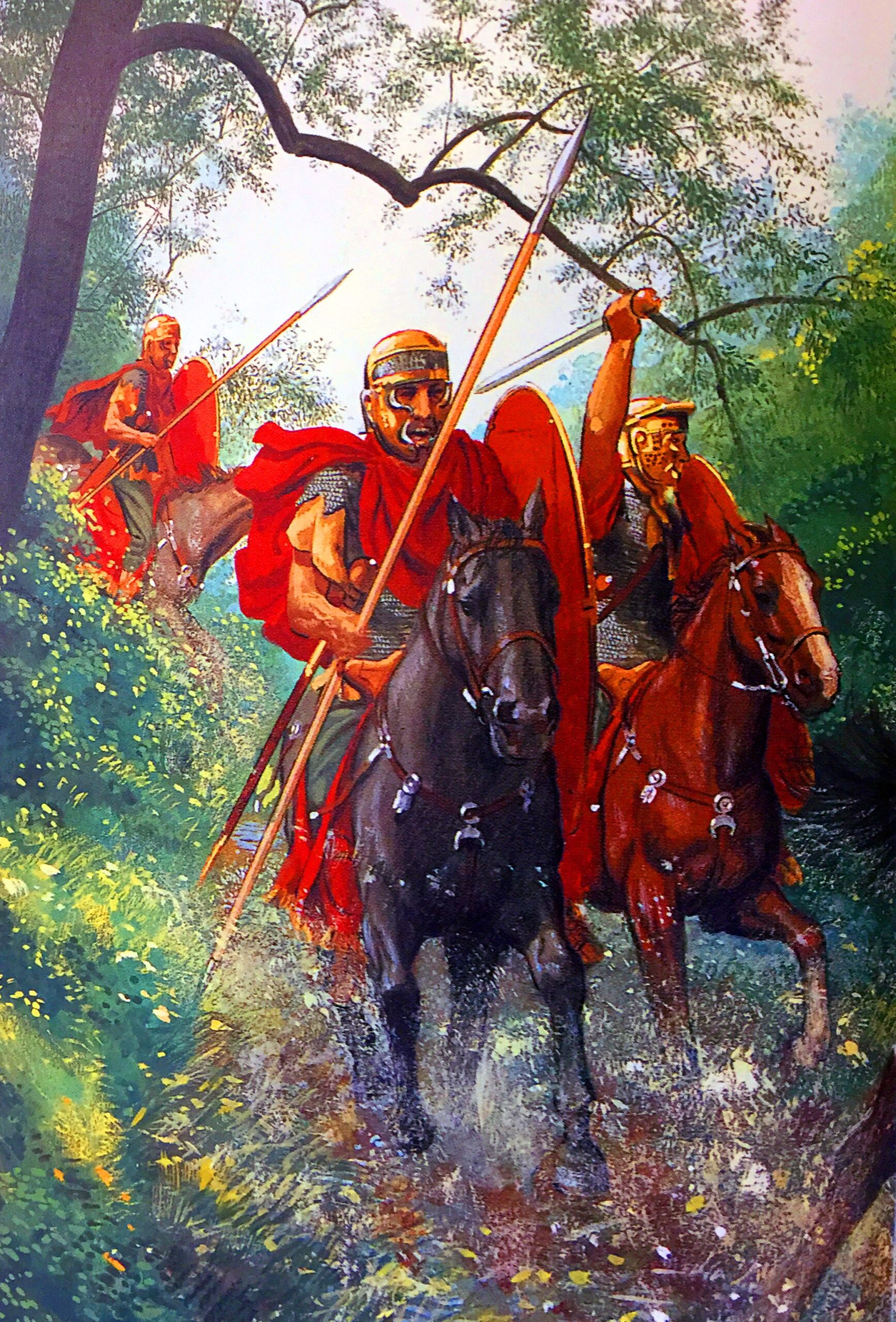
Ahead of the main column, scouts and reconnaissance forces could gather information about the route and possible threats. Roman armies also used cavalry and allied troops for duties that helped protect the marching force. Their purpose was not simply to find enemies, but to give commanders a better understanding of what lay ahead. In a campaign as large as Caesar’s conquest of Gaul, information could determine whether an army moved quickly, stopped, changed direction, or prepared for a confrontation.
The legionary himself usually knew only part of the wider plan. He might know where his unit was supposed to march or where the next camp would be established, but he did not necessarily know what Caesar and the senior officers had learned from scouts. The ordinary soldier followed orders rather than making strategic decisions.
Behind and among the marching troops came the army’s enormous logistical organization. A Roman army could not survive on fighting ability alone. Soldiers needed grain, water, replacement equipment, tools, clothing, animals, and other supplies. Food was one of the most important parts of military planning. Grain had to be transported or obtained along the route, then processed and distributed to the soldiers.
Pack animals and transport equipment carried much of what the army needed. The movement of these supplies had to be coordinated with the marching columns. A legionary might see animals carrying sacks of grain, bundles of equipment, tools, and other necessities moving alongside the soldiers. The army was therefore not simply a mass of armed men. It was a large moving organization that depended on an equally important supply system.
The army could also obtain food and other resources from the surrounding territory. During campaigns, Roman forces could use local supplies or requisition provisions. This could make military movement possible over large distances, but it also meant that the availability of food and resources influenced where and how an army could operate.
For the legionary, these matters appeared in much simpler terms. He needed to know whether he had enough water, whether his equipment was secure, and whether his unit was keeping its position in the column. Losing contact with the unit could create serious problems, particularly when the army was moving through unfamiliar territory.
Danger could come from many directions. Gallic forces could observe Roman movements, and Roman commanders had to consider the possibility of cavalry attacks, ambushes, fortified positions, or sudden changes in the situation. But campaigning was not necessarily a constant sequence of attacks. Much of the danger came from uncertainty. A quiet road could remain quiet for hours, while a report from scouts could suddenly change the army’s plans.
This uncertainty encouraged Roman discipline. Soldiers were expected to remain with their units, follow signals and orders, and keep their equipment ready. A legionary could not simply wander away because he was tired or curious about the countryside. The army’s strength depended heavily on maintaining organization even when conditions became difficult.
As the march continued, the column eventually approached its destination. The legionary might still be exhausted, but another major task was waiting. Before he could properly rest, the army would have to transform from a marching column into a fortified Roman camp.
5 Main Ideas
- Scouts and reconnaissance helped Roman commanders understand what lay ahead.
- Supplies and logistics were essential to keeping Caesar’s army moving through Gaul.
- Legionaries usually knew their immediate orders rather than the entire strategic plan.
- Uncertainty and possible enemy activity made discipline and readiness important even during ordinary marches.
- Reaching the destination did not mean the working day was over—the soldiers still had to build the camp.
5. Building the Camp — Work After the March
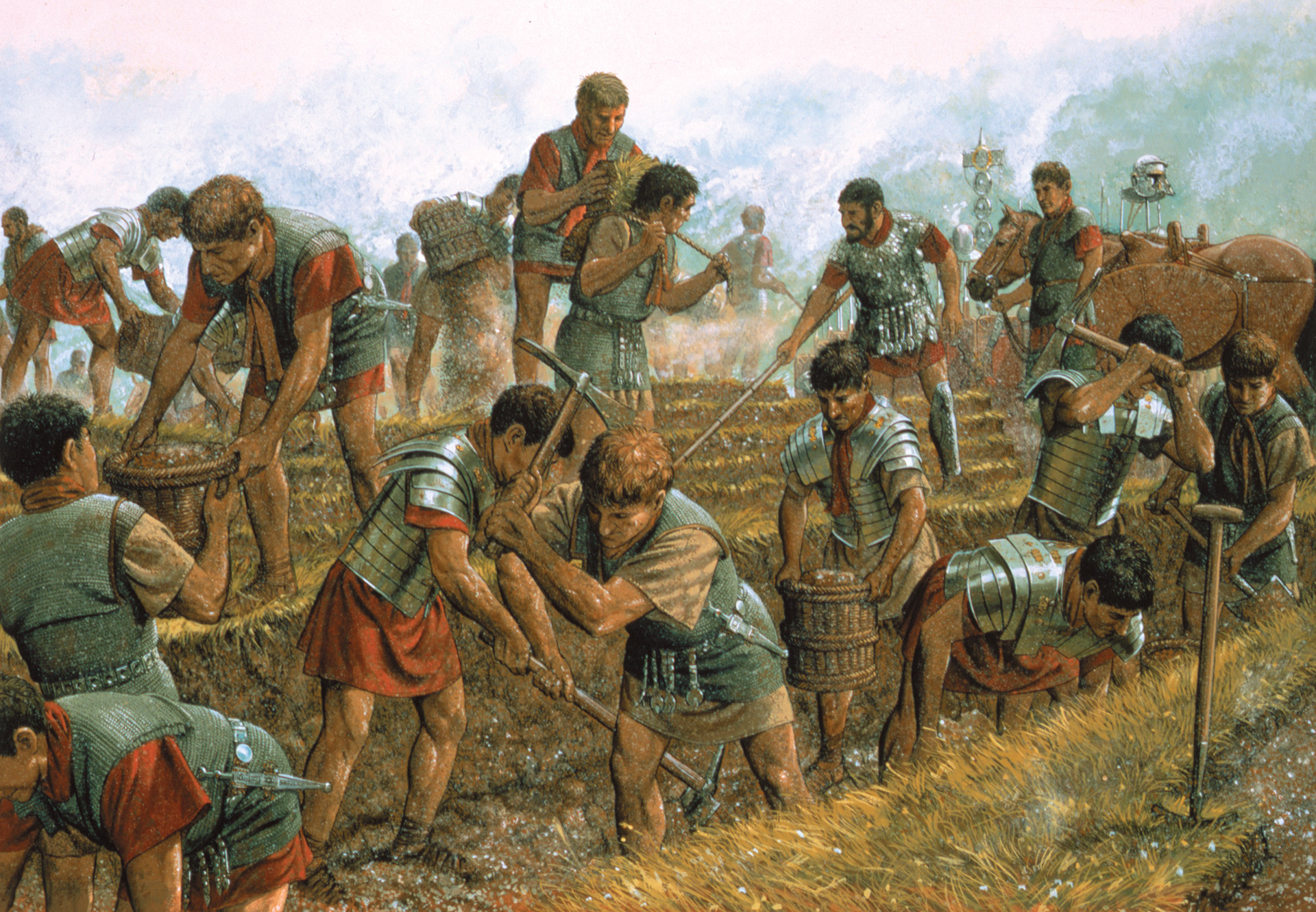
For the Roman legionary, reaching the day’s destination did not mean the day was finished. After hours of marching through Gaul, there was still one of the army’s most important routines to complete: building the fortified camp. Even when Caesar’s army expected to stay in one place for only a short time, soldiers were normally expected to help establish a secure position before settling down.
The first stage was choosing and organizing the camp site. Roman officers had to consider the terrain, water supply, access routes, and defensive position. Once the location had been selected, the army could begin laying out the camp according to an organized plan. Streets, gates, working areas, and positions for different units were arranged rather than placed randomly.
For the ordinary legionary, this meant work.
Tools that had been carried during the march were now put to use. Soldiers could be assigned tasks such as digging the defensive ditch, preparing earthworks, setting up the rampart, or helping establish the camp’s internal organization. The exact work depended on the circumstances and the army’s needs, but the principle was clear: Roman soldiers were not simply fighters. They were also expected to construct and maintain the infrastructure that allowed the army to operate.
The defensive ditch was especially important. Excavated earth could be used to help create a raised defensive bank, while stakes and other materials could strengthen the perimeter. The result was a temporary fortified position that provided protection during the night.
For a tired legionary, this work could be physically demanding. He had already spent much of the day carrying equipment and marching, and now he had to dig, carry, lift, and construct. Yet the routine was part of Roman military discipline. A soldier was expected to perform necessary work even when he was exhausted.
The camp also gave the army something extremely valuable: organization. Once established, soldiers knew where their units belonged, where supplies could be kept, where commanders operated, and where guards were positioned. The familiar structure of the camp provided a sense of order after a long day on unfamiliar roads.
Different areas of the camp served different purposes. Senior officers had designated quarters, while legionaries were organized according to their units. Animals, supplies, equipment, and other necessities also needed appropriate spaces. Roads through the camp allowed people and materials to move efficiently.
The legionary might finally have a moment to breathe as the sun began to disappear. Smoke from cooking fires could rise above the camp, while soldiers moved around completing their remaining duties. The temporary camp was becoming a small, organized military settlement.
But there was still work to do. Equipment that had been carried all day needed inspection. Weapons and shields had to be kept in usable condition, clothing and footwear might need attention, and personal belongings had to be organized. A soldier who ignored these tasks could find himself unprepared the following morning.
Meanwhile, guards were assigned and the camp’s security became a continuing responsibility. Not everyone could simply go to sleep. Some soldiers would have duties while others rested, creating a cycle that allowed the army to remain alert throughout the night.
For the ordinary legionary, this routine demonstrated an important reality of Caesar’s campaigns. Roman military power depended on organization as much as battlefield courage. The army could march because its soldiers carried what they needed. It could stop because those same soldiers could build a fortified camp. And it could continue the next day because everyone followed a system.
Eventually, the main construction would be complete. The legionary could finally eat, repair his equipment, talk with the men around him, and prepare for a few hours of rest. But the campaign was not finished for the night.
5 Main Ideas
- Building the camp was a major responsibility after a day of marching.
- Legionaries performed practical tasks including digging, carrying materials, and constructing defenses.
- Roman camps were carefully organized, with designated areas for units, commanders, supplies, and movement.
- Camp construction provided security and organization for the army during the night.
- Even after reaching camp, soldiers still had equipment maintenance and guard duties before they could rest.
6. Evening — Food, Equipment, and Comrades
Once the camp was finished and the main duties were complete, the legionary could finally turn his attention to the basic needs of the evening: food, water, equipment, and rest. After hours of marching, carrying equipment, and helping construct the camp, these ordinary necessities became especially important. There was no comfortable end to the working day, but the evening gave the soldier a chance to recover before another demanding morning.
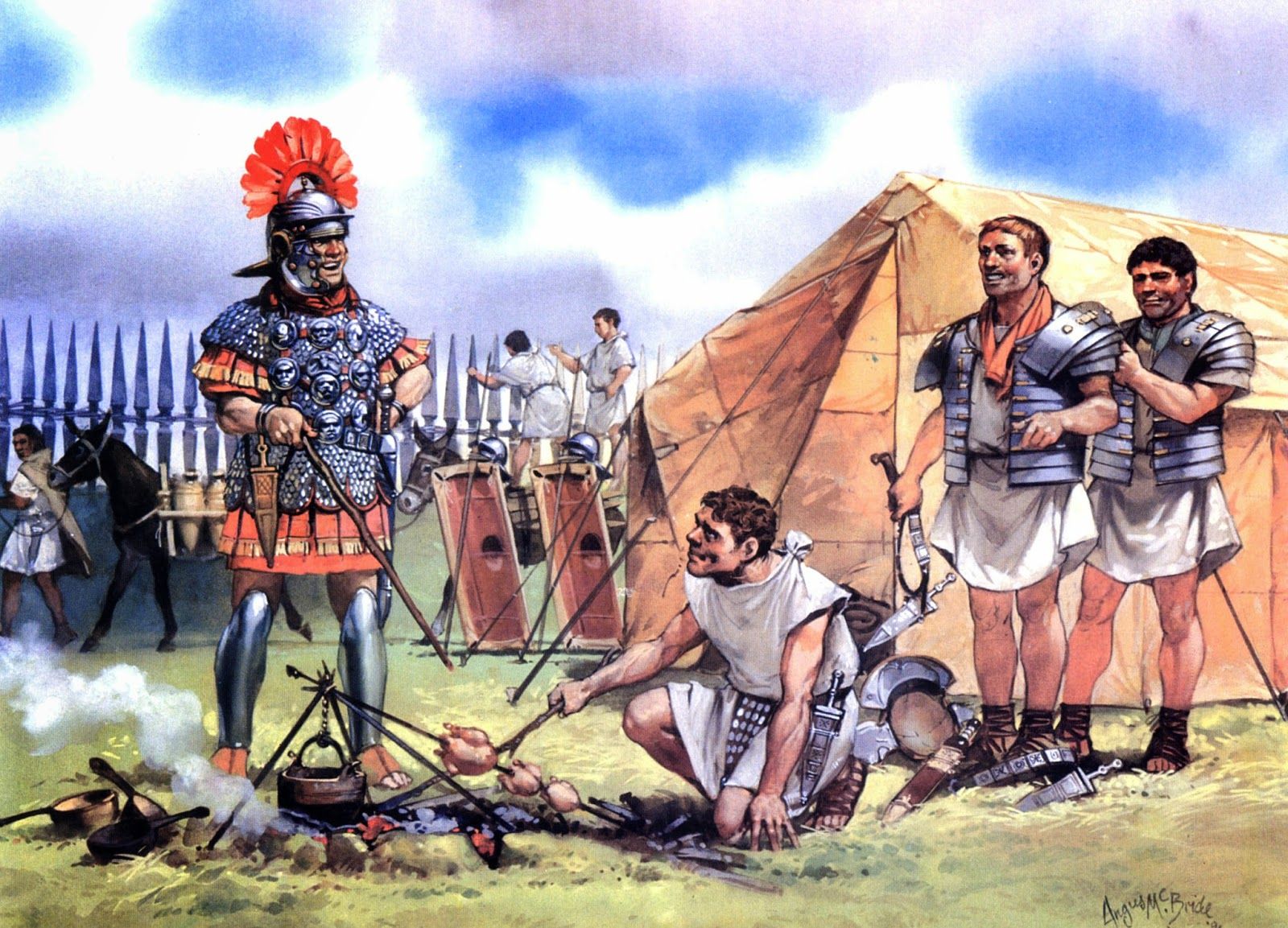
The evening meal was usually based around grain, which formed the foundation of the Roman soldier’s diet. Legionaries could prepare grain into different forms, including porridge or bread, depending on the circumstances and facilities available. Other foods could supplement the basic ration when supplies allowed. Vegetables, legumes, meat, or locally obtained provisions might sometimes be available, although the exact meal depended heavily on the army’s location and supply situation.
Food had to be carefully managed during a campaign. Caesar’s army could not simply assume that fresh supplies would always be available. Grain had to be transported, stored, distributed, and processed, making food an important part of military organization. For the individual legionary, however, this enormous logistical system was experienced simply as the evening meal that allowed him to continue the campaign.
Water was equally important. After spending hours marching through the countryside of Gaul, often while carrying heavy equipment, soldiers needed to replace the water they had lost during the day. The location of the camp therefore mattered not only for defense but also for access to reliable sources of water.
Once food had been dealt with, the legionary could turn toward his equipment. A Roman soldier carried much of what he needed to survive and fight, and constant marching placed considerable strain on his belongings. Sandals or other footwear could become worn, straps could loosen, and clothing could become dirty or damaged.
Weapons and defensive equipment also needed attention. A soldier could inspect his shield, sword, and other military equipment, making sure everything remained usable. The evening was an opportunity to fix small problems before they became larger ones. A damaged strap that seemed unimportant at night could become a serious inconvenience after several more hours of marching.
The legionary might also organize his personal belongings and prepare everything for the following morning. Readiness was part of military discipline. When the order to march came, there would be little time to search for missing equipment or repair something that should have been dealt with the previous evening.
While this work was happening, the soldier could finally spend some time with the men around him. These were the people he had marched beside throughout the day and would continue marching beside during the campaign. Roman soldiers lived and worked in close proximity, and repeated hardship could create strong bonds between comrades.
The evening therefore had a social side as well. Soldiers might talk about the day’s march, discuss the weather and terrain, share news, or simply sit together while preparing their equipment. For an ordinary legionary, these moments could provide a welcome break from the strict routine of military life.
The camp itself would remain active around them. Some soldiers were eating, others were repairing equipment, while others had already been assigned duties. Officers and messengers could continue moving through the camp, and preparations for the following day might already be underway.
As darkness settled over the Roman position, the atmosphere gradually changed. The main work of the day was finished, fires became less active, and many soldiers prepared their sleeping places. But the army could never completely shut down for the night.
Some legionaries still had responsibilities. Guards had to be positioned around the camp, and soldiers assigned to night duties would remain awake while their comrades slept. The legionary might therefore have only a limited amount of time to rest before his own watch began.
For those who were able to sleep first, the evening offered a few precious hours of recovery. They knew that when morning came, the same routine would begin again: wake, prepare equipment, eat, form up, and march.
For one ordinary legionary, this was the reality of campaigning with Caesar in Gaul. The war was not made up only of battles. It was built from thousands of evenings like this one—eating simple food, repairing equipment, speaking with comrades, standing guard, and preparing to do it all again the next day.
5 Main Ideas
- Grain was the foundation of the legionary’s diet, supported by other foods when available.
- Water and food were essential parts of surviving long days on campaign.
- Soldiers used the evening to repair, clean, and organize their equipment.
- Time spent with fellow soldiers provided important moments of comradeship and relaxation.
- Even after the main work was finished, night watches and preparation for the next day continued the military routine.
7. Night Watch — Sleep Before Another Day of War
As darkness covered the Roman camp, the noise of the day’s activity gradually became quieter. Fires continued to burn in different parts of the camp, while many legionaries settled down to sleep. For the ordinary soldier, this was the moment he had been waiting for since the morning. Yet the Roman army never completely stopped functioning at night.
Guards were stationed around the camp to watch the surrounding countryside and monitor the entrances. The army’s defensive position was designed to provide protection, but that protection depended on soldiers remaining alert. A legionary assigned to a night watch could not simply lie down with the rest of his unit. He had to remain awake and ready to respond to orders.
Night duty could be uncomfortable. The soldier might have spent the entire day marching and working, only to discover that his turn to stand guard had arrived. Fatigue was one of the constant realities of campaigning. Nevertheless, military discipline required him to perform the duty properly.
For those who were sleeping, the camp provided a degree of security. The ditch, rampart, gates, organized layout, and guards created several layers of protection. The legionary could therefore sleep knowing that other soldiers were watching while he rested.
Sleep itself was probably not luxurious. A temporary campaign camp was not a permanent Roman barracks. Soldiers slept in simple arrangements within the space assigned to their unit, surrounded by the equipment they carried. Comfort was secondary to practicality. Everything had to be capable of being packed up and moved when the army received the order to march.
The soldier’s sleep could also be interrupted. Orders might arrive, guards might change, weather could disturb the camp, or unexpected information could require the army to become more alert. Campaigning meant that a legionary could never assume that every night would pass quietly.
Eventually, the night watch would change. Soldiers completing their duty could finally return to their sleeping areas, while another group took their place. The system allowed the army to maintain security without keeping every legionary awake throughout the night.
For the ordinary legionary, these hours of darkness were therefore a mixture of exhaustion, routine, and uncertainty. He had marched across Gaul, carried his equipment, helped construct the camp, eaten his evening meal, maintained his belongings, and perhaps completed a period of guard duty. Now he could finally rest.
Before sunrise, however, the cycle would begin again.
The camp would wake gradually. Soldiers would prepare their equipment, fires would be lit, food would be prepared, and orders would move through the units. The legionary would once again check the things he depended on and prepare himself for another day on campaign.
That next day could be similar to the previous one: another long march through unfamiliar territory, another camp, more maintenance, and another night of limited rest. Or it could be completely different if Caesar’s army encountered a major Gallic force or received orders to change direction.
This uncertainty was part of military life during the Gallic Wars. An ordinary legionary could not know exactly what the following day would bring. His responsibility was much simpler: be prepared, follow orders, stay with his unit, and continue the campaign.
A single day therefore reveals something important about Caesar’s army. Roman military success was not created only when legionaries fought. It depended on the thousands of ordinary routines that happened before and after combat—marching, carrying supplies, maintaining equipment, building camps, standing guard, eating, sleeping, and preparing to repeat the process.
For the legionary, conquering Gaul was a long sequence of ordinary days. Each day demanded discipline and endurance, and each night offered only enough rest to prepare for the next.
5 Main Ideas
- Night watches kept the Roman camp secure while other soldiers slept.
- Legionaries often had to deal with fatigue and limited comfort during campaigning.
- The temporary camp provided protection but remained practical and ready to be dismantled.
- Soldiers could never be completely certain what the next day of campaigning would bring.
- Caesar’s military success depended on thousands of ordinary routines, not only battlefield fighting.