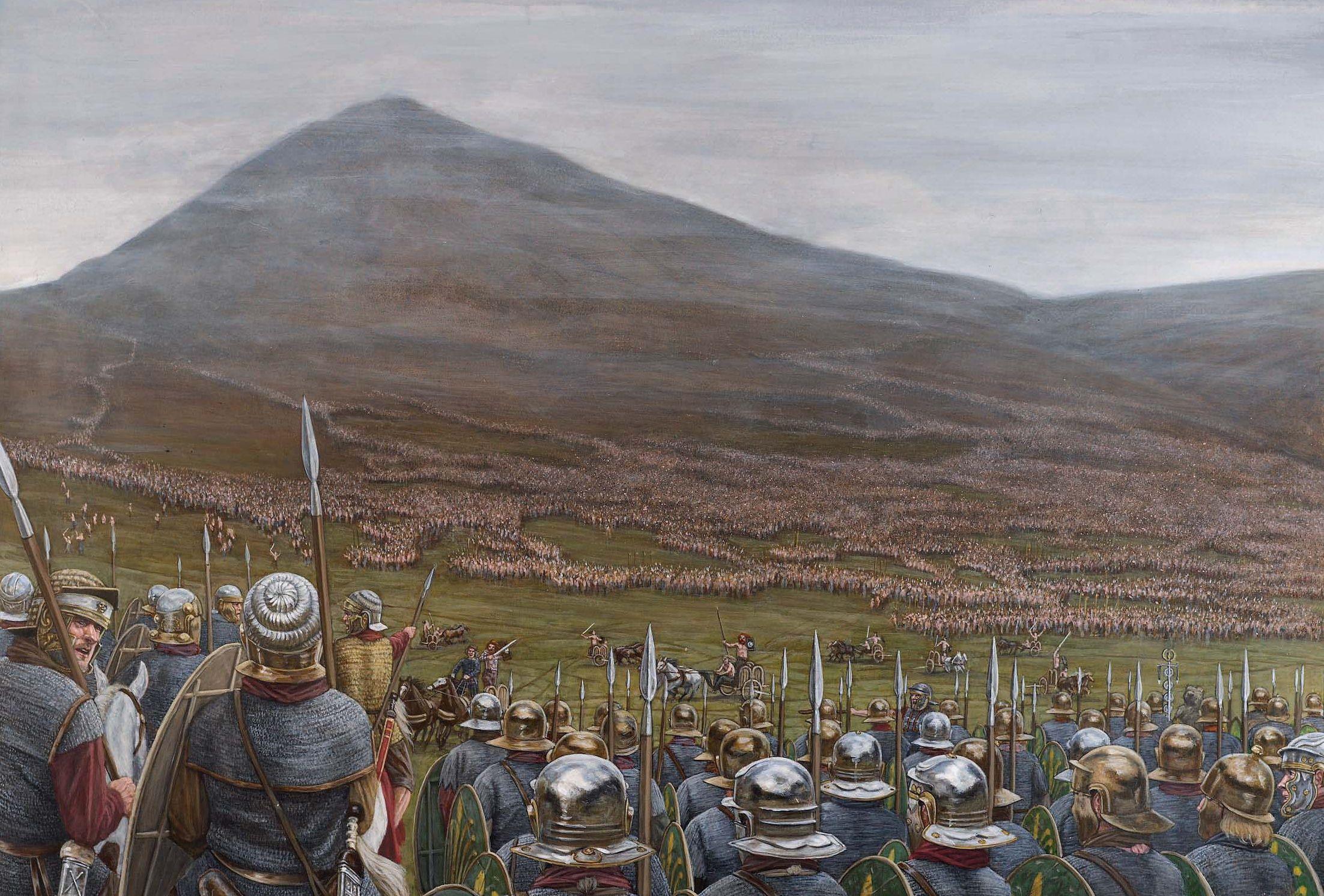
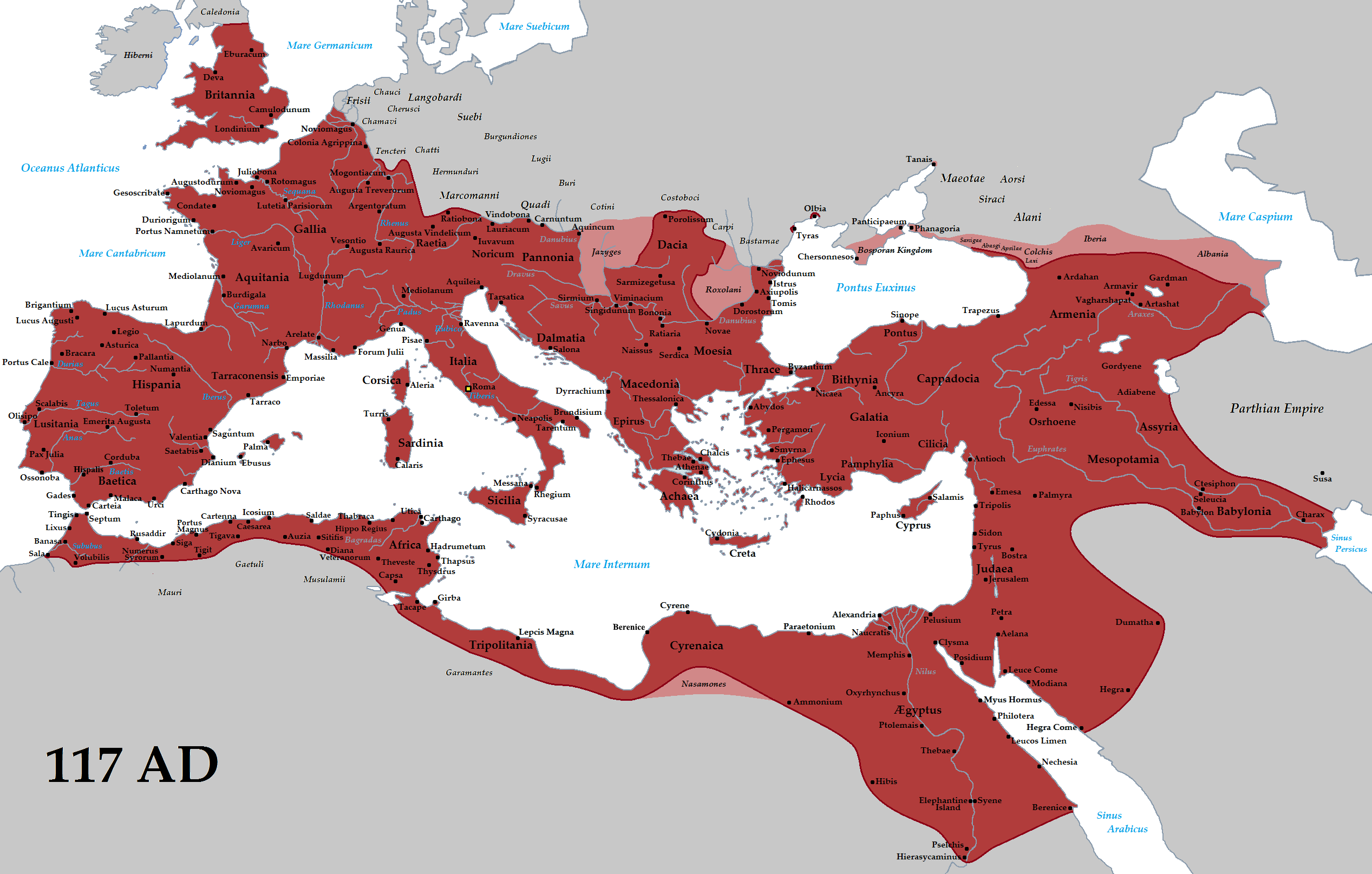
At the height of the Roman Empire, Rome controlled one of the largest and most politically complex territories the ancient world had ever seen. Its frontiers stretched from Britain in the northwest to the deserts and kingdoms of the Near East, and from the Atlantic coast across Europe, North Africa, and the eastern Mediterranean. The empire reached its greatest territorial extent under Emperor Trajan, around AD 117, following his campaigns in Dacia and his temporary expansion into Mesopotamia. At this moment, Rome appeared almost unstoppable. Yet controlling such an enormous empire created a challenge that was very different from conquering it: how could Rome actually defend all of its borders at the same time?
Conquering territory could sometimes be achieved through a concentrated military campaign. Defending it was a permanent responsibility. Roman commanders had to maintain forts, roads, bridges, watchtowers, supply depots, river crossings, ports, and military settlements, while keeping enough soldiers available to respond to raids or major invasions. Soldiers also had to be supplied with food, weapons, equipment, pay, and reinforcements. A frontier could therefore be difficult even when no major war was taking place.
Rome did not defend every border in the same way. Some frontiers benefited from powerful natural barriers. The Rhine and Danube rivers provided defensive lines across much of Europe, while deserts and mountains offered protection in other regions. Elsewhere, however, the landscape created serious problems. Britannia was separated from the continental empire by the sea and contained rugged terrain and powerful communities in the north. The German frontier included extensive forests and difficult country where Roman armies could struggle to find and engage their opponents. The Danube frontier stretched for hundreds of kilometres and faced peoples capable of crossing the river and attacking Roman territory.
The eastern frontier presented a different challenge. Roman provinces such as Syria and Cappadocia stood near powerful states, particularly the Parthian Empire, meaning Rome sometimes faced organized armies and rival imperial powers rather than only raids from smaller groups. Maintaining troops in the east could also require long-distance movement across mountains, plains, and deserts.
Even North Africa and Egypt had their own problems. Vast distances, limited water, desert terrain, and scattered settlements meant that controlling territory could depend heavily on roads, wells, forts, and reliable communications.
There is also an important historical complication: “the hardest province to defend” is not necessarily the same as “the hardest frontier to defend.” Some of Rome’s greatest military problems occurred across entire frontier systems rather than inside one province.
In this article, we will compare Rome’s major frontier regions by examining geography, enemy forces, distance, logistics, climate, military infrastructure, and manpower requirements. By doing so, we can understand which parts of the empire placed the greatest demands on Rome—and why maintaining the empire at its maximum extent could sometimes be harder than conquering it in the first place.
1. Britannia — The Isolated Northern Frontier
Among all the borders of the Roman Empire, Britannia presented Rome with a particularly unusual defensive problem. The province was separated from the rest of the empire by the English Channel, meaning that soldiers, supplies, weapons, and reinforcements had to cross the sea before reaching the island. Once Roman forces arrived, they also had to operate in a landscape that was very different from the Mediterranean world where much of Roman military planning had developed.
Roman Britain was not equally difficult everywhere. The southern and eastern parts of the province were relatively accessible and contained major Roman settlements, roads, and agricultural areas. The greatest challenge came farther north, where mountains, hills, forests, marshes, and rough terrain made military operations more difficult. Roman armies could build roads and forts, but controlling every valley and movement route was extremely difficult.
The northern frontier was also populated by communities that were not easily brought under permanent Roman control. Groups in northern Britain could resist Roman expansion, launch raids, or retreat into difficult terrain where Roman forces found it harder to pursue them. Rome therefore needed more than a large army. It needed a permanent defensive system capable of controlling movement and responding quickly to threats.
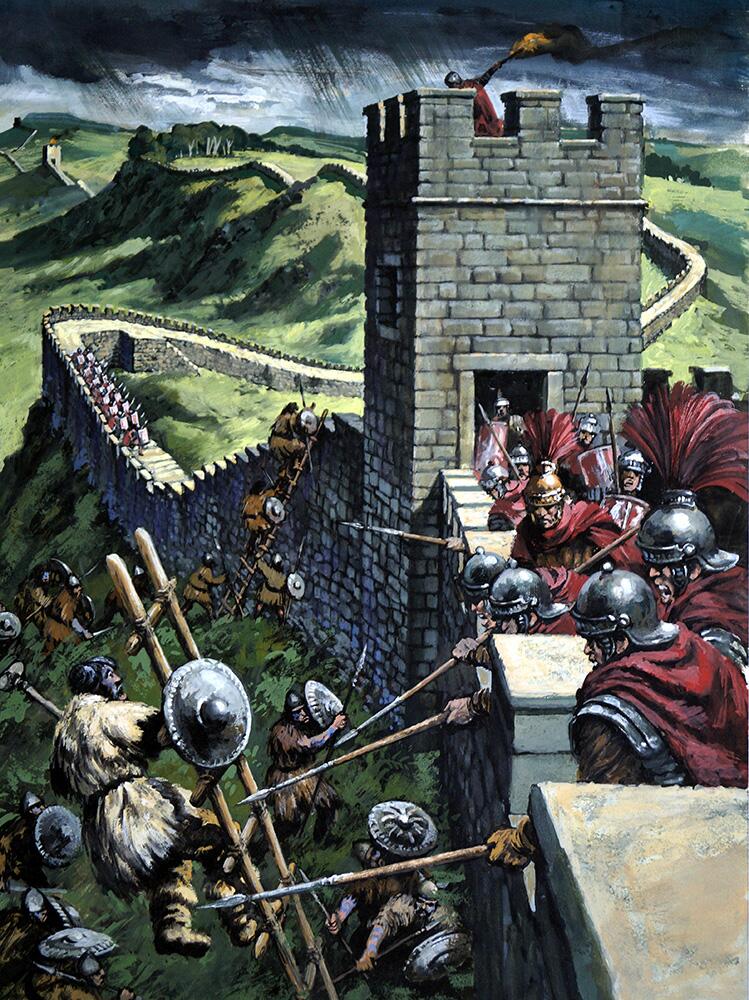
This helps explain the importance of Hadrian’s Wall, constructed during the reign of Emperor Hadrian beginning around AD 122. The wall stretched across northern England and became one of the most famous defensive structures in the Roman world. It included forts, milecastles, watchtowers, gates, and roads, allowing Roman soldiers to monitor movement across the frontier.
However, Hadrian’s Wall should not be imagined as an impenetrable barrier. Its purpose was not simply to create an enormous stone wall that nobody could cross. Instead, it helped the Roman military control movement, concentrate troops, monitor the frontier, and regulate crossings. Soldiers stationed at forts could patrol surrounding areas and respond to disturbances.
The location of Britain also created a major logistical challenge. A Roman army operating in Britain depended on ports and shipping connections with continental Europe. If a serious rebellion or invasion occurred, commanders needed to move troops and supplies across the Channel. Bad weather could complicate this process, while the long distance from the Mediterranean heartland meant Britain could not simply receive immediate assistance from Rome itself.
Climate presented another problem. Roman soldiers were accustomed to operating throughout many different environments, but Britain’s cooler, wetter conditions could make campaigning and maintaining equipment more difficult. Roads, camps, and supply routes required constant maintenance, particularly in areas where heavy rain and difficult ground could slow movement.
Britain was therefore difficult not because Rome faced one enormous enemy army every year, but because distance, geography, isolation, and persistent resistance combined together. Maintaining a strong military presence on the island required a substantial commitment of troops and infrastructure.
At the same time, Britain’s frontier had one important advantage: Rome eventually created a relatively defined defensive system. The wall, forts, roads, and military settlements gave Roman commanders a framework for controlling the northern frontier. This meant Britain was certainly demanding, but its challenges were different from those faced along the enormous continental frontiers.
5 Main Ideas
- Britannia was geographically isolated, making reinforcement and supply more complicated.
- Northern Britain contained rugged terrain, mountains, forests, and difficult weather conditions.
- Hadrian’s Wall helped Rome control movement and organize the northern frontier.
- Roman forces faced persistent resistance and raids from communities beyond the frontier.
- Britain’s greatest difficulties came from the combination of distance, geography, logistics, and isolation rather than constant large-scale invasions.
2. Germania — The Rhine Frontier
The Germanic frontier was one of the most difficult borders Rome ever attempted to control. Unlike Britain, where the sea separated the province from the rest of the empire, the frontier in Germania existed directly beside the Roman provinces of Germania Inferior and Germania Superior. The most important defensive feature was the Rhine River, which became one of the principal boundaries of the Roman Empire in western Europe.
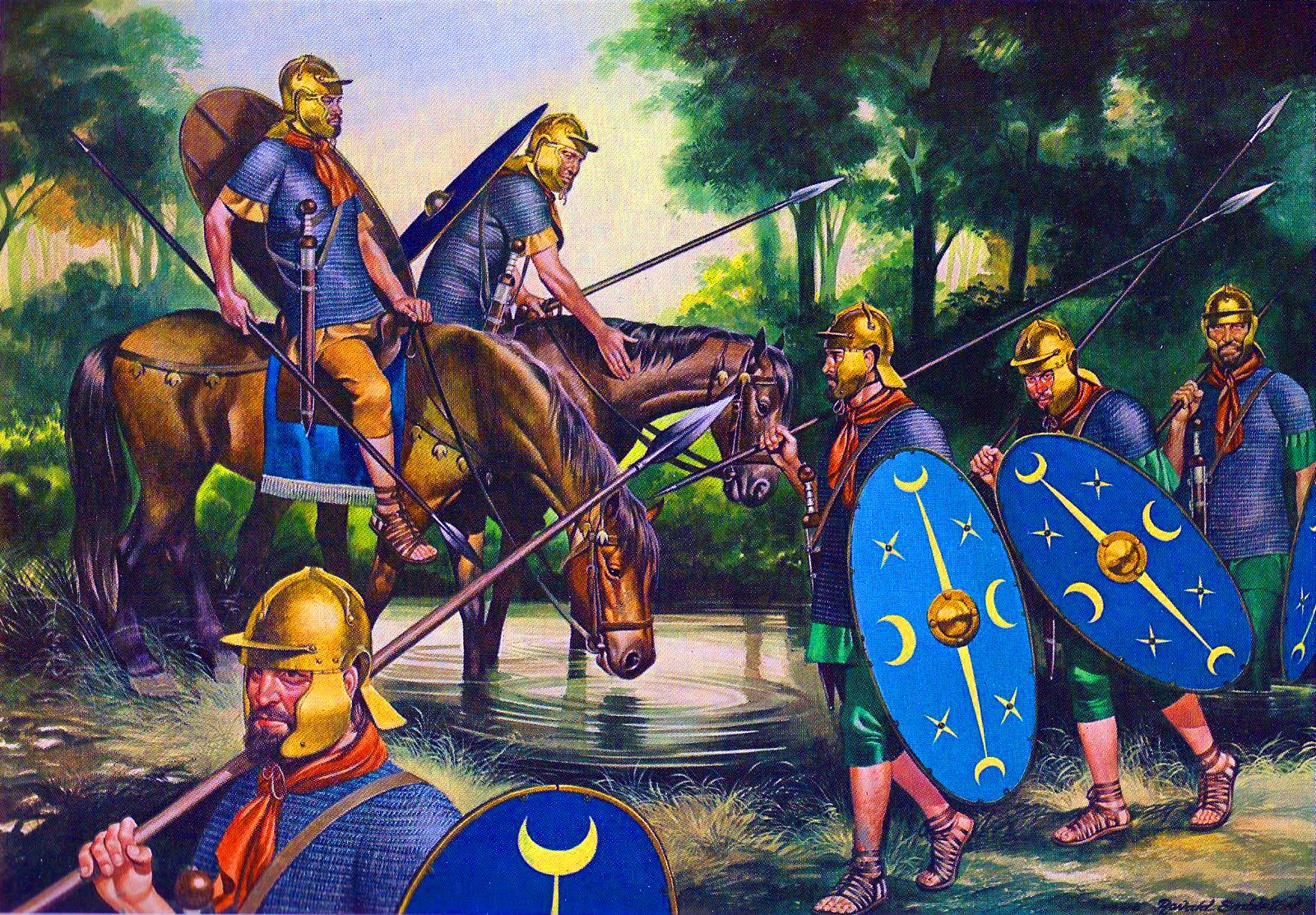
The Rhine provided Rome with a valuable natural barrier, but a river was never an impenetrable border. Germanic communities could cross it, particularly when Roman forces were distracted elsewhere. Roman commanders therefore established a network of forts, roads, watchtowers, and military settlements along the river. Large legionary bases such as Mogontiacum (Mainz) and Colonia Agrippina (Cologne) supported the frontier and allowed troops to move toward threatened areas.
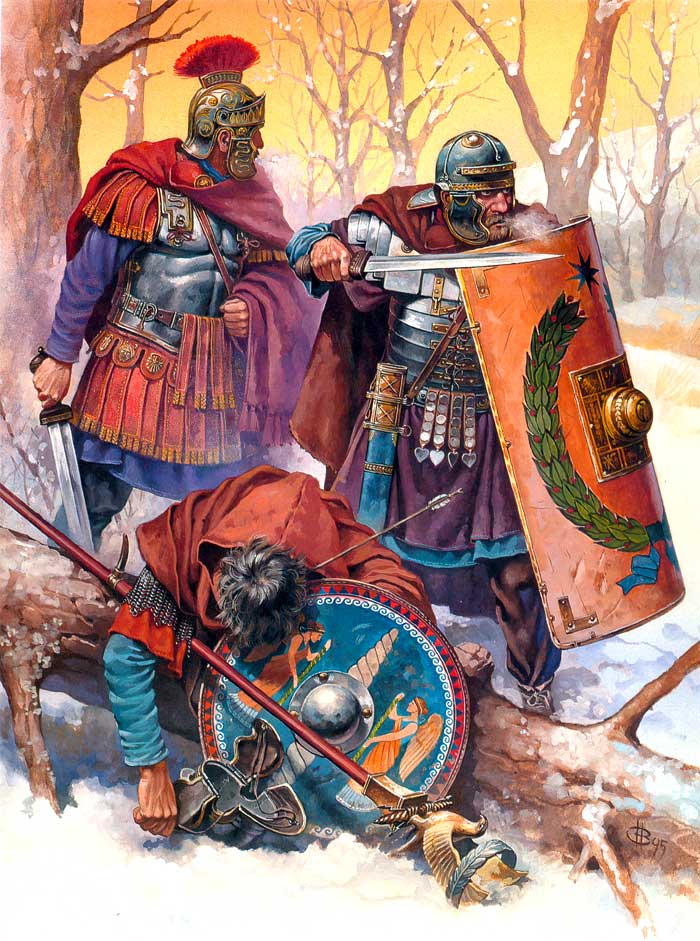
One of the biggest difficulties was the land beyond the Rhine. Much of Germania contained forests, rivers, marshes, and broken terrain that made large Roman military operations difficult. Roman armies could march into these regions, but maintaining supply lines while operating far from the Rhine was expensive and dangerous. The further Roman forces advanced, the more difficult it became to keep soldiers supplied and connected with their bases.
Rome learned this problem particularly harshly during the Battle of the Teutoburg Forest in AD 9. Three Roman legions under Publius Quinctilius Varus were destroyed in an ambush by a coalition of Germanic forces led by Arminius. The disaster demonstrated that Roman military discipline and organization did not guarantee victory when an army was operating in unfamiliar terrain against opponents who understood the local environment.
After Teutoburg, Rome did not simply abandon the region. Roman forces continued to campaign east of the Rhine under commanders such as Germanicus. However, Rome eventually settled into a strategy focused more heavily on securing the existing frontier rather than permanently conquering all of Germania.
This produced another important defensive system: the Germanic-Raetian frontier, including the network commonly known as the Limes. Roads and fortified positions connected military installations across the frontier. Watchtowers allowed soldiers to observe movement, while forts provided permanent bases for troops.
Yet the German frontier remained vulnerable because Rome was dealing with many different communities rather than one centralized enemy state. Germanic peoples could form temporary alliances, conduct raids, or take advantage of political changes inside the empire. Rome could defeat one coalition without permanently eliminating the possibility of another.
The frontier also required Rome to maintain substantial military forces. Legions stationed along the Rhine were not simply defending against attacks. They also had to patrol the border, protect settlements, maintain roads, support Roman administration, and remain ready for campaigns elsewhere. If troops were transferred to another war, the Rhine could become more vulnerable.
Compared with Britannia, Germania had the advantage of being directly connected to the continental Roman road network. Reinforcements did not have to cross the sea. But its forests, rivers, fragmented opposition, and enormous strategic depth created serious challenges.
The Rhine frontier therefore represented a fundamental Roman problem: how do you defend an empire when the territory beyond your border is difficult to control, the enemy is decentralized, and the natural frontier can be crossed? Rome found an answer through forts, roads, rivers, and permanent armies—but Germania remained one of the empire’s most demanding military environments.
5 Main Ideas
- The Rhine River became one of Rome’s most important defensive frontiers.
- Forests, marshes, rivers, and difficult terrain made operations beyond the Rhine challenging.
- The Teutoburg Forest disaster of AD 9 demonstrated the dangers of campaigning deep into Germania.
- Rome relied on forts, roads, watchtowers, and permanent armies to secure the frontier.
- The German frontier remained difficult because Rome faced many independent Germanic communities rather than one centralized enemy.
3. The Danube — Rome's Long European Frontier
The Danube frontier was one of the most important and demanding defensive systems in the Roman Empire. Unlike a short frontier surrounding a single province, the Danube stretched across a huge part of southeastern and central Europe. It passed through or bordered several Roman provinces, including Raetia, Noricum, Pannonia, Moesia, and Dacia, creating a vast military zone that required continuous Roman attention.
The river itself was Rome’s greatest defensive advantage. The Danube formed a natural barrier that made large-scale invasions more difficult and gave Roman commanders a clear geographical line to defend. But the river was also a major weakness. It was long, contained numerous crossing points, and could freeze in some regions during winter. Enemy forces could cross the river when Roman defenses were weak, while Roman commanders had to maintain troops along hundreds of kilometres of frontier.
Rome therefore constructed a huge network of forts, watchtowers, roads, bridges, and military bases along the Danube. Large legionary fortresses supported smaller auxiliary forts, allowing Roman forces to monitor the river and respond to attacks. Important settlements developed around these military installations, turning the Danube into a heavily militarized region.
The frontier became especially important after the Dacian Wars of Emperor Trajan. Rome’s conquest of Dacia in the early second century created a Roman province north of the Danube. This changed the strategic situation considerably. Instead of simply defending the river, Rome now had to defend a province that extended beyond it.
Dacia was surrounded by peoples who remained outside Roman control, including groups such as the Sarmatians and other communities living beyond the imperial frontier. This meant that Roman troops stationed in Dacia could potentially be threatened from several directions. Mountains also complicated movement, while roads and fortified positions were necessary to connect isolated military settlements.
The Danube frontier also faced a different problem from Britain. Britain was isolated by the sea, but the Danube was connected directly to the rest of continental Europe. This made reinforcement easier, but it also meant that large populations and migrating groups could approach the frontier overland.
Another difficulty was the sheer scale of the region. A commander responsible for one fort could protect only a limited section of the river. If an enemy crossed the Danube several hundred kilometres away, troops might need to travel considerable distances before reaching the threatened area. This made communication and rapid deployment extremely important.
The Danube also became a major route for Roman military movement. The river itself could be used for transportation, while roads running parallel to it connected fortresses and settlements. This allowed Rome to move soldiers and supplies more efficiently than would have been possible across completely undeveloped territory.
However, maintaining this system required enormous resources. Thousands of soldiers had to remain stationed along the frontier, while engineers and workers maintained roads, bridges, forts, and river infrastructure. The Roman government also had to supply these forces with food, weapons, equipment, animals, and pay.
The Danube was therefore not simply a border. It was a massive military zone where Rome had to combine natural geography with permanent military infrastructure. Its enormous length, numerous potential crossing points, powerful neighboring peoples, and the additional responsibility of defending Dacia made it one of the most demanding frontiers in the entire Roman Empire.
5 Main Ideas
- The Danube was one of Rome’s longest and most important European frontiers.
- The river provided a natural defensive barrier but also contained many potential crossing points.
- Rome built forts, roads, watchtowers, bridges, and legionary bases throughout the region.
- The conquest of Dacia created an additional defensive responsibility north of the river.
- The frontier’s enormous length, enemy pressure, and logistical demands made the Danube one of Rome’s most difficult borders to maintain.
4. Dacia — The Province Surrounded by Enemies
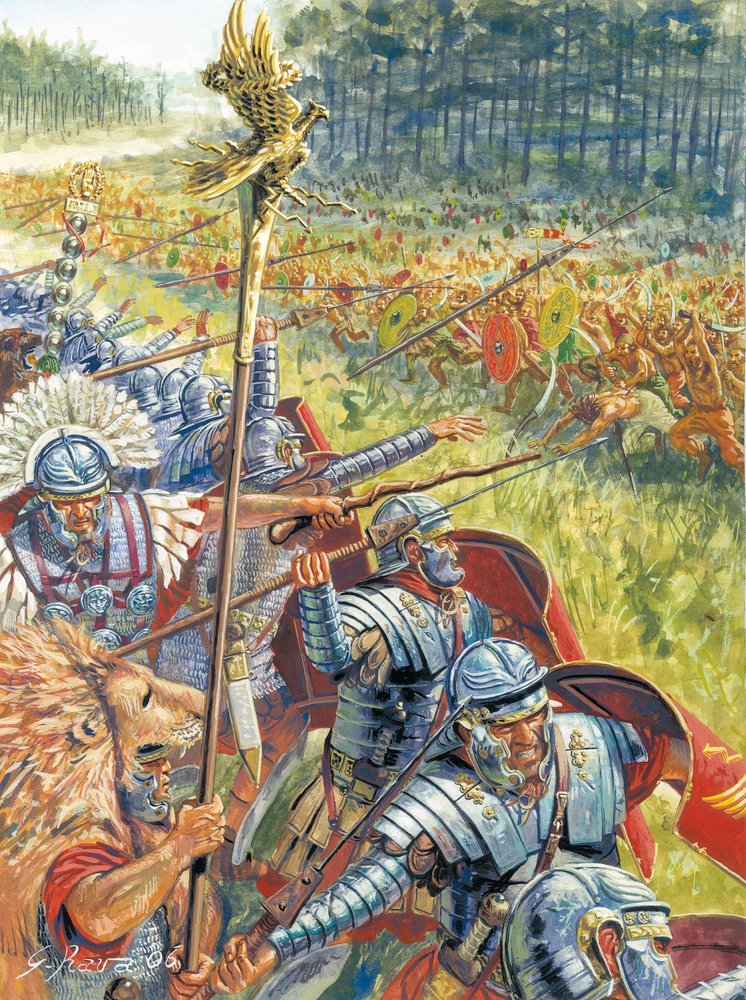
Among Rome’s frontier provinces, Dacia was unusual because of its location, geography, and the circumstances of its conquest. Rome conquered Dacia under Emperor Trajan after two major wars in AD 101–102 and AD 105–106. The resulting province extended north of the Danube into a region surrounded by peoples who remained outside Roman control. This made Dacia valuable, but it also created a difficult military responsibility.
The geography of Dacia was one of its biggest problems. Much of the province was dominated by the Carpathian Mountains, valleys, forests, and rugged highlands. These features could help Roman soldiers defend important positions, but they also made communication and transportation more difficult. Moving large numbers of troops through mountainous country required carefully constructed roads and bridges.
Rome responded by building an extensive military infrastructure. Fortresses, forts, roads, watchtowers, and settlements connected important areas of the province. Major military centers allowed Roman commanders to concentrate troops when necessary. Roads were particularly important because the Roman army depended on being able to move soldiers and supplies quickly between different parts of the province.
The greatest difficulty, however, came from Dacia’s strategic position. The province was not surrounded by other Roman territories on every side. Beyond its borders were independent peoples who could potentially threaten Roman settlements. The Sarmatians, for example, occupied territories to the east and north of the Roman frontier. Other groups in the wider region could also become involved in conflicts with Rome or with one another.
This meant that Roman commanders could not focus only on the province itself. They also had to watch what was happening beyond the frontier. A conflict between neighboring peoples could suddenly create a threat to Roman territory. Maintaining intelligence, patrols, and defensive positions was therefore an important part of Roman strategy.
Dacia’s location also created a problem of military isolation. The province was connected to the wider Roman world through the Danube, but the mountains and distance made movement more complicated than in many parts of the empire. If a serious attack developed in a remote area, troops could not instantly appear there. Roman commanders needed functioning roads and reliable supply networks to move forces where they were needed.
The province also required a substantial military presence. Roman forces had to protect mining regions, towns, roads, forts, and administrative centers, while remaining prepared for attacks from outside the province. Gold from Dacia’s mines was extremely valuable to Rome, making the territory economically important and therefore worth protecting.
Yet Dacia also demonstrates why conquest and defense were different problems. Trajan could concentrate large armies during the Dacian Wars and attack the kingdom with overwhelming force. Once Dacia became a Roman province, however, the army had to remain there permanently. Soldiers could no longer simply withdraw after victory. Roads had to be maintained, forts supplied, and surrounding peoples monitored year after year.
Eventually, the position became difficult enough that Emperor Aurelian abandoned Dacia in the late third century, although Roman influence and populations remained in the wider region. The withdrawal illustrates the long-term difficulty of maintaining a Roman province beyond the Danube.
Dacia was therefore one of Rome’s most demanding frontier provinces because it combined mountainous terrain, strategic isolation, surrounding hostile or independent peoples, valuable resources, and significant military requirements.
5 Main Ideas
- Dacia was conquered by Trajan after the Dacian Wars of AD 101–102 and AD 105–106.
- The province contained mountains, forests, and difficult terrain that complicated movement and communication.
- Dacia was surrounded by independent peoples, including Sarmatian groups beyond Roman territory.
- Rome needed extensive roads, forts, watchtowers, and military bases to maintain control.
- Dacia showed that conquering territory was easier than defending it permanently, eventually contributing to its abandonment under Aurelian.
5. The Eastern Frontier — Rome Against Powerful Empires
Rome’s eastern frontier was fundamentally different from the borders in Britain, Germania, or along the Danube. In the west and north, Roman armies often dealt with numerous tribes and smaller political communities. In the east, however, Rome faced organized and powerful states, most importantly the Parthian Empire. This created a frontier where the danger was not simply raids or local rebellions, but the possibility of major wars between two powerful civilizations.
The eastern frontier included important Roman provinces such as Syria and Cappadocia, as well as territories connected to Armenia and Mesopotamia. These regions were strategically important because they controlled major roads and routes between the Mediterranean, Anatolia, Mesopotamia, and the Arabian world. Losing control of one important city or road could therefore affect a much larger area.
One of the greatest difficulties was the distance involved. Rome’s eastern territories were far from Italy and the political center of the empire. A major conflict could require the movement of large armies across thousands of kilometres. Soldiers and supplies had to travel along established roads and through important cities before reaching the battlefield.
The geography also created multiple challenges. The eastern frontier contained mountains, deserts, plains, and major rivers, meaning Roman armies could not rely on one continuous natural barrier like the Rhine or Danube. Different parts of the frontier required different defensive strategies.
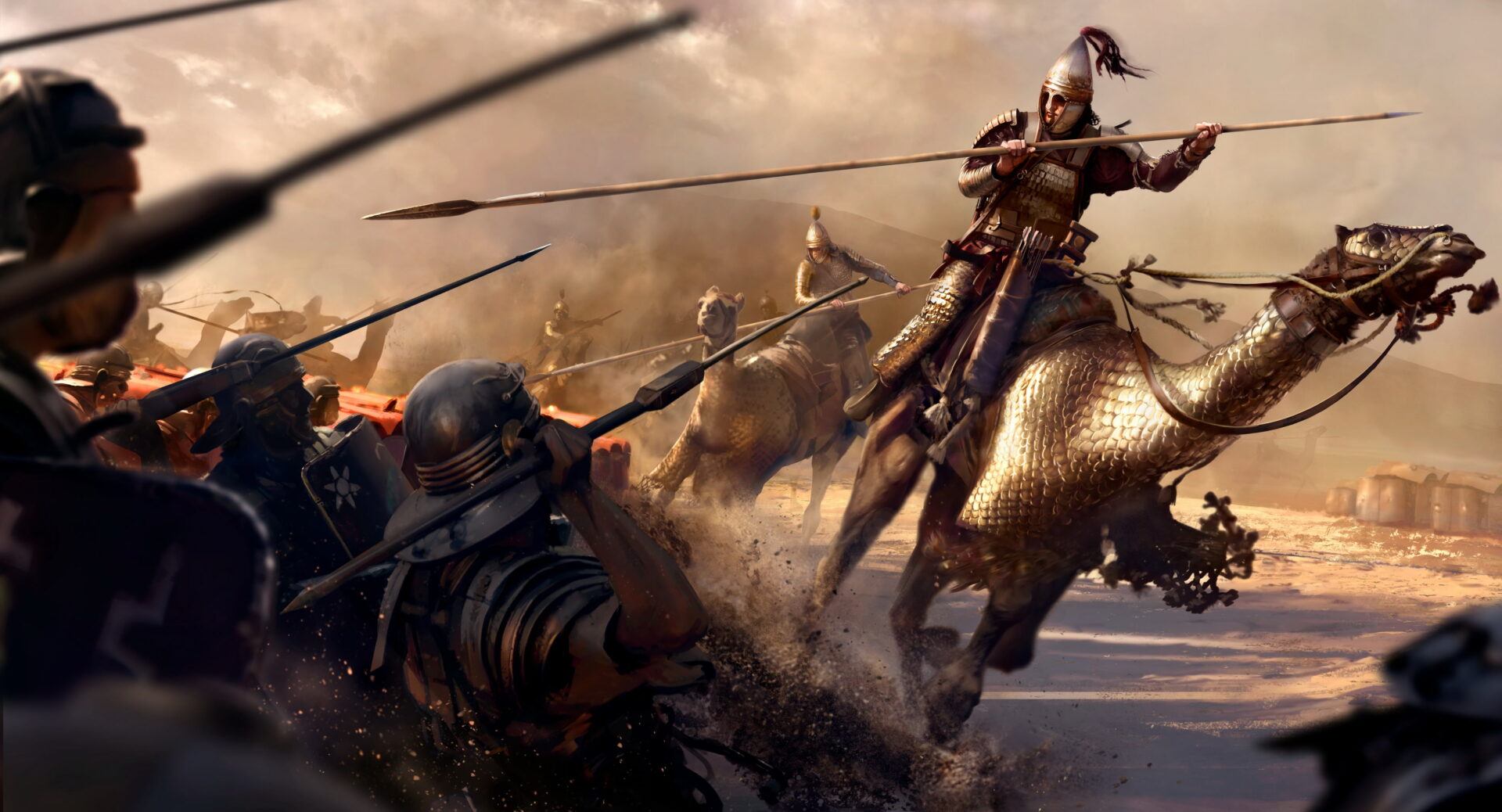
The relationship with Parthia made the situation even more complicated. The Parthians possessed strong cavalry forces and controlled extensive territory east of the Euphrates. Roman commanders therefore had to prepare for opponents who could operate very differently from the Germanic and British peoples encountered farther west.
The Roman-Parthian struggle also focused heavily on Armenia. Armenia occupied a strategically important position between the two great powers. Both Rome and Parthia wanted influence over the Armenian kingdom because it could provide strategic depth and access to important routes. As a result, disputes involving Armenia could develop into major international conflicts.
This meant that Rome could not simply build a wall and consider the frontier secure. The eastern border required diplomacy as well as military power. Rome frequently relied on client kingdoms, local rulers, treaties, and political alliances to create a buffer between Roman territory and its major eastern rival.
Trajan’s eastern campaigns demonstrated both the possibilities and the problems of Roman expansion. Around AD 114–117, Roman forces conquered Armenia and advanced into Mesopotamia, reaching areas far beyond the established Roman frontier. These campaigns temporarily pushed Roman power to an extraordinary distance from the Mediterranean.
However, maintaining these new territories proved extremely difficult. Following Trajan’s death, Hadrian abandoned much of the eastern territory conquered by his predecessor. The decision demonstrated an important reality of Roman strategy: territory was useful only if Rome could realistically supply, administer, and defend it.
The eastern frontier therefore required Rome to maintain substantial armies while also managing relationships with neighboring powers. A military victory did not necessarily solve the strategic problem. Rome had to consider supply lines, political alliances, enemy cavalry, fortified cities, mountain routes, and the possibility of another major war.
Compared with Britain or Germania, the eastern frontier was less about controlling every local community and more about maintaining a balance of power against another major state. A Roman army stationed there needed to be capable not only of stopping raids but also of participating in large-scale imperial warfare.
This made the eastern frontier one of Rome’s most strategically complicated borders. Its combination of great distances, difficult geography, powerful neighbors, and major military campaigns placed enormous demands on the Roman Empire.
5 Main Ideas
- The eastern frontier faced powerful organized states, especially the Parthian Empire.
- Provinces such as Syria and Cappadocia were strategically important because of their roads and geographic position.
- Rome had to deal with mountains, deserts, plains, and rivers, rather than one simple natural frontier.
- Armenia and client kingdoms played an important role in the competition between Rome and Parthia.
- The eastern frontier required a combination of armies, diplomacy, logistics, and strategic planning rather than simple border defense.
6. North Africa and Egypt — Desert Borders and Vast Distances
The North African and Egyptian frontiers presented Rome with a very different kind of defensive challenge. Unlike the Rhine and Danube, these borders were not dominated by enormous rivers, and unlike the eastern frontier, Rome was not always facing a powerful neighboring empire. Instead, Roman commanders had to deal with vast deserts, limited water, long distances, and mobile groups living beyond the settled frontier.
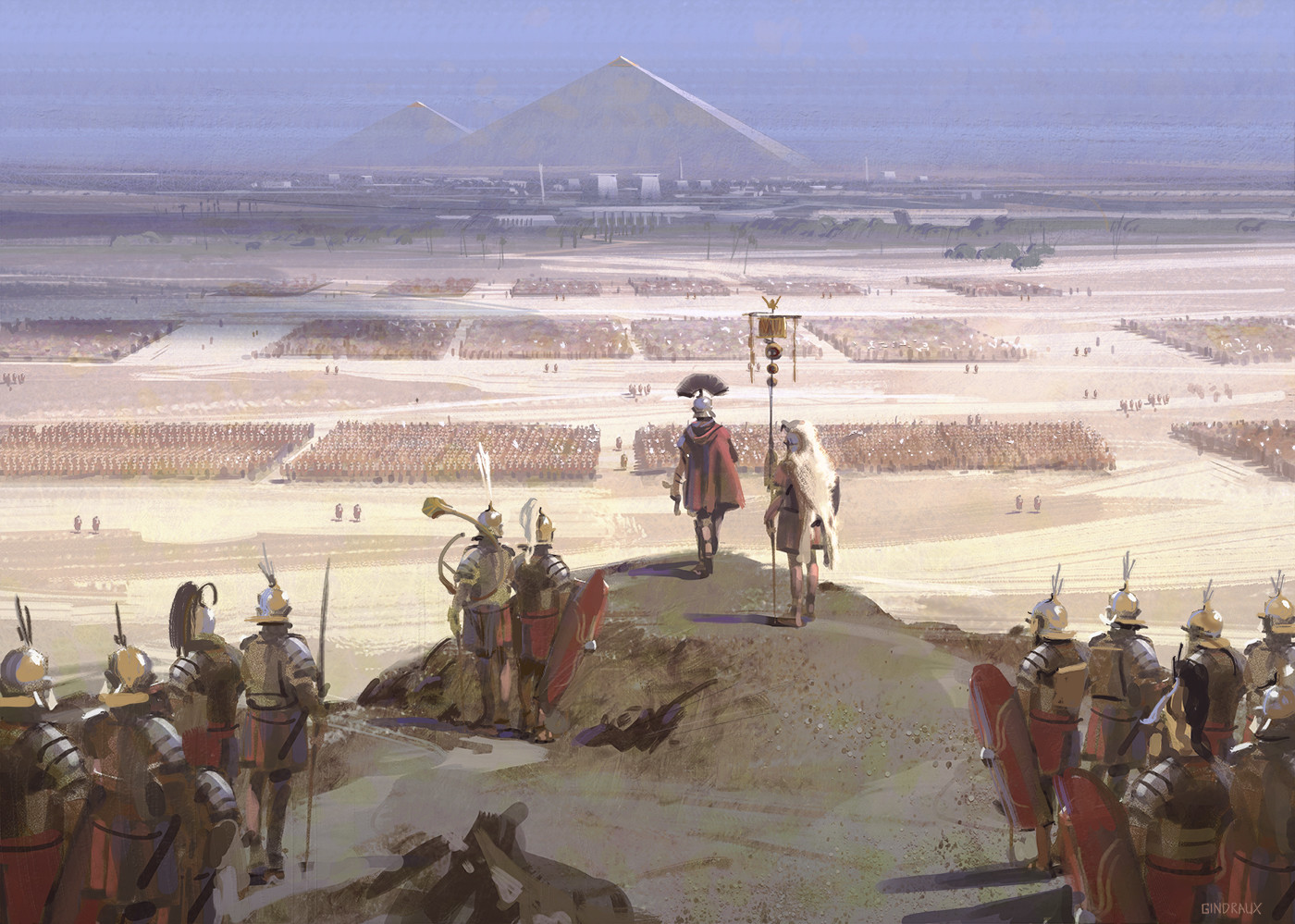
Egypt was one of the most important provinces in the entire Roman Empire. Its fertile Nile Valley produced enormous quantities of grain, making the province strategically and economically essential. Rome therefore had to protect the agricultural regions, major cities, ports, roads, and the routes connecting Egypt with the wider empire. Alexandria was particularly important because it connected Egypt to Mediterranean shipping networks.
Beyond the fertile Nile Valley, however, the environment changed dramatically. The Eastern Desert separated the Nile from the Red Sea, while vast desert regions extended west and south. Roman soldiers operating in these areas depended heavily on water sources and established routes. A fort might be strategically important not because it controlled a large population, but because it protected a road, well, or caravan route.
This created a major logistical problem. In a desert environment, an army could not simply march wherever it wanted. Water determined movement. Roman engineers and administrators therefore developed networks of wells, roads, fortified posts, and small military stations that allowed soldiers and travelers to cross difficult regions.
The Romans also built and maintained military installations along important desert routes. These included forts, watchtowers, and smaller outposts that could monitor movement and protect communication routes. The purpose was often less about stopping a massive invasion and more about controlling movement, protecting trade, and responding to raids.
North Africa presented similar problems in several regions. The Roman provinces of Africa Proconsularis, Numidia, and Mauretania contained some of the most productive agricultural land in the empire, but Roman-controlled territory gradually gave way to increasingly dry environments. The frontier therefore had to transition from settled agricultural zones into areas where Roman settlement became much more limited.
Rome also faced mobile desert and semi-desert communities. These groups were difficult to control because they did not always live in permanent settlements that Roman armies could easily occupy. A Roman force might defeat one group in battle without eliminating the wider possibility of raids or movement across the frontier.
This made intelligence particularly important. Roman commanders needed to know where groups were moving, which routes they were using, and where water sources were located. Local knowledge could therefore be extremely valuable in maintaining security.
However, the North African and Egyptian frontiers also had important advantages. Much of the territory around the major Roman settlements was relatively stable and heavily developed. Roads, towns, agricultural production, and established administrative systems allowed Rome to maintain control efficiently in many areas. The desert itself could also act as a natural barrier, making large-scale invasions difficult.
This means the main challenge was not necessarily the constant threat of enormous enemy armies. Instead, it was the difficulty of maintaining Roman authority across enormous spaces where water and settlement were limited.
Compared with the Danube or eastern frontier, North Africa and Egypt generally required a different style of defense. Rome relied heavily on fortified routes, wells, patrols, roads, and small military posts, rather than concentrating enormous armies along a single continuous defensive line.
The desert frontier therefore demonstrates that a border could be difficult even without frequent major battles. Distance itself could become the enemy. A Roman soldier stationed hundreds of kilometres from a major city depended on reliable roads, water supplies, communications, and local infrastructure. Protecting these systems was essential to keeping Rome’s southern and eastern territories secure.
5 Main Ideas
- Deserts and enormous distances created major logistical challenges for Roman forces.
- Egypt was especially important because the Nile Valley supplied enormous quantities of grain.
- Roman forces relied on wells, roads, forts, watchtowers, and desert outposts.
- Mobile groups beyond the frontier could conduct raids and move through difficult terrain.
- The main challenge was maintaining control across vast spaces where water and permanent settlement were limited.
7. So Which Frontier Was the Hardest to Defend?
After examining Britannia, Germania, the Danube, Dacia, the eastern frontier, and North Africa and Egypt, it becomes clear that there was no single type of problem facing the Roman army. Each frontier tested Rome in a different way. Britain was difficult because of isolation and rugged terrain. Germania combined forests, rivers, and decentralized opponents. The Danube was enormous and exposed Rome to pressure across a huge geographical area. Dacia was difficult to supply and defend because of its mountainous position. The eastern frontier brought Rome into competition with powerful organized states, while North Africa and Egypt presented problems of distance, water, and desert logistics.
If we compare these frontiers using the same criteria, however, the Danube frontier emerges as one of the strongest candidates for the most difficult overall defensive system.
The first reason is scale. The Danube was an enormous frontier extending across several provinces. Roman soldiers were responsible for protecting a huge river system rather than a relatively short defensive line. Even with forts and roads, an attack at one point could occur far away from the main concentration of Roman troops.
The second problem was the number and variety of peoples beyond the frontier. Rome did not face one permanent enemy. Different groups could cooperate, fight one another, migrate, raid Roman territory, or cross the river when circumstances were favorable. This meant Roman commanders had to remain prepared for constantly changing political conditions.
The third factor was the combination of natural barriers and crossing points. The Danube was a major defensive advantage, but it was also a river that could be crossed. Bridges, boats, islands, tributaries, and seasonal conditions all affected Roman security. A river could slow an invading army without completely stopping it.
The conquest of Dacia made the situation even more complicated. Rome gained valuable territory north of the Danube, but this meant that the empire now had to protect a province that extended beyond its previous natural defensive line. Roman troops had to defend Dacia itself while continuing to protect the wider Danube frontier.
The eastern frontier remains a serious competitor when considering strategic difficulty. Rome faced powerful states such as Parthia, and wars could involve enormous distances and complicated political alliances. However, the eastern frontier was also supported by major cities, established roads, and diplomatic relationships with client kingdoms. Rome could sometimes use political arrangements to reduce direct military pressure.
Britain, meanwhile, was isolated and difficult, but its frontier eventually became relatively well defined through Hadrian’s Wall and the northern military zone. Germania was dangerous, but the Rhine provided a strong natural boundary. North Africa contained enormous distances, but the desert itself could make large-scale invasion more difficult.
The Danube combined many of these problems at once: a vast frontier, difficult terrain, numerous neighboring peoples, major rivers, frequent military pressure, and the additional responsibility of defending Dacia. It required Rome to maintain a large and permanent military presence while keeping roads, forts, bridges, and supply systems functioning.
Therefore, if the question is which frontier presented the greatest overall combination of military, geographical, and logistical difficulties, the Danube frontier is arguably the strongest candidate. This does not mean every part of it was constantly dangerous, or that the eastern frontier was less strategically important. Rather, the Danube stands out because Rome had to manage an exceptionally large defensive zone where threats could emerge from many directions.
The broader lesson is that Rome’s hardest borders were not necessarily the ones with the most battles. A frontier could be difficult because of distance, geography, supply requirements, political instability, or the sheer amount of territory that had to be watched. The Roman Empire survived for centuries partly because it developed systems capable of dealing with these very different challenges.
5 Main Ideas
- Every Roman frontier presented a different defensive problem, from deserts and mountains to powerful neighboring states.
- The Danube frontier stands out because of its enormous scale and military complexity.
- Rome had to deal with many different peoples and changing political conditions along the Danube.
- The conquest of Dacia increased the defensive burden by placing Roman territory beyond the Danube.
- Considering scale, geography, enemies, logistics, and military requirements together, the Danube was one of the strongest candidates for Rome’s hardest frontier to defend.