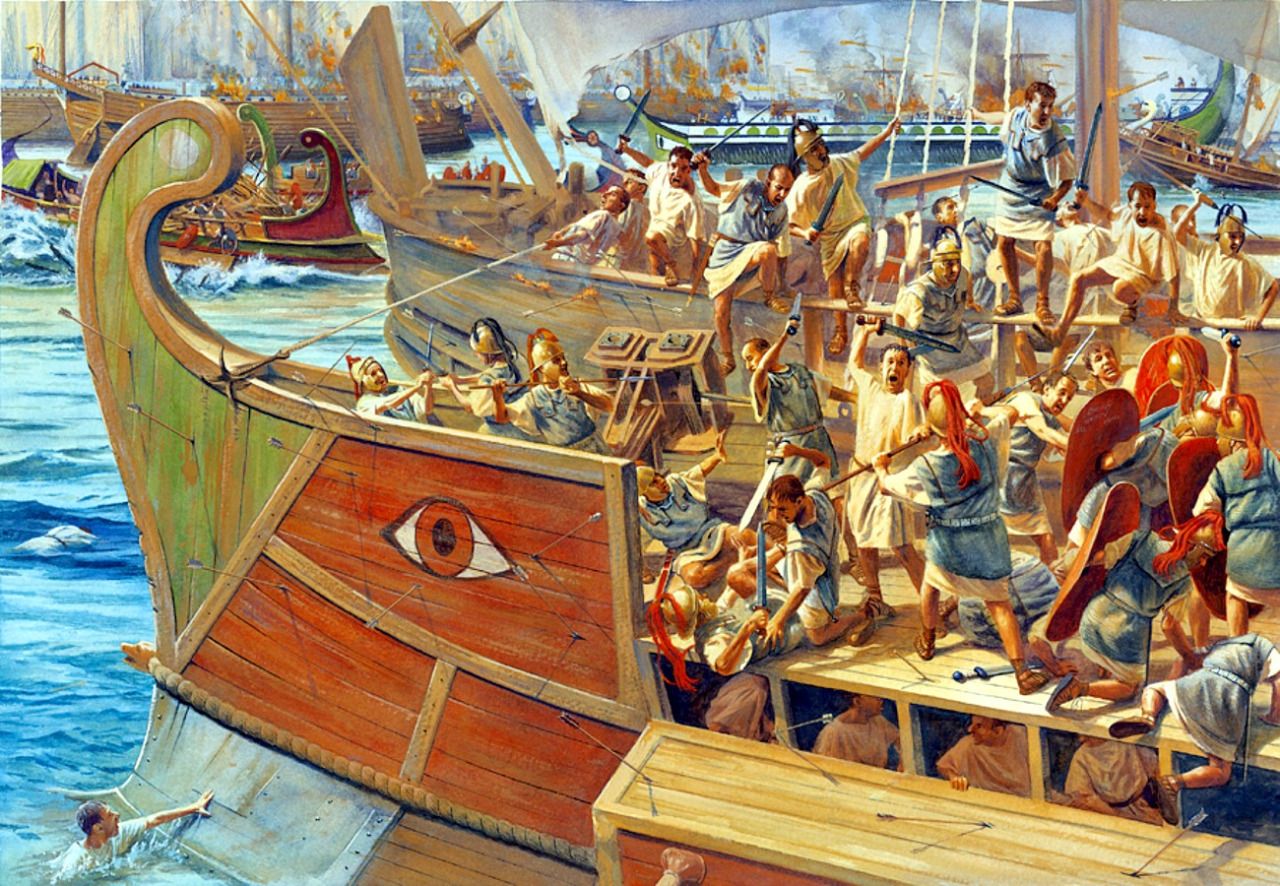
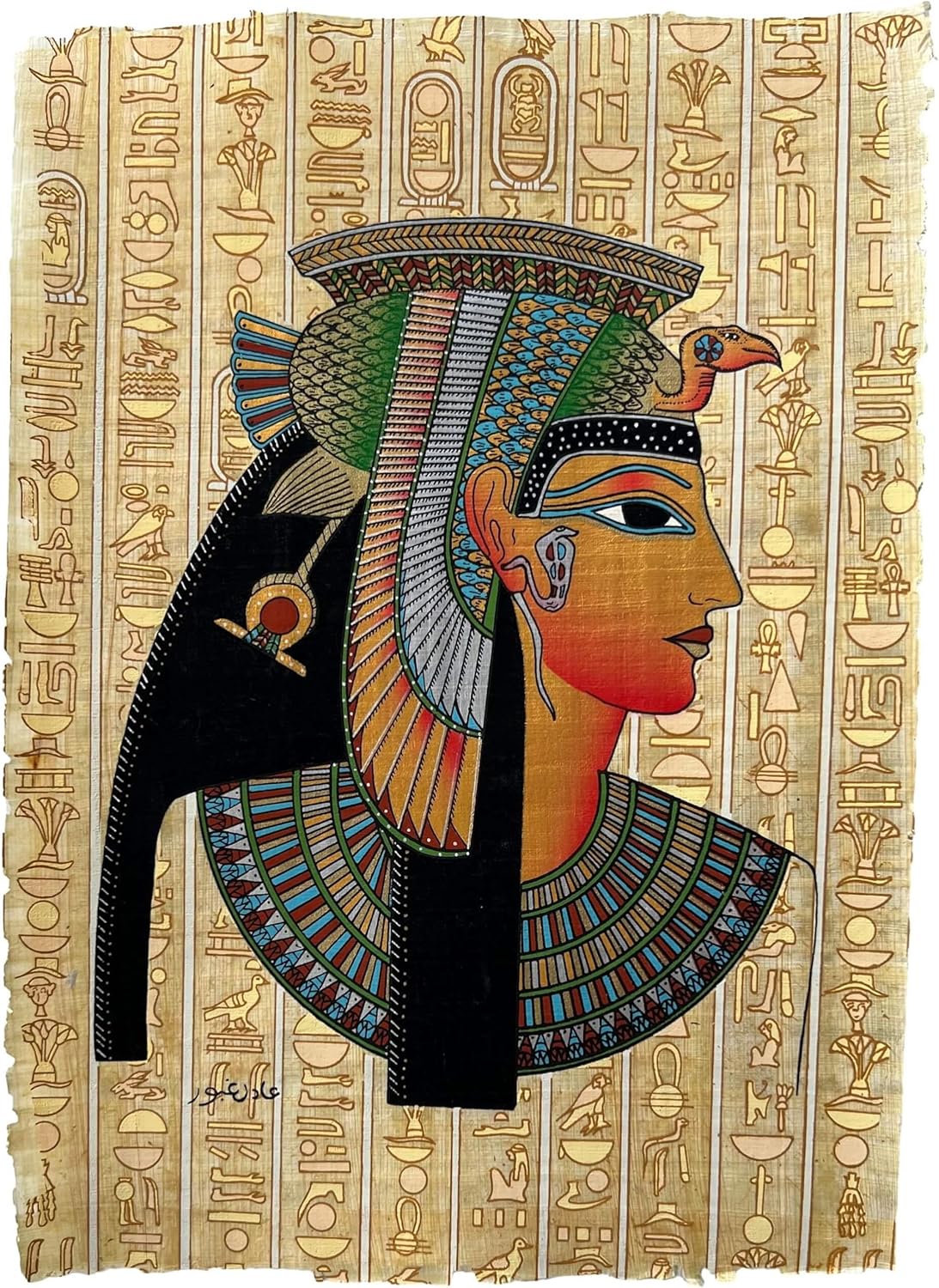
1. Who Was Cleopatra? The Last Queen of Ancient Egypt
Cleopatra VII Philopator is one of the most famous women in world history. Remembered as the last queen of Ancient Egypt, Cleopatra was far more than a legendary beauty or the romantic partner of powerful Roman leaders. She was an intelligent ruler, skilled diplomat, linguist, and strategic politician who fought to preserve the independence of her kingdom during one of the most turbulent periods of the ancient world. Her life became closely connected with the rise of Rome, and her relationships with Julius Caesar and Mark Antony would ultimately shape the future of both Egypt and the Roman Empire.
Cleopatra was born in 69 BC into the Ptolemaic Kingdom, a dynasty founded by Ptolemy I Soter, one of Alexander the Great‘s generals. Although the Ptolemies ruled Egypt for nearly three centuries, they were Greek in origin, not Egyptian. They spoke Greek, followed many Greek customs, and governed from the magnificent city of Alexandria, one of the wealthiest and most important cities of the ancient Mediterranean.
Unlike many of her predecessors, Cleopatra embraced Egyptian traditions alongside her Greek heritage. She presented herself as the living incarnation of the goddess Isis, strengthening her legitimacy among the Egyptian people. Ancient writers also noted that Cleopatra was exceptionally educated. She reportedly spoke multiple languages, including Egyptian, Greek, and several languages used by neighboring peoples. This made her unusual among the Ptolemaic rulers, many of whom relied on translators when dealing with foreign diplomats.
When Cleopatra’s father, Ptolemy XII Auletes, died in 51 BC, Cleopatra inherited the throne together with her younger brother Ptolemy XIII Theos Philopator, whom she was expected to marry according to Ptolemaic tradition. However, the relationship quickly broke down. Rival advisers at the royal court attempted to remove Cleopatra from power, forcing her to leave Alexandria and gather supporters outside Egypt.
While Egypt struggled with internal conflict, the Roman Republic was experiencing its own political crisis. After defeating Pompey the Great during the Roman Civil War, Julius Caesar arrived in Egypt in 48 BC. Pompey had sought refuge there after his defeat, but he was murdered shortly after landing by advisers hoping to gain Caesar’s favor. Instead of rewarding them, Caesar was outraged by the killing and became involved in Egypt’s succession dispute.
At this point, Cleopatra recognized an opportunity to regain her throne. Rather than relying solely on military force, she used diplomacy, intelligence, and political calculation to secure Caesar’s support. This decision would change not only her own future but also the future of Egypt and Rome.
Cleopatra ruled at a time when Egypt remained one of the richest kingdoms in the Mediterranean. The fertile lands along the Nile produced enormous quantities of grain, making Egypt an essential source of food for many parts of the Roman world. The kingdom also controlled valuable trade routes linking the Mediterranean with Africa, Arabia, and Asia. Whoever controlled Egypt possessed immense wealth and strategic influence.
Despite these advantages, Cleopatra faced constant challenges. Political rivals, family conflicts, economic pressures, and Rome’s growing influence all threatened Egyptian independence. She understood that Egypt alone could not match Rome’s military power, so she focused instead on building strong political alliances with Rome’s most influential leaders.
Modern historians generally agree that Cleopatra’s reputation has often been overshadowed by later legends emphasizing her beauty and romances. Ancient Roman writers, especially those who supported Augustus, frequently portrayed her as a dangerous seductress in order to justify Rome’s conquest of Egypt. Today, however, historians view Cleopatra as a highly capable monarch whose greatest strengths were her intelligence, education, diplomatic skill, and determination to preserve her kingdom’s independence.
Ultimately, Cleopatra was far more than the last pharaoh of Egypt. She was one of the ancient world’s most accomplished political leaders, navigating the dangerous intersection of Egyptian and Roman politics during a period that reshaped Mediterranean history. Her decisions, alliances, and ambitions would directly influence the collapse of the Roman Republic, the rise of the Roman Empire, and the end of more than three thousand years of independent Egyptian rule.
Main Ideas
- Cleopatra VII was the last active ruler of Ancient Egypt.
- She belonged to the Greek Ptolemaic Dynasty founded after Alexander the Great’s death.
- Unlike many previous rulers, she embraced both Greek and Egyptian traditions.
- Cleopatra was highly educated and reportedly spoke several languages.
- She entered a power struggle with her brother Ptolemy XIII after their father’s death.
- Julius Caesar’s arrival in Egypt changed the course of her reign.
- Egypt remained one of the richest and most strategically important kingdoms in the Mediterranean.
- Cleopatra relied on diplomacy and political alliances to protect her kingdom.
- Ancient Roman propaganda often distorted her reputation.
- She remains one of the most influential and remarkable rulers of the ancient world.
2. How Cleopatra Met Julius Caesar During the Alexandrian War
The meeting between Cleopatra VII Philopator and Julius Caesar-` is one of the most famous events in ancient history. Their first encounter took place during the Alexandrian War (48–47 BC), a conflict that combined a Roman civil war with a struggle for the Egyptian throne. What began as a political alliance would eventually develop into one of history’s most influential relationships, changing the future of both Egypt and Rome.
In 48 BC, Julius Caesar arrived in Alexandria after defeating Pompey the Great at the Battle of Pharsalus during the Roman Civil War. Pompey fled to Egypt hoping to find protection from the young King Ptolemy XIII Theos Philopator, but before Caesar arrived, Pompey was murdered by Egyptian officials who believed they would gain Caesar’s approval.
Instead of rewarding them, Caesar was angered by Pompey’s murder. Although Pompey had been his enemy, he had also been one of Rome’s greatest generals and a former political ally. Caesar believed the execution was dishonorable and decided to intervene in Egypt’s growing political crisis.
At the time, Egypt was divided by a bitter struggle between Cleopatra and her younger brother Ptolemy XIII, who were officially ruling together according to Ptolemaic tradition. In reality, powerful advisers controlled the young king and had forced Cleopatra to flee Alexandria. She gathered supporters in eastern Egypt while looking for an opportunity to reclaim the throne.
Knowing that Caesar held the military power needed to decide the conflict, Cleopatra devised one of the most famous political moves in ancient history. According to the ancient Greek historian Plutarch, Cleopatra secretly entered Caesar’s residence by being wrapped inside a carpet or a large sack of bedding that was carried into the palace. When the bundle was opened, Cleopatra appeared before Caesar unexpectedly.
Whether every detail of this story is completely accurate remains debated by modern historians, but there is little doubt that Cleopatra arranged a dramatic private meeting with Caesar. The event demonstrated her confidence, intelligence, and willingness to take enormous personal risks. Rather than approaching Caesar through formal diplomacy, she created a memorable encounter that immediately captured his attention.
During their meeting, Cleopatra argued that she was the rightful ruler of Egypt and asked Caesar to support her claim to the throne. Caesar quickly recognized that restoring Cleopatra offered several advantages. Egypt was one of the wealthiest kingdoms in the Mediterranean, producing enormous grain supplies that were important to Rome. Supporting Cleopatra also allowed Caesar to increase Roman influence without directly annexing Egypt.
His decision immediately escalated tensions within Alexandria. Supporters of Ptolemy XIII rejected Caesar’s intervention, leading to the outbreak of the Alexandrian War. Caesar suddenly found himself trapped inside the royal quarter of Alexandria with only a relatively small force, surrounded by a much larger Egyptian army loyal to the king.
The fighting was intense and lasted for several months. Roman soldiers defended the palace district while waiting for reinforcements. During the conflict, parts of the famous Library of Alexandria may have been damaged by fires connected to the fighting, although historians continue to debate the extent of the destruction.
Eventually, Roman reinforcements reached Egypt and allowed Caesar to launch a decisive offensive. The campaign ended with the Battle of the Nile, where Ptolemy XIII’s forces were defeated. According to ancient sources, the young king drowned while attempting to escape after the battle.
With her rival defeated, Cleopatra regained the throne. Following Ptolemaic tradition, she formally ruled alongside another younger brother, Ptolemy XIV, but in practice Cleopatra held the real authority. Caesar remained in Egypt for several months after the war, strengthening both their political alliance and their personal relationship.
The meeting between Cleopatra and Julius Caesar was therefore far more than a famous romantic story. It was a carefully calculated political alliance that helped restore Cleopatra to power while increasing Roman influence in Egypt. The decisions made during the Alexandrian War shaped the future of both kingdoms and laid the foundation for events that would eventually lead to the end of the Roman Republic and the rise of the Roman Empire.
Main Ideas
- Cleopatra met Julius Caesar during the Alexandrian War in 48 BC.
- Caesar came to Egypt after defeating Pompey at the Battle of Pharsalus.
- Pompey’s murder convinced Caesar to intervene in Egyptian politics.
- Cleopatra secretly arranged a private meeting with Caesar.
- She convinced Caesar to support her claim to the Egyptian throne.
- Caesar’s intervention triggered the Alexandrian War.
- The fighting ended with the defeat of Ptolemy XIII at the Battle of the Nile.
- Cleopatra was restored as Queen of Egypt.
- The alliance strengthened Roman influence in Egypt.
- Their first meeting became one of the most significant political encounters in ancient history.
3. The Romance Between Cleopatra and Julius Caesar and the Birth of Caesarion
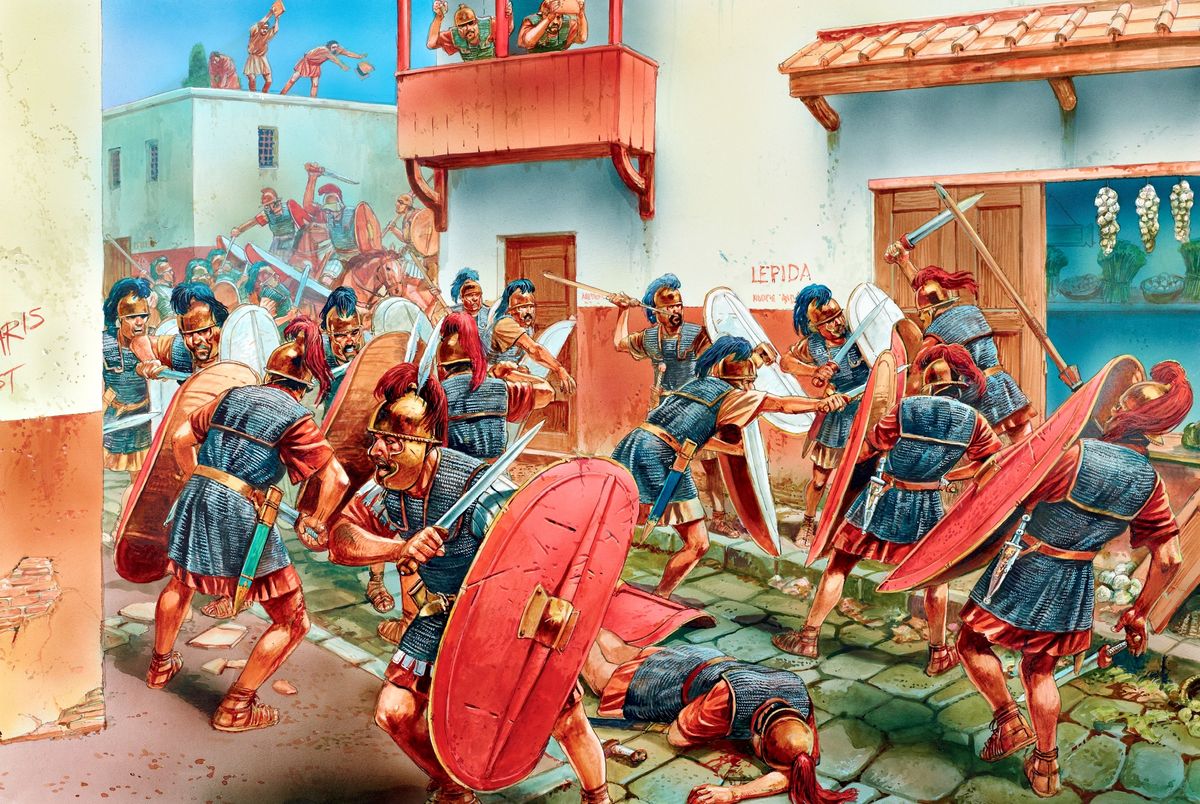
After the Alexandrian War ended in 47 BC, the relationship between Cleopatra VII Philopator and Julius Caesar developed into both a political alliance and a romantic partnership. Their relationship has become one of the most famous love stories of the ancient world, but it was also deeply connected to power, diplomacy, and the future of Egypt and Rome. Together, they sought to strengthen their positions, and their union eventually produced a son known as Caesarion, whose existence would later play an important role in Roman politics.
Following Caesar’s victory over the forces of Ptolemy XIII, Cleopatra was restored to the Egyptian throne. Although she officially ruled alongside her younger brother Ptolemy XIV, Cleopatra held the real authority. With her position secured, she and Caesar spent several months together in Egypt. Ancient sources describe them traveling along the Nile, where they visited important temples and demonstrated Cleopatra’s restored authority to the Egyptian people.
For Cleopatra, the relationship with Caesar provided security. Egypt remained an independent kingdom, but it depended heavily on maintaining good relations with Rome, which had become the dominant power in the Mediterranean. Having the support of Rome’s most powerful general greatly reduced the risk of foreign intervention or internal rebellion. Caesar, meanwhile, gained a loyal ally who ruled one of the richest kingdoms in the ancient world.
Although romance undoubtedly developed between them, their relationship was also based on mutual political interests. Cleopatra was an intelligent ruler who understood the importance of diplomacy, while Caesar recognized Egypt’s strategic value. The kingdom supplied vast quantities of grain that helped feed the Roman population, and its wealth made it one of the most valuable allies Rome could have.
In 47 BC, Cleopatra gave birth to a son named Ptolemy XV Philopator Philometor Caesar, who became widely known as Caesarion, meaning “Little Caesar.” Cleopatra publicly declared Julius Caesar to be the child’s father. While many people accepted this claim, Caesar himself never officially recognized Caesarion as his legal heir under Roman law. Nevertheless, the child’s existence strengthened Cleopatra’s political position, as she could present him as the son of both the Queen of Egypt and Rome’s greatest general.
Several years later, Cleopatra traveled to Rome, where she stayed as Caesar’s guest between 46 BC and 44 BC. She lived in one of Caesar’s villas outside the city together with Caesarion. Her presence attracted enormous attention among the Roman people. Many admired Egypt’s wealth and culture, while others viewed Cleopatra with suspicion, believing she held too much influence over Caesar.
Caesar’s treatment of Cleopatra also caused political controversy. He had a golden statue of her placed within the Temple of Venus Genetrix, an extraordinary honor for a foreign queen. To many conservative Romans, this seemed to suggest that Caesar intended to give Cleopatra an unprecedented position within Roman affairs. Rumors spread that he might even move the center of power away from Rome or make Cleopatra his queen, although there is no reliable evidence that he planned either action.
These rumors contributed to growing opposition against Caesar. Many senators already feared that he was becoming too powerful after being appointed dictator for life. Cleopatra’s presence in Rome became another symbol, at least in the eyes of his enemies, of Caesar’s increasing dominance and disregard for traditional Roman values.
Everything changed on 15 March 44 BC, the Ides of March, when Caesar was assassinated by a group of senators led by Marcus Junius Brutus and Gaius Cassius Longinus. With Caesar dead, Cleopatra’s political position in Rome collapsed almost immediately. Recognizing the danger, she quickly left Rome and returned to Egypt with Caesarion.
Back in Egypt, Cleopatra declared Caesarion her co-ruler, strengthening his claim as the legitimate heir of the Ptolemaic Kingdom. She also continued to present him as Julius Caesar’s son, hoping this connection would secure Egypt’s future. However, Caesar’s adopted heir, Augustus (then known as Octavian), would later reject Caesarion’s claim entirely, setting the stage for future conflict.
The relationship between Cleopatra and Julius Caesar therefore had consequences far beyond their personal lives. It restored Cleopatra’s throne, strengthened Egypt’s position, introduced Caesarion into history, and intensified political tensions within the Roman Republic. Their alliance helped shape the final years of the Republic and prepared the way for the dramatic events that would follow after Caesar’s assassination.
Main Ideas
- Cleopatra and Julius Caesar formed both a political alliance and a romantic relationship.
- Their partnership strengthened Egypt’s independence and Rome’s influence.
- Cleopatra gave birth to Caesarion, whom she claimed was Caesar’s son.
- Caesarion became co-ruler of Egypt alongside Cleopatra.
- Cleopatra lived in Rome as Caesar’s guest between 46 BC and 44 BC.
- Her presence in Rome caused political controversy among many senators.
- Caesar honored Cleopatra publicly, increasing suspicion about his intentions.
- Caesar’s assassination ended their relationship and forced Cleopatra to return to Egypt.
- Caesarion’s claimed connection to Caesar later became a major political issue.
- Their relationship influenced both the fate of Egypt and the collapse of the Roman Republic.
4. Cleopatra and Mark Antony: How Their Alliance Changed the Roman World
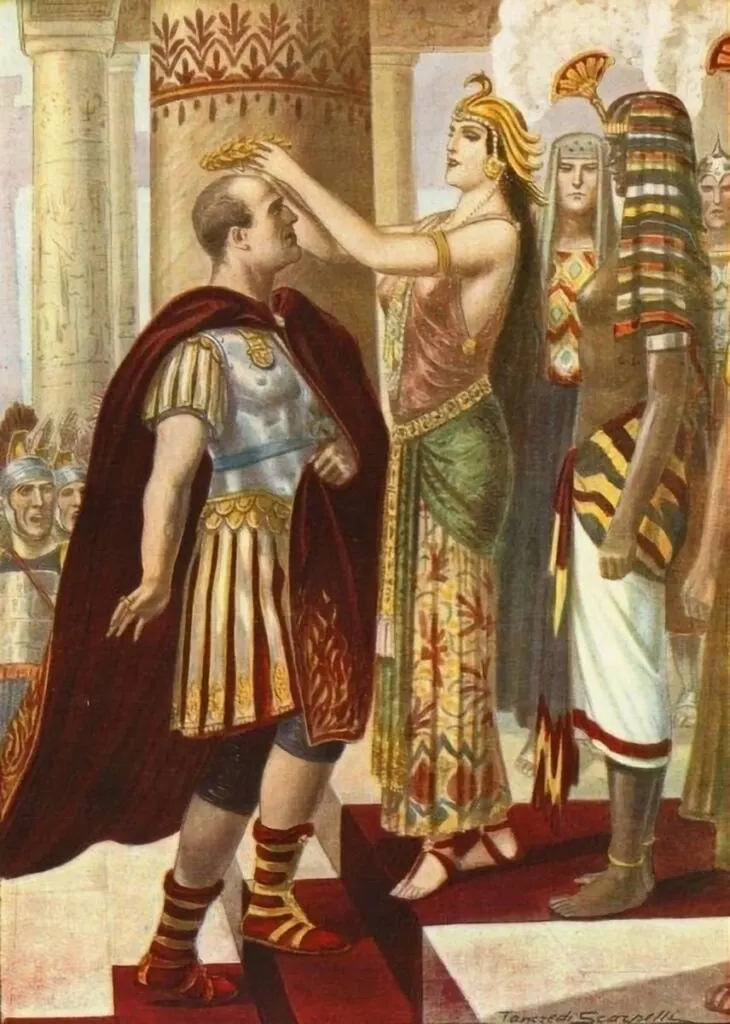
After the assassination of Julius Caesar in 44 BC, Cleopatra VII Philopator found herself in a dangerous political position. Her most powerful ally was gone, and the Roman Republic had descended into another civil war. To protect Egypt’s independence, Cleopatra once again turned to diplomacy. This time, her fate became closely tied to Mark Antony, one of Caesar’s closest supporters and one of the three rulers who divided control of the Roman world after Caesar’s death.
Following the formation of the Second Triumvirate, Rome was governed jointly by Mark Antony, Augustus (then known as Octavian), and Marcus Aemilius Lepidus. Antony took responsibility for Rome’s eastern provinces, placing him in direct contact with Egypt. Because Cleopatra ruled one of the richest kingdoms in the Mediterranean, Antony understood that securing her support would strengthen both his finances and his military power.
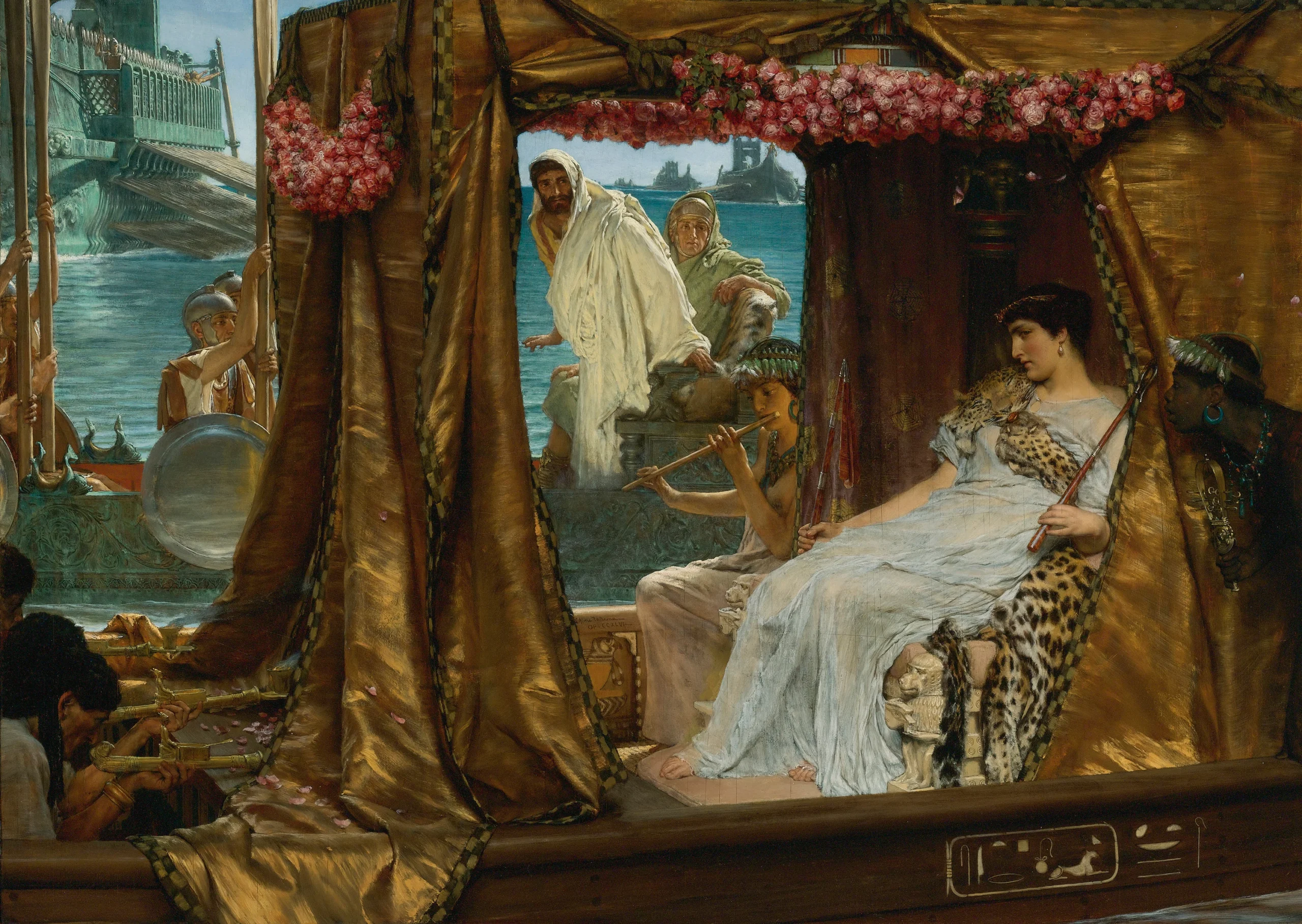
In 41 BC, Antony summoned Cleopatra to the city of Tarsus to explain Egypt’s actions during the recent Roman conflicts. Rather than appearing as a defeated ruler seeking mercy, Cleopatra arrived with extraordinary confidence and magnificence. Ancient writers describe her traveling aboard a luxurious royal barge decorated with purple sails, gold ornaments, and lavish displays that emphasized Egypt’s immense wealth. Whether these descriptions contain some exaggeration or not, they illustrate the powerful impression Cleopatra intended to create.
The meeting was a political success for Cleopatra. Antony quickly recognized her intelligence, charm, and strategic importance. Instead of treating Egypt as a subordinate kingdom, he formed a close alliance with its queen. Their relationship soon developed into a romance, but like Cleopatra’s earlier relationship with Caesar, it was also based on shared political interests.
For Antony, Egypt provided enormous financial resources, grain supplies, and access to experienced fleets operating in the eastern Mediterranean. These resources were especially valuable because Antony planned military campaigns against Parthian Empire, Rome’s greatest eastern rival. Cleopatra, meanwhile, gained the protection of one of Rome’s most powerful commanders, helping preserve Egypt’s independence.
Over the following years, Antony spent long periods in Egypt, particularly in Alexandria, which increasingly became the center of his eastern administration. During this time, Antony and Cleopatra had three children together: Alexander Helios, Cleopatra Selene II, and Ptolemy Philadelphus. These children symbolized the growing political partnership between Rome’s eastern territories and the Ptolemaic Kingdom.
As Antony’s relationship with Cleopatra deepened, tensions with Octavian steadily increased. Many Romans believed Antony was becoming too closely connected to Egypt and feared that he was placing eastern interests above those of Rome. Octavian skillfully used this perception in his political campaign, portraying Antony as a leader who had abandoned traditional Roman values under Cleopatra’s influence.
These accusations became even stronger after Antony granted Cleopatra and her children control over several eastern territories. Although Antony viewed these decisions as practical administrative arrangements, Octavian presented them as evidence that Antony intended to establish a new eastern monarchy centered on Egypt rather than Rome.
Despite Roman criticism, Antony and Cleopatra remained committed allies. Together they attempted to strengthen their position against Octavian while maintaining Egypt as an independent kingdom. Their partnership represented one of the most significant political alliances of the ancient world, combining Roman military power with Egyptian wealth and strategic influence.
However, this growing alliance also made conflict with Octavian almost inevitable. As both men competed for control of the Roman world, Cleopatra became a central figure in the struggle. What had begun as a diplomatic partnership would eventually lead to one of the most famous wars in Roman history and determine the future of both Egypt and Rome.
The alliance between Cleopatra and Mark Antony therefore changed far more than their personal lives. It reshaped Roman politics, shifted the balance of power in the Mediterranean, and set the stage for the final collapse of the Roman Republic. Their partnership would culminate in a decisive confrontation with Octavian, bringing an end to both the Ptolemaic Kingdom and the Republican era of Rome.
Main Ideas
- After Caesar’s death, Cleopatra formed an alliance with Mark Antony.
- Antony ruled Rome’s eastern provinces as part of the Second Triumvirate.
- Their first meeting at Tarsus established a powerful political partnership.
- Egypt supplied Antony with wealth, grain, and military resources.
- Cleopatra gained protection for her kingdom through the alliance.
- They had three children together.
- Antony increasingly governed the eastern Roman territories from Alexandria.
- Octavian used Antony’s relationship with Cleopatra as political propaganda.
- Their alliance intensified the struggle for control of the Roman world.
- The partnership paved the way for the final conflict between Antony and Octavian.
5. The Donations of Alexandria and the Growing Conflict with Octavian
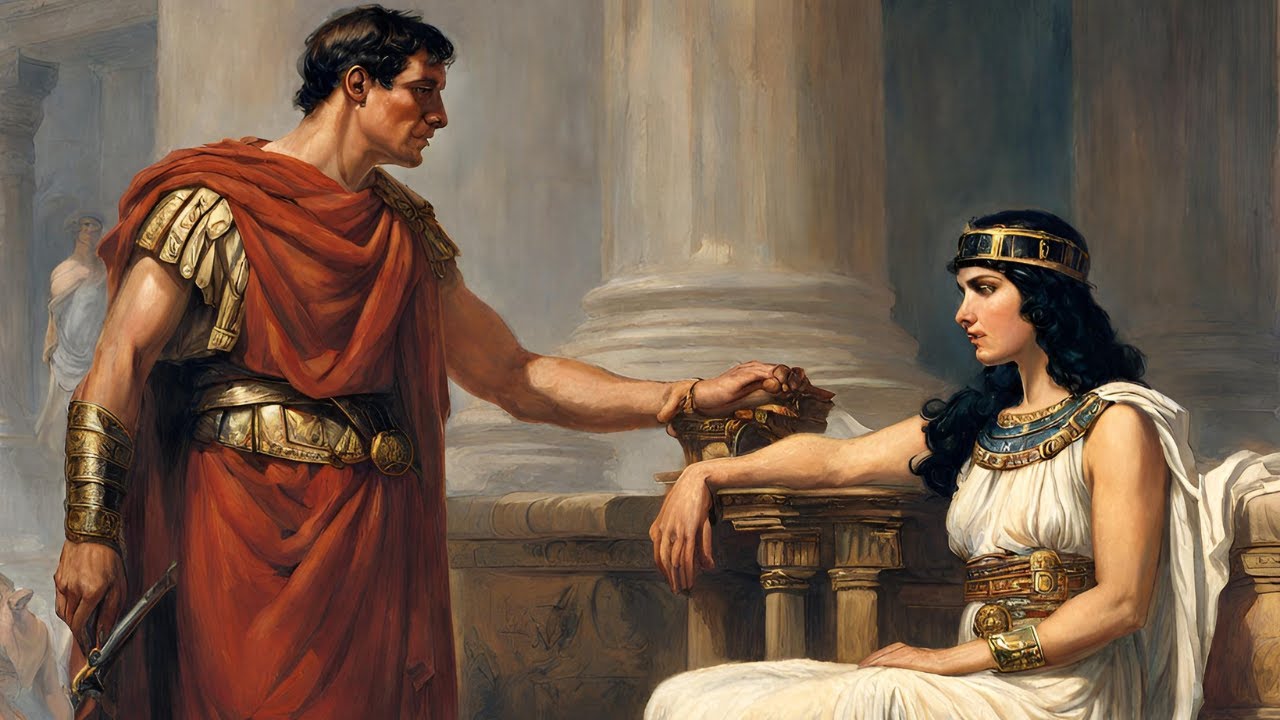
By 34 BC, the alliance between Cleopatra VII Philopator and Mark Antony had reached its height. Together they controlled vast territories across the eastern Mediterranean and appeared to be creating a new political order centered on Alexandria rather than Rome. Their growing power alarmed Augustus, then still known as Octavian, who saw Antony as his greatest rival for control of the Roman world. The rivalry between the two men became even more intense after one of the most controversial political events of the ancient world—the Donations of Alexandria.
The Donations of Alexandria were a grand public ceremony held in Alexandria following Antony’s successful campaign in Armenia. The event was designed to celebrate his military achievements, but it also served a much larger political purpose. During the ceremony, Antony officially granted several eastern territories to Cleopatra and their children, presenting them before a large audience in an elaborate royal celebration.
Cleopatra was proclaimed “Queen of Kings,” while her eldest son, Caesarion, was declared “King of Kings.” More significantly, Antony publicly described Caesarion as the legitimate son of Julius Caesar. This declaration carried enormous political consequences because Octavian had based much of his own authority on being Caesar’s adopted heir. If Caesarion were accepted as Caesar’s true successor, Octavian’s position could be seriously weakened.
Antony also distributed kingdoms among his children with Cleopatra. Alexander Helios received authority over Armenia, Media, and territories that Rome hoped to conquer in the future. Cleopatra Selene II was granted Cyrenaica and Crete, while Ptolemy Philadelphus received lands in Syria and Cilicia. Although some of these territories remained under Roman influence or had not yet been fully secured, the ceremony projected an image of a powerful eastern dynasty led by Antony and Cleopatra.
To supporters in Egypt, these actions demonstrated strength and stability. Cleopatra appeared not only as Queen of Egypt but as the leading monarch of the eastern Mediterranean. Antony likely believed that rewarding his family with royal titles would strengthen alliances and create a stable political structure in the East.
However, the reaction in Rome was dramatically different. Many senators viewed Antony’s decisions as an abuse of Roman authority. They believed that Roman territories should never be distributed as personal gifts, especially to a foreign queen. The fact that the ceremony took place in Alexandria instead of Rome further fueled suspicion that Antony was placing Egypt above Roman interests.
Octavian immediately recognized the political opportunity. He launched an extensive propaganda campaign portraying Antony as a Roman leader who had abandoned his homeland for Cleopatra. Roman poets, politicians, and public speakers increasingly described Cleopatra as a dangerous foreign queen who sought to dominate Rome through Antony. These claims were often exaggerated for political purposes, but they proved highly effective in shaping public opinion.
Octavian also emphasized Antony’s recognition of Caesarion as Caesar’s son. Since Octavian’s own authority rested on his adoption by Caesar, he argued that Antony and Cleopatra were attempting to undermine Rome’s legitimate leadership. This transformed the political dispute into a personal struggle over Caesar’s legacy.
As tensions increased, diplomacy became almost impossible. Although Antony and Octavian had once governed together as members of the Second Triumvirate, trust between them had completely disappeared. Both leaders began preparing for military confrontation, gathering fleets, recruiting soldiers, and strengthening alliances throughout the Mediterranean.
Importantly, Octavian avoided presenting the coming conflict as another Roman civil war. Instead, he declared war on Cleopatra, not directly on Antony. This allowed him to portray the struggle as Rome defending itself against a foreign monarch rather than Romans fighting fellow Romans. The strategy proved politically successful, encouraging many Romans to support Octavian’s cause.
The Donations of Alexandria therefore marked the point at which political rivalry became open hostility. Antony and Cleopatra’s vision of an eastern-centered alliance directly challenged Octavian’s ambition to rule the Roman world from Rome. Within just a few years, this growing conflict would lead to the decisive Battle of Actium, ending both Antony’s career and the independence of Ancient Egypt.
Main Ideas
- The Donations of Alexandria took place in 34 BC after Antony’s Armenian campaign.
- Cleopatra was proclaimed “Queen of Kings.”
- Caesarion was declared the legitimate son of Julius Caesar and “King of Kings.”
- Antony granted eastern territories to his children with Cleopatra.
- Many Romans viewed the ceremony as a betrayal of Roman interests.
- Octavian used the Donations as powerful political propaganda.
- The recognition of Caesarion threatened Octavian’s claim as Caesar’s heir.
- Relations between Antony and Octavian rapidly deteriorated.
- Octavian declared war on Cleopatra rather than directly on Antony.
- The Donations of Alexandria paved the way for the Battle of Actium and the fall of Ptolemaic Egypt.
6. The Battle of Actium and the Fall of Antony and Cleopatra
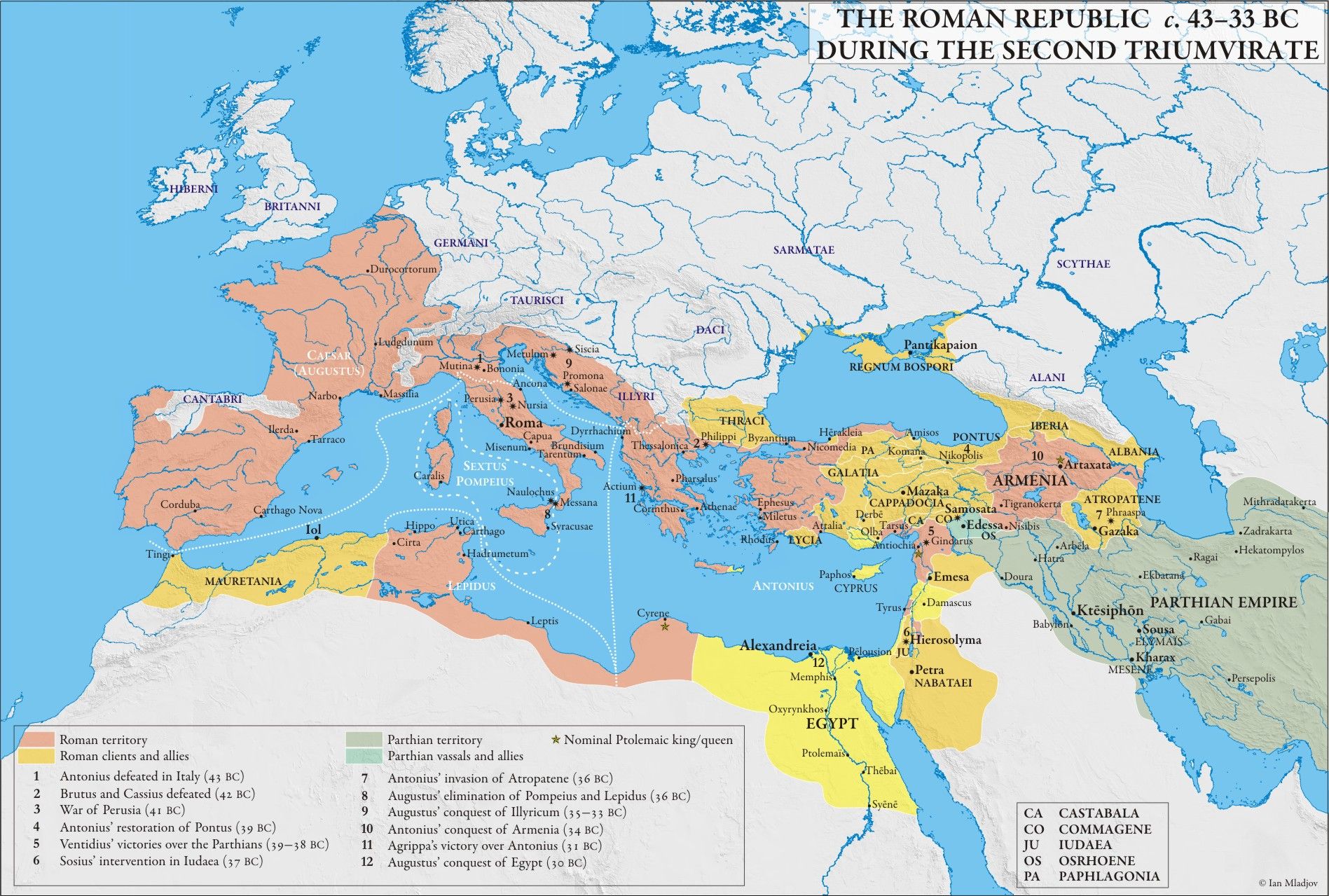
The Battle of Actium was the decisive event that ended the long struggle for control of the Roman world. Fought on 2 September 31 BC, it was the climax of the conflict between Mark Antony and Augustus, who was still known as Octavian. Alongside Antony stood Cleopatra VII Philopator, whose wealth, fleet, and political support had become essential to Antony’s cause. The outcome of this battle would not only determine the future of Rome but also bring an end to more than 300 years of Ptolemaic rule in Egypt.
By 32 BC, relations between Antony and Octavian had completely broken down. The Second Triumvirate had effectively collapsed, and both men were preparing for war. Antony gathered a massive army and fleet in Greece, drawing troops and ships from his eastern provinces and from Egypt. Cleopatra contributed a significant number of warships, financial resources, and supplies, making Egypt the backbone of Antony’s military strength.
Octavian, meanwhile, carefully prepared his own campaign. Although he lacked Antony’s experience as a battlefield commander, he benefited from the leadership of his brilliant admiral Marcus Vipsanius Agrippa. Agrippa had already achieved several important naval victories before Actium, capturing key ports and disrupting Antony’s supply lines. These successes weakened Antony’s position long before the decisive battle began.
The two fleets eventually met near the Greek coast at Actium. Antony commanded large, heavily armed warships that were powerful but slow. Octavian’s fleet, directed by Agrippa, relied on smaller, faster, and more maneuverable vessels. This difference in naval strategy would prove decisive during the battle.
As fighting began, Octavian’s ships avoided direct collisions with Antony’s larger vessels. Instead, they used their superior speed to attack from multiple directions, isolating enemy ships and preventing coordinated action. Throughout the engagement, Antony’s fleet struggled to maintain formation while shortages of experienced sailors further reduced its effectiveness.
During the battle, Cleopatra remained behind the main fighting line with her Egyptian squadron. At a critical moment, she sailed through an opening in the battle and headed south toward Egypt. Ancient historians have debated why she withdrew. Some argue that the retreat had been planned in advance if defeat became inevitable, while others believe it reflected the collapse of Antony’s strategy. Whatever the reason, Antony soon chose to leave the battle and follow Cleopatra with a portion of his fleet.
The departure of their commanders destroyed the morale of the remaining forces. Many of Antony’s ships surrendered, while others were destroyed or captured. The Battle of Actium ended in a decisive victory for Octavian, giving him complete control of the Mediterranean and removing his last serious rival.
After the defeat, Antony and Cleopatra returned to Alexandria and attempted to rebuild their defenses. However, their situation was hopeless. Many of Antony’s allies abandoned him, and Octavian steadily advanced toward Egypt with overwhelming military strength. In 30 BC, Roman forces entered Alexandria with little effective resistance.
Believing that Cleopatra had died, Antony fell into despair and committed suicide by falling on his own sword. Although he was still alive when he learned that Cleopatra survived, he was carried to her and died in her arms according to ancient accounts.
Soon afterward, Cleopatra realized that capture by Octavian was unavoidable. Refusing to be displayed as a prisoner in a Roman triumph, she also took her own life. Ancient tradition claims she died from the bite of an Egyptian cobra (asp), although modern historians continue to debate the exact method of her death. Regardless of how it occurred, her death marked the end of the Ptolemaic Kingdom, which had ruled Egypt since the time of Alexander the Great.
Following their deaths, Octavian annexed Egypt as a Roman province, placing it under his direct control. Egypt’s immense wealth and grain supply became part of the Roman state, greatly strengthening Octavian’s position. Within a few years, he would become Augustus, the first Roman emperor, officially marking the beginning of the Roman Empire.
The Battle of Actium was therefore far more than a naval engagement. It ended the final civil war of the Roman Republic, destroyed the ambitions of Antony and Cleopatra, brought Egypt under Roman rule, and opened a new chapter in Roman history that would last for centuries.
Main Ideas
- The Battle of Actium was fought on 2 September 31 BC.
- Mark Antony and Cleopatra faced Octavian and Agrippa in a decisive naval battle.
- Agrippa’s faster fleet outmaneuvered Antony’s larger warships.
- Cleopatra withdrew with the Egyptian fleet during the battle.
- Antony followed Cleopatra, leading to the collapse of his forces.
- Octavian won complete control of the Roman world.
- Antony committed suicide after the defeat.
- Cleopatra also took her own life rather than be captured.
- Egypt became a Roman province after their deaths.
- The victory at Actium cleared the way for Augustus to establish the Roman Empire.