
Pompeii was a thriving Roman city in southern Italy until the catastrophic eruption of Mount Vesuvius in AD 79 transformed its history forever. Before the eruption, Pompeii was a busy community with homes, shops, markets, temples, public baths, and entertainment venues. Its streets were filled with residents, merchants, workers, and visitors going about their daily lives. Although the people of Pompeii had experienced earthquakes in the years before the eruption, few could have understood the scale of the disaster that was approaching.
The exact date of the eruption remains debated by historians and archaeologists, although AD 79 is firmly established as the year. Ancient accounts, archaeological evidence, and modern research have provided valuable information about what happened, but the precise sequence and timing of events cannot be known with complete certainty. For this reason, a timeline of the disaster should be understood as a reconstruction based on available evidence rather than a perfectly recorded hour-by-hour account.
In the hours before the main eruption, Pompeii would have appeared largely normal. People were carrying out their daily activities, businesses were operating, and residents were moving through the streets. However, earthquakes and tremors had affected the region, providing signs that Mount Vesuvius was becoming increasingly unstable. Many residents may have been familiar with earthquakes and therefore may not have immediately recognized the danger.
The eruption began with an enormous explosion that sent ash, pumice, and volcanic material high into the atmosphere. As the eruption continued, these materials began falling across Pompeii. Streets, rooftops, and buildings gradually became covered, making movement increasingly difficult. Some residents attempted to escape while others sought shelter inside buildings.
The disaster became even more dangerous when pyroclastic surges and flows moved down the slopes of Vesuvius. These extremely hot mixtures of volcanic gases, ash, and rock could travel rapidly and overwhelm areas around the volcano. Pompeii was eventually buried beneath layers of volcanic material, preserving parts of the city remarkably well.
The eruption did not simply destroy buildings; it also preserved an extraordinary snapshot of Roman life. Houses, shops, streets, artwork, inscriptions, tools, and everyday objects survived beneath the volcanic deposits. Centuries later, archaeological excavations revealed much of the ancient city and provided historians with an exceptional source of information about Roman society.
Today, Pompeii is one of the most important archaeological sites from the ancient Roman world. Its destruction provides a powerful example of the unpredictable force of volcanic eruptions while its preservation allows researchers to study Roman architecture, culture, society, religion, food, and everyday life in remarkable detail.
I. Two Hours Before the Eruption: A Normal Day in Pompeii
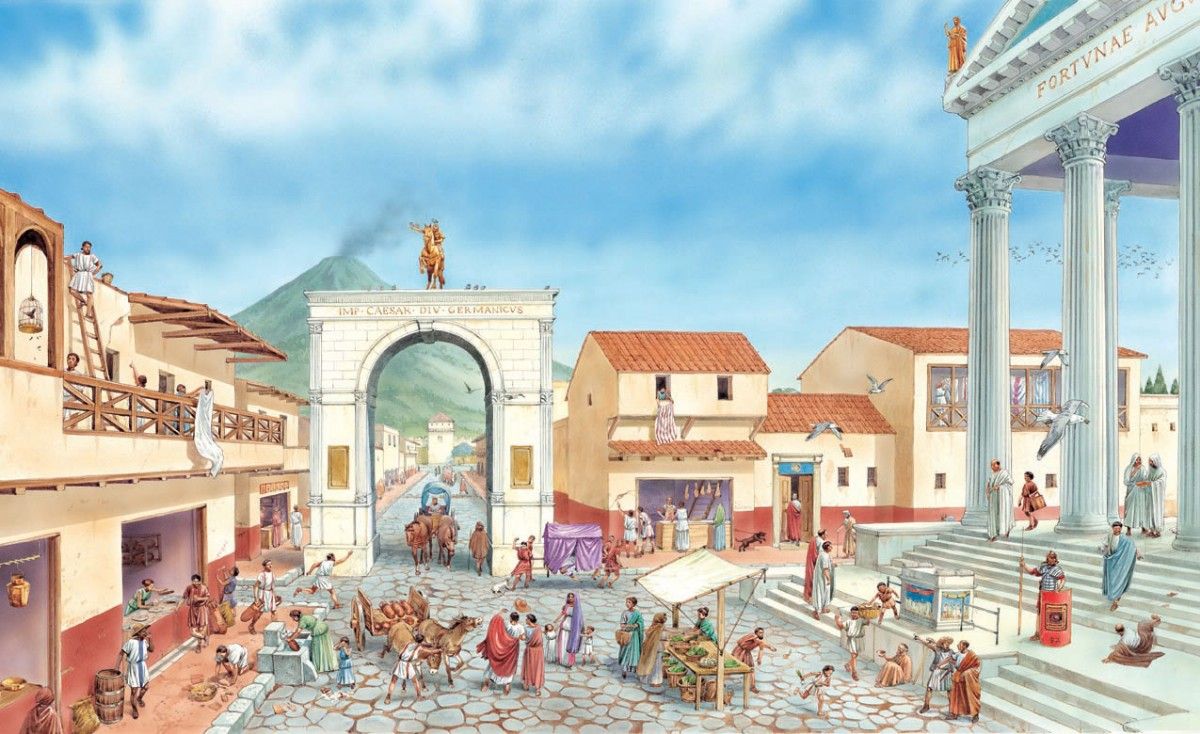
About two hours before the main stages of the eruption of Mount Vesuvius in AD 79, Pompeii was still functioning as a busy Roman city. Although the exact timing cannot be established with complete certainty, archaeological evidence and ancient accounts allow historians to reconstruct what life may have been like shortly before the disaster. The city was not simply a place waiting to be destroyed; it was a living community where people were working, shopping, socializing, worshipping, and carrying out ordinary activities.
Pompeii was located near the Bay of Naples, in the fertile and economically important region of Campania. Its location provided access to farmland, trade routes, and nearby coastal communities. The city contained private houses, businesses, temples, public baths, fountains, workshops, and entertainment buildings. On a normal day, residents would have moved through the streets while merchants operated shops and workers carried out their trades.
The streets of Pompeii were an important part of everyday life. Shops and workshops opened directly onto many streets, allowing customers to purchase food, drinks, pottery, clothing, and other goods. Taverns and food shops provided places where people could buy prepared meals and refreshments. Public fountains supplied water, while larger public buildings provided spaces for bathing, worship, and entertainment.
Pompeii was also a socially diverse Roman community. Its population included wealthy property owners, merchants, craftsmen, laborers, enslaved people, freed people, and families from different backgrounds. Their experiences of the city varied depending on their wealth and social position. Wealthier residents could live in large houses decorated with frescoes, mosaics, gardens, and courtyards, while poorer residents generally lived in smaller and simpler accommodation.
However, Pompeii had already experienced serious earthquakes and tremors before the eruption. The major earthquake of AD 62 caused widespread damage throughout Campania, and some buildings were still being repaired when Vesuvius erupted. These earlier earthquakes were significant warnings in hindsight, but earthquakes were not unknown in the region, so residents may not have realized that a much larger disaster was approaching.
The volcano itself was not necessarily seen as an obvious threat. Vesuvius had been quiet for generations, meaning that many people living nearby had no direct experience of a major volcanic eruption. Its slopes were also used for agriculture because volcanic soils could be highly fertile. The mountain was therefore part of the familiar landscape rather than an obvious source of immediate danger.
As the final hours approached, people continued their routines while activity was developing beneath the volcano. The precise sequence of warning signs remains uncertain, but archaeological evidence confirms that Pompeii was inhabited and active when the eruption began.
This makes the destruction of Pompeii particularly important to historians. Ordinary Roman life was suddenly interrupted by a catastrophic natural event, leaving behind an extraordinary archaeological record. Buildings, possessions, streets, artwork, tools, and other objects were buried beneath volcanic deposits and preserved for centuries.
5 Main Ideas
I. Normal Daily Life: Pompeii was still a busy Roman city where people worked, traded, socialized, and carried out everyday activities.
II. Urban Life: Shops, workshops, baths, temples, fountains, and houses made Pompeii an active and developed Roman community.
III. Social Diversity: The population included wealthy citizens, merchants, craftsmen, laborers, enslaved people, and freed people.
IV. Earlier Earthquakes: Earthquakes had already damaged Pompeii, but residents could not know that a much larger volcanic disaster was approaching.
V. The Approaching Disaster: Vesuvius had been quiet for generations, and Pompeii continued its normal routines shortly before the eruption began.
II. One Hour Before the Eruption: Tremors, Warnings, and Growing Unease
As the eruption of Mount Vesuvius approached, the people of Pompeii would have experienced signs that the ground and the volcano were becoming increasingly active. The exact sequence and timing of these events are not known with complete certainty, because no ancient source records Pompeii minute by minute. However, archaeological evidence and ancient accounts allow historians to reconstruct the general situation during the period before the main eruption. Earthquakes, underground activity, and changes associated with Vesuvius would have created an increasingly dangerous environment around the city.
Pompeii was already familiar with earthquakes. A major earthquake had struck the region in AD 62, causing serious damage to buildings throughout the city. Smaller earthquakes continued to affect the area during the years that followed. Because earthquakes were not completely unusual in Campania, residents may not have immediately understood that the shaking associated with the eruption was different from earlier disturbances. Some buildings were still being repaired or rebuilt when Vesuvius eventually erupted.
The growing activity around Vesuvius would have been particularly important because the volcano had not recently behaved like an active volcano in the way modern people might recognize. Vesuvius had been relatively quiet for generations, and many residents had no reason to expect a major eruption. The mountain was part of the landscape surrounding Pompeii, and its slopes supported agriculture. Vineyards and farms benefited from the fertile volcanic soils, meaning that Vesuvius was not simply viewed as a threat.
As the eruption approached, earthquakes became an important warning sign. The ground could shake strongly enough to frighten residents and damage already weakened structures. People may have moved outdoors or gathered in safer areas, while others continued trying to protect their homes and possessions. The archaeological record suggests that Pompeii was not simply abandoned at the first sign of danger. Different people responded differently, and some remained in the city even as conditions became more threatening.
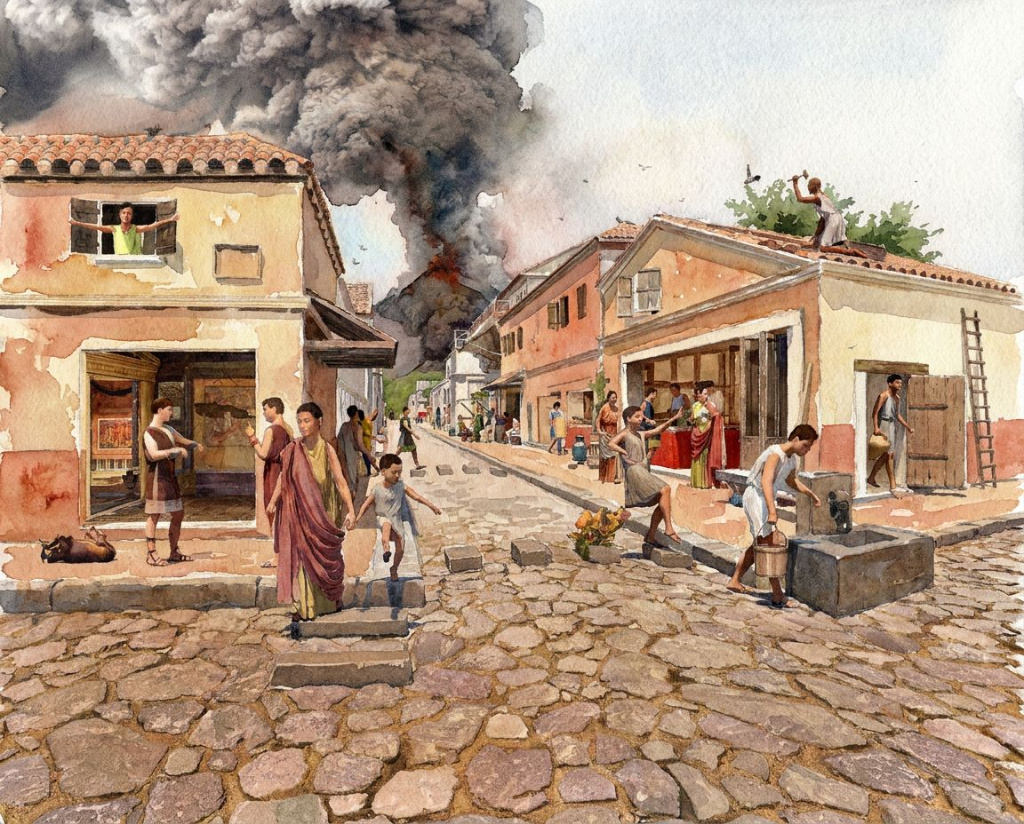
The changing environment would soon make normal activities increasingly difficult. The eruption began with volcanic material being expelled high into the atmosphere, eventually producing a massive column above Vesuvius. At first, people may not have understood the full scale of what was happening. The appearance of a strange cloud above the mountain would have been alarming, but the immediate danger was not yet the same as the later stages of the disaster.
The period before the main eruption is therefore important because it shows that Pompeii did not go from complete normality to destruction in a single instant. There were warning signs, particularly seismic activity, but recognizing those signs as evidence of an approaching volcanic catastrophe was extremely difficult. Without modern volcanology, monitoring equipment, emergency communication, or evacuation plans, residents had very limited information.
As the eruption intensified, the situation changed rapidly. The peaceful landscape around Pompeii was transformed as Vesuvius released enormous quantities of volcanic material, beginning the sequence of events that would eventually bury the city.
5 Main Ideas
I. Increasing Earthquakes: Tremors became an important warning sign as volcanic activity around Vesuvius intensified.
II. Previous Earthquake Damage: Pompeii had already suffered major earthquake damage in AD 62, so residents were familiar with seismic activity.
III. An Unexpected Threat: Vesuvius had been relatively quiet for generations, making a major eruption difficult for residents to anticipate.
IV. Different Reactions: Some people may have attempted to leave or seek safety, while others remained, showing that there was no single response to the growing danger.
V. The Eruption Approaches: The increasing earthquakes and volcanic activity marked the transition from ordinary life to the beginning of one of the ancient world’s most famous disasters.
III. Thirty Minutes Before: Mount Vesuvius Begins to Erupt
The period immediately before and at the beginning of the eruption marked the moment when the danger around Pompeii changed from unusual earthquakes and disturbances into a major volcanic catastrophe. The exact “thirty minutes before” sequence cannot be known with certainty, because ancient observers did not record the eruption using modern clocks. The timeline used here is therefore a historical reconstruction based on archaeological evidence and the accounts of Pliny the Younger, who witnessed the eruption from the area of Misenum across the Bay of Naples.
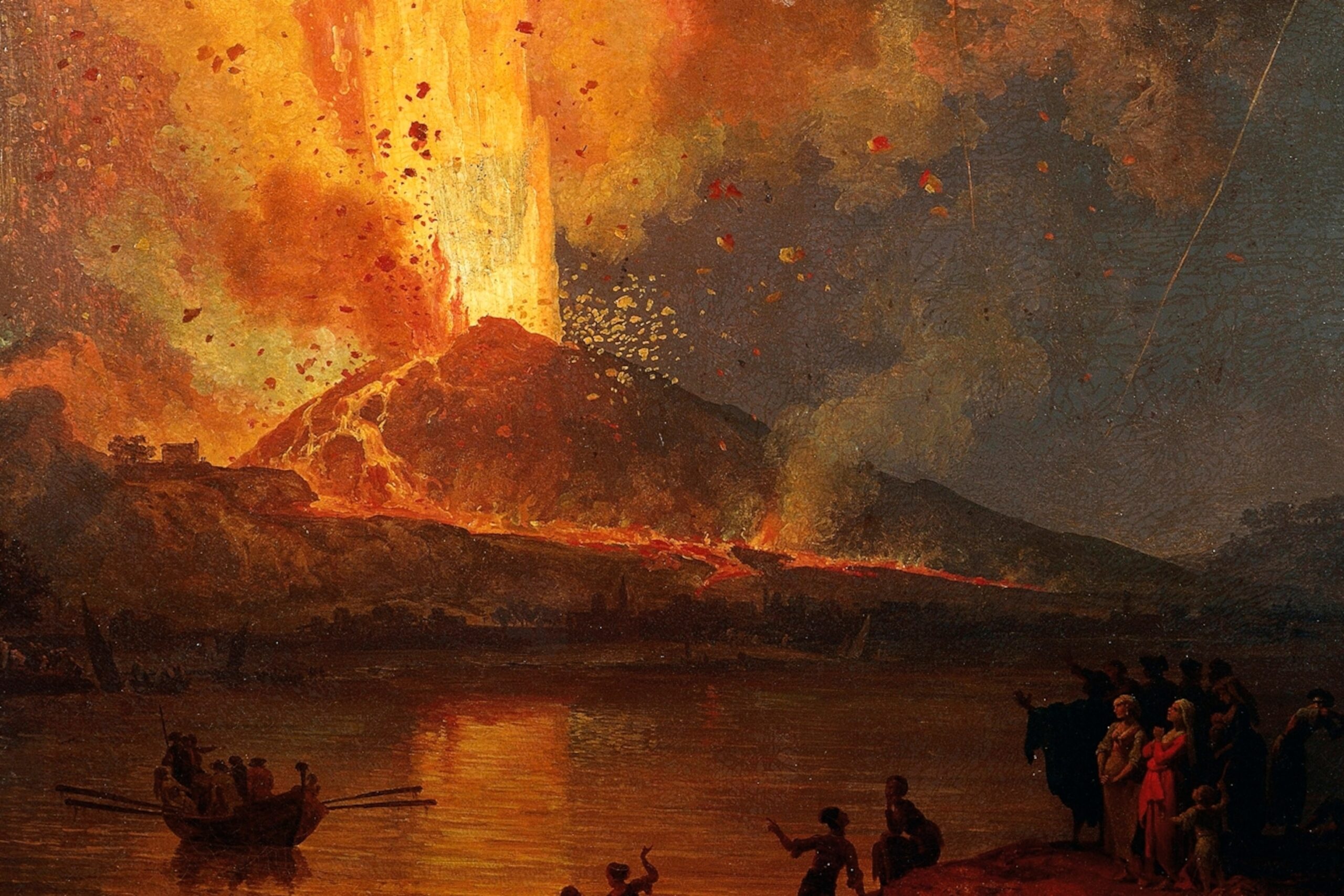
Mount Vesuvius began releasing enormous amounts of volcanic material into the atmosphere. A towering eruption column rose above the volcano, carrying ash, gases, and fragments of volcanic rock high into the sky. Pliny the Younger famously compared the shape of the cloud to a pine tree, with a narrow column rising from the mountain and spreading outward near the top. This description provides historians with one of the most important ancient accounts of the eruption.
For people in Pompeii, the sight of the enormous cloud would have been extraordinary and frightening. The mountain that had formed part of the Campanian landscape suddenly became the source of a powerful volcanic eruption. Ash and small pieces of volcanic material began falling from the sky, gradually changing conditions within the city.
At first, the eruption did not necessarily mean immediate destruction for every resident. The earliest phase was dominated by the enormous eruption column and falling pumice and ash. This gave some people an opportunity to recognize the seriousness of the situation and attempt to escape. Archaeological evidence indicates that many inhabitants did leave Pompeii during the disaster, although historians cannot determine exactly when every person left or where each individual went.
The direction of the wind also played an important role. Volcanic material did not fall equally across the entire region. Pompeii was positioned southeast of Vesuvius, and the prevailing winds helped determine where the pumice and ash accumulated. As the eruption continued, layers of volcanic material became increasingly thick across streets, rooftops, and public spaces.
The eruption also created a major challenge for anyone attempting to leave the city. Falling pumice could make roads difficult to use, while earthquakes and collapsing structures added to the danger. Visibility could become worse as ash accumulated in the atmosphere. The longer the eruption continued, the more difficult normal movement and communication became.
It is important to understand that the eruption was not one single explosion followed immediately by the complete destruction of Pompeii. The disaster developed through different stages over many hours. The early phase involved the eruption column and widespread pumice fall, while later phases brought far more dangerous pyroclastic currents.
The beginning of the eruption therefore represents a crucial turning point in Pompeii’s history. The ordinary life described in the previous stages was ending, and the city was entering an unprecedented volcanic emergency. Residents now had to make decisions about whether to remain in their homes, seek shelter, or attempt to escape.
As Vesuvius continued erupting, the amount of volcanic material covering Pompeii increased rapidly. The next stage would bring hours of pumice and ash falling across the city, transforming streets and buildings and making survival increasingly difficult.
5 Main Ideas
I. The Eruption Begins: Mount Vesuvius began producing a massive eruption column containing ash, gases, and volcanic rock.
II. The Famous Pliny Account: Pliny the Younger described the enormous cloud above Vesuvius, providing historians with a valuable ancient description of the eruption.
III. Pumice Begins to Fall: Volcanic pumice and ash started accumulating across Pompeii, gradually disrupting normal life.
IV. Some Residents Escaped: Many inhabitants appear to have left Pompeii during the disaster, although the exact timing of individual escapes is unknown.
V. The Disaster Intensifies: The eruption developed through several stages, with the early pumice fall eventually followed by much more dangerous volcanic currents.
IV. The First Hours of the Disaster: Ash and Pumice Rain Down
As Mount Vesuvius continued erupting, Pompeii entered one of the most dangerous stages of the disaster. Pumice, ash, and other volcanic material continued falling from the sky, gradually covering streets, buildings, gardens, and public spaces. What had begun as an extraordinary sight above the volcano became a rapidly developing emergency throughout the city.
The early eruption produced a massive column that carried volcanic material high into the atmosphere. As this material cooled and fell back toward the ground, pumice began accumulating across Pompeii. Pumice is a lightweight volcanic rock filled with gas bubbles, and large quantities of it can accumulate surprisingly quickly. The archaeological record shows that thick layers of pumice eventually covered significant parts of the city.
The falling material created several problems. Roofs and other structures came under increasing pressure as pumice accumulated on them. Some buildings had already been weakened by earlier earthquakes, particularly the major earthquake of AD 62. Continued shaking combined with the weight of volcanic deposits could make damaged structures even more vulnerable.
The streets of Pompeii also became increasingly difficult to use. Volcanic material accumulated on roads and pathways, while continuing earthquakes and falling debris created additional hazards. The city was gradually being transformed from a functioning Roman settlement into a landscape covered by volcanic deposits.
The eruption did not affect every person in exactly the same way. Some residents appear to have attempted to leave the city, while others sought shelter or remained behind for various reasons. Pompeii’s population was diverse, and individual decisions during the disaster would have differed considerably. Archaeological discoveries provide evidence that people were in different parts of the city at different stages of the eruption.
One of the most important pieces of evidence comes from the buildings themselves. Houses, shops, streets, public buildings, and objects were preserved beneath volcanic deposits. The layers of pumice and ash effectively sealed parts of Pompeii, protecting many objects and structures from later changes that would normally have destroyed or altered them.
The eruption also affected the surrounding countryside. Fields and roads were covered with volcanic material, while communities across the Bay of Naples experienced the consequences of Vesuvius. The disaster was therefore not simply a local event affecting a single street or neighborhood. The eruption became a regional catastrophe that transformed communities throughout the area.
As the hours passed, conditions became increasingly dangerous. The continuing eruption produced more volcanic material, and the atmosphere around Pompeii became increasingly difficult to navigate. The city was now buried beneath a growing layer of pumice and ash, while Vesuvius continued releasing material into the sky.
Eventually, the eruption entered an even more destructive phase. The enormous eruption column became unstable, and hot mixtures of volcanic gases, ash, and rock began moving rapidly away from the volcano. These pyroclastic currents were much more dangerous than the earlier falling pumice because they could travel quickly across the surrounding landscape.
This marked the transition from the first stage of the disaster to its most destructive phase. Pompeii had already been heavily affected by hours of falling volcanic material, but the arrival of pyroclastic currents would bring a completely different and much more dangerous threat.
5 Main Ideas
I. Pumice Falls for Hours: Large quantities of pumice and ash continued falling across Pompeii, gradually covering the city.
II. Buildings Were Under Pressure: The weight of accumulating volcanic material placed increasing stress on roofs and structures, many of which had already suffered earthquake damage.
III. Escape Became Difficult: Streets and pathways became increasingly difficult to use as volcanic deposits accumulated throughout the city.
IV. Pompeii Was Preserved: Layers of pumice and ash buried and sealed buildings, streets, and objects, helping preserve Pompeii for future archaeologists.
V. A More Dangerous Stage Approaches: The eruption eventually progressed from falling volcanic material to fast-moving pyroclastic currents, creating an even greater threat to Pompeii and the surrounding region.
V. The Final Stage: Pyroclastic Surges Reach Pompeii
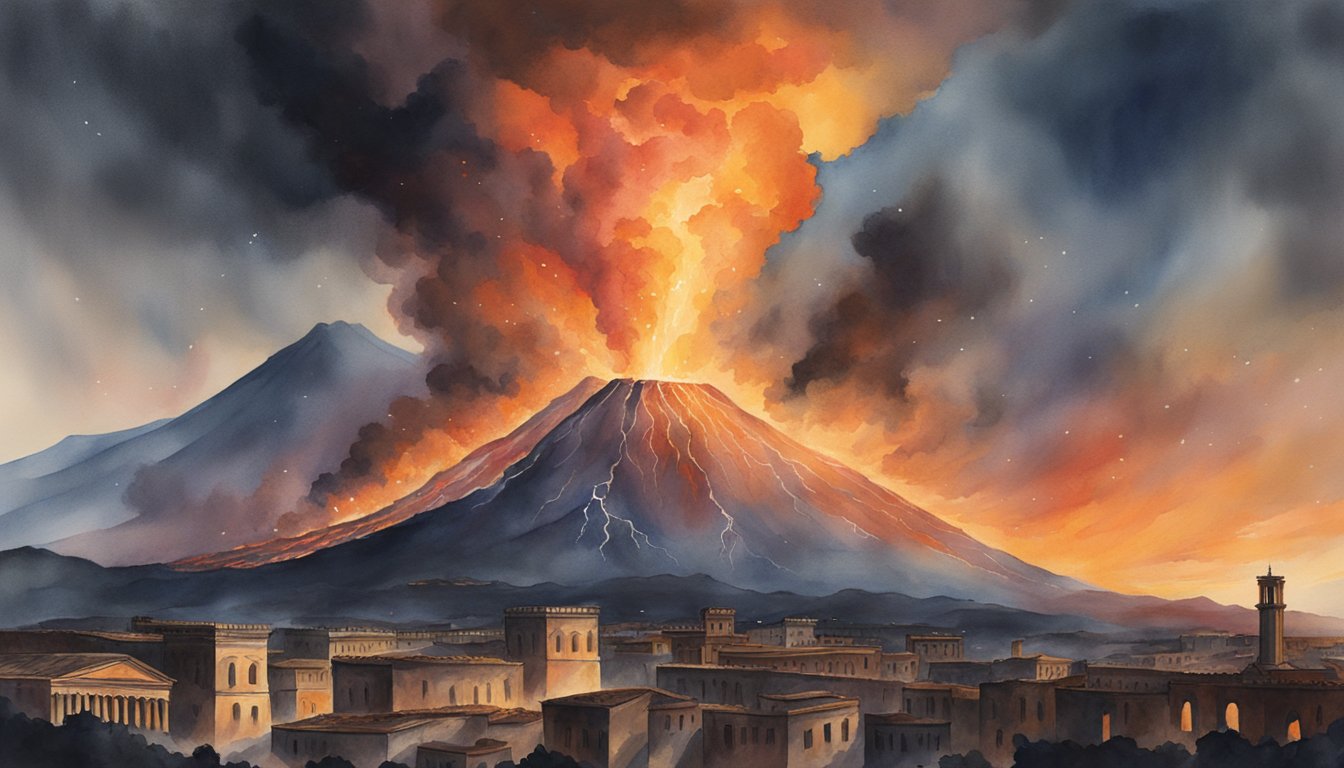
After hours of pumice and ash falling across Pompeii, the eruption of Mount Vesuvius entered a much more dangerous phase. The eruption column became unstable, and hot, fast-moving mixtures of volcanic gases, ash, and rock began moving outward from Vesuvius. These are commonly described as pyroclastic currents or surges. Their arrival represented a major change in the disaster because the danger was no longer coming mainly from material falling from above.
Pyroclastic currents are produced when an eruption column partially collapses. Instead of remaining high in the atmosphere, dense mixtures of extremely hot gas and volcanic particles can rush outward across the ground. They can move much faster than people can normally escape on foot and can spread across large areas. For the residents still in Pompeii, this created an extremely serious situation.
The exact sequence of the pyroclastic currents is difficult to reconstruct because the ancient witnesses did not record their arrival from inside Pompeii. However, layers of volcanic deposits discovered by archaeologists provide important evidence about how the city was buried. Different layers show that the eruption occurred in multiple stages rather than as one single event.
By this point, Pompeii had already been buried under substantial amounts of pumice and ash. The streets were obstructed, buildings had been damaged, and visibility and movement were becoming increasingly difficult. Anyone who had remained in the city was facing conditions very different from those experienced earlier in the day.
The pyroclastic currents eventually reached Pompeii. Their deposits covered parts of the city and helped preserve buildings, objects, and other archaeological evidence. The combination of pumice, ash, and later volcanic deposits created a thick protective layer over Pompeii, separating much of the ancient city from the surface for centuries.
The disaster also affected nearby communities in different ways. Herculaneum, located closer to Vesuvius, experienced particularly powerful volcanic effects, while other settlements around the Bay of Naples were also affected. The exact deposits and sequence varied depending on each location’s distance and position relative to the volcano.
The arrival of pyroclastic currents marked the end of Pompeii’s existence as a functioning Roman city. Its streets, homes, shops, temples, and public buildings were no longer part of an active community. Instead, they became buried archaeological remains that would remain hidden for many centuries.
It is important to avoid imagining that every person in Pompeii experienced the eruption in exactly the same way. Some residents had already escaped before the later stages, while others remained in different parts of the city. Archaeological evidence cannot provide a complete personal story for every inhabitant, but it clearly demonstrates that the disaster unfolded over time.
The eruption eventually subsided, leaving Vesuvius and the surrounding landscape dramatically changed. Pompeii had been buried beneath volcanic deposits, while the nearby region faced the long-term consequences of the eruption.
For the ancient Romans, the disaster became part of the history of Campania. For modern historians and archaeologists, however, the burial of Pompeii created something extraordinary: an ancient Roman city preserved beneath volcanic material, offering an unusually detailed record of everyday life in the Roman world.
5 Main Ideas
I. Pyroclastic Currents: Hot mixtures of volcanic gases, ash, and rock moved rapidly outward from Vesuvius, creating a major new danger.
II. A Changing Disaster: The eruption progressed through different stages, moving from falling pumice and ash to much more dangerous pyroclastic activity.
III. Pompeii Was Buried: Pyroclastic deposits and earlier volcanic material covered large parts of the city, ending Pompeii’s life as a functioning settlement.
IV. Different Communities Were Affected: Pompeii, Herculaneum, and other settlements around the Bay of Naples experienced the eruption differently because of their locations.
V. Preservation Begins: The volcanic deposits that destroyed Pompeii also helped preserve its buildings and objects, creating an extraordinary archaeological record for future generations.
VI. The Day After: Pompeii Lies Buried Beneath Volcanic Deposits
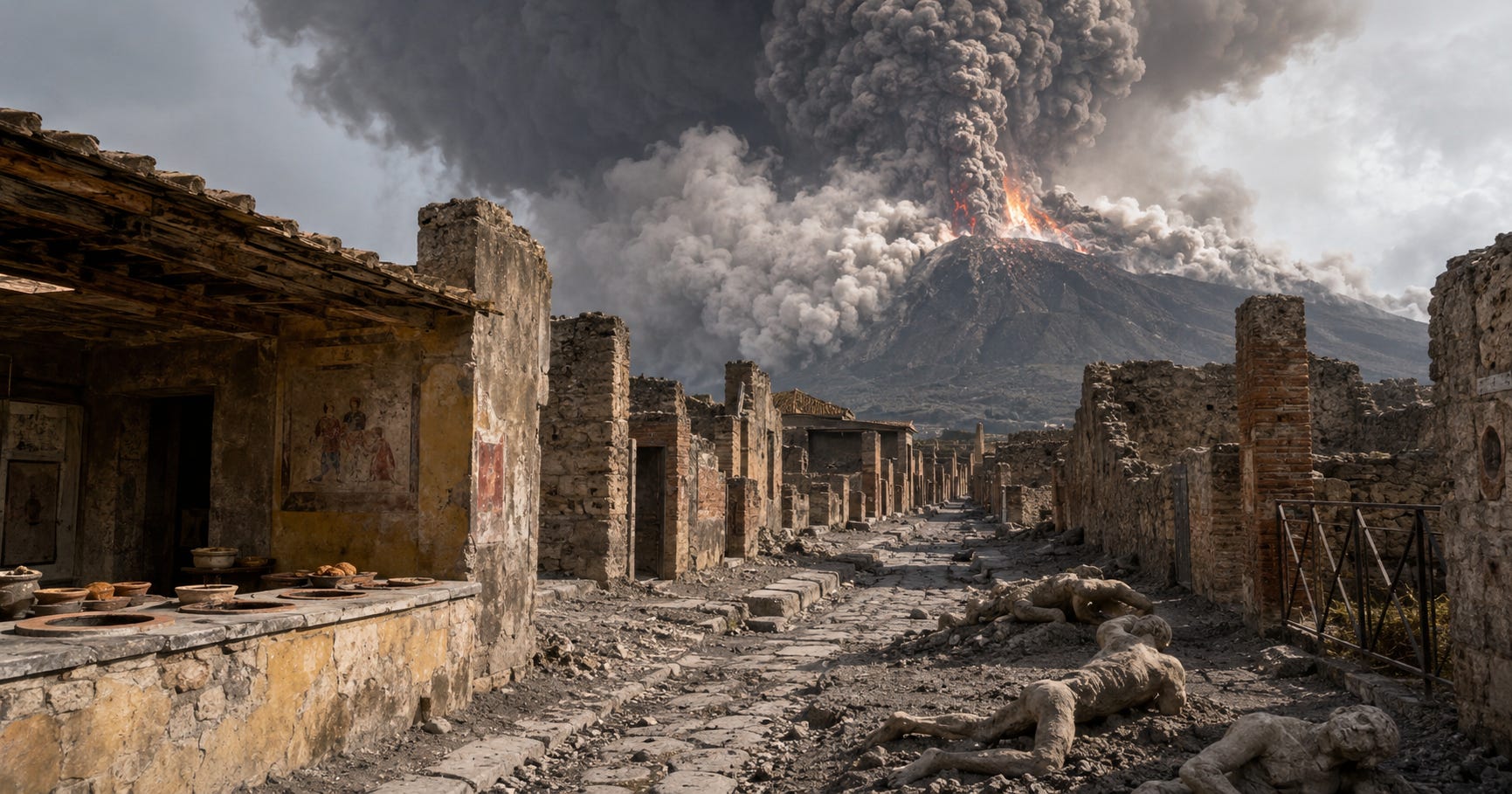
When the eruption of Mount Vesuvius finally subsided, the landscape around Pompeii had been transformed. The city was buried beneath layers of volcanic material, and the familiar streets, houses, shops, temples, and public buildings were no longer visible as they had been before the disaster. The eruption had changed not only Pompeii itself but also the surrounding countryside and communities around the Bay of Naples.
The exact conditions immediately after the eruption are difficult to reconstruct. Ancient accounts focus mainly on the eruption itself and the experiences of people who observed it from other locations. There was no modern emergency service or organized recovery operation capable of immediately entering the buried city. The area remained dangerous, and volcanic activity could continue after the most dramatic stages of an eruption.
The volcanic deposits had created a thick covering over Pompeii. Pumice and ash had accumulated during the earlier stages, while later volcanic deposits covered additional areas. This combination effectively sealed large parts of the city beneath the surface. Buildings that had once been open to the streets were now hidden, and objects left behind were covered by layers of material.
The disaster also affected the surrounding environment. Fields, roads, buildings, and agricultural areas across the region were covered or damaged by volcanic deposits. Communities around Vesuvius had to deal with the consequences of the eruption, while survivors faced the challenge of rebuilding their lives.
Pompeii itself did not immediately become an archaeological site. For ancient people, it was a destroyed city rather than a preserved historical monument. Some survivors may have returned to search for valuable possessions or recover materials, and there is evidence that parts of the buried area were disturbed in antiquity. However, the city as a functioning Roman community was gone.
Over time, the exact location and appearance of Pompeii became increasingly difficult to recognize. The buried city gradually disappeared from everyday knowledge, while vegetation and new layers of soil developed across parts of the landscape. Roman settlements and roads changed, political powers came and went, and centuries passed.
Yet the volcanic deposits that covered Pompeii produced an unusual form of preservation. Because many structures and objects were buried relatively quickly, they were protected from centuries of weathering and later construction. This would eventually allow archaeologists to recover an extraordinary amount of information about Roman life.
The preserved remains include houses with decorative paintings, streets with shops and fountains, public buildings, workshops, inscriptions, household objects, and evidence of food and commerce. Pompeii became an unusually detailed record of everyday Roman life, rather than simply a collection of monumental ruins.
The eruption also became historically important because of the written account of Pliny the Younger. His letters describing the disaster provide one of the most valuable surviving eyewitness perspectives on the eruption of Vesuvius. His observations helped later historians understand the sequence and scale of the catastrophe, even though his account was written from a different location.
In the days and years after the eruption, however, the people of the region were dealing with a disaster, not thinking about its future archaeological importance. The significance of Pompeii as a preserved ancient city would only become clear many centuries later.
Eventually, the buried remains began to attract renewed attention. Explorations and excavations would reveal that beneath the ground was not simply a ruined settlement, but an entire Roman city remarkably preserved by the volcanic disaster of AD 79.
5 Main Ideas
I. Pompeii Was Buried: The city was covered by thick layers of pumice, ash, and other volcanic deposits after the eruption.
II. Recovery Was Difficult: The dangerous and heavily buried landscape made immediate recovery and rebuilding extremely difficult.
III. Pompeii Was No Longer a Living City: The eruption ended Pompeii’s existence as an active Roman settlement, although the surrounding region continued to be inhabited.
IV. The Burial Preserved Evidence: Volcanic deposits protected many buildings, objects, paintings, and other evidence of Roman life from later destruction.
V. A Lost City Emerges Centuries Later: Pompeii gradually disappeared from everyday knowledge before later explorers and archaeologists began uncovering its remains.
VII. Centuries Later: The Rediscovery and Archaeological Study of Pompeii
Although Pompeii had been destroyed and buried in AD 79, its story did not end with the eruption. For centuries, the city remained hidden beneath layers of volcanic material, gradually disappearing from the landscape. Over time, new settlements developed in the region, and knowledge of the exact location and extent of ancient Pompeii became limited.
The buried city was not completely forgotten. Ancient and medieval people occasionally encountered remains from the area, and some objects were recovered or removed from the buried ruins. However, there was no systematic archaeological excavation of Pompeii during the centuries immediately following the eruption.
Interest in the ancient city increased during the early modern period as European scholars and collectors became increasingly interested in classical antiquity. In the eighteenth century, excavations in the region began revealing the remains of Roman settlements buried by Vesuvius. Systematic exploration of Pompeii began in 1748, during the reign of King Charles VII of Naples, although earlier discoveries had already taken place in the surrounding area.
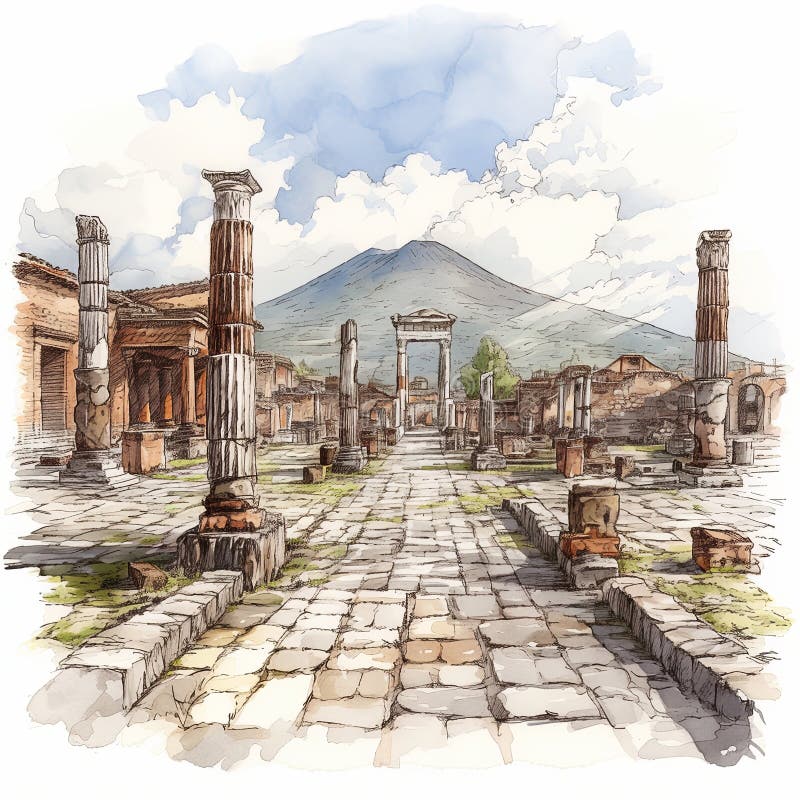
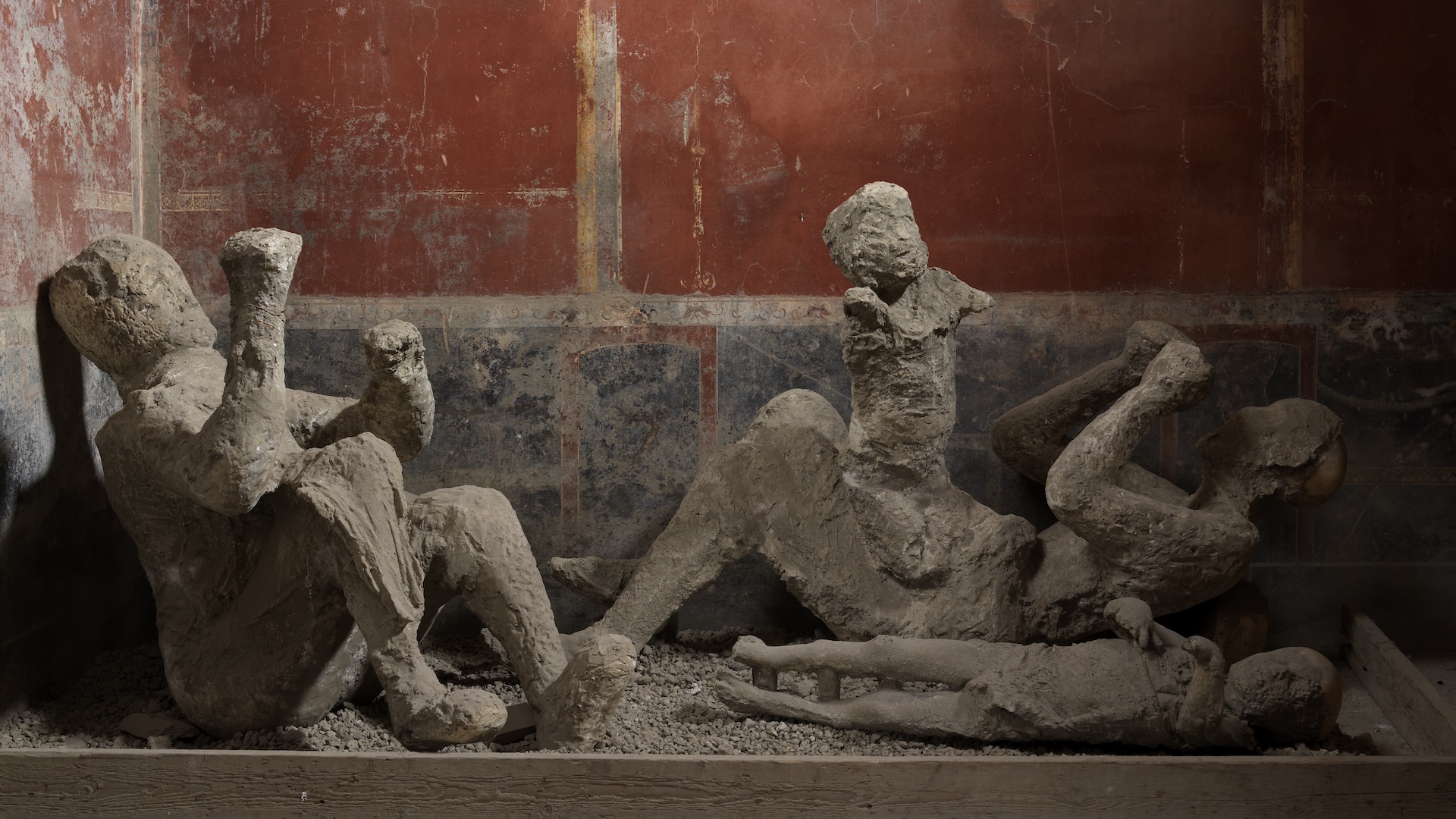
The excavations gradually revealed something extraordinary. Instead of finding only isolated ruins, researchers discovered streets, houses, shops, temples, public buildings, paintings, inscriptions, and everyday objects. These discoveries provided an unusually detailed picture of Roman urban life.
Pompeii is particularly valuable because its archaeological evidence includes not only monuments belonging to wealthy people but also evidence of ordinary activities. Bakeries, workshops, restaurants, houses, fountains, markets, and streets reveal how people lived and worked in a Roman city. Inscriptions and graffiti also provide evidence about communication, politics, commerce, and social life.
Archaeologists have also learned much from the buildings themselves. The arrangement of houses and streets shows how Pompeii’s urban environment was organized, while decorative paintings and mosaics reveal aspects of Roman art and domestic culture. Objects found inside buildings can provide clues about cooking, trade, religion, clothing, and other parts of everyday life.
The preservation of Pompeii has also allowed historians to study the eruption itself. Different layers of volcanic deposits provide evidence about the sequence of the disaster, helping researchers reconstruct how pumice, ash, and pyroclastic material affected the city.
Modern archaeology has made the study of Pompeii much more careful than the early excavations. Archaeologists now record buildings, objects, soil layers, inscriptions, and environmental evidence in detail. Scientific techniques can reveal information about ancient diets, agriculture, materials, diseases, climate, and patterns of human activity, allowing researchers to study Pompeii from many different perspectives.
Pompeii has therefore become more than a famous Roman ruin. It is one of the most important archaeological sites for understanding everyday life in the ancient Roman world. Its preservation provides historians with evidence that would normally have disappeared through centuries of rebuilding, weathering, and development.
The story of Pompeii is ultimately a combination of destruction and preservation. The eruption of Vesuvius destroyed a thriving Roman city, but the same volcanic deposits that caused the destruction also protected an extraordinary record of its inhabitants and their world.
Today, the remains of Pompeii continue to be studied, conserved, and interpreted. Every street, building, inscription, and object contributes another piece to the story of the city. What was once a catastrophic volcanic disaster has become one of the most important archaeological windows into ancient Rome.
5 Main Ideas
I. Centuries of Burial: Pompeii remained hidden beneath volcanic deposits for many centuries after the eruption of AD 79.
II. Excavations Begin: Systematic archaeological excavation began in the eighteenth century, gradually revealing the buried Roman city.
III. Everyday Roman Life: Houses, shops, workshops, streets, inscriptions, and everyday objects provide exceptional evidence about Roman society.
IV. Understanding the Eruption: Archaeological layers help researchers reconstruct the different stages of the AD 79 eruption.
V. Pompeii’s Historical Importance: Pompeii remains one of the most valuable archaeological sites for understanding everyday life, culture, and society in the ancient Roman world.