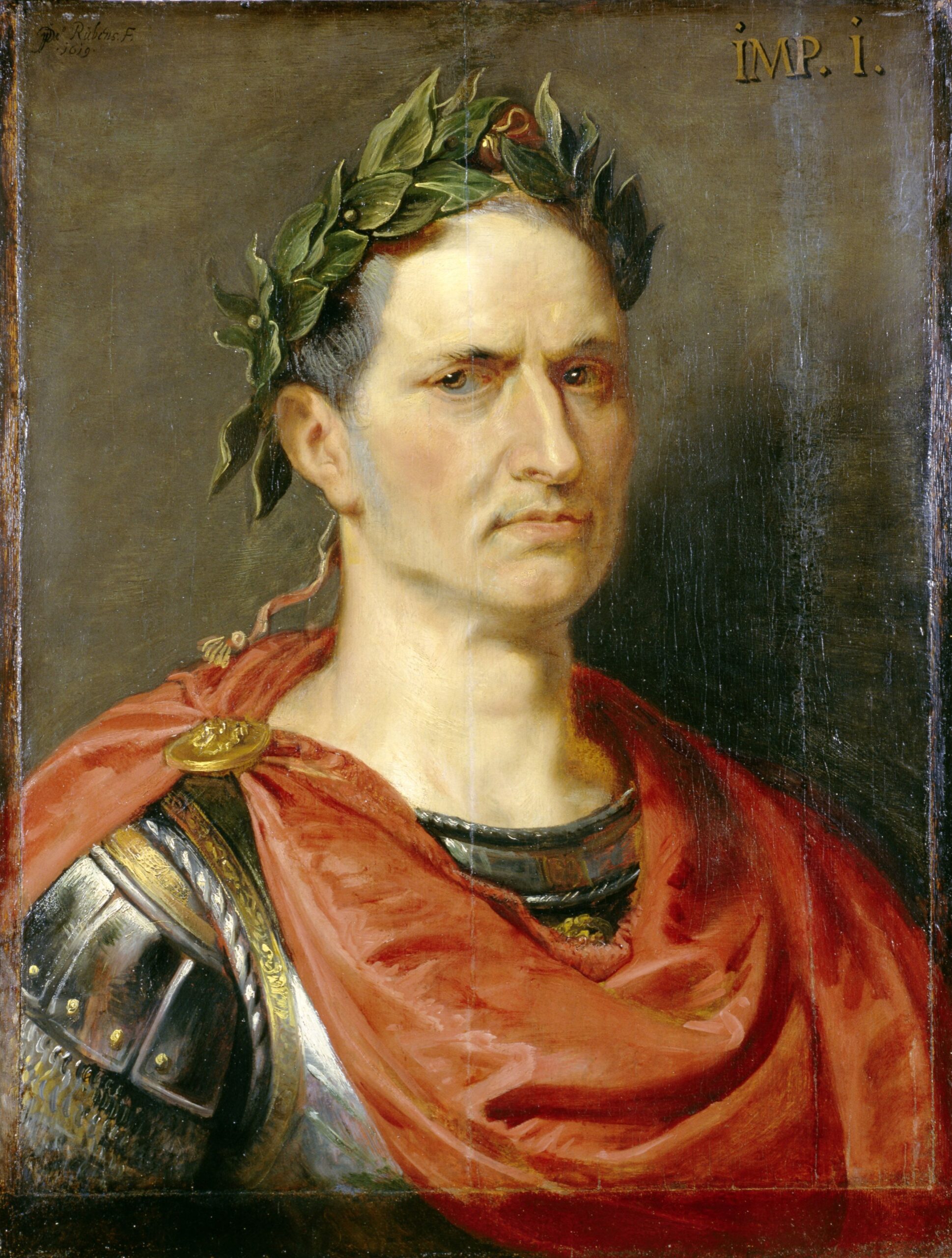
Julius Caesar was one of the most important figures in ancient Roman history. A brilliant military commander, ambitious politician, and powerful statesman, Caesar played a major role in the transformation of the Roman Republic into the political system that eventually became the Roman Empire. His career was marked by military victories, political alliances, civil war, and dramatic changes to Roman government.
Born in 100 BC into the ancient Roman Julian family, Caesar came from a respected patrician background, although his family was not among Rome’s most powerful political families at the time. He entered Roman politics during a period of intense competition between ambitious leaders and growing tensions between different political groups.
Caesar’s rise was helped by his political skill and his alliance with two of Rome’s most powerful men, Pompey the Great and Crassus. Together, the three formed an informal political alliance known as the First Triumvirate. This arrangement helped Caesar gain the consulship in 59 BC and later command Roman armies in Gaul.
As governor and military commander, Caesar led the Gallic Wars between 58 and 50 BC. His campaigns greatly expanded Roman control in western Europe and made him extremely wealthy and influential. His military success also gave him the loyalty of experienced Roman soldiers, which would become crucial during his later conflict with the Roman Senate and Pompey.
The political relationship between Caesar and Pompey eventually collapsed. When Caesar was ordered to give up his military command and return to Rome without his army, he refused. In 49 BC, Caesar crossed the Rubicon River with his army, beginning a civil war that would ultimately leave him as the dominant political figure in Rome.
After defeating Pompey and his remaining opponents, Caesar returned to Rome and accumulated extraordinary political power. He was eventually appointed dictator for life, allowing him to introduce major political, administrative, and calendar reforms.
Caesar’s growing power alarmed a group of Roman senators who feared that he was destroying the Republic and becoming a monarch. On 15 March 44 BC, known as the Ides of March, Caesar was assassinated by a group of senators, including Brutus and Cassius.
His death did not restore the old Republic. Instead, it triggered another series of civil wars that eventually brought Octavian, Caesar’s adopted heir, to power. Octavian later became Augustus, the first Roman emperor.
Caesar’s legacy therefore extends far beyond his military victories. His career helped expose the weaknesses of the Roman Republic and accelerated Rome’s transformation into an empire. His name also became a title associated with later Roman rulers, making Julius Caesar one of the most influential individuals in Roman history.
1. Who Was Julius Caesar?
Julius Caesar was one of the most important political and military figures of ancient Rome. Born in 100 BC, he lived during the final and increasingly unstable decades of the Roman Republic. Through a combination of political ambition, military success, alliances, and personal influence, Caesar rose from a member of an old Roman family to become the most powerful individual in Rome.
Caesar was born into the Julian family, an ancient patrician family that traced its legendary ancestry back to Iulus, the son of the Trojan hero Aeneas. According to Roman tradition, Aeneas was an ancestor of the Roman people, and the Julian family claimed a connection to the goddess Venus through him. Despite this prestigious ancestry, Caesar’s family did not possess the enormous political influence of Rome’s most powerful families.
Caesar began building his political career during a period when Roman politics was dominated by powerful individuals and competing factions. The Republic’s political system depended on elected officials, the Senate, assemblies, and traditional customs, but wealthy and ambitious politicians could accumulate enormous personal influence.
Caesar proved particularly skilled at building political alliances. One of the most important was his relationship with Pompey the Great, one of Rome’s most successful military commanders, and Marcus Licinius Crassus, one of Rome’s wealthiest men. Together, the three formed the informal political alliance known as the First Triumvirate.
The alliance helped Caesar secure the position of consul in 59 BC. After his consulship, he received important provincial commands that gave him the opportunity to build a military career. Caesar eventually became commander of Roman forces in Gaul, where he launched a series of campaigns beginning in 58 BC.
The Gallic Wars transformed Caesar’s reputation. Over several years, he defeated numerous Gallic tribes and expanded Roman control over large areas of western Europe. His victories brought him wealth, military prestige, and the loyalty of his soldiers. Caesar also wrote about his campaigns, helping create a carefully constructed public image of himself as a successful commander.
His growing power eventually brought him into conflict with Pompey and the Senate. Political alliances broke down, and Caesar was ordered to surrender his military command. Instead, in 49 BC, he crossed the Rubicon River with his army. This act began a civil war and represented a direct challenge to the authority of the Roman Senate.
Caesar eventually defeated Pompey’s forces and became the dominant political figure in Rome. He was appointed dictator, eventually receiving the unprecedented title of dictator perpetuo, or dictator for life.
His concentration of power alarmed many senators. On 15 March 44 BC, known as the Ides of March, Caesar was assassinated by a group of conspirators who believed they were defending the Roman Republic.
However, Caesar’s death did not restore the old political system. Instead, it triggered further civil wars and eventually helped create the conditions for the rise of Augustus, Rome’s first emperor.
5 Key Ideas
- Julius Caesar was born in 100 BC into the ancient Julian family.
- His political rise was supported by the First Triumvirate with Pompey and Crassus.
- The Gallic Wars made Caesar extremely powerful and influential.
- Caesar’s crossing of the Rubicon in 49 BC began a major civil war.
- His assassination in 44 BC failed to restore the Republic and instead contributed to Rome’s eventual transformation into an empire.
2. Caesar’s Early Life and Family
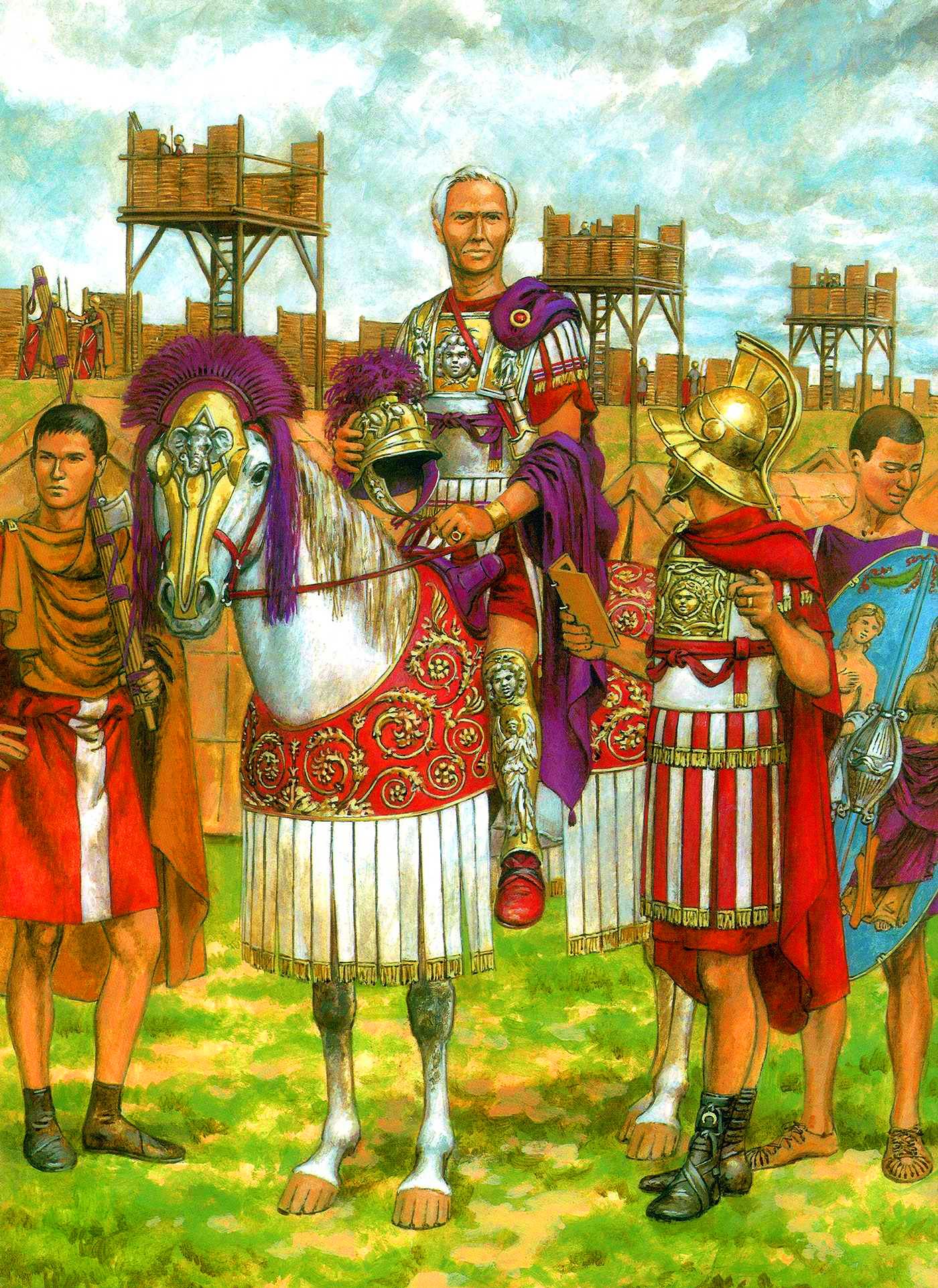
Julius Caesar was born in 100 BC into the ancient Julian family, one of Rome’s old patrician families. His full name was Gaius Julius Caesar, and his family claimed a prestigious legendary ancestry connected to Aeneas, the Trojan hero who Roman tradition considered an ancestor of the Roman people.
Although Caesar came from an old family, his relatives did not control Rome’s politics in the same way as some of the city’s most powerful families. His father, also named Gaius Julius Caesar, held important political positions, but he died when Caesar was still young. Caesar therefore had to build much of his own political career.
Caesar’s mother, Aurelia, played an important role in his upbringing. Ancient sources describe her as a strong and capable woman who came from a respected Roman family. Caesar was also connected through marriage to important political families. These relationships would become increasingly valuable as he entered Roman public life.
Caesar’s early adulthood took place during a period of serious political conflict. Rome was being affected by the rivalry between Gaius Marius and Lucius Cornelius Sulla, two powerful Roman leaders whose supporters competed for control of the Republic. Caesar was connected to the Marian side through his family. His aunt Julia had been the wife of Marius, while Caesar himself married Cornelia, the daughter of an important Marian politician.
When Sulla became dictator after defeating his opponents, Caesar’s family connections became dangerous. Sulla ordered Caesar to divorce Cornelia, but Caesar refused. As a result, he temporarily lost some of his property and political position and left Rome.
This period was an important early experience for Caesar. He saw firsthand how political rivalry could lead to civil conflict and how military power could influence Roman politics.
After Sulla’s death in 78 BC, Caesar returned to Rome and began rebuilding his career. He developed a reputation as an ambitious politician and gradually advanced through the traditional Roman political system.
Caesar also spent time gaining military experience. He served in Asia Minor and received recognition for his actions during military operations. His early military service helped him develop the skills and reputation that would later become central to his career.
Caesar continued climbing the Roman political ladder, holding several important offices. He became quaestor, then aedile, praetor, and eventually pontifex maximus, Rome’s chief priest. His election as pontifex maximus in 63 BC was particularly significant because it gave him considerable religious and political prestige.
Throughout these years, Caesar also developed a reputation for public generosity and political ambition. He invested heavily in public events and cultivated support among ordinary Romans. At the same time, he accumulated substantial debts while financing his political career.
By the time Caesar reached the consulship in 59 BC, he had transformed himself from a relatively young politician with an uncertain future into one of Rome’s most ambitious rising leaders.
His early life therefore helps explain his later success. Family connections, political alliances, military experience, public popularity, and personal ambition all played important roles in Caesar’s rise.
5 Key Ideas
- Julius Caesar was born in 100 BC into the ancient Julian family.
- His family had important connections to Marius and the Marian political faction.
- Caesar’s conflict with Sulla exposed him to Rome’s dangerous political struggles.
- He gained early military and political experience before becoming consul.
- Caesar’s election as pontifex maximus in 63 BC increased his political and religious influence.
3. How Julius Caesar Rose to Power
By the time Julius Caesar reached his forties, he had already built an impressive political career, but he was still competing with several of Rome’s most powerful politicians. His rise to the highest levels of Roman politics depended on a combination of ambition, political alliances, public support, and military opportunity.
One of Caesar’s most important political achievements came in 63 BC, when he was elected Pontifex Maximus, the chief priest of Rome. This was a prestigious position that gave Caesar greater visibility and influence. He also continued advancing through Rome’s traditional political offices, eventually becoming praetor in 62 BC.
After serving as praetor, Caesar received a provincial command in Hispania Ulterior. There he gained valuable military experience and improved his financial position. His campaigns demonstrated that he could successfully command Roman forces, while the wealth gained from his provincial administration helped him deal with the large debts he had accumulated during his political career.
When Caesar returned to Rome, he faced an important political challenge. Two of the most powerful men in the Republic were Pompey the Great and Marcus Licinius Crassus. Pompey was one of Rome’s most successful generals, while Crassus was among the wealthiest men in the Roman world.
Despite their enormous influence, Pompey and Crassus were rivals. Caesar recognized that cooperation between the three men could give each of them advantages. They therefore formed an informal political alliance known as the First Triumvirate around 60 BC.
The alliance became particularly powerful when Caesar was elected consul for 59 BC. During his consulship, Caesar pushed through legislation supported by his allies, including measures connected to Pompey’s veterans and other political objectives.
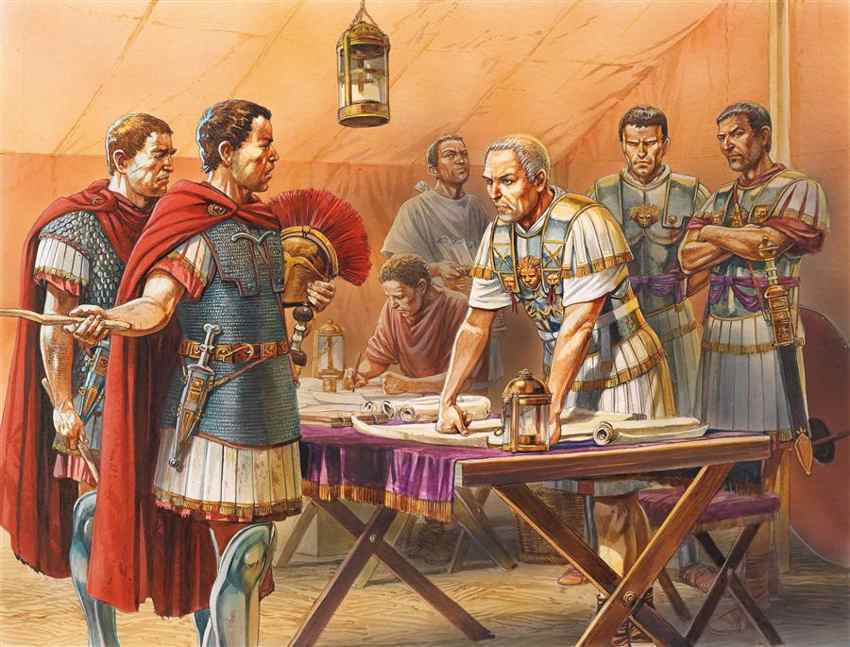
After his consulship, Caesar received command over important provinces. He became governor of Cisalpine Gaul and Illyricum, and later received Transalpine Gaul as well. More importantly, he received command of several Roman legions.
This gave Caesar exactly what he needed to expand his influence: a powerful military command far from Rome.
Beginning in 58 BC, Caesar launched a series of campaigns in Gaul. These campaigns eventually became known as the Gallic Wars. Over several years, Caesar defeated numerous Gallic tribes and expanded Roman control over a huge region.
The Gallic Wars transformed Caesar’s position in Roman politics. His victories made him extremely famous throughout the Roman world. His soldiers became personally loyal to their commander, while his military successes provided him with enormous wealth and prestige.
Caesar also carefully communicated his achievements to the Roman public. In his account of the Gallic Wars, he presented his campaigns as necessary military actions that protected Roman interests and defeated threats to Roman territory.
Meanwhile, the political situation in Rome was changing. Crassus died in 53 BC during his campaign against the Parthians, removing one of the three members of the original alliance. Pompey and Caesar were now increasingly isolated from one another.
Pompey gradually moved closer to the Senate, while Caesar’s military success made him increasingly powerful. The political alliance that had helped Caesar rise was breaking apart.
By the end of the Gallic Wars, Caesar had become far more than an ordinary Roman politician. He had a wealthy and experienced army, enormous personal prestige, and a large network of political supporters.
His rise to power had therefore reached a critical point. The question was no longer whether Caesar was an important Roman politician, but whether Rome’s political system could accommodate a commander with so much personal power.
5 Key Ideas
- Caesar advanced through Rome’s political system and became Pontifex Maximus in 63 BC.
- His alliance with Pompey and Crassus created the First Triumvirate.
- Caesar became consul in 59 BC, strengthening his political position.
- The Gallic Wars gave Caesar wealth, military fame, and loyal soldiers.
- The death of Crassus in 53 BC helped destroy the political balance between Caesar and Pompey.
4. Julius Caesar and the Conquest of Gaul
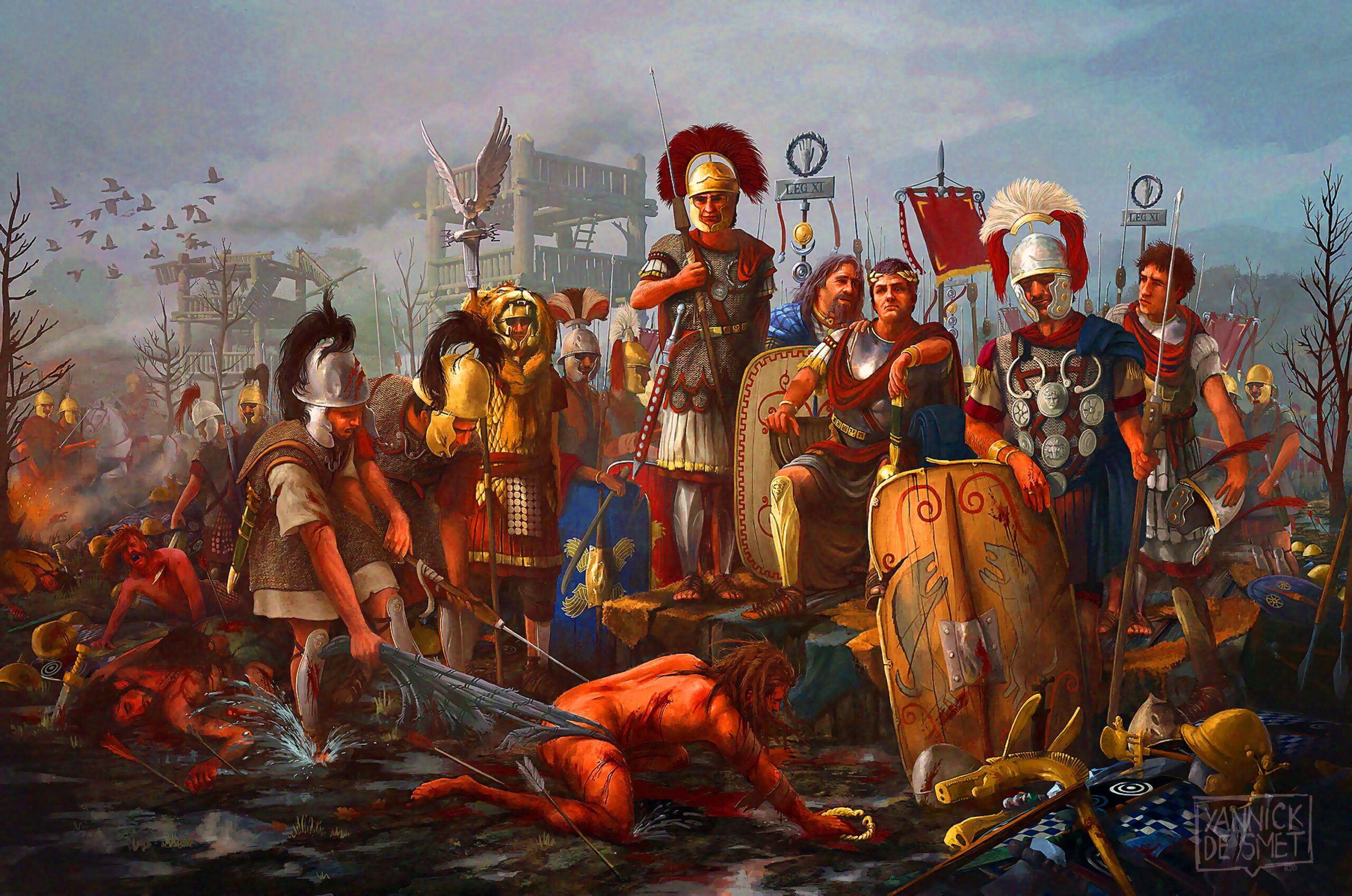
The Gallic Wars were the campaigns that transformed Julius Caesar from an ambitious Roman politician into one of the most powerful military commanders in the ancient world. Between 58 and 50 BC, Caesar led Roman armies through a series of campaigns in Gaul, a vast region that included much of modern France and Belgium, as well as parts of neighboring areas. His victories greatly expanded Roman territory and gave him the wealth, reputation, and military support that would later help him challenge his political opponents in Rome.
After his consulship in 59 BC, Caesar received important provincial commands. He governed Cisalpine Gaul, Transalpine Gaul, and Illyricum, giving him access to several Roman legions and placing him close to regions where Rome already had political and military interests. Caesar now had an opportunity to build a military reputation while also strengthening his political position.
The first major stage of the conflict began in 58 BC, when Caesar became involved with the Helvetii, a Celtic people who were migrating through Gaul. Caesar presented his intervention as necessary to protect Roman interests and allied communities. After defeating the Helvetii, he became involved in another conflict involving Ariovistus, a powerful Germanic leader who had established himself in Gaul. Caesar defeated Ariovistus and forced his forces to withdraw toward the Rhine.
These early victories increased Caesar’s reputation among the Roman public. However, his campaigns continued to expand. During the following years, Roman armies fought against several Gallic peoples, including the Belgae in northern Gaul and communities along the Atlantic coast.
Caesar faced more than individual battles. Gaul contained numerous tribes with different political interests and alliances. Some groups cooperated with Rome, while others resisted Roman expansion. Caesar often took advantage of these divisions, forming alliances with some communities while fighting others.
The Roman army’s organization was also extremely important. Caesar’s soldiers were experienced and highly disciplined, and they were capable of constructing fortifications, roads, bridges, camps, and siege works during campaigns. Caesar famously constructed a bridge across the Rhine River, demonstrating Roman engineering and allowing his army to operate beyond the immediate boundaries of Gaul.
The most serious challenge came in 52 BC, when the Gallic leader Vercingetorix united several tribes against Caesar. Instead of fighting Rome’s army separately, the Gallic forces attempted to coordinate their resistance. Caesar faced a much more organized opponent than in some of his earlier campaigns.
The conflict reached its climax at the Siege of Alesia. Vercingetorix and his army occupied a fortified position while Caesar’s forces surrounded them. The Romans constructed extensive defensive lines around Alesia. One line faced inward toward Vercingetorix’s army, while another faced outward to protect the Romans from Gallic forces attempting to relieve the city.
After repeated fighting, the Gallic relief forces failed to break the Roman position. Vercingetorix eventually surrendered, becoming one of the most famous opponents of Caesar’s career. Although resistance continued in parts of Gaul, the defeat at Alesia was a major turning point.
By 50 BC, Caesar had established Roman control over most of Gaul. The conquest dramatically increased the size and wealth of Roman territory and provided Caesar with enormous personal prestige.
Caesar also used the Gallic Wars to strengthen his public reputation. He wrote the Commentarii de Bello Gallico, usually known as The Gallic War, describing his campaigns and explaining his decisions. The work remains an important ancient source, although it was written from Caesar’s own perspective and presented his actions in a favorable manner.
Most importantly, the wars transformed Caesar’s relationship with his army. His soldiers had spent years campaigning under his command and became strongly connected to their general. Caesar now possessed experienced legions that were personally loyal to him, something that would become extremely important when his political relationship with Rome’s ruling establishment collapsed.
The conquest of Gaul therefore did more than expand Roman territory. It changed Caesar’s position within Roman politics. He returned from his campaigns with enormous wealth, military prestige, political influence, and a powerful army. These advantages would soon bring him into direct conflict with Pompey and the Senate.
5 Key Ideas
- The Gallic Wars lasted from 58 to 50 BC and greatly expanded Roman control.
- Caesar defeated numerous Gallic and Germanic opponents, including Ariovistus.
- Vercingetorix united major Gallic forces against Rome in 52 BC.
- The Siege of Alesia became one of Caesar’s most important military victories.
- The conquest gave Caesar wealth, prestige, political influence, and highly experienced loyal legions.
5. Caesar Crosses the Rubicon and Becomes Dictator
By 50 BC, Julius Caesar had become one of the most powerful men in the Roman Republic. His conquest of Gaul had given him enormous wealth, military prestige, and the loyalty of his experienced legions. However, Caesar’s growing influence had also created serious political tensions in Rome, particularly with Pompey the Great and many members of the Senate.
The relationship between Caesar and Pompey had changed dramatically. They had once been political allies through the First Triumvirate, but the alliance had collapsed after the death of Crassus in 53 BC. Pompey increasingly cooperated with Caesar’s political opponents, while Caesar remained in command of his armies in Gaul.
The Senate eventually demanded that Caesar give up his military command and return to Rome as a private citizen. This created a major problem for Caesar. Roman governors normally surrendered their military authority when they returned to Italy, but Caesar feared that without the protection of his office and army, his political enemies could prosecute him for actions taken during his career.
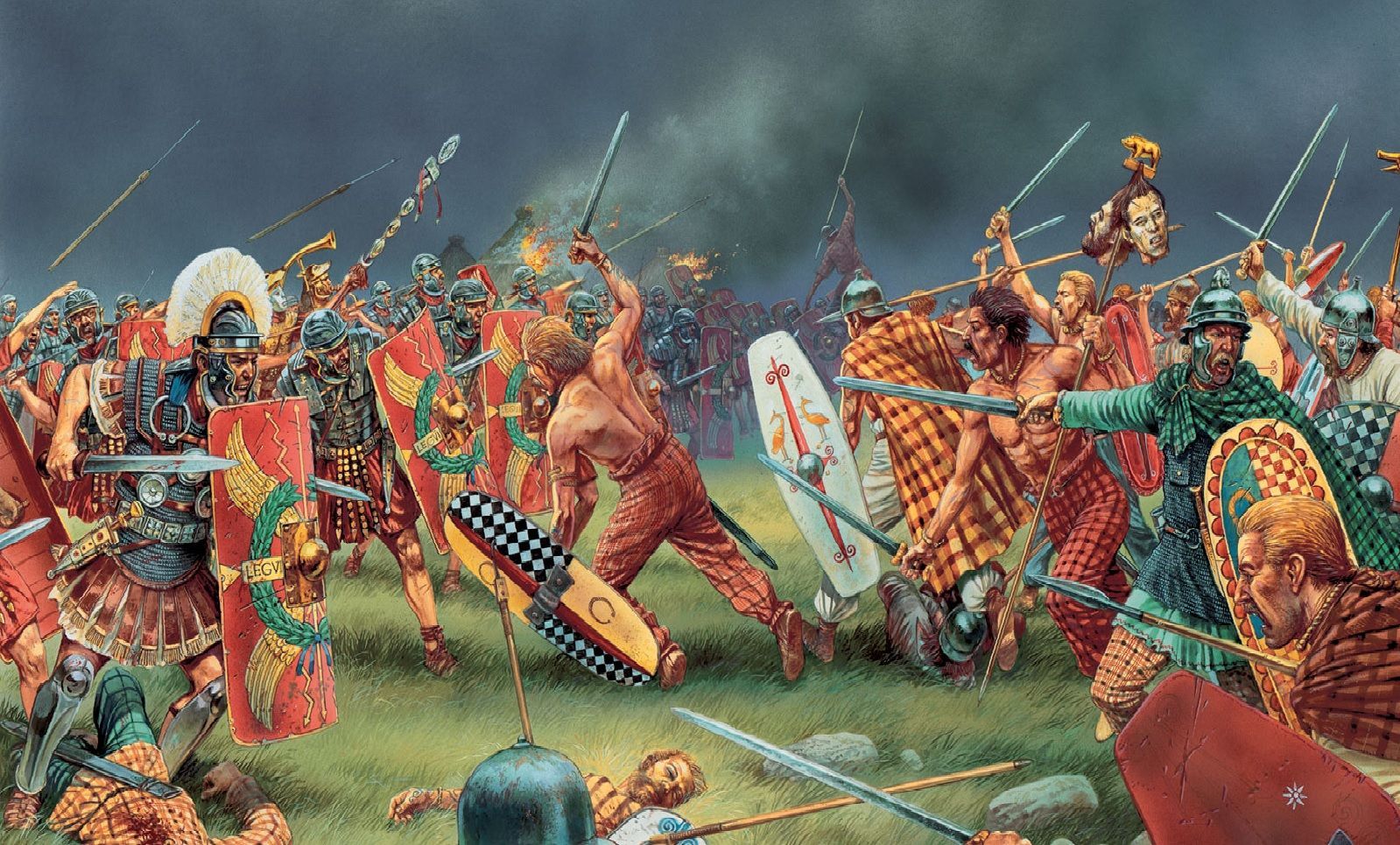
The crisis reached its decisive moment in 49 BC. Caesar approached the Rubicon River, which marked the boundary between his provincial command and Italy proper. A Roman commander was not permitted to bring his provincial army across this boundary without authorization.
Caesar decided to cross the river with his troops.
This action began a civil war between Caesar and his opponents. The famous phrase traditionally associated with the moment, “the die is cast,” reflects the significance of the decision. Caesar had effectively chosen armed conflict rather than surrendering his military command.
Pompey and many senators left Italy and eventually established their main forces in Greece. Caesar moved quickly through Italy, gaining control of Rome and much of the Italian peninsula. Rather than immediately pursuing Pompey, Caesar first secured his position in the western provinces.
The civil war continued across several regions. Caesar eventually crossed into Greece and confronted Pompey’s forces at the Battle of Pharsalus in 48 BC. Caesar achieved a decisive victory, while Pompey fled to Egypt.
Pompey hoped to receive support from the Egyptian royal court, but he was killed shortly after arriving in Egypt. Caesar then became involved in Egyptian politics and supported Cleopatra VII during a struggle over the Egyptian throne.
After further military campaigns against Caesar’s remaining opponents, Caesar returned to Rome as the dominant political figure in the Republic. His victories had removed most of his major rivals, leaving him with extraordinary political influence.
Caesar was appointed dictator several times and eventually received the unprecedented title of dictator for life in 44 BC. He introduced a number of reforms, including changes to the Roman calendar that eventually produced the Julian calendar.
Caesar also reorganized aspects of Roman administration and expanded the Roman Senate. He supported the settlement of veterans and established colonies for Roman citizens.
However, Caesar’s concentration of power created fear among some senators. Rome had traditionally presented itself as a republic without a permanent monarch, and many senators worried that Caesar’s growing authority threatened this political tradition.
A group of conspirators therefore began planning against him. Their leaders included Marcus Junius Brutus and Gaius Cassius Longinus.
On 15 March 44 BC, Caesar attended a meeting of the Senate. There, the conspirators attacked and killed him. The event became known as the Ides of March.
Caesar’s assassination did not restore the Republic. Instead, it created another struggle for power and eventually contributed to the rise of his adopted heir, Octavian, who would later become Augustus and establish the Roman imperial system.
5 Key Ideas
- Caesar’s growing power brought him into conflict with Pompey and the Senate.
- In 49 BC, Caesar crossed the Rubicon River, beginning a civil war.
- Caesar defeated Pompey’s forces at the Battle of Pharsalus in 48 BC.
- He eventually became dictator for life and introduced important reforms.
- Caesar was assassinated on the Ides of March in 44 BC, but his death did not restore the Roman Republic.
